

WHO warns: Stroke deaths rising fast in Africa, urges immediate lifestyle changes
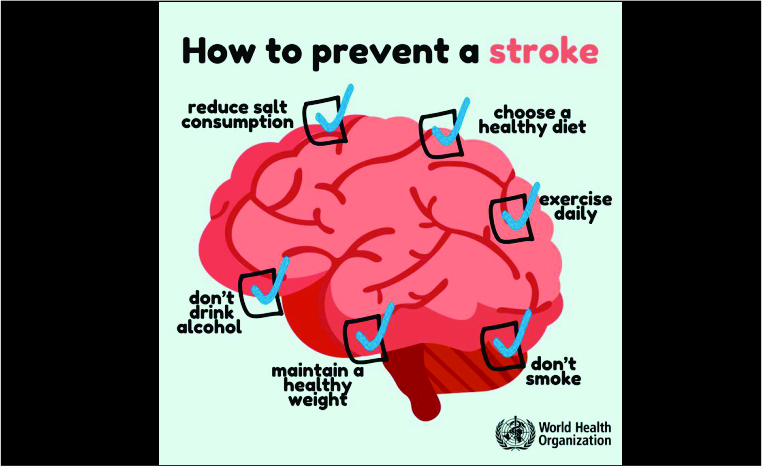
INTERNATIONAL, April 5, 2026 (NPA) — The World Health Organisation (WHO) has outlined measures to prevent stroke, a serious medical emergency that occurs when blood flow to the brain is interrupted by a blockage or bleeding, leading to brain cell death.
WHO urged people to adopt healthier lifestyles, including eating well, staying physically active, maintaining a healthy weight, and avoiding tobacco and alcohol. Stroke, often called a “brain attack,” is one of the leading causes of death and disability worldwide, requiring urgent medical attention to reduce long-term damage.
There are three main types of stroke: ischemic, caused by blood clots blocking vessels; haemorrhagic, resulting from ruptured blood vessels; and transient ischemic attack (TIA), or “mini-stroke,” which produces temporary symptoms but signals future risk. Symptoms often appear suddenly and can be remembered with the acronym BE FAST: Balance problems, Eye changes, Facial drooping, Arm weakness, Speech difficulties, and Time — stressing the need for immediate help. Treatment ranges from clot-busting drugs and surgery to therapies that manage bleeding, while rehabilitation through physical, occupational, and speech therapy is vital for recovery.

In Africa, stroke has become a growing public health crisis. Incidence rates reach as high as 316 per 100,000 annually, with prevalence up to 1,460 per 100,000. Alarmingly, the three-year fatality rate exceeds 80% in some regions.
About 70% of global stroke deaths and 87% of stroke-related disability occur in low- and middle-income countries, including many across Africa, where limited access to emergency care and rehabilitation has made stroke one of the fastest-rising causes of death and disability.

Ghana, UK review bilateral ties ahead of Mahama’s official visit

Nigeria, Ethiopia deepen cooperation on trade and investment

World Bank upgrades Africa growth outlook, says AI could boost jobs and productivity
Uganda vaccinates more than 8.2 million children in Measles-Rubella Campaign
NCDC heightens vigilance after imported Ebola case confirmed in Kenya

Eswatini says three third-country nationals voluntarily return home
NAFDAC DG advocates stronger continental cooperation on food safety
AU Commission Chairperson congratulates Abiy Ahmed on re-election
- Tinubu commissions NRS Headquarters, says new tax reforms will drive prosperity
- Tinubu assures investors of regulatory stability as Ogun, DP World sign $7bn port, SEZ MoUs
- Climate change anxiety is rising — and so is the willingness to act on it
- Ohaukwu LG Chairman Ituma breaks ground for modern diagnostic centre, blood bank
- Baseball boosts TBS, NFL gives ESPN a kick and streamers love ‘Squid’
Community Discussion