Category: Opinion

  • Sharing meal, sharing love: Eritrea’s enduring culture of unity

    Sharing meal, sharing love: Eritrea’s enduring culture of unity

    ASMARA, Eritrea, 11 April 2026 (NPA) — Eating together in a group is an ancient human cultural tradition, found across different times and places. Archaeologists trace this practice back nearly 800,000 years and highlight food sharing as a fundamental chapter in human evolution. From a bio‑archaeological perspective, sharing a common meal is a ritual that connects the human being as a biological organism to a social person.

    In Eritrea, sharing a communal plate has been a well‑celebrated cultural practice for generations. It creates memorable moments when those gathered can share love and respect for one another, exchange valuable information, address urgent family or community matters informally, and strengthen their relationships. Across all Eritrean ethnic groups, the meaning of eating together goes far beyond a significant cultural tradition — it is a determining practice for survival and thriving.

    Among the Tigrinya ethnic group, this practice is called Meadi. Family members sit around a plate facing each other, ready to taste the food and engage in conversation. After a mother or another female member prepares everything, everyone waits for a blessing from the father or an elder. Following the blessing, the father gives each member a sizable piece of injera, passing it from his right side. This marks the beginning of the eating process in a well‑disciplined manner. Until everyone confirms they are satisfied, no one is allowed to leave the Meadi except in urgent situations or with the elder’s permission. It is a cultural taboo to leave the Meadi without consent, as that would show disrespect to all family members and to the blessing. Consequently, family members learn to sit together until everyone declares they are satisfied.

    All Eritrean ethnic groups share this sacred culture, with only slight differences in name. In the Saho ethnic group, eating together is known as Maddi; in Bilen — Meddira or Gbar; in Kunama — Gonta or Nada Gonta; in Nara — Gaan; in Bidawyet — Tooda; in Tigre — Metaagal; in Tigrinya — Meadi; in Afar — Galadda; and in Arabic — Maida.

    Usually, people sit in a circle to share the available meal. The number of people sharing a plate depends on the situation, sometimes reaching as many as eight during special occasions such as wedding ceremonies.

    All Eritrean ethnic groups together share this rich culture, connecting through common values and norms that form the national identity. Such a valuable culture carries centuries‑old stories from generation to generation, helping to ensure community progress. In contemporary times, despite many preferring to eat on individual plates, this culture endures across all national groups.

    In Eritrea, this culture is also practised during serious community matters such as divorce or restitution. After discussions, guests sit to eat together, narrowing their differences to seal the agreement and normalise the situation.

    When a new person arrives during the meal, everyone invites them to share. N’Qedembel or Tefedel are popular terms often used to welcome anyone to join the prepared meal. This gesture reflects Eritrean hospitality and marks unity in diversity.

    Even during the Eritrean armed struggle, freedom fighters shared their food. Regardless of the ratio, fighters were served in their small, intimate units. Beyond mere provisions, the shared meal was a symbol of unity and resilience. As a sacred culture respected by all Eritrean diversities, eating together inspired freedom fighters to foster a unified national identity. Today, when Eritrean veterans gather for communal meals, they remember the struggles and sacrifices made for national liberation.

    Research shows that eating in a group provides ample social, psychological, and physical rewards. Among the social and emotional benefits, a shared meal increases a group’s social bond, trust, and sense of safety. Through this practice, people feel comfortable and connected, which is essential for their emotional well‑being. It helps members combat loneliness by giving them a deep sense of community and belonging. It also allows groups to spend consistent time in conversation, helping them build strong bonds with family, friends, or colleagues. People who share mealtimes have lower stress levels and better communication.

    Physical and nutritional benefits include mindful eating, lower health risks, and better weight management. Because group meals encourage slower eating, they improve digestion and prevent overeating by giving the brain time to register fullness. This, in turn, lowers the risk of cardiovascular disease by reducing stress and improving nutritional intake. It also reduces the risk of developing eating disorders in adolescents.

    Most notably, children and teens benefit greatly from this culture. By regularly hearing and sharing information and stories, they enrich their vocabulary, enhance their communication skills, internalise their culture, and achieve better academic performance. In addition, this practice helps deter children from high‑risk behaviours such as depression. Families who raise their children with this culture often develop healthy communication, deep connections, and strong relationships among family members. A mother’s love and a father’s blessing reward children with remarkable life memories. Through these experiences, children discover their social position and shape their future lives.

    In today’s world, where busy schedules and digital lifestyles encourage solo dining, the shared meal remains highly valuable because it provides mental well‑being, trust building, and emotional support.

    In conclusion, Eritrea is an icon of unity in diversity, where all national groups share common and complementary norms and values that together build the national identity. Eating in a group is an equally shared and deeply respected cultural heritage across all diversities, through which young generations embrace their future destiny — ensuring its preservation safeguards Eritrean national norms and values against the global cultural wave that erodes social fabrics. Therefore, let us all share a meal — to share a bright future.

    Written by Kidane Shimendi

  • From vanity to value: The real secret behind winning Nigeria’s mobile audience

    From vanity to value: The real secret behind winning Nigeria’s mobile audience

    OPINION, April 4, 2026 (NPA) —Nigeria is undeniably a mobile-first market, but that does not mean every company should rush to build its own app. Too often, strategies confuse access with appetite, or downloads with loyalty.

    Users will only keep an app if it delivers consistent, practical value. In Nigeria, where data costs are high, storage space is limited, and attention is fiercely contested, an app that fails to solve a recurring problem quickly becomes disposable.

    This is the real challenge for corporates considering streaming platforms. The issue is not whether an app looks modern or impressive, but whether it offers enough ongoing value to justify a permanent place on someone’s phone. For most companies, the honest answer is still “not yet.” Without strong, regular, exclusive content, branded streaming apps risk becoming expensive digital monuments—ambitious in appearance but rarely part of everyday life.

    Social media, by contrast, is already woven into the daily rhythm of Nigerian society. It is where people discover, discuss, learn, watch, argue, laugh, compare, and share. For many brands, social handles are not a weakness but the most realistic starting point.

    Still, social platforms are borrowed ground. They provide reach, visibility, and conversation, but they do not give brands full control over their audience, data, or long-term distribution. The smarter approach is layered: use social media for discovery and relevance; YouTube and video platforms for depth and repeat viewing; WhatsApp for direct connection, community, and service; then link all of these back to an owned destination—whether a website, content hub, membership platform, or lighter digital environment under the brand’s control. In this model, content works harder and audience relationships last longer.

    Ultimately, content matters more than the platform. Corporates should focus less on polished self-promotion and more on useful, human, repeatable value. Audiences respond to content that helps them do something, understand something, avoid something, or feel part of something. That means practical explainers, behind-the-scenes access, customer stories, live conversations, thought leadership, short how-to videos, and programming built around real interests and real problems.

    The lesson is clear: build the audience before you build the app. And when the time comes, ensure the app delivers a service—not just a screen.

  • Nigeria and China: Shared future, shared journey, building eco-friendly modernisation together

    Nigeria and China: Shared future, shared journey, building eco-friendly modernisation together

    Yu Dunhai, China’s Ambassador to Nigeria

    OPINION (NPA) — March 21, 2026 — Balancing development with environmental protection is a major common challenge for the world today.

    It is also an eternal task for the sustainable development of human society.

    As the world’s largest developing country, China has achieved a green development miracle that has captured global attention.

    This has contributed Chinese wisdom, solutions, and strength to global ecological and environmental governance and the building of a clean and beautiful world.

    The year 2026 marks the beginning of China’s 15th Five-Year Plan period.

    The recently concluded “Two Sessions”, the annual sessions of China’s top legislature and political advisory body, reviewed and approved the Outline of the 15th Five-Year Plan and the Ecological and Environmental Code of the People’s Republic of China.

    This paints a blueprint for China’s high-quality economic and social development and comprehensive green transition.

    The 15th Five-Year Plan sets the development goals for the next five years, and explicitly calls for accelerating the comprehensive green transition of economic and social development, and actively participating in and leading global climate governance.

    This also demands adherence to the principle of common but differentiated responsibilities, and fully implementing the United Nations Framework Convention on Climate Change and its Paris Agreement, and continuously deepening South-South cooperation on climate change.

    The Ecological and Environmental Code directly addresses global environmental challenges. Notably, it features a standalone section on “Green and Low-Carbon Development,” a pioneering initiative in global legislative practice.

    When green development becomes a national strategic goal, and the vision of harmonious coexistence between humanity and nature is enshrined in law, the path towards sustainable development for mankind is bound to become clearer and broader, thanks to China’s green commitment.

    China has always been a steadfast practitioner of ecological civilisation, and has integrated ecological progress into the overarching plan for national development, taking concrete actions to fight pollution.

    It became the first developing country to implement systematic PM2.5 pollution control, and has taken the lead in establishing and implementing an “ecological conservation red line” system, accelerating the development of the world’s largest national park system.

    China has achieved consecutive years of “double reduction” in desertified and sandified land, and currently contributes one-quarter of the world’s newly increased green area, making it the fastest and most effective country in “greening” the planet.

    Every patch of green across the land of China vividly testifies to its practice of the concept of ecological civilisation.

    China has always been a pragmatic actor in global climate governance, conscientiously fulfilling its obligations under the Convention.

    It has solidly advanced its goals of peaking carbon emissions and achieving carbon neutrality, by committing to achieving the largest reduction in carbon emission intensity in the shortest time globally.

    China continues to optimise its energy structure, having built the world’s largest and fastest-growing renewable energy system and the most complete new energy industrial chain.

    For ten consecutive years, China has ranked first globally in installed capacity for photovoltaic and wind power; its hydropower and biomass power generation installed capacities remain the largest worldwide.

    It currently supplies over 80 per cent of the world’s photovoltaic components and 70 per cent of wind power equipment.

    These tangible figures amply demonstrate that China is not just an active advocate but a down-to-earth implementer in climate governance.

    China has always been an active leader in global environmental governance, as a participant, contributor, and leader in the global endeavor for ecological civilisation.

    The country firmly upholds multilateralism and strives to build a fair, reasonable, and mutually beneficial global environmental governance system.

    It vigorously promotes green development under the Belt and Road Initiative, deeply engages in global ecological and environmental governance, and works tirelessly to build a clean and beautiful world.

    China actively advances South-South cooperation on climate change, increasing support for countries and regions with fragile ecosystems and weak green development capacities.

    It has collaborated on green energy projects with over 100 countries and regions. As the world’s largest exporter of clean technology, China has created 46 per cent of global jobs in the renewable energy sector, injecting strong momentum into worldwide green development.

    China and Africa have always been like-minded companions on the journey to address climate change and promote green development.

    African countries have drawn on China’s experience with the Three-North Shelterbelt Forest Program to implement the Great Green Wall Initiative, effectively advancing efforts to combat desertification in the Sahara.

    In the clean energy sector, China has implemented hundreds of cooperative projects in Africa. The installed capacity of photovoltaic power stations built through China-Africa cooperation alone has exceeded 1.5 gigawatts.

    China’s Juncao technology has been introduced to Africa, becoming an exemplary model of “small and beautiful” livelihood cooperation.

    Cooperation on green technologies like wind power, geothermal energy, and solar power assists African nations in their energy transition.

    Through these tangible practices of green cooperation, China and Africa are setting a prime example of solidarity, cooperation, and shared development for the Global South.

    The new journey of the 15th Five-Year Plan period has commenced, opening a new chapter in China’s ecological civilisation development.

    Standing at this new historical starting point, China is promoting a comprehensive green transition of its economic and social development with unprecedented determination and effort.

    Building an ecological civilisation concerns the common future of humanity. China will unwaveringly pursue a path of green, low-carbon, and high-quality development.

    It will continue to contribute wisdom and solutions to global green development, and work hand in hand with countries around the world on the new journey towards an eco-friendly modernisation.

    As a major African country and an important global economy, Nigeria plays an irreplaceable role in addressing climate change and promoting regional green development.

    China is ready to work with Nigeria to strengthen policy dialogue, share governance experience, and deepen practical cooperation in areas such as clean energy, disaster prevention and mitigation, desertification control, and green finance.

    Together, we can jointly paint a beautiful picture of harmonious coexistence between humanity and nature.

    This can be done by making the Niger River clearer, the Gulf of Guinea bluer, and ensuring that the green bond of China-Nigeria friendship is passed on with everlasting vitality from generation to generation.(NAN).

  • JUST IN: House of Reps amend Electoral Act, impose ₦10m fine, jail term for dual party membership

    JUST IN: House of Reps amend Electoral Act, impose ₦10m fine, jail term for dual party membership

    ABUJA, NIGERIA (NPA) — March 11, 2026 — Nigeria’s lower chamber, the House of Representatives has passed an amendment to the Electoral Act 2026, introducing strict penalties against dual membership of political parties. The new provision makes it a criminal offence for any individual to belong to more than one political party at the same time.

    Lawmakers say the measure is aimed at strengthening Nigeria’s democratic process and ensuring clarity in party affiliation. 

    Under the amendment, offenders will face a fine of ₦10 million or a maximum prison sentence of two years.

    The decision follows growing concerns about political instability and the manipulation of party structures. Supporters of the amendment argue that it will promote discipline, transparency, and loyalty within political parties.

    The development marks a significant shift in Nigeria’s electoral framework, with the House insisting that the reform is necessary to safeguard democracy and prevent abuse of the political system.

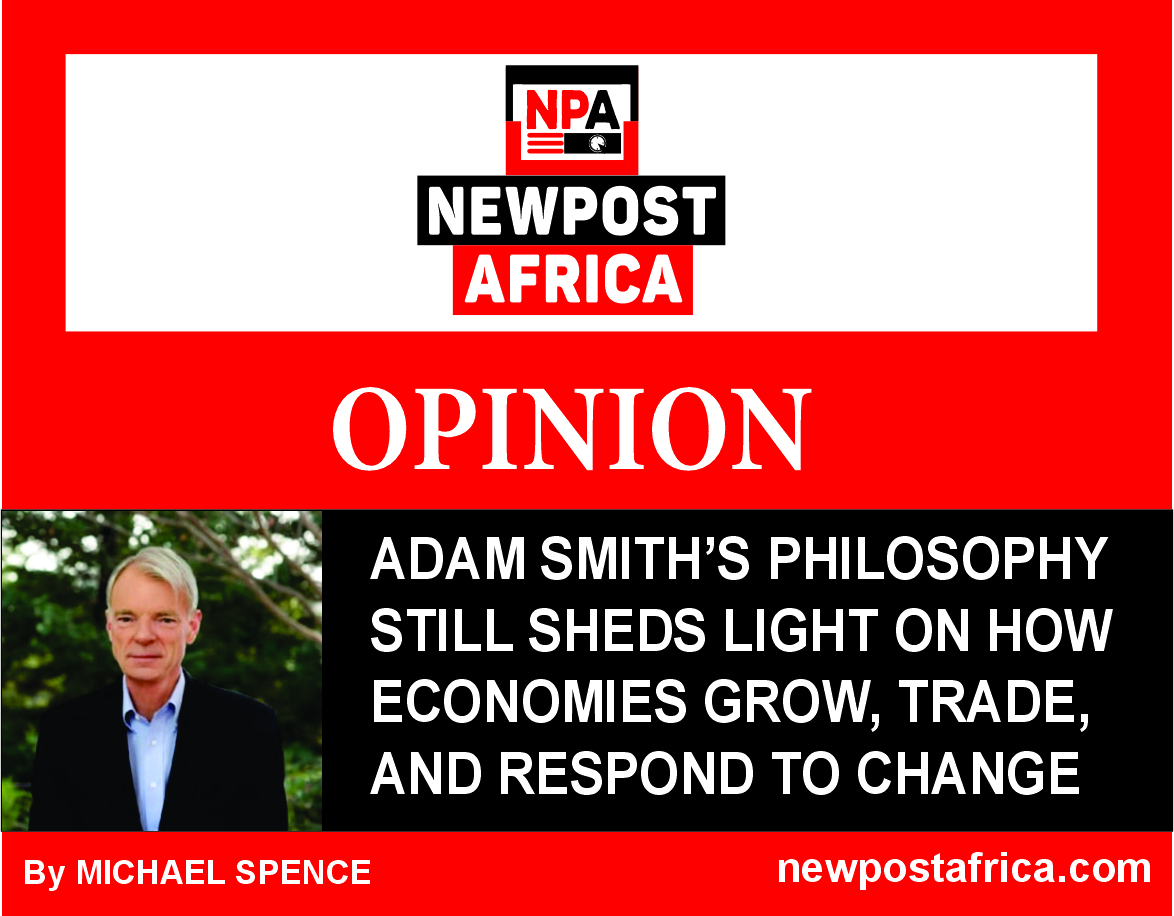
  • MICHAEL SPENCE: Adam Smith’s philosophy still sheds light on how economies grow, trade, and respond to change

    MICHAEL SPENCE: Adam Smith’s philosophy still sheds light on how economies grow, trade, and respond to change

    OPINION (NPA)— March 9, 2026 — When The Wealth of Nations was published on March 9, 1776, there was no such thing as an economics profession. Two hundred fifty years on, there is no shortage of economists, and Adam Smith is widely regarded as the godfather of their profession.

    If asked, Smith would have probably described himself as a Scot who made a living as a moral philosopher. And as for his famous book, it came to be seen as a true expression of the Enlightenment. This period of cultural and intellectual flourishing helped create an alternative vision for humanity based on reason, science, individual liberty, and human dignity.

    Despite detours and missteps, it is a moral frame of reference that resonates to this day. It is why we continue to listen to what Smith had to say.

    He illuminated the structural foundations of modern economies. Although he is best known for his idea of the “invisible hand,” Smith gave us an insight that is even more important: Moving from a static, subsistence economy to increasing income and prosperity requires what he called the “division of labor.” 

    Without this specialization, one cannot achieve dramatic increases in productivity coming from scale economies, learning curves, and improved conditions for innovation. Like all scientific discoveries, it seems obvious after the fact. 

    Division of labor

    For specialization to work, we need two structural elements, which are mutually reinforcing.

    One is trade, which is implied by specialized production. Indeed, while the supply side of the economy is specialized, the demand side is not. Hence the need for an “invisible hand” in the form of trade, a market system using prices and currencies. Trade is efficient, unless there are glaring externalities and informational gaps and asymmetries. It is economical by not requiring the collection of vast amounts of centralized information. And as a decentralized resource-allocation system, it allows for diverse preferences and creates incentives for innovation.

    Of course, Smith was no stranger to trade. His father served as the customs agent in his hometown and birthplace, Kirkcaldy, and Smith himself served as the commissioner of customs for Scotland from 1778 to 1790. While he is sometimes unfairly accused of codifying a system that glorifies selfishness, he envisioned the opposite: an economy with moral underpinnings and supporting structures, such as regulations, government revenues, and a stable currency.

    The second structural element needed for specialization is a sufficiently large market. In other words, an economy needs to generate enough demand to support the specialized producer.  Otherwise, the producing entity will have to reduce its level of specialization. Think of the general store in the American West giving way to specialized shops as the population grew and became richer and urban centers expanded.

    This is especially relevant for high-tech industries, where the total addressable market is central to assessing investment returns. The economics are clear: Developing new technology involves up-front investment. And the return on that investment is proportional to the size and scope of the market for the innovation. As an aside, the return on investment is also proportional to the duration of the market opportunity—until it is superseded by the next innovation. This is where the Schumpeterian dynamics enter the model.

    All these factors—from specialization and trade to finding ways to access large potential markets—lie at the heart of any successful development model. They are complementary and structural. It is their coevolution that produces the desired result: rising productivity and incomes, economic growth, increasing purchasing power, and the resulting expansion of domestic markets for products and services that, by virtue of growth, become more affordable and desired.

    Technology and development

    Let’s remember that Smith lived at the very beginning of the British Industrial Revolution. To my mind, it is simply stunning that he understood, and to some extent foresaw, the structural features and dynamics that have driven much of the evolution of the global economy in which we now live.

    Time and again, technology has played an essential role in directly driving productivity growth, but also in specialization via a connectivity channel, hence expanding the size of the addressable market. Smith may have seen James Watt’s steam engine (1769), which was more efficient than earlier models; if so, he would have certainly understood its potential in factories and transportation. He did not live to see the first steam locomotive, developed by Richard Trevithick in 1804. Nor did he get to see our modern digital economy, including the latest AI tools.

    But again, he would have understood the implications of these revolutionary developments: the immense benefits of expanding market size at reasonable cost, the opportunity to foster inclusive growth patterns, and the prospect of another jump discontinuity in specialization and productivity.

    The relevance to economic development is hard to overstate. Think of how specialization and trade accelerated in scale and scope after World War II. Over time, specialization moved from being a defining feature of developed economies to being one of the key engines of the entire global economy. It helped generate unprecedented growth rates, productivity expansions, and—over the past three decades—the biggest reduction in extreme poverty in human history.

    In countries in the early stages of development, income levels are low and domestic demand is limited, which in turn limits specialization. But if the global economy is accessible, the domestic demand constraint is removed, at least for tradable goods and services. Leveraging this opportunity requires technology, connectivity, and infrastructure. It also requires the removal of barriers to trade that are created by policies. Hence the importance of the General Agreement on Tariffs and Trade and its successor, the World Trade Organization, and the general acceptance that trade can be broadly beneficial to all.

    While technology, connectivity, and infrastructure cannot be acquired overnight, they can be built, and then the tradable part of the economy specializes and starts to grow. Employment shifts toward the tradable side, and average incomes grow. This income growth initially produces demand that spills over to nontradable goods and services markets. Relaxing the demand constraint on specialization beyond its tradable part benefits the economy as a whole.

    Risk and complexity

    The process of development gathers momentum because its underlying dynamics are mutually reinforcing. And yet myriad things can go wrong. These risks are well documented in the literature: macroeconomic mismanagement, instability and crises, insufficient investment in infrastructure and hence poor connectivity, and failure to leverage the opportunity created by global demand, to name just a few risks.

    Let me briefly expand on one of them. A specialized economy entails risk for the simple reason that anything that causes a disruption or failure of the trading system is dangerous, the more so the longer it lasts. Perceived risks to market openness, functioning, and access could severely constrain specialization. We could even restate Smith’s fundamental insight as follows: Specialization is limited by the extent of the market and the probability that it will remain accessible.

    One way to understand recent developments in the global economy is that, as the risks from multiple sources rise, there is a predictable partial pullback in specialization.

    Moreover, a highly specialized economy is by definition complex. The degree of specialization and complexity can be seen as different sides of the same coin. The market and network connections that underpin a modern economy exceed the capacity of its participants to fully comprehend them. Perhaps advances in AI will give us tools to enhance this comprehension and our ability to adapt. A promising and growing application of AI is precisely in assisting in the management of complex systems, such as global supply chains and smart grids. 

    Complexity also entails hidden risks, which are often systemic. They are embedded in the complex network of interconnections that are hard to see comprehensively. Unless we get better at managing them, complexity will become an additional major constraint on specialization. More broadly, complexity at this level makes it hard for people to understand the economic system. That creates a vacuum, with all kinds of unsubstantiated theories about how, and in whose interests, it works. Some of these theories risk undermining political and social cohesion. 

    All this would make for a fascinating conversation with Smith, who saw plenty of economic disruption and dislocation. He lived at a time when the economy went from extremely local—where people probably knew most of those with whom they interacted and transacted—to the beginning of a rapid increase in specialization and the scope of markets.

    This journey continues in our lifetimes. We increasingly depend on people and places we have never seen and that are largely unknown to us. We depend on science, technology, media, and expertise that go beyond our capacity to verify directly. How we address these challenges will shape our individual well-being and the wealth of nations in the years ahead.

    MICHAEL SPENCE

    MICHAEL SPENCE is a senior fellow at the Hoover Institution and Philip H. Knight Professor and dean, emeritus, at Stanford Graduate School of Business. In 2001, he was awarded the Nobel Memorial Prize in Economic Sciences.

    The opinions expressed in articles and other materials are solely those of the authors and do not necessarily reflect the views or editorial position of Newpost Africa.

  • Alex Otti’s big move: Abia’s social contract with senior citizens

    Alex Otti’s big move: Abia’s social contract with senior citizens

    OPINION (NPA) — March 7, 2026 —In most countries, senior citizens — those aged 60 and above — are esteemed and accorded special recognition and care by the state. The United Nations, in acknowledgement of their importance, designated October 1 as the International Day of Older Persons.

    In Nigeria, the National Senior Citizens Act, 2017 established the National Senior Citizens Centre (NSCC) to cater to the needs of the elderly and promote social inclusion. The NSCC has since urged state governments to domesticate the Act to safeguard the welfare of senior citizens.

    In Abia State, Governor Alex Otti is blazing the trail. Recently, he signed the Senior Citizens Welfare Bill into law, providing free medical care and a monthly stipend for residents aged 60 and above. Law No. 4 of 2025 formally established the Abia State Senior Citizens Centre, a landmark initiative aimed at improving the quality of life for the elderly, ensuring dignity, security, and social protection.

    The law sets out a framework for registration, identification, and administration of benefits. Key provisions include free medical care, access to public healthcare facilities, social support, and assistance for vulnerable seniors. Eligibility requires being 60 years or older and an indigene of Abia.

    To dispel misconceptions, Commissioner for Information Okey Kanu clarified that the Centre is not a “free money distribution scheme” but a structured welfare system. “This legislation is a deliberate and compassionate response by Otti’s administration to the growing population of elderly persons in Abia and the long-standing absence of a structured, government-backed system dedicated to their care, welfare, and social inclusion,” he said.

    Kanu emphasized that the Centre is not a retirement home but a hub for support services, social engagement, recreational activities, and advocacy. It will operate under the Ministry of Poverty Alleviation and Social Protection, funded through budgetary allocations, grants, and approved donations. “Law No. 4 of 2025 is a bold and humane policy choice that places Abia among progressive states that recognise ageing as a governance issue and institutionalise care for senior citizens,” he added.

    Senior citizens in Abia have welcomed the initiative. Felix Nwadioha commended the governor, saying: “It is not only when you are in service that you are relevant; you are also relevant when you are out of government.” Obike Ukoh praised the programme, noting that it would alleviate challenges faced by the aged: “It is a human approach to help people live longer; not to live a little longer in suffering but to live long in a very healthy living and in comfort.”

    Mrs. Eunice Offor described the law as a game-changer: “The monthly stipend, free medical care, and other benefits will go a long way in improving our quality of life. The fact that this law is now a statutory entitlement gives us a sense of security and dignity.”

    Former Vice-President Yemi Osinbajo also applauded Otti, calling the law a landmark initiative that embodies compassion and social responsibility. “I was quite particularly touched by the new law for Senior Citizens in Abia, and I think it is one of those very important issues that we have to address,” he said.

    While the governor and the Abia House of Assembly deserve praise, policy analysts stress that the true test lies in the full implementation of this watershed law.

  • Peter Obi Attack: Dr. SKC Ogbonnia Writes to Donald Trump on Nigeria’s Democratic Crisis

    Peter Obi Attack: Dr. SKC Ogbonnia Writes to Donald Trump on Nigeria’s Democratic Crisis

    LAGOS, NIGERIA (NPA): Following the reported attack on Mr. Peter Obi by suspected political hoodlums in Benin City, the Edo State capital, on Monday, former APC presidential aspirant Dr. SKC Ogbonnia has written to U.S. President Donald Trump, urging him to intervene.

    In his letter, Ogbonnia described Trump as “the leader of the free world” and appealed for action to hold accountable those he alleges are responsible for what he termed a “total collapse of democracy in Nigeria.”

    Dr. Ogbonnia, a businessman, academic, and politician, hails from Ugbo in Awgu Local Government Area of Enugu State. He is the Chairman of First Texas Energy Corporation, an Adjunct Professor of Leadership, and a regular commentator on Nigerian politics and governance.

    The letter, republished below, outlines his concerns regarding Nigeria’s democratic trajectory and calls for international attention to safeguard democratic values in the country.

    ———————————————————————-

    A Letter To Donald Trump On The Assassination Attempt On Peter Obi, By SKC Ogbonnia

    February 27, 2026

    President Donald J. Trump

    The White House

    1600 Pennsylvania Avenue NW

    Washington, D.C. 20500

    Subject: Why The World Should Hold Tinubu Responsible For The Assassination Attempt On Peter Obi

    Dear Mr. President,

    I am writing as a voice for the millions of Nigerians and Nigerian Americans who look up to your leadership as the standard-bearer for the free world and a passionate defender of democratic integrity. Nigeria is witnessing a grave assault on the democratic process that requires your immediate attention. Besides widespread insecurity which your timely intervention has helped bring to limelight, the African country is also witnessing a deeper and deteriorating state of democratic safety. Specifically, the country is now the most dangerous place for democratic opposition. The most recent and blatant example is the assassination attempt on Peter Obi on February 24, 2026 in Benin City, Edo State. Mr. Obi is a frontline opposition leader and the presidential candidate of the Labour Party in 2023 elections in Nigeria. Gunmen trailed his convoy from a political event and eventually opened fire. They missed him but damaged vehicles and other properties at the residence of his host, a former Edo State Governor, Chief John Odigie-Oyegun.

    The primary function of a state is to protect its citizens. Yet, this incident—where armed thugs shot at a convoy and damaged properties at a private residence—demonstrates a deliberate failure to secure opposition leaders. Despite the presence of police, the assailants were able to act and flee, suggesting a lack of proactive security measures or abject complicity. The mere fact that President TInubu has failed to condemn such attack on high-profile opposition leaders full three days after the incident speaks volumes. The silence of the federal government in the face of these attacks is a testament to its enabling role. As the chief security officer of the nation, President Tinubu’s failure to act decisively against acts of violence makes him the ultimate beneficiary of this dastardly act. 

    But this development did not come as a surprise. In a widely circulated essay published in 2022, “Tinubu’s Candidacy Provoking A Civil War”, I had enumerated why the politics of Bola Ahmed Tinubu is synonymous with political violence. Therefore, the incident of the assassination attempt on Peter Obi is not an isolated occurrence but rather the apex of a sustained pattern of political intimidation that has defined Tinubu’s career, dating back to his time as Governor of Lagos State (1999–2007).

    A Deep Pattern of Political Intimidation and Violence

    Tinubu’s tenure in Lagos was widely notorious for deploying various state apparatuses to suppress the local opposition. The unsolved assassination of PDP governorship aspirant Funsho Williams in 2006 remains the darkest chapter of that era. Though the case was never legally concluded, Tinubu was generally viewed as a prime suspect, with claims that the crime was orchestrated to remove a significant political rival in Lagos. Such pattern creates a dangerous precedent where political opposition is met with lethal force rather than democratic debate.

    Sadly, Tinubu’s history of political intimidation has now found its way to the national stage. Keenly aware that his policies are unpopular with Nigerians, and he has no chance to win a free and fair re-election in 2027, President TInubu has resorted to his familiar melange of political intimidation and violence. It is significant to note here that the attack on Obi occurred shortly after a prominent member of Tinubu’s party, the Edo State Governor, Monday Okpebholo, issued a public threat against Mr. Obi. This threat created a hostile environment that preceded the violence.

    Besides the case of Peter Obi, which degenerated to open attempt on his life, many opposition leaders are continuing to face untold political persecution than ever before. Draconian intimidation has replaced democratic norms. As a renowned human rights activist and presidential candidate, Omoyele Sowore put it, he has suffered more police brutality and illegal detentions under Tinubu than during the military era. This do-or-die mentality, where political opponents are constantly being intimidated has not only fostered a culture of impunity and atmosphere of violence, but it is also an existential threat to Nigeria’s fragile democracy.

    Targeting of the Igbo People

    It is a common knowledge that Tinubu has a chronic history of intimidation directed at the Igbo people—Peter Obi’s ethnic group. For instance, during the 2023 elections in Lagos, areas dominated by opponents, particularly the Igbo, were systematically targeted, with voters intimidated and prevented from exercising their rights. Infamous threats by traditional rulers close to the ruling APC, urging that non-compliant voters be forced into the Lagos lagoon, were met with tacit approval from Tinubu and the party he led. Clearly, the 2026 attack in Edo follows this unfortunate trend of using violence to disenfranchise the political base of opponents, specifically targeting the Igbo population and their supporters.

    A Plea

    Dear President Trump, the systematic targeting of political opposition under President Tinubu has led to a de facto one-party state. The result has been total erosion of rule of law and total impunity. As the leader of the free world, I urge you to use your good offices to hold Mr. TInubu accountable. A total collapse of Nigerian democracy has severe consequences.

    Sincerely,

    SKC Ogbonnia, Ph.D.

    A former APC Presidential Aspirant

    Houston, Texas.

  • Newpost Africa Relaunches, Reaffirms Commitment to World-Class Journalism

    Newpost Africa Relaunches, Reaffirms Commitment to World-Class Journalism

    LAGOS, NIGERIA (NPA): Nigerian media organisation Newpost Africa Media Publishing® (Newpost Africa) has announced its return following a successful restructuring process. The relaunch underscores the company’s renewed commitment to delivering journalism of the highest standards—anchored in integrity, balance, and diversity.

    Positioning itself as “Nigeria’s independent, world-class media organisation”, Newpost Africa emphasized its founding principles of strict editorial neutrality, an uncompromising stance against propaganda, and reporting that informs without bias or distortion. The organisation stressed that credible journalism is indispensable to democratic societies and informed citizenship.

    In a statement issued on February 22, 2026, Newpost Africa encouraged stakeholders and readers to actively engage with its mission. “By sharing perspectives and experiences, you contribute to a platform that values truth, dialogue, and collective responsibility in shaping the public record,” the statement read.

    Driven by a team of seasoned professionals and supported by a global network of journalists and writers, Newpost Africa said it is well-positioned to deliver timely coverage of rapidly evolving stories with speed, clarity, and analytical depth—while maintaining accuracy and editorial discipline.

    Its editorial focus remains firmly on Nigeria and the African continent, ensuring accountability from policymakers, institutions, and power brokers. At the same time, the organisation pledged to continue reporting on international developments that shape Africa’s place in the global context.

    The relaunch, according to the statement, is not merely a return but a reaffirmation of purpose and a strategic commitment to excellence in journalism. “This relaunch is a reaffirmation of our mission to uphold the highest standards of journalism and to serve as a trusted voice in Nigeria, Africa, and beyond,” the organisation noted.

  • Why Nigeria Needs A Well-Articulated MICE Policy To Rival Rwanda USD 60M Industry

    Why Nigeria Needs A Well-Articulated MICE Policy To Rival Rwanda USD 60M Industry

    Rwanda in East Africa has intentionally emerged as the leading destination for international conferences and events and a creative hub in the sub-Saharan Region. Kigali, its eco-friendly capital, is well-connected to the seven continents, with RwandAir, the country’s flag carrier, expanding its routes aggressively. Also, the government, led by President Paul Kagame, has simplified the visa process—offering visas on arrival—making the country attractive for global meetings. Security in the country of about 14 million people, reputed for a low crime rate and significant investment in public safety, has significantly enhanced its appeal to international delegates and investors and raised the bar.

    Modern infrastructure, such as world-class venues like the Kigali Convention Centre, reliable transportation, an eco-friendly urban planning strategy, and international hotel chains, also contributes to the success of the East African country. With the booming Rwanda’s hospitality industry complementing its growing MICE (Meetings, Incentives, Conferences, and Exhibitions) sector. The government has also invested heavily in education, developing a tech-savvy, skilled workforce, particularly in ICT, events management, and hospitality, supported by institutions like the African Leadership University and tech hubs.

    In contrast, despite its large cities like Lagos and Abuja, Nigeria faces challenges that hinder it from profiting from the growing MICE industry to attain its full potential. Security concerns, including terrorism, civil unrest birthed by worsening economic conditions and perennial secessionist agitations, have remained major obstacles to attracting international events. While the country of over 200 million people has significant facilities such as the Eko Convention Centre and others, unreliable infrastructure—particularly in power generation and supply and poor transportation services—diminishes its MICE competitiveness. And despite its creative and tech sectors being very vibrant, particularly in Lagos, brain drain and gaps in technical education hamper further economic growth. Government efforts to promote international events have been slower, fraught with bureaucratic red tape and policy somersaults.

    Notably, Rwanda’s government has played a pivotal role in driving a focused MICE strategy, marketing the country globally, and encouraging private-sector involvement. Nigeria, with its larger population and market potential, could catch up by addressing security concerns and national cohesion challenges, improving its infrastructure, and fostering public-private partnerships. Simplification of the visa policies and robust investments in technical education are other critical steps to enhance its global standing.

    Nigeria’s untapped MICE market has the potential to generate between $500 million to USD 1 billion annually, in contrast to Rwanda’s current USD 60 million—expected to grow to USD 150 million by 2025. The global MICE industry, valued at USD 876 billion in 2022 and projected to reach USD 1.4 trillion by 2028, presents significant opportunities for Nigeria to shore up its foreign exchange earnings to support the ongoing efforts to arrest its spiralling economic crisis.

    In the short and long run, with the right reforms, Nigeria could unlock substantial economic growth by capitalising on this sector, boosting tourism, attracting foreign investments, creating jobs and also diversifying its economy and positioning itself as a key player in Africa’s event and tourism space.

    Aderemi Ogunpitan is the President of IBST Limited (an award-winning Nigerian video production company with affiliates in London, Accra, Douala, Kampala, and Nairobi).