Category: Middle East

  • Netanyahu hosts Somaliland president in Jerusalem, signs cooperation agreement

    Netanyahu hosts Somaliland president in Jerusalem, signs cooperation agreement

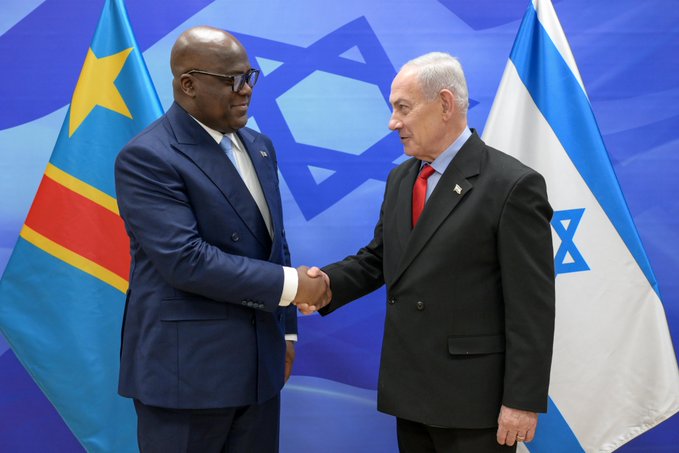
    JERUSALEM, Israel (NPA) — Israeli Prime Minister Benjamin Netanyahu has hosted Somaliland President Abdirahman Mohamed Abdullahi in Jerusalem, marking a significant milestone in the growing diplomatic relationship between Israel and Somaliland.

    The meeting formed part of President Abdullahi’s official state visit to Israel and comes amid deepening ties between both governments following Israel’s recognition of Somaliland and the opening of Somaliland’s embassy in Jerusalem.

    According to a statement issued by the Israeli Prime Minister’s Office, Netanyahu and Abdullahi first held a private meeting before leading a broader bilateral session involving senior officials from both sides.

    The Israeli delegation included Foreign Ministry officials, the Chief of Staff, the Government Secretary, the Military Secretary, Israel’s Ambassador to Somaliland, and other senior government representatives.

    President Abdullahi was accompanied by Somaliland’s Minister of Foreign Affairs, Minister of Defence, Minister of the Presidency, Minister of Water Development, the President’s Chief of Staff, the Chief of the General Staff of the Somaliland Armed Forces, the Somaliland Ambassador to Israel, and other top officials.

    At the conclusion of the talks, both leaders signed a Joint Declaration aimed at strengthening cooperation between Israel and Somaliland across multiple sectors.

    The agreement is expected to deepen collaboration in diplomacy, security, economic development, investment, and other areas of mutual interest.

    Speaking after the signing ceremony, Prime Minister Netanyahu described the relationship between the two governments as one founded on shared values and common aspirations.

    “We are proud, and I am proud that my government is the first government on the planet to recognise Somaliland,” Netanyahu said.

    “We are united by the same belief that freedom, democracy and opportunity are stronger than extremism, terrorism and chaos.”

    The visit is being viewed as a major diplomatic breakthrough for Somaliland, which has sought broader international recognition since declaring independence from Somalia in 1991.

    While Somaliland operates with its own government, security institutions, currency, and electoral system, it remains internationally recognised as part of Somalia by most countries and international organisations.

    Political analysts say Israel’s recognition of Somaliland and the strengthening of bilateral relations could reshape diplomatic dynamics in the Horn of Africa and generate renewed debate over Somaliland’s quest for wider international recognition.

    The state visit also highlights growing cooperation between the two governments on strategic, economic, and security issues amid evolving geopolitical developments in the region.

  • Trump secures peace deal with Iran as fuel prices poised to return to pre-war levels

    Trump secures peace deal with Iran as fuel prices poised to return to pre-war levels

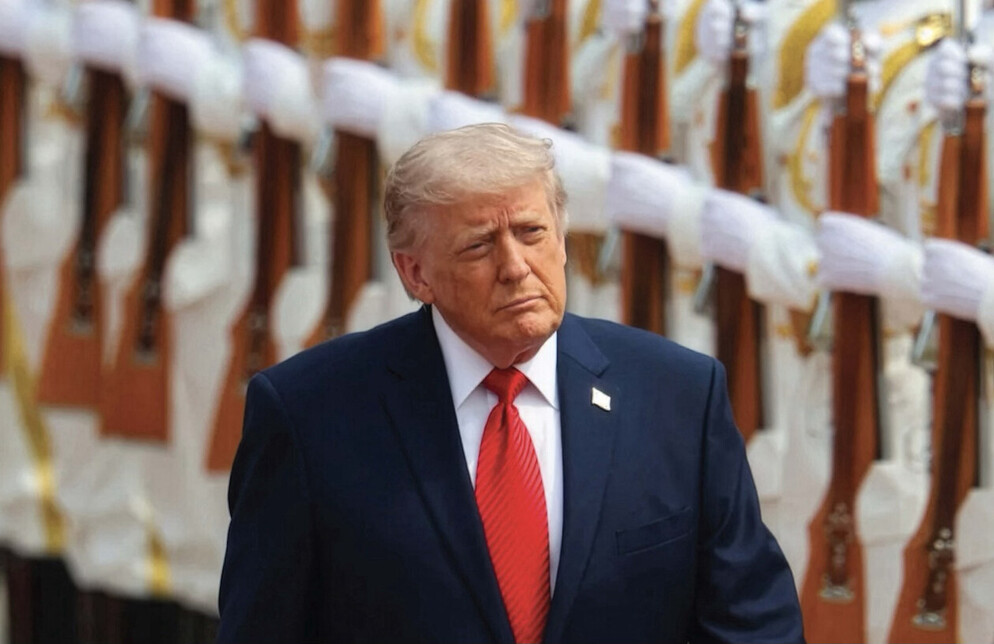
    GENEVA, Switzerland (NPA) — United States President Donald Trump has announced a landmark agreement with Iran aimed at ending decades of hostility between the two countries and easing tensions across the Middle East.

    In a statement posted on Truth Social, Trump declared that negotiations with the Islamic Republic had culminated in a comprehensive deal that would reopen critical global energy routes and pave the way for broader diplomatic engagement.

    “The Deal with the Islamic Republic of Iran is now complete. Congratulations to all! I hereby fully authorise the toll-free opening of the Strait of Hormuz and authorise the immediate removal of the United States naval blockade. Ships of the world, start your engines. Let the oil flow!” Trump said.

    The agreement, expected to be formally signed in Switzerland later this week, is being described as one of the most significant diplomatic breakthroughs in recent Middle East history.

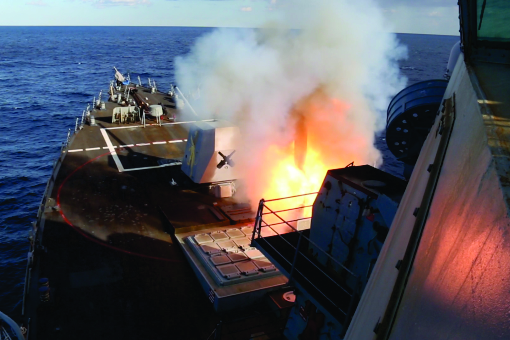
    Under the framework, both countries have agreed to an immediate ceasefire, while Iran is set to reopen the Strait of Hormuz, one of the world’s most strategic maritime corridors through which a significant portion of global oil supplies passes.

    The United States, in turn, will begin lifting its naval blockade on Iranian ports, with full implementation expected within 30 days.

    Marine traffic through the Strait will reportedly be coordinated by Iran and Oman to ensure the safe movement of international vessels.

    As part of the agreement, Iran has pledged not to pursue nuclear weapons and will freeze uranium enrichment activities pending the conclusion of a broader nuclear accord. The United States will permit the supervised dilution of Iran’s enriched uranium stockpiles, although negotiations on inspection mechanisms and compliance procedures are ongoing.

    The framework also includes major economic concessions. Washington is expected to grant temporary waivers on oil-related sanctions, allowing Iran to resume petroleum exports, while approximately $25 billion in frozen Iranian assets will be released through a combination of direct transfers and credit facilities.

    A wider economic reconstruction and cooperation package is expected to be negotiated within the next 60 days.

    Trump hailed the agreement as a historic achievement, arguing that previous administrations had failed to secure lasting peace with Tehran.

    “This Great Deal will bring peace and security to the whole region. Many presidents have tried to make peace with Iran, and all have failed before me,” he said.

    The President added that the agreement would restore stability to global energy markets and strengthen regional security.

    Analysts say the accord could mark the most consequential diplomatic breakthrough between Washington and Tehran since the 2015 Iran nuclear agreement. However, significant challenges remain, including the finalisation of nuclear verification arrangements and the response of regional stakeholders who may view the deal with caution.

    Newpost Africa reports that the agreement is also expected to have far-reaching implications for global oil markets, international trade routes, and geopolitical stability in the Gulf region.

    Nigerians are anticipating a reduction in the pump price of petroleum to its pre-war level of N800 per litre. Similar adjustments are expected across other African economies, where sudden price disruptions have strained households and eroded company incomes, driving up the cost of goods and services in the wake of the war.

    If successfully implemented, the deal could signal the beginning of a new chapter in relations between the United States and Iran, ending years of confrontation and opening the door to broader economic and diplomatic cooperation.

  • JUST IN: Netanyahu welcomes Trump’s Iran negotiation push as US suspends planned strikes

    JUST IN: Netanyahu welcomes Trump’s Iran negotiation push as US suspends planned strikes

    JERUSALEM, Israel (NPA) — Israeli Prime Minister Benjamin Netanyahu has expressed support for ongoing diplomatic efforts between the United States and Iran after U.S. President Donald Trump announced the suspension of planned military strikes and revealed progress toward a memorandum of understanding with Tehran.

    According to a statement issued by the Israeli Prime Minister’s Office, Trump spoke with Netanyahu on Thursday regarding the emerging framework for negotiations with Iran.

    Although Israel is not a direct party to the proposed memorandum of understanding, Netanyahu reportedly welcomed Trump’s assurances that any final agreement would address Israel’s core security concerns.

    The Prime Minister’s Office said Netanyahu expressed appreciation for Trump’s commitment that a final deal would include the removal of Iran’s enriched nuclear material, the dismantling of enrichment infrastructure, restrictions on missile production, and an end to Tehran’s support for armed proxy groups across the Middle East.

    The development followed Trump’s surprise announcement that he had cancelled military strikes previously scheduled against Iran after what he described as progress in high-level negotiations involving multiple regional and international stakeholders.

    “Based on the fact that discussions with the Islamic Republic of Iran have been brought to the highest level of Iranian leadership and approved, I have, as President of the United States of America, cancelled the scheduled strikes and bombings against Iran this evening,” Trump wrote on his Truth Social platform.

    The U.S. President claimed that key elements of a prospective agreement had been approved by parties involved in the negotiations, including the United States, Israel, Saudi Arabia, the United Arab Emirates, Qatar, Turkey, Pakistan, Bahrain, Kuwait, Jordan, and Egypt. He added that a naval blockade would remain in force until the arrangement is formally concluded.

    The latest diplomatic development comes after several days of escalating tensions between the United States, Iran, and Israel, during which Trump had threatened large-scale military action against Iran and even suggested that the United States could eventually take control of Iran’s strategic Kharg Island and other major oil infrastructure facilities.

  • BREAKING: Trump says US will take control of Iran’s Kharg Island, oil and gas markets

    BREAKING: Trump says US will take control of Iran’s Kharg Island, oil and gas markets

    WASHINGTON, D.C. (NPA) — United States President Donald Trump has declared that the United States will take control of Iran’s strategic Kharg Island and other key oil infrastructure facilities, marking a dramatic escalation in the ongoing conflict involving Washington, Tehran, and Israel.

    Trump made the announcement in a post on his Truth Social platform on Thursday, where he also vowed that the United States would launch fresh military strikes against Iran.

    Kharg Island is regarded as the backbone of Iran’s oil export industry, handling a significant portion of the country’s crude oil exports and serving as one of the most critical energy hubs in the Persian Gulf.

    In the statement, Trump claimed that Iran’s military capabilities had been largely neutralised and announced plans for the United States to assume control of the country’s oil and gas sector.

    “The United States will be hitting Iran (whose Navy, Air Force, Radar, Anti-Aircraft, and all other forms of Defense, together with most of its offensive capability, are gone) very hard tonight,” Trump wrote.

    “At some point in the not too distant future, we will be taking Kharg Island, and other oil infrastructure points, and assume total control of their Oil and Gas Markets, much like we have with Venezuela,” he added.

    The latest remarks represent one of the strongest statements yet from the U.S. President since hostilities between the United States and Iran intensified.

    Trump’s comments came a day after he announced fresh military action against targets inside Iran, as the conflict continues to expand across the region.

    The prospect of the United States taking control of Iranian oil infrastructure has heightened concerns about further instability in the Middle East and potential disruptions to global energy supplies. Financial markets reacted to the development, with oil prices rising amid fears of a prolonged conflict involving one of the world’s major oil-producing nations.

    As of the time of filing this report, Iranian authorities had not officially responded to Trump’s latest declaration.

    The latest development adds a new dimension to the escalating confrontation involving Iran, the United States, and Israel, raising concerns among world leaders about the risk of a broader regional conflict with far-reaching geopolitical and economic consequences.

  • BREAKING: Trump says Iran shot down U.S. Apache Helicopter, vows American response

    BREAKING: Trump says Iran shot down U.S. Apache Helicopter, vows American response

    WASHINGTON, D.C. (NPA) — United States President Donald Trump has claimed that Iran shot down a U.S. Apache helicopter during a patrol mission over the Strait of Hormuz, warning that Washington would respond to the incident.

    Trump made the allegation in a statement posted on his Truth Social platform on Tuesday, saying he had been briefed by the U.S. military on the development.

    According to the President, the helicopter was brought down on Monday night while operating over the strategically important waterway.

    “I have just been informed by our Great Military that last night the Iranians shot down one of our highly sophisticated Apache Helicopters while patrolling over the Strait of Hormuz,” Trump said.

    He disclosed that the two pilots aboard the aircraft survived the incident without injuries.

    “There were two pilots involved, both are safe and uninjured. Nevertheless, the United States must, of necessity, respond to this attack,” he added.

    The White House had not released additional details on the incident as of the time of filing this report, while there was no immediate response from Iranian authorities.

    The claim comes amid heightened tensions between the United States, Iran, and Israel following recent military exchanges in the Middle East.

    The Strait of Hormuz remains one of the world’s most strategic maritime routes, serving as a major corridor for global oil shipments and international trade.

    The latest development is expected to further escalate tensions in the region and could have significant implications for relations between Washington and Tehran.

    The incident also follows recent Israeli strikes on targets in Iran, which came after Tehran launched missile attacks against Israel, raising fears of a broader regional confrontation.

  • BREAKING: Israel launches airstrikes on Iranian strategic defence systems after missile barrage

    BREAKING: Israel launches airstrikes on Iranian strategic defence systems after missile barrage

    TEL AVIV, Israel (NPA) — The Israel Defence Forces (IDF) has announced the completion of a large-scale air operation targeting strategic air defence systems across Iran, days after Tehran launched a barrage of ballistic missiles toward Israeli territory.

    According to the Israeli military, the strikes were aimed at dismantling key defence installations that Iran had been rebuilding following damage sustained during previous Israeli military operations.

    “The IDF completed a large-scale strike on strategic defence systems belonging to the Iranian regime,” the military said in a statement.

    Israeli authorities stated that the targeted systems formed part of Iran’s efforts to restore military capabilities that had been degraded during what the IDF referred to as “Operation Roaring Lion.”

    The military said the operation resulted in the destruction of several strategic air defence assets deployed across the country.

    The latest strikes mark a significant escalation in the growing confrontation between Israel and Iran, which has intensified following a series of military exchanges involving Iran and Iran-backed groups in the region.

    Earlier, the IDF said its air defence systems intercepted multiple ballistic missiles launched by Iran toward northern Israel.

    Air raid sirens were activated across several parts of the country after the missiles were detected heading toward Israeli territory.

    “The IDF identified missiles launched from Iran toward Israel. Defensive systems are operating to intercept the threat,” the military said at the time.

    Israeli authorities did not immediately release details regarding casualties or damage resulting from the missile attacks.

    Iran, however, said the missile barrage was carried out in response to recent Israeli military operations in southern Lebanon and the Dahieh suburb of Beirut, a known stronghold of the Lebanese militant group Hezbollah.

    The Iranian response came after Israel launched strikes against Hezbollah targets and infrastructure in Lebanon, including what the IDF described as command centres and underground military facilities linked to the group.

    The latest developments underscore mounting tensions across the Middle East, raising concerns about the possibility of a broader regional conflict involving Israel, Iran and allied armed groups.

    More details are expected as military authorities on both sides continue to assess the situation.

  • BREAKING: Iran launches ballistic missile barrages at Northern Israel as regional tensions escalate

    BREAKING: Iran launches ballistic missile barrages at Northern Israel as regional tensions escalate

    TEL AVIV, Israel (NPA) — The Israel Defence Forces (IDF) said its air defence systems intercepted multiple ballistic missiles launched by Iran toward northern Israel, marking a significant escalation in the ongoing tensions between the two regional adversaries.

    According to the IDF, air raid sirens were activated across several areas of the country after missiles were detected heading toward Israeli territory.

    “The IDF identified missiles launched from Iran toward Israel. Defensive systems are operating to intercept the threat,” the military said in a statement.

    Israeli authorities did not immediately provide details on casualties or damage resulting from the missile barrage.

    Iran said the attacks were carried out in response to recent Israeli military operations in southern Lebanon and the Dahieh suburb of Beirut, areas known to be strongholds of the Lebanese militant group Hezbollah.

    The latest exchange follows a series of Israeli strikes targeting Hezbollah infrastructure in Lebanon.

    Earlier, the IDF announced that it had struck a Hezbollah command centre following rocket attacks launched by the group against communities in northern Israel.

    According to the Israeli military, the facility was being used by Hezbollah operatives to coordinate attacks against Israeli civilians and troops operating in southern Lebanon.

    The IDF also disclosed that its operations uncovered what it described as an extensive underground Hezbollah tunnel network beneath the Beaufort Ridge area.

    Israeli military officials said the tunnel complex included living quarters, water and electricity infrastructure, as well as anti-tank and air defence systems allegedly intended for use against Israeli forces and civilian targets.

    The military further alleged that the network was built with Iranian support and located near areas where the Lebanese Armed Forces operate.

    According to the IDF, Israeli authorities had previously requested that the Lebanese military address the site as part of efforts to enforce existing agreements between Israel and Lebanon.

    However, the military claimed that Hezbollah prevented such action from being taken.

    The latest developments underline the growing volatility across the region amid heightened military confrontations involving Israel, Iran and Iran-backed armed groups operating in Lebanon and elsewhere in the Middle East.

    More details are expected as the situation continues to unfold, especially Isreal’s immediate response.

  • BREAKING: Terrorist attack in Central Israel leaves one dead, several wounded

    BREAKING: Terrorist attack in Central Israel leaves one dead, several wounded

    TEL AVIV, Israel (NPA) — A terrorist attack in central Israel today claimed the life of one man and left at least five others wounded in a shooting spree across multiple communities near Kochav Ya’ir, Tzur Yitzhak, and Tzur Natan.

    According to Israeli police, the attacker — identified as an Arab Israeli from Tayibe — opened fire at several locations, including a petrol station and road junctions, using a makeshift submachine gun known as a “Carlo.”

    The assailant was later neutralised by security forces after fleeing towards Tayibe.

    Initial reports suggested two attackers, but authorities confirmed only one was involved.

    Emergency services evacuated the wounded to Meir Medical Centre in Kfar Saba and Beilinson Hospital in Petach Tikva, with at least two victims reported in serious condition. The man killed was in his 30s.

    Prime Minister Benjamin Netanyahu convened an emergency security assessment following the incident.

    Hamas praised the attack as “heroic” but did not claim responsibility, as security agencies launched raids in nearby Arab villages to rule out accomplices.

    Police issued a terrorist infiltration alert in the Sharon region during the attack, urging residents to shelter in place. The swift response by Israeli forces prevented further casualties, but the incident underscores the persistent threat of lone‑actor terrorism in areas bordering the West Bank.

    Authorities have urged the public to remain vigilant and report suspicious activity as investigations continue.

  • Netanyahu orders strikes on Hezbollah stronghold in Beirut’s Dahiyeh District

    Netanyahu orders strikes on Hezbollah stronghold in Beirut’s Dahiyeh District

    JERUSALEM, Israel (NPA) — Israeli Prime Minister Benjamin Netanyahu has ordered the Israel Defence Forces (IDF) to carry out strikes on Hezbollah targets in the Dahiyeh district of Beirut, citing what he described as repeated violations of the ceasefire agreement by the Lebanese armed group.

    Dahiyeh, located in southern Beirut, is widely regarded as Hezbollah’s political, social and military stronghold.

    In a statement issued on Monday, Netanyahu said the action was taken in response to ongoing attacks against Israeli communities and citizens.

    “Following the repeated and ongoing violations of the ceasefire in Lebanon by the terrorist organisation Hezbollah and the attacks against our cities and citizens, I have instructed the IDF to strike terrorist targets in the Dahiyeh neighbourhood in Beirut,” he said.

    Israeli Defence Minister Israel Katz also confirmed the directive, saying the military operation was intended to target Hezbollah positions in the area.

    The latest development comes amid heightened tensions along the Israel-Lebanon border, where exchanges of fire and accusations of ceasefire violations have continued despite diplomatic efforts to prevent a wider conflict.

    Katz also disclosed that Israeli forces had expanded military operations in southern Lebanon and captured the strategic Beaufort ridge, a prominent hilltop position overlooking parts of the border region.

    According to the defence minister, the operation involved troops from the Golani Brigade, who raised Israeli and brigade flags on the ridge after securing the position.

    He described the location as a key strategic asset for protecting communities in northern Israel and supporting military operations in the area.

    Katz warned that Israel would continue to target what it considers strategic assets of hostile groups threatening its security. “This is a clear message to our enemies: whoever threatens Israeli citizens will lose their strategic assets one after another,” he said.

    The defence minister added that military operations against Hezbollah would continue until Israel achieves its stated objective of restoring security to residents of the country’s northern region.

    The announcement is expected to raise concerns about a possible escalation of hostilities between Israel and Hezbollah, which have been engaged in periodic cross-border confrontations since the outbreak of the Gaza conflict, spilling into the United States, Israel, and Iran’s war.  

  • Nigeria moves to deepen bilateral ties with Algeria, Israel, Czech Republic, Côte d’Ivoire

    Nigeria moves to deepen bilateral ties with Algeria, Israel, Czech Republic, Côte d’Ivoire

    ABUJA, Nigeria (NPA) — The Federal Government has intensified diplomatic engagements with several countries, including Algeria, Israel, the Czech Republic, and Côte d’Ivoire, as part of efforts to strengthen bilateral cooperation, expand trade, improve security collaboration, and drive economic development.

    The renewed diplomatic push was disclosed in a series of press statements issued by the Ministry of Foreign Affairs following separate meetings between Nigeria’s Minister of Foreign Affairs, Bianca Odumegwu-Ojukwu, and envoys from the respective countries in Abuja.

    Nigeria, Algeria Strengthen Strategic Partnership

    During talks with the Algerian Ambassador to Nigeria, Hocine Mezoued, both countries reaffirmed their commitment to deepening cooperation in infrastructure, transportation, trade, education, parliamentary exchanges, military collaboration, and regional security.

    The Algerian envoy disclosed that the Third Steering Committee Meeting on the Trans-Saharan Gas Pipeline Project would be held in June 2026 with participation from Nigeria, Algeria, and the Niger Republic.

    He also revealed that Air Algérie was considering extending its operations to Lagos following the launch of the Algiers-Abuja route in 2025.

    According to the ambassador, Algeria has also expanded scholarship opportunities for Nigerian students in higher education and technical training programmes, with more than 130 Nigerians reportedly benefiting between 2025 and 2026.

    Odumegwu-Ojukwu reaffirmed Nigeria’s support for the Trans-Saharan Gas Pipeline project, describing it as strategically important to African economic integration and regional development under the African Continental Free Trade Area (AfCFTA).

    Nigeria, Israel Seek Expanded Cooperation

    In a separate meeting, the Foreign Affairs Minister received the Israeli Ambassador to Nigeria, Michael Freeman, where discussions focused on strengthening diplomatic relations, agriculture, healthcare, innovation, security, and technology cooperation.

    The minister reiterated Nigeria’s commitment to sustained diplomatic engagement and constructive dialogue with Israel while noting that President Bola Ahmed Tinubu remained open to dialogue with the Israeli leadership.

    The Israeli envoy congratulated Odumegwu-Ojukwu on her appointment and extended an invitation for an official visit to Israel.

    Discussions also covered developments in the Middle East, humanitarian concerns, and multilateral cooperation involving the United Nations and the World Health Organisation.

    Both sides identified opportunities for stronger collaboration in agriculture, medical innovation, healthcare support, technology, and food security.

    Czech Republic Expands Developmental Engagements

    The Minister also hosted the Czech Ambassador to Nigeria, Tomas Vyrachticky, who reaffirmed his country’s commitment to expanding cooperation with Nigeria in agriculture, healthcare, industrialisation, renewable energy, education, and technology transfer.

    The Czech envoy described Nigeria as a strategic partner with immense economic and political potential within Sub-Saharan Africa.

    Officials of the Czech Embassy highlighted ongoing development and commercial projects across several Nigerian states, including Taraba, Delta, Edo, Ondo, Bauchi, Plateau, Lagos, Rivers, and Zamfara.

    Particular reference was made to the supply of nearly 1,000 specially designed tractors and agricultural equipment to Taraba State in 2024 to support mechanised farming and improve agricultural productivity.

    Odumegwu-Ojukwu proposed the strengthening of institutional cooperation frameworks, including the establishment of a Joint Commission mechanism to coordinate engagements in trade, agriculture, defence, education, technology, and industrial development.

    Nigeria, Côte d’Ivoire Push Regional Integration

    The Foreign Minister also met with the Ambassador of Côte d’Ivoire to Nigeria, Kalilou Touré, where both countries agreed to deepen cooperation aimed at promoting regional development and stability within West Africa.

    Discussions focused on trade, investment, industrial development, security, migration, culture, and consular affairs.

    Both countries also reviewed existing Memoranda of Understanding and pending bilateral agreements ahead of a forthcoming bilateral session expected to be held in Côte d’Ivoire.

    The meeting reechoed the importance of intelligence sharing, coordinated regional responses to terrorism, violent extremism, drug trafficking, human trafficking, and transnational organised crime across the West African sub-region.

    The Foreign Affairs Ministry stated that the renewed diplomatic engagements reflect Nigeria’s commitment to strengthening regional and international partnerships capable of driving economic growth, peace, security, and sustainable development.