Category: Middle East

  • Nigeria moves to deepen bilateral ties with Algeria, Israel, Czech Republic, Côte d’Ivoire

    Nigeria moves to deepen bilateral ties with Algeria, Israel, Czech Republic, Côte d’Ivoire

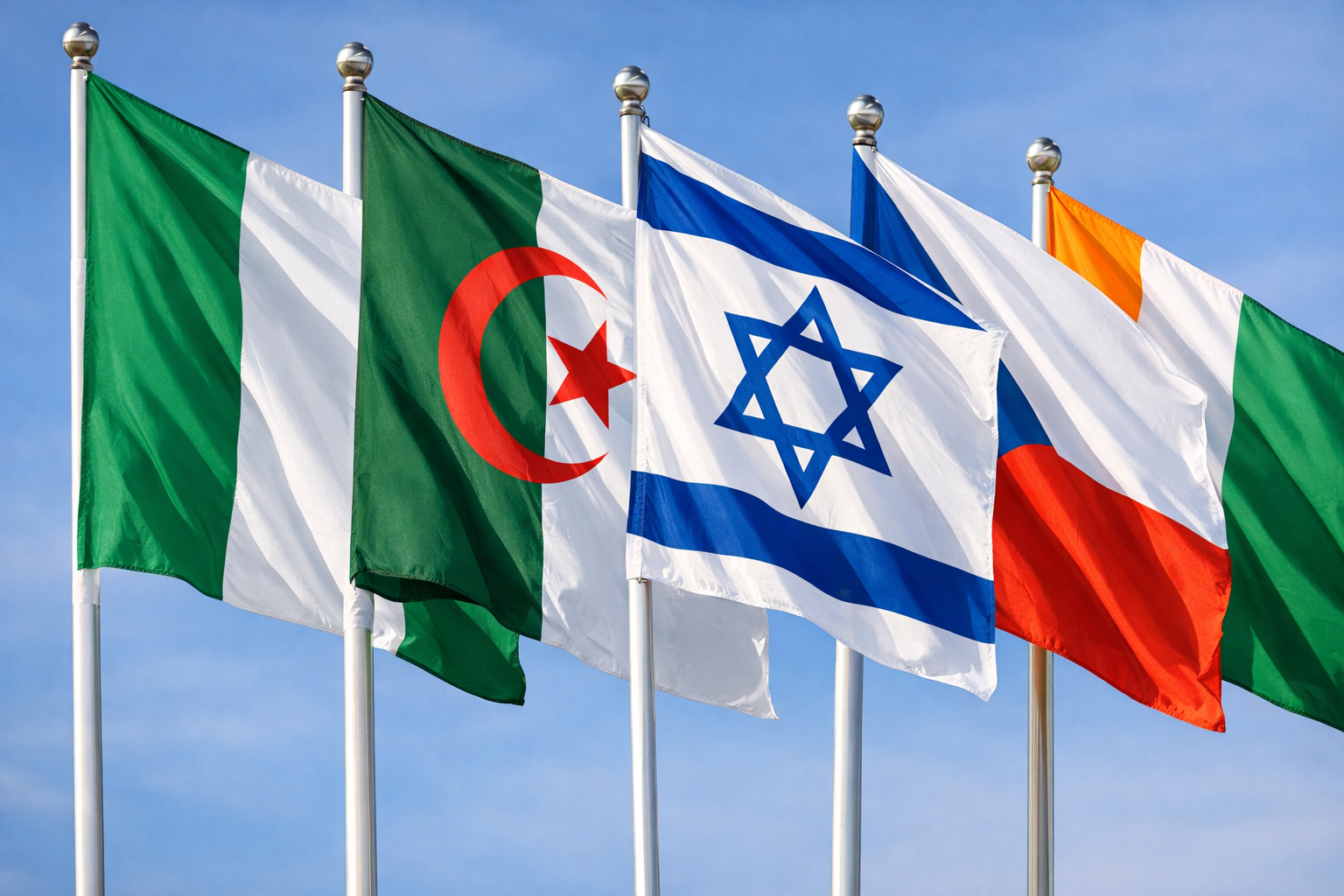
    ABUJA, Nigeria (NPA) — The Federal Government has intensified diplomatic engagements with several countries, including Algeria, Israel, the Czech Republic, and Côte d’Ivoire, as part of efforts to strengthen bilateral cooperation, expand trade, improve security collaboration, and drive economic development.

    The renewed diplomatic push was disclosed in a series of press statements issued by the Ministry of Foreign Affairs following separate meetings between Nigeria’s Minister of Foreign Affairs, Bianca Odumegwu-Ojukwu, and envoys from the respective countries in Abuja.

    Nigeria, Algeria Strengthen Strategic Partnership

    During talks with the Algerian Ambassador to Nigeria, Hocine Mezoued, both countries reaffirmed their commitment to deepening cooperation in infrastructure, transportation, trade, education, parliamentary exchanges, military collaboration, and regional security.

    The Algerian envoy disclosed that the Third Steering Committee Meeting on the Trans-Saharan Gas Pipeline Project would be held in June 2026 with participation from Nigeria, Algeria, and the Niger Republic.

    He also revealed that Air Algérie was considering extending its operations to Lagos following the launch of the Algiers-Abuja route in 2025.

    According to the ambassador, Algeria has also expanded scholarship opportunities for Nigerian students in higher education and technical training programmes, with more than 130 Nigerians reportedly benefiting between 2025 and 2026.

    Odumegwu-Ojukwu reaffirmed Nigeria’s support for the Trans-Saharan Gas Pipeline project, describing it as strategically important to African economic integration and regional development under the African Continental Free Trade Area (AfCFTA).

    Nigeria, Israel Seek Expanded Cooperation

    In a separate meeting, the Foreign Affairs Minister received the Israeli Ambassador to Nigeria, Michael Freeman, where discussions focused on strengthening diplomatic relations, agriculture, healthcare, innovation, security, and technology cooperation.

    The minister reiterated Nigeria’s commitment to sustained diplomatic engagement and constructive dialogue with Israel while noting that President Bola Ahmed Tinubu remained open to dialogue with the Israeli leadership.

    The Israeli envoy congratulated Odumegwu-Ojukwu on her appointment and extended an invitation for an official visit to Israel.

    Discussions also covered developments in the Middle East, humanitarian concerns, and multilateral cooperation involving the United Nations and the World Health Organisation.

    Both sides identified opportunities for stronger collaboration in agriculture, medical innovation, healthcare support, technology, and food security.

    Czech Republic Expands Developmental Engagements

    The Minister also hosted the Czech Ambassador to Nigeria, Tomas Vyrachticky, who reaffirmed his country’s commitment to expanding cooperation with Nigeria in agriculture, healthcare, industrialisation, renewable energy, education, and technology transfer.

    The Czech envoy described Nigeria as a strategic partner with immense economic and political potential within Sub-Saharan Africa.

    Officials of the Czech Embassy highlighted ongoing development and commercial projects across several Nigerian states, including Taraba, Delta, Edo, Ondo, Bauchi, Plateau, Lagos, Rivers, and Zamfara.

    Particular reference was made to the supply of nearly 1,000 specially designed tractors and agricultural equipment to Taraba State in 2024 to support mechanised farming and improve agricultural productivity.

    Odumegwu-Ojukwu proposed the strengthening of institutional cooperation frameworks, including the establishment of a Joint Commission mechanism to coordinate engagements in trade, agriculture, defence, education, technology, and industrial development.

    Nigeria, Côte d’Ivoire Push Regional Integration

    The Foreign Minister also met with the Ambassador of Côte d’Ivoire to Nigeria, Kalilou Touré, where both countries agreed to deepen cooperation aimed at promoting regional development and stability within West Africa.

    Discussions focused on trade, investment, industrial development, security, migration, culture, and consular affairs.

    Both countries also reviewed existing Memoranda of Understanding and pending bilateral agreements ahead of a forthcoming bilateral session expected to be held in Côte d’Ivoire.

    The meeting reechoed the importance of intelligence sharing, coordinated regional responses to terrorism, violent extremism, drug trafficking, human trafficking, and transnational organised crime across the West African sub-region.

    The Foreign Affairs Ministry stated that the renewed diplomatic engagements reflect Nigeria’s commitment to strengthening regional and international partnerships capable of driving economic growth, peace, security, and sustainable development.
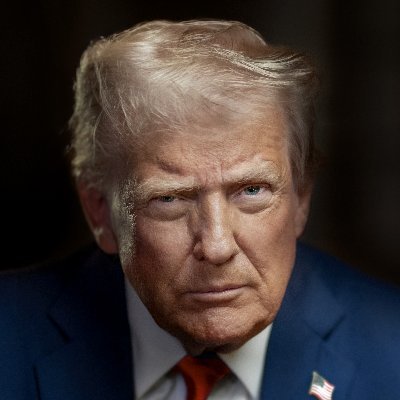
  • Saudi Arabia backs Trump’s diplomatic initiative to end war, urges Iran to avoid perilous escalation

    Saudi Arabia backs Trump’s diplomatic initiative to end war, urges Iran to avoid perilous escalation

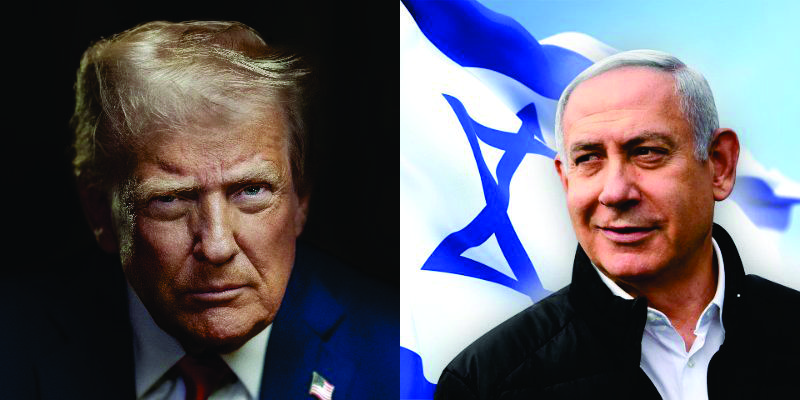
    RIYADH, Saudi Arabia (NPA) — Saudi Arabia has welcomed the decision by Donald Trump to allow diplomacy another opportunity in efforts to end the ongoing crisis involving Iran and restore security in the strategically important Strait of Hormuz.

    In a statement on Wednesday, Saudi Foreign Minister Faisal bin Farhan Al Saud, said the Kingdom highly appreciates President Trump’s move to prioritise negotiations aimed at ending the conflict and restoring the security and freedom of maritime navigation in the Strait of Hormuz to conditions existing before February 28, 2026.

    According to the statement, Saudi Arabia also commended the mediation efforts being led by Pakistan as diplomatic initiatives intensify to prevent further escalation in the region.

    The Saudi government expressed hope that Iran would seize the opportunity to avoid what it described as the “dangerous consequences of continued escalation,” and urgently engage in negotiations capable of producing a comprehensive agreement for lasting regional and global peace.

    Earlier, Newpost Africa reported that President Trump announced he had ordered the suspension of plans to resume military strikes on Tuesday against Iran following interventions by the leaders of Saudi Arabia, the United Arab Emirates and Qatar.

    Trump, however, warned that the United States could resume military operations if Iran fails to reach an agreement acceptable to Washington, disclosing that he had instructed Secretary of War, Peter Hegseth, to prepare for possible renewed military action against the Persian Gulf nation.

    The standoff between Iran and the United States around the Strait of Hormuz remains at the centre of rising regional tensions, as international diplomatic efforts continue to focus on preventing a wider conflict in the Middle East amid soaring crude oil prices and growing economic instability across several parts of the world.

  • UAE intercepts six hostile drones, says attacks originated from Iraq

    UAE intercepts six hostile drones, says attacks originated from Iraq

    ABU DHABI, United Arab Emirates (NPA) — The United Arab Emirates Ministry of Defence has announced that the country’s air defence systems successfully intercepted and neutralised six hostile drones over the past 48 hours.

    According to the ministry, the drones attempted to target civilian and strategic facilities across the country but were detected and engaged with what officials described as the highest levels of readiness and operational efficiency.

    The ministry stated that the air defence operation was carried out successfully without any human casualties or damage to critical infrastructure.

    In a related development, the Ministry of Defence disclosed the origin of the drones involved in the May 17, 2026, attack on the Barakah Nuclear Energy Plant.

    According to the ministry, investigations and technical monitoring confirmed that the three drones involved in the earlier attack, alongside those intercepted in subsequent operations, originated from Iraqi territory.

    Officials said two of the drones used in the May 17 attack were intercepted, while a third struck an electrical generator located outside the internal perimeter of the nuclear facility.

    The ministry described the incident as a “brazen attack” and warned that the United Arab Emirates reserves the right to take all necessary measures to protect its sovereignty and national security in accordance with international law.

    “The Ministry of Defence affirms that the United Arab Emirates reserves its full right to take all necessary measures to protect its sovereignty and national security, in accordance with international laws and covenants,” the statement read.

    The UAE further stressed that its armed forces remain fully prepared to confront any threat targeting the country’s security, strategic facilities and national capabilities.

  • Trump halts planned Iran strikes after Gulf leaders’ intervention, signals possible nuclear deal talks

    Trump halts planned Iran strikes after Gulf leaders’ intervention, signals possible nuclear deal talks

    WASHINGTON, United States (NPA) — President Donald Trump has called off the planned resumption of US military strikes against Iran, citing ongoing diplomatic interventions by Gulf leaders and renewed prospects for a negotiated settlement.

    Trump said the decision followed engagements with the Emir of Qatar, Tamim bin Hamad Al Thani, Saudi Crown Prince Mohammed bin Salman, and United Arab Emirates President Mohamed bin Zayed Al Nahyan.

    In a post on his Truth Social account, the US President said he had instructed the American military to suspend the planned strike on the Iran, which had been scheduled for the following day.

    He said “serious negotiations” were now underway, adding that, based on the assessment of Gulf leaders, a deal was likely to be reached that would be acceptable to the United States as well as other countries in the Middle East and beyond.

    Trump reiterated that any potential agreement would include a strict prohibition on Iran acquiring nuclear weapons.

    “NO NUCLEAR WEAPONS FOR IRAN!” he declared.

    In the statement, Trump said: “Based on my respect for the above-mentioned Leaders, I have instructed Secretary of War, Pete Hegseth, the Chairman of the Joint Chiefs of Staff, General Daniel Caine, and the United States Military, that we will NOT be doing the scheduled attack of Iran tomorrow.”

    However, he added that US forces remain on standby and fully prepared to launch a large-scale military operation “on a moment’s notice” should negotiations fail or an acceptable deal not be reached.

    The development comes after Trump earlier issued a warning to Iran, insisting that time was running out to reach an agreement or face severe military consequences.

    Tensions have remained high amid the ongoing conflict dynamics in the Middle East, with the Strait of Hormuz emerging as a critical flashpoint with significant implications for global energy markets and international security.

  • Donald Trump warns Iran “time is running out” over agreement with US

    Donald Trump warns Iran “time is running out” over agreement with US

    WASHINGTON D.C., U.S (NPA) — Donald Trump has warned the Islamic Republic of Iran to move quickly toward reaching an agreement with the United States aimed at resolving the conflict between both nations.

    In a terse post shared on Truth Social on Sunday, Trump wrote: “For Iran, the clock is ticking, and they better get moving, FAST, or there won’t be anything left of them. TIME IS OF THE ESSENCE! President DJT.”

    The U.S. president, however, did not specify any deadline or timeframe for Tehran to comply, nor did he elaborate on the consequences Iran could face if negotiations fail.

    The growing standoff around the Strait of Hormuz has remained at the centre of the crisis, with both Washington and Tehran making competing claims over control and possible blockades of the critical global oil transit route.

    The uncertainty surrounding the conflict has continued to rattle international energy markets, contributing to rising global oil prices.

    Analysts say the situation currently appears to be in a state of stalemate as geopolitical tensions continue to deepen amid fears of wider regional instability.

    Earlier in a related development, the United Arab Emirates announced that its air defence systems intercepted multiple drones, with one reportedly striking an electrical generator near the Barakah Nuclear Power Plant. The Gulf country said it is investigating the projectiles that came through its southern borders.

  • JUST IN: Drone hits electrical generator at Barakah Nuclear Power Plant in United Arab Emirates

    JUST IN: Drone hits electrical generator at Barakah Nuclear Power Plant in United Arab Emirates

    ABU DHABI, United Arab Emirates (NPA) — The Ministry of Defence of the United Arab Emirates has confirmed that the country’s air defence systems engaged three drones that entered the nation’s airspace on Sunday, with one striking an electrical generator outside the perimeter of the Barakah Nuclear Power Plant.

    In a statement issued on Sunday, the Ministry said the drones entered the country from the western border on May 17, 2026.

    According to the Ministry, two of the drones were successfully intercepted by air defence systems, while the third drone hit an electrical generator located outside the inner perimeter of the nuclear facility in the Al Dhafra area.

    Authorities said investigations are ongoing to determine the source of the drone attacks, adding that further details would be released upon the conclusion of the probe.

    The Ministry of Defence stressed that the UAE remains on high alert and fully prepared to confront any threats targeting the country’s security and stability.

    It added that the armed forces would continue to firmly counter all attempts aimed at undermining the nation’s sovereignty, national interests, and critical infrastructure.

  • IDF announces killing of senior Hamas commander Izz al-Din al-Haddad, other militants linked to October 7 attack

    IDF announces killing of senior Hamas commander Izz al-Din al-Haddad, other militants linked to October 7 attack

    INTERNATIONAL (NPA) — The Israel Defence Forces has announced the elimination of Izz al-Din al-Haddad, head of Hamas’ military wing and one of the last remaining senior commanders of the group, accusing him of playing a central role in the planning of the October 7 attack in Israel in which about 1,200 people were killed and more than 250 others abducted.

    According to the IDF, al-Haddad assumed a top leadership position within Hamas following the elimination of Mohammed Sinwar and subsequently worked to rebuild the group’s military capabilities while coordinating multiple attacks against Israeli civilians and Israeli troops.

    The Israeli military alleged that throughout the ongoing conflict, al-Haddad was directly involved in the captivity of several Israeli hostages held by Hamas in Gaza and managed the group’s hostage detention system.

    The IDF further claimed that the Hamas commander surrounded himself with hostages in an attempt to shield himself from targeted military operations.

    In a separate operation, the Israeli military also announced the elimination of Hamer Iyad Muhammad Almatouk and Khaled Muhammad Salem Joudeh, described as senior Hamas operatives.

    According to the IDF, the two militants infiltrated Israel during the October 7 attack and had recently attempted to carry out additional attacks against Israeli troops operating in the area.

    The military also confirmed the killing of Abd al-Rahman Mahmoud Jumaa Shaafi, identified as a member of Hamas’ Bureij Battalion, allegedly involved in coordinating attacks against Israeli forces.

    Meanwhile, reports emerging from Gaza indicated that burial arrangements were underway for al-Haddad and the other slain Hamas fighters.

  • Saudi Arabia condemns alleged IRGC infiltration into Kuwait

    Saudi Arabia condemns alleged IRGC infiltration into Kuwait

    RIYADH, Saudi Arabia (NPA) — Saudi Arabia has strongly condemned what it described as the infiltration of an armed group linked to Iran’s Islamic Revolutionary Guard Corps (IRGC) into Kuwait’s Bubiyan Island.

    In a statement issued by the Saudi Ministry of Foreign Affairs on Tuesday, the Kingdom denounced the alleged operation, accusing the group of attempting to carry out hostile acts against Kuwait.

    “The Ministry of Foreign Affairs expresses the Kingdom of Saudi Arabia’s strongest condemnation and denunciation of the infiltration carried out by an armed group from the Islamic Revolutionary Guard Corps of the Islamic Republic of Iran into Kuwait’s Bubiyan Island, intending to carry out hostile acts against the brotherly State of Kuwait,” the statement read.

    Saudi Arabia said it firmly rejects actions that violate Kuwait’s sovereignty, warning that such acts undermine regional stability and international peace efforts.

    According to the statement, the Kingdom considers the alleged infiltration a clear violation of international law and the Charter of the United Nations.

    “The Ministry stresses the Kingdom’s categorical rejection of such hostilities that violate the sovereignty of the State of Kuwait, which constitute a clear breach of international law and the Charter of the United Nations,” it stated.

    Riyadh further argued that such developments threaten ongoing efforts aimed at restoring security and stability across the region.

    The Saudi government also reaffirmed its solidarity with Kuwait, pledging support for all measures taken by the Kuwaiti authorities to safeguard the country’s sovereignty and national security.

    “The Ministry also expresses the Kingdom’s solidarity with the brotherly State of Kuwait, its government and its people, and reaffirms its full support for all measures taken by Kuwait to safeguard its sovereignty, security, and stability of the country and its brotherly people,” the statement added.

    The development comes amid heightened tensions in the Gulf region and growing concerns over regional security and military escalation involving Iran, Israel, the United States, and Gulf states.

  • Zelenskyy, UAE President discuss security cooperation amid Iranian drone threats

    Zelenskyy, UAE President discuss security cooperation amid Iranian drone threats

    KYIV, Ukraine (NPA) — Volodymyr Zelenskyy on Monday held a telephone conversation with the President of the United Arab Emirates, Mohamed bin Zayed Al Nahyan, focusing on regional security and ongoing cooperation between both countries.

    According to the Ukrainian president, discussions centred on renewed drone attacks launched by Iran against Gulf countries, including the UAE and Kuwait.

    Zelenskyy condemned the attacks and stressed the importance of continued security collaboration between Ukraine and the UAE to protect lives and infrastructure in the Gulf region.

    “Against this backdrop, it is critical that our teams continue to work closely together in the area of security. I was glad to hear that Ukrainian expertise is truly helping build reliable protection for lives. We discussed continuing this work,” Zelenskyy said.

    Ukraine and the UAE had earlier signed a defence cooperation agreement at the onset of the conflict involving the United States, Israel and Iran, aimed at strengthening the UAE’s air defence capabilities against Iranian-made drones.

    The Ukrainian president also thanked Sheikh Mohamed bin Zayed Al Nahyan for his role in facilitating the return of Ukrainian prisoners of war from Russian captivity as part of recent prisoner exchange arrangements.

    “We count on this work to continue,” Zelenskyy said.

    The leaders also discussed bilateral cooperation in the energy sector and other strategic areas.

    “I am grateful to the UAE that our agreements are being implemented on the basis of reciprocity and that Ukraine is also receiving the support it needs, including in the energy sector. We also discussed other potential projects in various areas. Thank you!” he added.

  • Nigeria, Jordan sign defence cooperation, intelligence sharing agreement

    Nigeria, Jordan sign defence cooperation, intelligence sharing agreement

    ABUJA, Nigeria (NPA) — Nigeria and Jordan have signed a defence cooperation and intelligence-sharing agreement aimed at strengthening bilateral security collaboration.

    The development was disclosed by Nigeria’s Minister of State for Defence, Bello Matawalle, following meetings in Amman with the Chairman of the Joint Chiefs of Staff of the Jordanian Armed Forces, Yousef A. Alhnaity.

    According to Matawalle, the Memorandum of Understanding (MoU) was signed on behalf of the Government of the Federal Republic of Nigeria and the Government of the Hashemite Kingdom of Jordan.

    “On behalf of the Government of the Federal Republic of Nigeria, I signed a Memorandum of Understanding (MoU) with the Government of the Hashemite Kingdom of Jordan on Defence Cooperation and Intelligence Sharing,” the minister said in a statement issued on Monday.

    He noted that the agreement is intended to deepen cooperation between the two countries in addressing evolving security threats confronting Nigeria.

    According to the minister, the challenges facing the country have become increasingly complex, asymmetric and cross-border in nature.

    Matawalle said the agreement aligns with the security strategy of President Bola Ahmed Tinubu’s administration, which he described as a “bottoms-up approach” toward achieving peace, security and stability across the country.

    The latest agreement comes as Nigeria intensifies defence and security cooperation with several countries amid ongoing counter-terrorism and anti-banditry operations, particularly in the northern region.

    Nigeria has continued to battle insurgency, banditry and kidnapping activities that have affected communities and major highways in different parts of the country.

    Security analysts have repeatedly called for stronger international cooperation, intelligence sharing and improved military coordination to address the persistent attacks and growing insecurity.

    The Nigerian government has expressed optimism that expanded defence partnerships with foreign allies will strengthen ongoing operations and improve national security outcomes.