Category: Middle East

  • BREAKING: U.S. launches fresh strikes on Iranian military targets, denies casualty claims

    BREAKING: U.S. launches fresh strikes on Iranian military targets, denies casualty claims

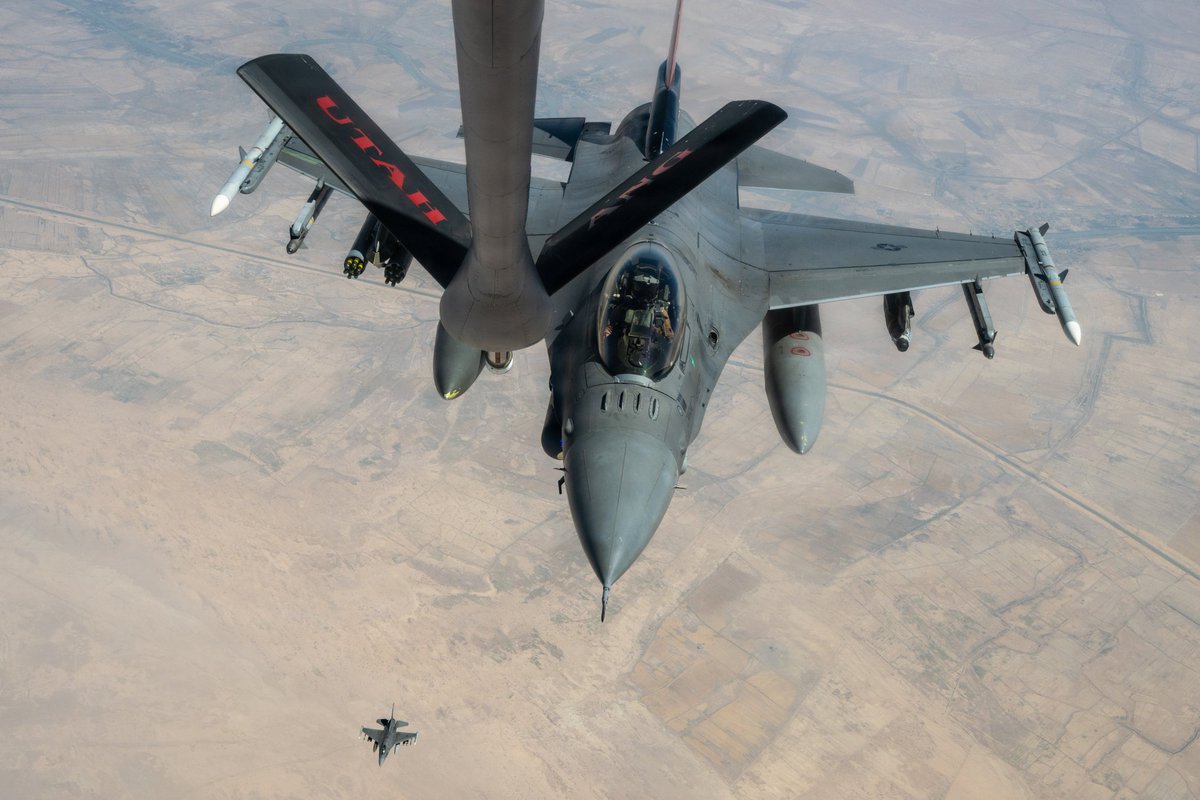
    WASHINGTON, D.C. (NPA) — The United States has launched another round of military strikes against targets inside Iran as tensions continue to escalate following the collapse of the fragile ceasefire between the two countries.

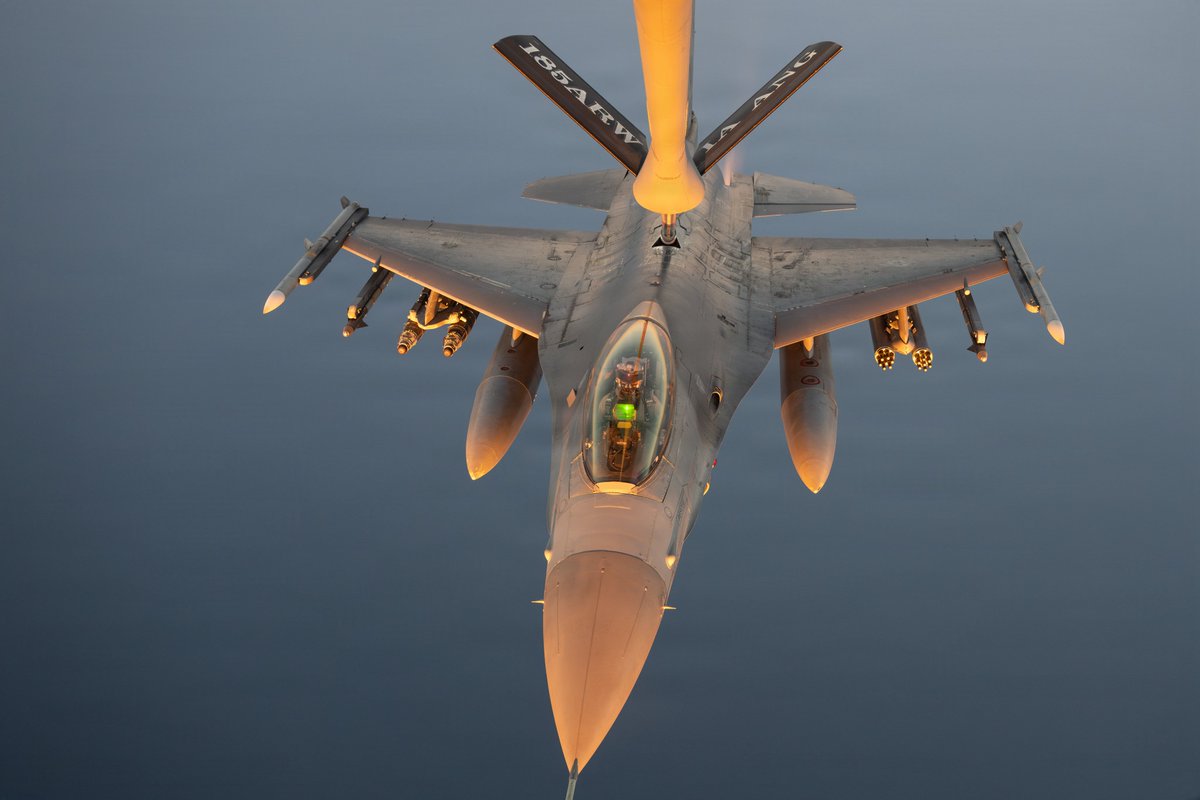
    The latest operation, carried out by the U.S. Central Command (CENTCOM), is aimed at further degrading Iran’s military capabilities and preventing attacks on civilian mariners and commercial vessels transiting the Strait of Hormuz.

    In a statement on Sunday, CENTCOM said the strikes commenced at 5 p.m. ET on the orders of the Commander-in-Chief.

    “At 5 p.m. ET today, U.S. Central Command forces began launching more strikes against Iran to continue degrading their ability to attack civilian mariners and commercial ships freely transiting the Strait of Hormuz. The Commander in Chief has directed the strikes to hold Iranian forces accountable,” the statement said.

    CENTCOM said the operation forms part of ongoing efforts to safeguard international shipping through the Strait of Hormuz, one of the world’s busiest and most strategically important maritime trade routes.

    Meanwhile, the U.S. military dismissed reports circulating on Iranian media and social media platforms alleging that three American service members were killed in Kuwait during Iranian strikes.

    Describing the reports as false, CENTCOM said all U.S. military personnel in the region had been accounted for.

    “Iranian propaganda claimed today that three American service members were killed in Kuwait by strikes from Iran. False.

    “Truth: There are zero reports of U.S. service member deaths or injuries in the region. All personnel are accounted for,” the command stated.

    The renewed exchange of hostilities has further heightened concerns over the security of international maritime traffic through the Strait of Hormuz, a critical global shipping corridor through which a significant share of the world’s oil and liquefied natural gas exports passes.

    Analysts warn that any prolonged disruption to navigation through the waterway could have far-reaching implications for global energy supplies, shipping operations and international trade.

    The latest military developments signal growing volatility in the Gulf region as diplomatic efforts to restore the ceasefire remain uncertain after US President Donald Trump said the ceasefire is over at the recently concluded NATO Summit in Ankara, Turkey.
  • BREAKING: Tanzania’s President Samia mourns Qatar’s former Emir Sheikh Hamad bin Khalifa Al Thani, dead at 74

    BREAKING: Tanzania’s President Samia mourns Qatar’s former Emir Sheikh Hamad bin Khalifa Al Thani, dead at 74

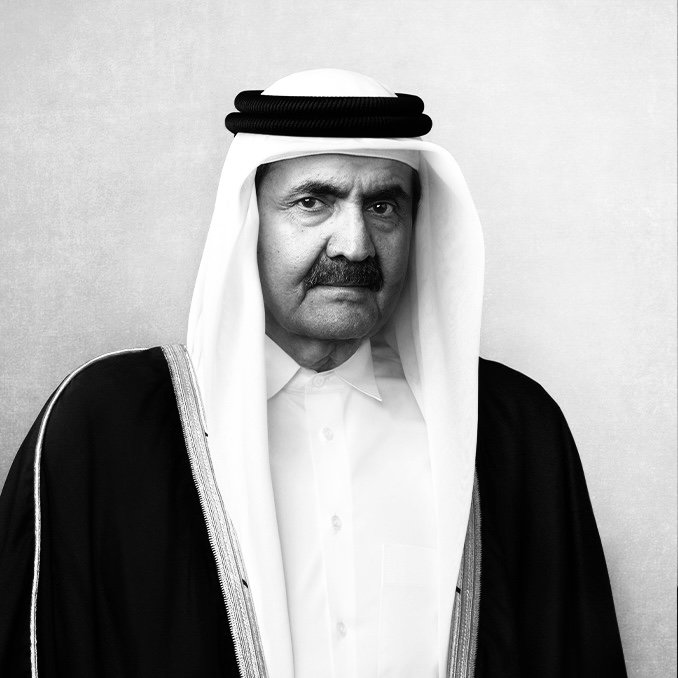
    DODOMA, Tanzania (NPA) — Tanzanian President Samia Suluhu Hassan has extended condolences to the Government and people of Qatar following the passing of the country’s former ruler, His Highness the Father Emir Sheikh Hamad bin Khalifa Al Thani, who died on Sunday, July 12, 2026, at the age of 74.

    In a statement on Sunday, President Suluhu extended her sympathies to the Emir of Qatar, Sheikh Tamim Bin Hamad Al Thani, and praised the late statesman for his transformative leadership and enduring contributions to Qatar’s development.

    “On behalf of the Government and people of the United Republic of Tanzania, I extend my deepest condolences to His Highness Sheikh Tamim Bin Hamad Al Thani, the Emir of Qatar, and the people of the State of Qatar, following the demise of His Highness the Father Emir Sheikh Hamad Bin Khalifa Al Thani,” she said.

    President Suluhu described the late Father Emir as a visionary leader whose legacy would be remembered for driving Qatar’s socio-economic transformation and promoting the empowerment of women.

    “The late former Emir of Qatar will be remembered for his significant contribution to the socio-economic development of Qatar and his critical role in advancing women empowerment, especially their enfranchisement,” she added.

    She concluded her tribute with the Islamic prayer: “Inna Lillahi wa inna ilayhi raji’un.”

    Sheikh Hamad bin Khalifa Al Thani ruled Qatar from 1995 to 2013, after assuming power in a peaceful transition that ended the reign of his father, Sheikh Khalifa bin Hamad Al Thani.

    During his tenure, he transformed Qatar into one of the world’s wealthiest and most influential states through ambitious economic reforms, strategic investments and an assertive foreign policy.

    Among his most notable achievements were the establishment of the Qatar Investment Authority, which became one of the world’s leading sovereign wealth funds, the launch of Al Jazeera, which reshaped the Arab media landscape, and major investments in education, healthcare and infrastructure.

    His administration also secured Qatar’s successful bid to host the 2022 FIFA World Cup, a landmark achievement that elevated the country’s global profile and reinforced its role in international sports diplomacy.

  • Trump confirms fresh U.S. airstrikes on Iran, warns of further military action

    Trump confirms fresh U.S. airstrikes on Iran, warns of further military action

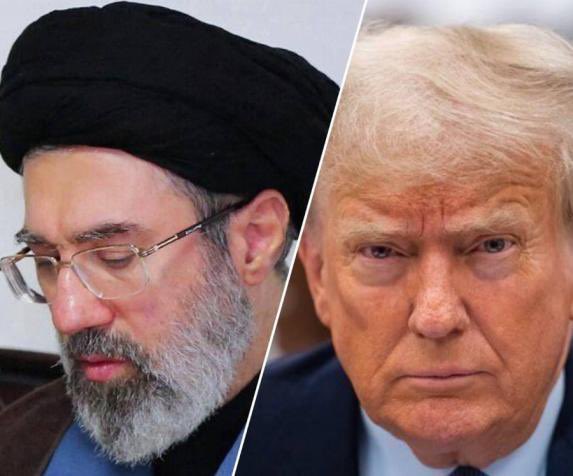
    WASHINGTON, D.C. (NPA) — U.S. President Donald Trump has confirmed that American forces carried out fresh airstrikes against Iranian military targets, accusing Tehran of repeatedly violating the ceasefire agreement between the two countries.

    In a statement posted on his Truth Social platform on Sunday, Trump said U.S. aircraft targeted Iranian missile and drone storage facilities, as well as coastal radar installations, following what he described as another breach of the ceasefire by Iran.

    “United States aircraft just struck Iranian missile and drone storage locations, and coastal radar sites, for violating the Cease Fire Agreement, AGAIN! It is very possible that they will never learn!” Trump wrote.

    He warned that Washington could escalate its military response if Tehran continued what he described as repeated acts of aggression.

    “There may come a point when we are no longer able to be reasonable, and will be forced to militarily complete the job that we very successfully started. If that happens, the Islamic Republic of Iran will no longer exist,” Trump added.

    The latest strikes followed an Iranian drone attack on a commercial oil tanker transiting the Strait of Hormuz, which U.S. officials cited as the immediate trigger for the military operation. According to the U.S. military, the strikes targeted surveillance infrastructure, missile and drone facilities, air defence systems and coastal radar sites near the strategic waterway.

    Iran has rejected the U.S. accusations and, according to reports, responded by launching missile and drone attacks against U.S. military installations in Bahrain and Kuwait, further escalating tensions in the Gulf.

    Authorities in both countries activated air defence systems, although no significant casualties were immediately reported.

    The renewed exchange of attacks has raised fresh concerns over the fragile ceasefire reached earlier this month and threatens ongoing diplomatic efforts aimed at reducing tensions between Washington and Tehran.

    The Strait of Hormuz, through which about a fifth of the world’s oil supply passes, has remained a focal point of the crisis, with commercial shipping facing repeated security threats in recent days.

    Regional governments have called for restraint, warning that further escalation could undermine security and disrupt global energy supplies.

  • JUST IN: Netanyahu hails Israel-Lebanon framework, says deal weakens Iran, Hezbollah

    JUST IN: Netanyahu hails Israel-Lebanon framework, says deal weakens Iran, Hezbollah

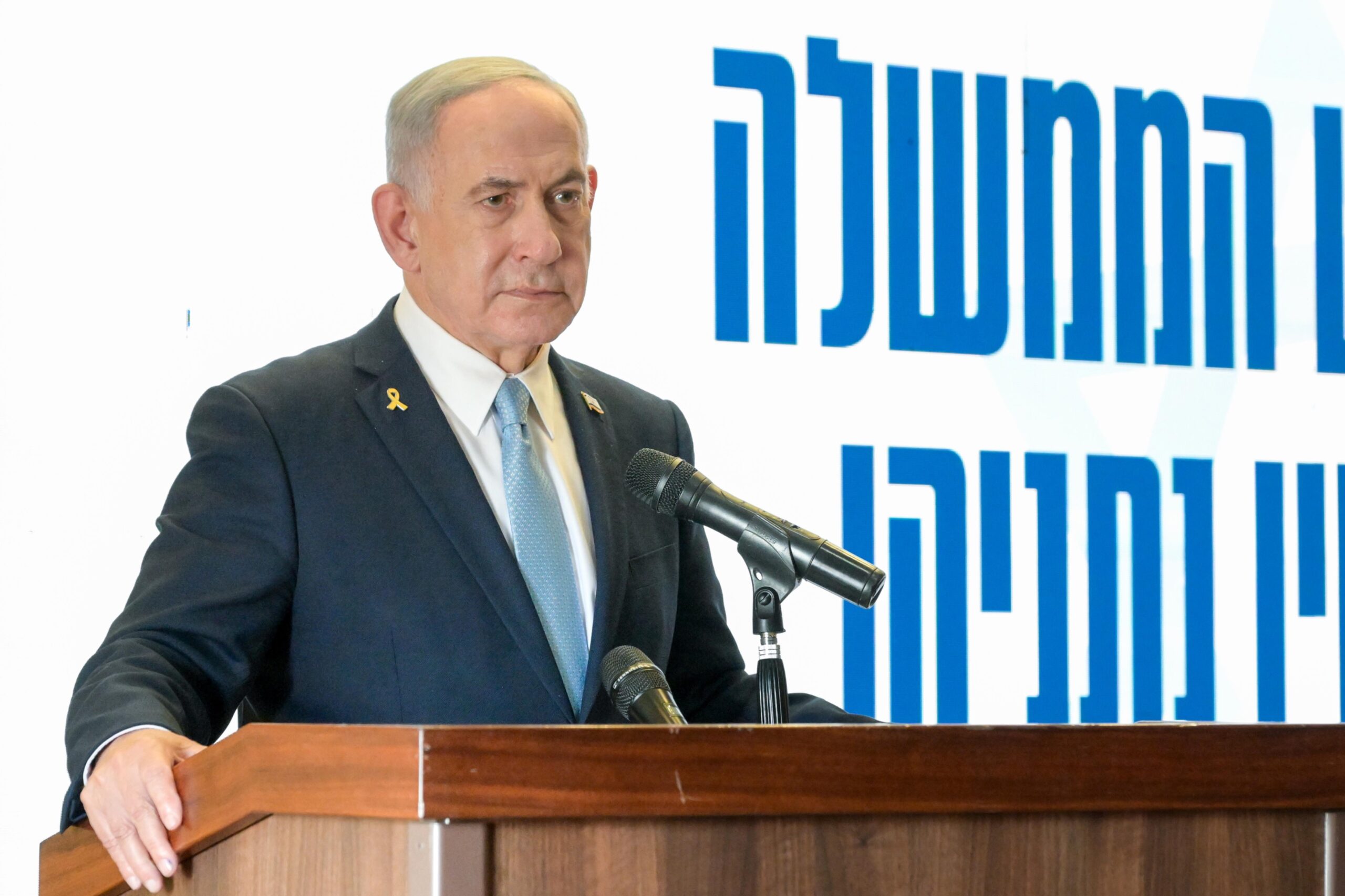
    JERUSALEM, Israel (NPA) — Israeli Prime Minister Benjamin Netanyahu has hailed the new framework of understandings between Israel and Lebanon as a historic breakthrough, saying it paves the way for ending hostilities and eventually reaching a formal peace agreement between the two countries.

    Addressing a news conference on Saturday, Netanyahu said the agreement followed direct negotiations between Israel and Lebanon mediated by the United States.

    “Yesterday, before the start of the Sabbath, we achieved a historic accomplishment for the State of Israel,” Netanyahu said.

    “Following direct negotiations between Israel and Lebanon, mediated by the United States, we have reached a framework of understandings that allows us to move forward toward ending the conflict and, God willing, eventually reaching a peace agreement between the two countries.”

    According to the Israeli leader, the understandings recognise Israel’s right to maintain what he described as a security zone inside southern Lebanon for as long as necessary.

    He said Israeli forces would remain in the area until Hezbollah and other armed groups are disarmed and no longer pose a threat to Israel.

    Netanyahu described the agreement as a major strategic setback for Iran and Hezbollah, accusing Tehran of attempting to force Israel to withdraw from southern Lebanon.

    “I stood firm on our vital interests and forcefully opposed the notion of forcing a withdrawal upon us,” he said.

    He added that Israel, Lebanon and the United States had agreed on a pilot programme in two areas near the Blue Line to facilitate Hezbollah’s disarmament and transfer security responsibilities to the Lebanese Armed Forces.

    The Prime Minister thanked U.S. President Donald Trump, Secretary of State Marco Rubio and other American officials for facilitating the negotiations.

    He also expressed appreciation to the Lebanese government and people for what he described as their courage in supporting the process, while commending Israel’s negotiating team led by Ambassador Yechiel Leiter.

    Netanyahu argued that Israel’s military campaign against Hezbollah and Iranian interests created the conditions for the agreement.

    He claimed Israeli forces had destroyed about 90 per cent of Hezbollah’s missile and rocket stockpile, eliminated senior commanders, including former Hezbollah leader Hassan Nasrallah, and dismantled significant militant infrastructure in southern Lebanon.

    According to him, Israeli forces have also maintained control of several strategic locations while continuing operations to destroy tunnels, bunkers and other military positions.

    “We are breaking the Iranian axis of terror, but we are also breaking the Iranian diplomatic axis,” he said.

    Netanyahu acknowledged that military operations were continuing, particularly against what he described as the growing threat posed by explosive drones.

    Looking ahead, he said the agreement would strengthen both Israel and Lebanon while weakening Hezbollah and Iran’s regional influence.

    The Prime Minister pledged continued investment in Israel’s northern communities, announcing more than 20 billion shekels in reconstruction and economic support.

    “We will continue to do everything necessary to restore security to the residents of the North,” he said.

    “This is what I want to see: a quiet border between us and Lebanon, a border of peace. In the North, I want to see security, peace and prosperity.”

    The agreement comes amid continued international efforts to reduce tensions along the Israel-Lebanon border after months of cross-border fighting that raised fears of a wider regional conflict with Iran in the mix.

  • EU welcomes Israel-Lebanon peace framework, pledges support for regional stability

    EU welcomes Israel-Lebanon peace framework, pledges support for regional stability

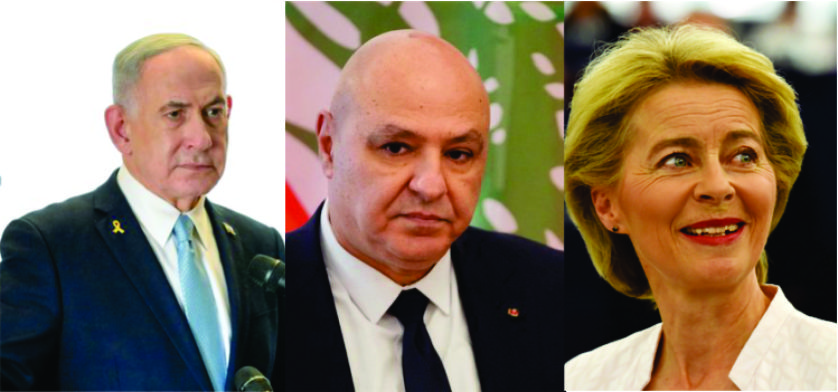
    BRUSSELS, Belgium (NPA) — European Commission President Ursula von der Leyen has welcomed the peace framework signed between Israel and Lebanon, describing it as a significant step towards de-escalation and long-term stability in the Middle East.

    In a statement issued on Saturday, von der Leyen said the agreement marked a critical move away from conflict.

    “Because there can be no peace in the Middle East with Lebanon in flames,” she said.

    She thanked the United States for mediating the agreement and stressed that its successful implementation would depend on the disarmament of non-state armed groups and the preservation of Lebanon’s sovereignty and territorial integrity.

    “The EU stands ready to support this path to lasting regional stability, also with the continued delivery of much-needed humanitarian aid, with €100 million mobilised for the displaced,” she said.

    Under the Trilateral Framework signed on June 26 by the United States, Israel and Lebanon, the two countries committed to ending decades of conflict, strengthening their sovereignty and security, and working towards peaceful neighbourly relations through direct negotiations with U.S. mediation.

    The agreement outlines a phased security process under which the Lebanese Armed Forces (LAF) will gradually assume full security responsibility across Lebanese territory following the verified disarmament of non-state armed groups. As the process progresses, Israeli Defence Forces (IDF) are expected to redeploy from Lebanese territory under agreed security arrangements and U.S.-backed verification mechanisms.

    Lebanon reaffirmed its commitment to restoring the state’s exclusive authority over the use of force, disarming all non-state armed groups, and ensuring that no armed organisation operates outside government control.

    Israel, for its part, stated that its military operations in Lebanon had been directed at threats posed by non-state armed groups, particularly Hezbollah, and reiterated that it has no territorial ambitions in Lebanon.

    Both governments affirmed their right to self-defence under the United Nations Charter while agreeing that no third party should exercise that right on their behalf. They also committed to establishing a military coordination group with U.S. participation to oversee implementation of the framework.

    The agreement also provides for the creation of working groups to negotiate a comprehensive peace and security treaty, while the United States pledged to mobilise international support for Lebanon’s reconstruction, economic recovery and humanitarian assistance.

    In addition, Lebanon and the United States committed to preventing reconstruction funds or financial resources from reaching non-state armed groups, with future U.S. assistance tied to measurable reforms, transparency and verified progress.

    The two countries also pledged to refrain from hostile actions in international political and legal forums and to cooperate on the return of detainees and human remains as confidence-building measures, while expressing appreciation to the United States and President Donald Trump’s role for facilitating the end of decades of conflict and promoting lasting regional peace.

  • JUST IN: Trump accuses Iran of violating ceasefire after drone strike in Strait of Hormuz

    JUST IN: Trump accuses Iran of violating ceasefire after drone strike in Strait of Hormuz

    WASHINGTON, D.C. (NPA) — United States President Donald Trump has accused Iran of violating the ceasefire agreement between the two countries following a reported drone attack on commercial vessels transiting the Strait of Hormuz.

    The accusation comes after Iran rejected a new shipping corridor proposed by Oman to facilitate maritime traffic through the strategic waterway. Tehran had warned that vessels using the alternative route, instead of the channel it recognises, could be targeted.

    In a post on his Truth Social platform on Friday, Trump alleged that Iranian forces launched four one-way attack drones at commercial ships in the Strait.

    According to the U.S. president, one of the drones struck the upper deck of a cargo vessel, causing damage, while U.S. forces intercepted the remaining three drones.

    “The Islamic Republic of Iran shot at least four One Way Attack Drones at ships transversing the Strait of Hormuz. One of the drones solidly hit the upper deck of a large and very expensive cargo-carrying ship. Damage was done, but the ship was able to proceed on its way. We knocked down three other drones. Obviously, this is a foolish violation of our Ceasefire Agreement,” Trump wrote.

    The reported attack is the first major incident since the United States and Iran reached an interim ceasefire aimed at reducing hostilities and restoring freedom of navigation through one of the world’s busiest oil shipping routes.

    As of the time of filing this report, the U.S. administration had not announced any retaliatory measures, while Iranian authorities had yet to publicly respond to Trump’s allegations.

    It also remains unclear whether the incident will affect the fragile ceasefire agreement or ongoing negotiations between Washington and Tehran.

  • Iran criticises Gulf Cooperation Council over regional security stance

    Iran criticises Gulf Cooperation Council over regional security stance

    TEHRAN, Iran — Iran has criticised the Gulf Cooperation Council (GCC) over its approach to regional security, accusing the bloc of relying on what it described as “the greatest violator of security” to safeguard the region.

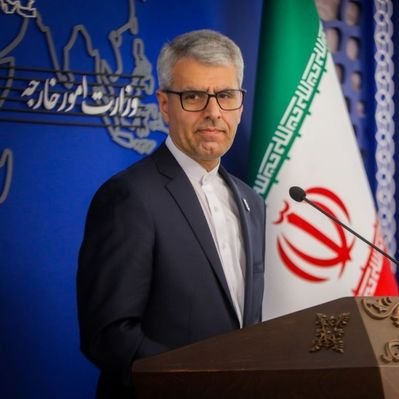
    The Head of the Centre for Public Diplomacy and Spokesperson for Iran’s Ministry of Foreign Affairs, Esmaeil Baqaei, made the remarks in a statement issued on Friday.

    Baqaei said Iran remained more committed than any other country to ensuring collective security in the region, arguing that seeking external security guarantees from powers Tehran considers responsible for regional instability was counterproductive.

    “Undoubtedly, Iran, more than any other party, is concerned with ensuring the collective security of the region. For the Gulf Cooperation Council to imagine that the solution to addressing this concern lies in seeking refuge with the greatest violator of security is, in itself, a violation of the very purpose—a bitter irony and a disheartening sign of failing to learn from recent bitter experiences,” he said.

    The Iranian Foreign Ministry spokesman also questioned the role of some Gulf states during recent regional tensions.

    He alleged that some of Iran’s southern neighbours had violated the principles of good neighbourliness and international law by participating in attacks against Iran or allowing their territories to be used for military operations targeting the country.

    “The southern neighbours must be asked why they themselves, in violation of the principle of good neighbourliness and the fundamental rules of international law, took part in an aggressive attack against a Muslim neighbour and allowed their territory to be used against Iran or for launching missiles from there,” Baqaei said.

    He further questioned what he described as the region’s silence over the continued acquisition of advanced weapons by some countries and Israel’s military actions.

    “Why do they turn a blind eye to the destructive arms race and the purchase and stockpiling of hundreds of billions of dollars in advanced weaponry that has no defensive justification?” he asked.

    Baqaei also criticised what he described as the failure to condemn repeated Israeli military operations in the region and what he called Israel’s undeclared nuclear arsenal, while Iran’s conventional military capabilities continued to attract criticism.

    According to him, Iran’s military capabilities are intended solely to guarantee the country’s inherent right to legitimate self-defence while contributing to regional peace and stability.

    “The national security and dignity of the country cannot be bargained or made conditional. Just as the inherent right to legitimate self-defence can never be a subject for negotiation, its instruments cannot be a subject for compromise with any party,” he said.

  • Netanyahu vows to block Iran’s nuclear ambitions, maintain security Zone in Lebanon

    Netanyahu vows to block Iran’s nuclear ambitions, maintain security Zone in Lebanon

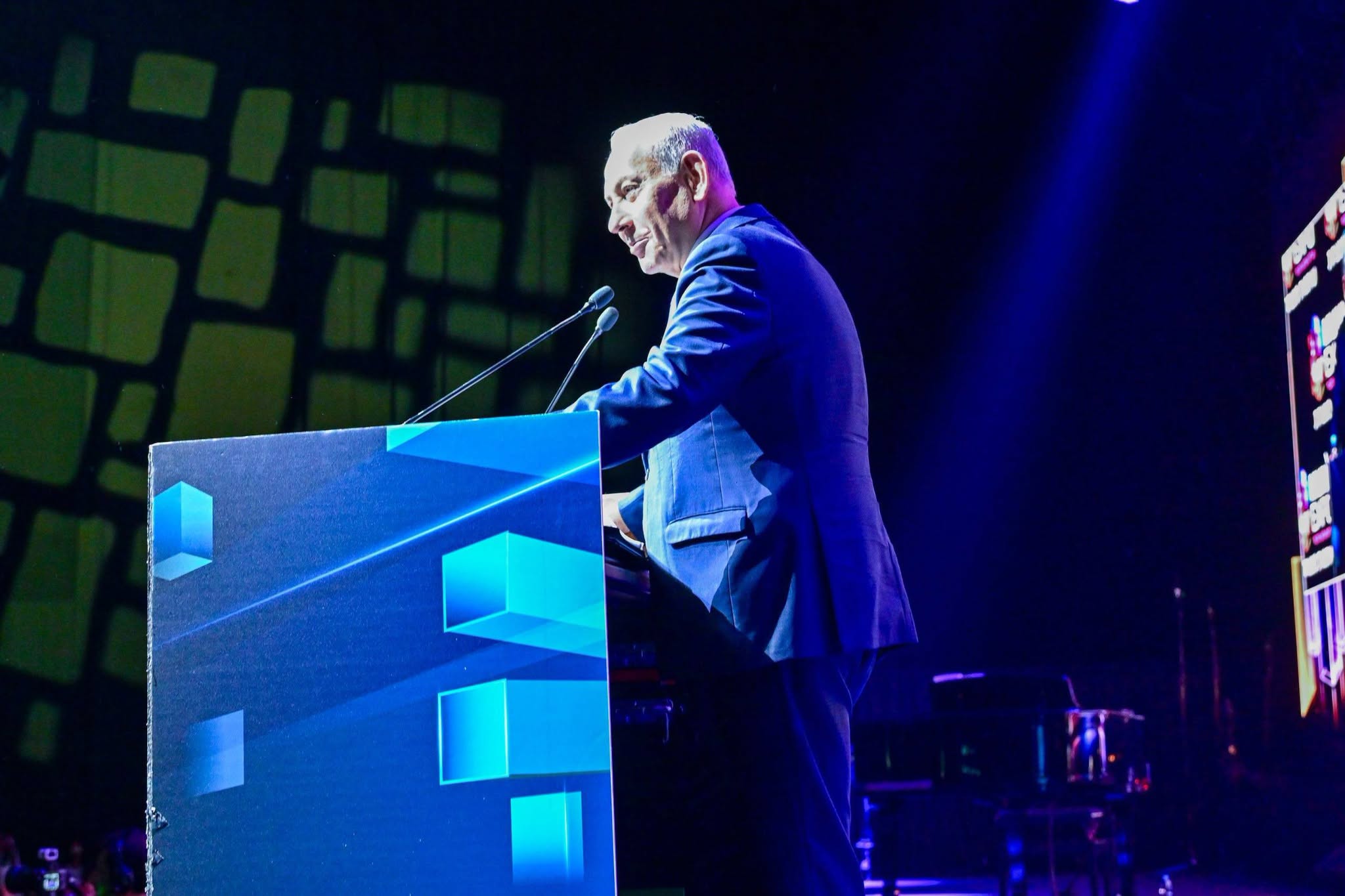
    JERUSALEM (NPA) — Israeli Prime Minister Benjamin Netanyahu has vowed to maintain a security buffer in southern Lebanon and prevent Iran from acquiring nuclear weapons, declaring that Israel will continue operations across the region despite international hesitation.

    Speaking at the Federation of Local Authorities in Israel Conference, Netanyahu said a newly established security zone has curbed Hezbollah’s presence in Lebanon, while Israel dismantles underground infrastructure designed to threaten the Galilee.

    He pledged that Israel would be the first nation to solve the global challenge of explosive drones, describing the effort as a “Manhattan Project.”

    The Prime Minister recounted military actions in Gaza, Rafah, Syria, and Iran, including what he called Operation Rising Lion, conducted largely with the Mossad.

    He said Israel acted decisively to protect its Druze community in Syria and to disrupt Iran’s nuclear ambitions, despite warnings from allies not to intervene.

    Netanyahu revealed that he informed U.S. Presidents Joe Biden and Donald Trump of Israel’s plans, stressing that national survival sometimes requires defying external pressure. “There are moments when you must know how to tell even the President of the United States what we stand for,” he said.

    He insisted that Israel’s campaign against Iran’s nuclear program remains unfinished but emphasised that progress has been “monumental.” “As long as I am Prime Minister, Iran will not have nuclear weapons. And as long as I am Prime Minister, we will maintain the security zone in southern Lebanon,” Netanyahu declared.

  • Netanyahu hosts Somaliland president in Jerusalem, signs cooperation agreement

    Netanyahu hosts Somaliland president in Jerusalem, signs cooperation agreement

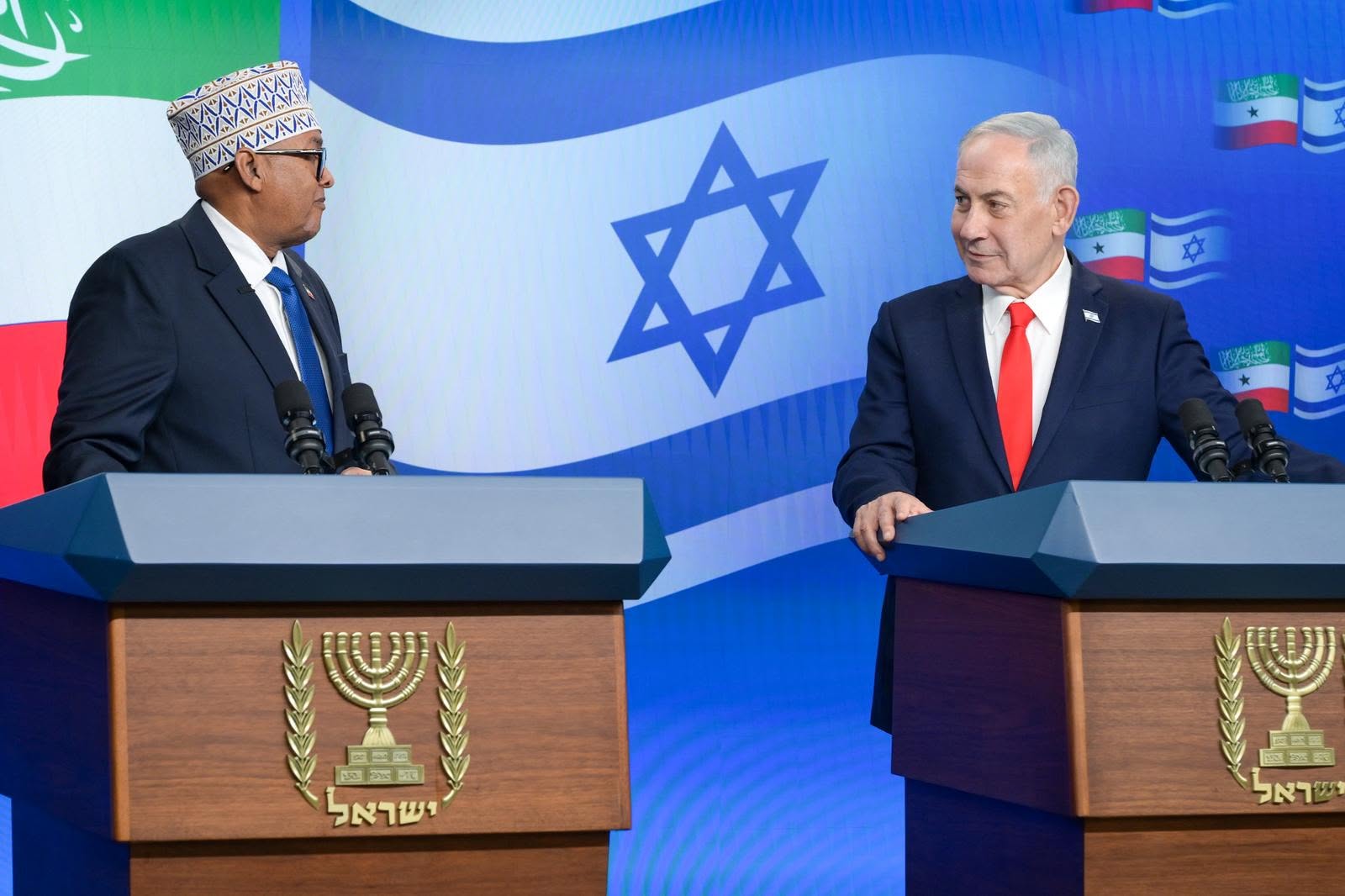
    JERUSALEM, Israel (NPA) — Israeli Prime Minister Benjamin Netanyahu has hosted Somaliland President Abdirahman Mohamed Abdullahi in Jerusalem, marking a significant milestone in the growing diplomatic relationship between Israel and Somaliland.

    The meeting formed part of President Abdullahi’s official state visit to Israel and comes amid deepening ties between both governments following Israel’s recognition of Somaliland and the opening of Somaliland’s embassy in Jerusalem.

    According to a statement issued by the Israeli Prime Minister’s Office, Netanyahu and Abdullahi first held a private meeting before leading a broader bilateral session involving senior officials from both sides.

    The Israeli delegation included Foreign Ministry officials, the Chief of Staff, the Government Secretary, the Military Secretary, Israel’s Ambassador to Somaliland, and other senior government representatives.

    President Abdullahi was accompanied by Somaliland’s Minister of Foreign Affairs, Minister of Defence, Minister of the Presidency, Minister of Water Development, the President’s Chief of Staff, the Chief of the General Staff of the Somaliland Armed Forces, the Somaliland Ambassador to Israel, and other top officials.

    At the conclusion of the talks, both leaders signed a Joint Declaration aimed at strengthening cooperation between Israel and Somaliland across multiple sectors.

    The agreement is expected to deepen collaboration in diplomacy, security, economic development, investment, and other areas of mutual interest.

    Speaking after the signing ceremony, Prime Minister Netanyahu described the relationship between the two governments as one founded on shared values and common aspirations.

    “We are proud, and I am proud that my government is the first government on the planet to recognise Somaliland,” Netanyahu said.

    “We are united by the same belief that freedom, democracy and opportunity are stronger than extremism, terrorism and chaos.”

    The visit is being viewed as a major diplomatic breakthrough for Somaliland, which has sought broader international recognition since declaring independence from Somalia in 1991.

    While Somaliland operates with its own government, security institutions, currency, and electoral system, it remains internationally recognised as part of Somalia by most countries and international organisations.

    Political analysts say Israel’s recognition of Somaliland and the strengthening of bilateral relations could reshape diplomatic dynamics in the Horn of Africa and generate renewed debate over Somaliland’s quest for wider international recognition.

    The state visit also highlights growing cooperation between the two governments on strategic, economic, and security issues amid evolving geopolitical developments in the region.

  • Trump secures peace deal with Iran as fuel prices poised to return to pre-war levels

    Trump secures peace deal with Iran as fuel prices poised to return to pre-war levels

    GENEVA, Switzerland (NPA) — United States President Donald Trump has announced a landmark agreement with Iran aimed at ending decades of hostility between the two countries and easing tensions across the Middle East.

    In a statement posted on Truth Social, Trump declared that negotiations with the Islamic Republic had culminated in a comprehensive deal that would reopen critical global energy routes and pave the way for broader diplomatic engagement.

    “The Deal with the Islamic Republic of Iran is now complete. Congratulations to all! I hereby fully authorise the toll-free opening of the Strait of Hormuz and authorise the immediate removal of the United States naval blockade. Ships of the world, start your engines. Let the oil flow!” Trump said.

    The agreement, expected to be formally signed in Switzerland later this week, is being described as one of the most significant diplomatic breakthroughs in recent Middle East history.

    Under the framework, both countries have agreed to an immediate ceasefire, while Iran is set to reopen the Strait of Hormuz, one of the world’s most strategic maritime corridors through which a significant portion of global oil supplies passes.

    The United States, in turn, will begin lifting its naval blockade on Iranian ports, with full implementation expected within 30 days.

    Marine traffic through the Strait will reportedly be coordinated by Iran and Oman to ensure the safe movement of international vessels.

    As part of the agreement, Iran has pledged not to pursue nuclear weapons and will freeze uranium enrichment activities pending the conclusion of a broader nuclear accord. The United States will permit the supervised dilution of Iran’s enriched uranium stockpiles, although negotiations on inspection mechanisms and compliance procedures are ongoing.

    The framework also includes major economic concessions. Washington is expected to grant temporary waivers on oil-related sanctions, allowing Iran to resume petroleum exports, while approximately $25 billion in frozen Iranian assets will be released through a combination of direct transfers and credit facilities.

    A wider economic reconstruction and cooperation package is expected to be negotiated within the next 60 days.

    Trump hailed the agreement as a historic achievement, arguing that previous administrations had failed to secure lasting peace with Tehran.

    “This Great Deal will bring peace and security to the whole region. Many presidents have tried to make peace with Iran, and all have failed before me,” he said.

    The President added that the agreement would restore stability to global energy markets and strengthen regional security.

    Analysts say the accord could mark the most consequential diplomatic breakthrough between Washington and Tehran since the 2015 Iran nuclear agreement. However, significant challenges remain, including the finalisation of nuclear verification arrangements and the response of regional stakeholders who may view the deal with caution.

    Newpost Africa reports that the agreement is also expected to have far-reaching implications for global oil markets, international trade routes, and geopolitical stability in the Gulf region.

    Nigerians are anticipating a reduction in the pump price of petroleum to its pre-war level of N800 per litre. Similar adjustments are expected across other African economies, where sudden price disruptions have strained households and eroded company incomes, driving up the cost of goods and services in the wake of the war.

    If successfully implemented, the deal could signal the beginning of a new chapter in relations between the United States and Iran, ending years of confrontation and opening the door to broader economic and diplomatic cooperation.