Category: South America

  • United Nations launches Borrowers’ Platform on April 15

    United Nations launches Borrowers’ Platform on April 15

    INTERNATIONAL —13 April 2026 (NPA) — The United Nations has officially launched the Borrowers’ Platform, a new initiative designed to give developing countries a stronger collective voice in global debt discussions. Facilitated by the UN Conference on Trade and Development (UNCTAD), the platform seeks to address long-standing gaps in the international financial system by creating a borrower-led space for cooperation, knowledge-sharing, and capacity-building.

    Debt servicing costs in developing countries have surged over the past decade, with external debt reaching $11.7 trillion in 2024. That year, governments spent nearly 10% of their revenue on interest payments, while least developed countries devoted almost a quarter of their revenue to external creditors. According to UNCTAD, 54 countries—home to 3.4 billion people—now spend more on debt than on health or education.

    Rebeca Grynspan, Secretary-General of UNCTAD, underscored the urgency of reform: “3.4 billion people deserve better outcomes. They’re not asking for charity. They want a level playing field where finance enables development rather than constraining it.”

    Egypt’s Finance Minister Ahmed Kouchouk, who chairs the initial working group, explained that the Borrowers’ Platform is not a debt restructuring forum but rather a cooperative space to share experiences, strengthen debt management capacity, improve transparency, and engage more effectively in global financial discussions.

    The platform’s creation follows a series of milestones: in December 2024, UN Secretary-General António Guterres appointed an Expert Group on Debt; in June 2025, the group proposed the Borrowers’ Platform; in July 2025, Member States endorsed the idea in the Sevilla Commitment at the 4th International Conference on Financing for Development; and in October 2025, the Geneva Consensus at UNCTAD16 called on UNCTAD to facilitate borrower cooperation. A working group led by Egypt and Pakistan, with members including Colombia, Honduras, Maldives, Nepal, and Zambia, drafted the platform’s modalities.

    UNCTAD will serve as the platform’s secretariat, providing technical and administrative support. Advocates say the initiative sends a positive signal to markets by promoting debt sustainability and transparency, while giving developing countries a long-overdue seat at the table in shaping global financial rules.

  • Iran’s envoy criticises Argentina’s expulsion decision, says decision influenced by US, Israel

    Iran’s envoy criticises Argentina’s expulsion decision, says decision influenced by US, Israel

    INTERNATIONAL, NIGERIA, 3 April 2026 (NPA) — Iran’s chargé d’affaires in Argentina, Mohsen Soltani Tehrani, has condemned Buenos Aires’ decision to expel him, warning that the move “does not benefit” his host country and “only makes things worse.”

    Speaking in an interview before departing Argentina for Tehran, the veteran diplomat criticised what he described as Argentina’s misguided political participation in the ongoing Iran War. “It is not a sovereign decision to join an illegal war against all international norms,” Tehrani said, accusing the Argentine government of aligning itself too closely with the United States and Israel in the Middle East conflict.

    He stressed that Iran does not object to Argentina maintaining relations with Washington or Tel Aviv, but strongly opposed the government’s declaration that Argentina is part of the aggression against Iran. “What we criticise is that the President says Argentina is part of the aggression, that he is willing to send logistical support and that ‘we are going to win the war.’ That is something very serious,” Soltani noted.

    The envoy argued that such rhetoric carries consequences even if Argentina lacks the capacity to send troops. “Just saying it has consequences. The President’s decisions may bring consequences,” he warned, adding that the stance undermines Argentina’s sovereignty and risks escalating tensions. 

    Tehrani concluded that the expulsion reflects a broader failure of diplomacy and could further isolate Argentina at a time when constructive engagement is most needed.

  • Death toll in Colombia plane crash rises to 66

    Death toll in Colombia plane crash rises to 66

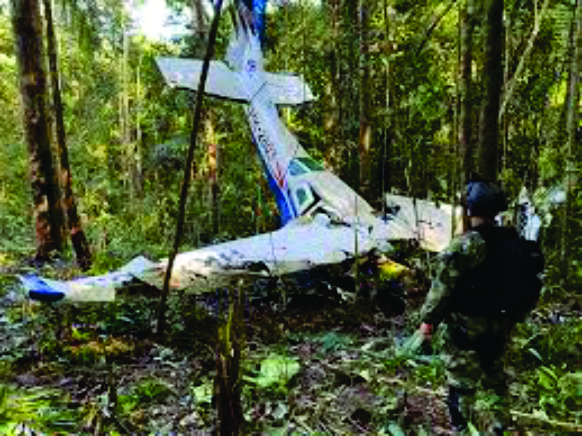
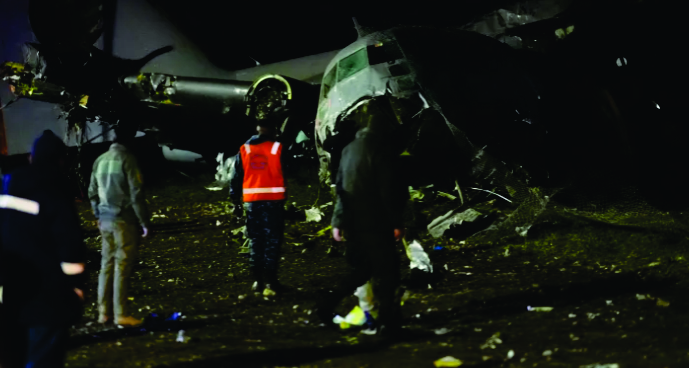
    INTERNATIONAL (NPA) — March 24, 2026 — The death toll from the Colombian military plane crash in Puerto Leguízamo, Putumayo province, has climbed to 66, with four soldiers still missing.

    The Lockheed C-130 Hercules transport aircraft, carrying 128 people — including 115 Army personnel, 11 crew members, and two National Police officers — went down shortly after takeoff on March 23. The crash produced flames and thick smoke, with eyewitnesses reporting a large black cloud rising from the site.

    Rescue teams have recovered dozens of survivors, though many remain hospitalised with injuries. The Defence Minister, Pedro Sánchez, described the incident as a “tragic accident,” confirming that soldiers were among the victims.

    The Colombian Air Force has launched an investigation into the cause, with mechanical failure or overload considered possible factors. President Gustavo Petro expressed condolences to the families and pledged full support for rescue and inquiry efforts.

    The crash, one of the deadliest in Colombia’s military aviation history, has raised concerns about the safety and maintenance of the country’s ageing C-130 fleet. Puerto Leguízamo’s remote Amazon location has complicated rescue operations, underscoring the challenges of military transport in difficult terrain.

  • WTO warns Middle East conflict could slow global trade in latest report

    WTO warns Middle East conflict could slow global trade in latest report

    INTERNATIONAL (NPA) — March 20, 2026 — The World Trade Organization (WTO) says global trade growth will slow in 2026, after stronger‑than‑expected gains last year driven by booming demand for AI‑related products.

    According to the WTO’s latest Global Trade Outlook published on March 19, merchandise trade is forecast to grow by 1.9% in 2026, down from 4.6% in 2025, before picking up slightly to 2.6% in 2027. Services trade is also expected to ease, rising 4.8% in 2026 compared with 5.3% in 2025. Together, goods and services trade will expand by 2.7% in 2026, compared with 4.7% last year.

    The slowdown is linked to the ongoing Middle East conflict, which has disrupted transport routes and raised energy prices. If oil and gas prices stay high, WTO economists warn global GDP growth could fall by 0.3 percentage points, while trade growth could drop by 0.5 points — with energy‑importing regions like Asia and Europe hit hardest.

    The conflict has already blocked traffic through the Strait of Hormuz, a vital global shipping lane. This has disrupted fertilizer exports critical for farming and raised food security concerns in countries such as India, Thailand, and Brazil. Gulf states, heavily dependent on food imports, also face rising costs. Transport disruptions have cancelled tens of thousands of flights and increased insurance premiums, adding further strain on businesses and consumers worldwide.

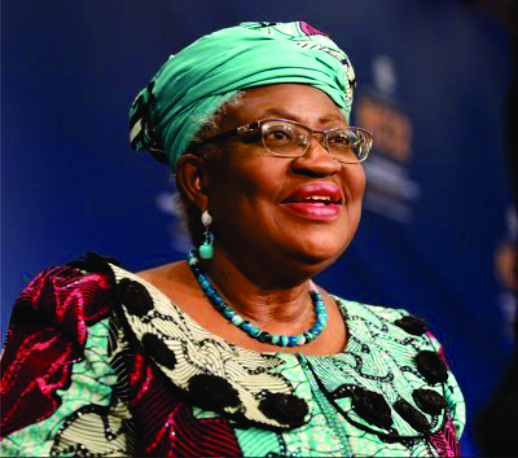
    Despite these risks, WTO Director‑General Ngozi Okonjo‑Iweala stressed that trade remains resilient, supported by high‑tech goods and digital services. She urged governments to keep trade policies predictable and strengthen supply chains to cushion the impact.

    There is some upside: if the conflict ends quickly and AI‑related spending continues, trade growth could rise to 2.4% in 2026 and 2.7% in 2027. But if energy prices remain high, the outlook will stay fragile.

    In 2025, AI‑enabling goods such as semiconductors and data equipment grew by nearly 22%, accounting for almost half of global trade growth. WTO economists say this sector could continue to offset some of the negative effects of tariffs and geopolitical tensions, offering hope that technology will remain a bright spot in otherwise uncertain times.

  • U.S. Treasury Department lifts restrictions on Venezuela, grants license for Petróleos de Venezuela

    U.S. Treasury Department lifts restrictions on Venezuela, grants license for Petróleos de Venezuela

    NORTH AMERICA (NPA) — March 18, 2026 — The U.S. Treasury Department’s Office of Foreign Assets Control (OFAC) on Wednesday issued a license authorising American entities to engage in business transactions with Venezuela’s state-owned oil company, Petróleos de Venezuela, S.A. (PdVSA), and its subsidiaries.

    The agency said the license will benefit both the United States and Venezuela, while supporting the global energy market by increasing available oil supply and encouraging new investment in Venezuela’s energy sector.

    In a statement, the Treasury Department noted: “Today, the Treasury Department’s Office of Foreign Assets Control issued a license broadly authorising established U.S. entities to engage in many types of transactions with Venezuela’s state-owned oil company, Petróleos de Venezuela, S.A. (PdVSA), and its subsidiaries.”

    “This license will benefit both the United States and Venezuela, while supporting the global energy market by increasing the supply of available oil. It will also help incentivise new investment in Venezuela’s energy sector.”

    The U.S. Treasury Department had previously sanctioned Venezuela over human rights abuses, corruption, election fraud, and ties to drug trafficking and armed groups. Those measures, which began in 2014, expanded into broad economic restrictions on Venezuela’s oil and gold sectors.

    The consequences were severe: Venezuela’s economy contracted sharply, foreign investment dried up, and access to international financial markets was restricted. While sanctions weakened the Maduro government’s ability to fund operations, they also worsened living conditions for ordinary citizens, contributing to shortages of food, medicine, and fuel, while pushing Caracas to deepen ties with Russia, China, and Iran.

  • Bolivian Military Plane Crash Near La Paz Kills 20, Injures Dozens

    Bolivian Military Plane Crash Near La Paz Kills 20, Injures Dozens

    LA PAZ, BOLIVIA — A Bolivian Air Force Hercules C-130 transport aircraft crashed on Friday evening while attempting to land at El Alto International Airport, leaving at least 20 people dead and more than 30 injured, according to local authorities.

    The aircraft, reportedly carrying newly printed banknotes, skidded off the runway amid severe weather conditions and struck a busy highway before coming to rest in a nearby field. Police Colonel Rene Tambo, head of the homicide division in El Alto, said the death toll could rise as rescue operations continue.

    Defence Minister Marcelo Salinas confirmed that firefighters quickly extinguished a fire at the crash site. He added that the cause of the accident remains under investigation. Witnesses described heavy hail and lightning at the time of the incident.

    Footage circulating on social media showed chaotic scenes as crowds gathered around the wreckage. Some individuals attempted to collect banknotes scattered among debris and damaged vehicles. Security forces deployed water hoses and tear gas to disperse onlookers and prevent looting.

    In a statement, the Ministry of Defence clarified that the banknotes had no serial numbers and therefore no legal value, warning that possession or use of them would constitute a crime.

    Bolivian Air Force General Sergio Lora reported that two of the six crew members remain missing. The Central Bank of Bolivia is expected to provide further details regarding the aircraft’s cargo.

    La Paz, situated at an altitude of 3,650 meters (11,975 feet) and surrounded by the Andes, is the world’s highest administrative capital — a challenging environment for aviation operations.

  • U.S. Citizens in Mexico Receive Security Alert Amid Ongoing Operations

    U.S. Citizens in Mexico Receive Security Alert Amid Ongoing Operations

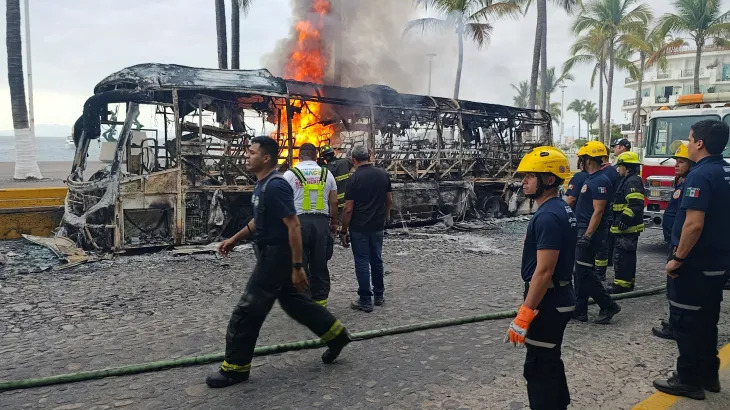
    MEXICO CITY (NPA): The United States Mission in Mexico issued a security alert on February 22, 2026, advising U.S. citizens to shelter in place due to ongoing security operations, road blockages, and related criminal activity. The mission stated: “U.S. citizens in the affected locations should shelter in place until further notice.”

    The alert directed all U.S. government staff at Consulate General Tijuana, as well as personnel in Guerrero, Michoacán, and Quintana Roo, to remain sheltered. Staff at Consulate General Monterrey were instructed to stay within the Monterrey metropolitan area. While airports remain open, roadblocks have disrupted airline operations, leading to cancellations of domestic and international flights in Guadalajara and Puerto Vallarta. Taxi and rideshare services in Puerto Vallarta have been suspended, and several businesses have temporarily closed.

    The mission urged U.S. nationals in Mexico to minimize movement, remain in residences or hotels, avoid areas of law enforcement activity, stay vigilant, monitor local media, and call 911 in case of emergencies.

    The alert follows the killing of Nemesio Rubén Oseguera Cervantes, known as El Mencho, leader of the Jalisco New Generation Cartel (CJNG), during a military operation in Jalisco state. His death has triggered violent reprisals, including vehicle burnings, highway blockages, and unrest in Guadalajara and Puerto Vallarta. Authorities warn that further escalations are likely as Mexico confronts the power vacuum left by one of its most notorious cartel leaders.