Category: Africa

  • Ruto urges East Africa to end rivalry, deepen regional integration, Africa’s unity

    Ruto urges East Africa to end rivalry, deepen regional integration, Africa’s unity

    DODOMA, Tanzania (NPA) — President William Ruto of Kenya has called on member states of the East African Community (EAC) to abandon rivalry, suspicion, and mistrust in order to strengthen regional integration and economic cooperation.

    Ruto made the remarks at the conclusion of his two-day state visit to Tanzania, where he held bilateral talks with President Samia Suluhu Hassan and signed eight agreements aimed at expanding cooperation between both countries.

    According to the Kenyan leader, divisions and unhealthy competition among countries in the region have weakened regional markets, limited collective progress, and undermined the bloc’s influence. “We must move beyond competition, suspicion, rivalry, and mistrust that have fragmented our markets, weakened our voice, and constrained our collective progress,” Ruto said.

    He noted that stronger collaboration within the region would help the bloc achieve deeper integration and maximize opportunities emerging from the African Continental Free Trade Area (AfCFTA).

    “This spirit must guide the East African Community as we expand continental integration to unlock opportunities being created by the African Continental Free Trade Area,” he stated.

    Ruto also stressed the need for African countries to speak with one voice in pushing for reforms within the African Union and the United Nations to make the institutions more inclusive and responsive to African interests.

    The Kenyan President said Nairobi and Dodoma were strengthening bilateral relations to unlock greater economic opportunities through increased trade, investment, infrastructure development, and supportive integration policies. “We recognise that the progress and setbacks of Kenya and Tanzania are intertwined,” he added.

    Ruto disclosed that Kenya and Tanzania had set a target of 130 billion Kenyan shillings in new trade and 65 billion Kenyan shillings in fresh cross-border investments.

    According to him, achieving the target would require the removal of barriers hindering the free movement of people, goods, and services across both countries.

    He identified border delays, non-harmonised standards, and restricted market access as major obstacles affecting trade growth within the region.

    “We have set ourselves a June 30, 2026 target to ensure all these barriers are removed,” he said.

    Ruto further announced that the Kenya-Tanzania Joint Business Council would serve as the primary platform for structured economic collaboration, while the Tanzania-Kenya Business Forum would become an annual event to monitor implementation and identify new opportunities.

    The Kenyan leader and President Samia Suluhu Hassan also addressed the Tanzania-Kenya Business Forum in Dar es Salaam, which brought together more than 300 business leaders and private sector stakeholders.

    Both leaders reaffirmed their commitment to providing a stable and predictable business environment anchored on regulatory clarity, investor protection, and private sector-driven growth.

  • Nigeria, Ghana deepen anti-drug partnership to combat trafficking cartels

    Nigeria, Ghana deepen anti-drug partnership to combat trafficking cartels

    ABUJA, Nigeria (NPA) — National Drug Law Enforcement Agency (NDLEA) and Narcotics Control Commission (NACOC) of Ghana have strengthened bilateral cooperation against drug trafficking and related transnational crimes in West Africa.

    Chairman/Chief Executive Officer of the NDLEA, Mohamed Buba Marwa, stated this on Tuesday while receiving a Ghanaian delegation led by NACOC Director General, Maxwell Obuba Mantey, during a benchmarking visit and study tour of the agency’s operational model at the NDLEA headquarters in Abuja.

    Marwa said the renewed collaboration between both anti-narcotics agencies should serve as a strong warning to drug trafficking networks operating within the West African sub-region.

    “Let this visit serve as a warning to those who seek to destabilize our societies with illicit drugs: Nigeria and Ghana stand united. We will continue to innovate, collaborate, and dominate the tactical space until our streets and communities are safe,” he said.

    According to a statement signed by NDLEA Director of Media and Advocacy, Femi Babafemi, the NDLEA boss noted that the visit reflects the long-standing relationship between Nigeria and Ghana and reinforces their shared commitment to regional security.

    He warned that transnational organised crime, especially drug trafficking and associated money laundering activities, continues to evolve across borders, requiring deeper cooperation among regional partners. “The threat posed by transnational organized crime, particularly drug trafficking and its associated money laundering activities, knows no borders,” Marwa said.

    He added that intelligence-led operations, interdiction strategies, digital forensics, and operational best practices remain critical in narrowing operational space for criminal cartels across the region.

    Marwa described the signing of a Memorandum of Understanding between NDLEA and NACOC as the major highlight of the engagement.

    According to him, the agreement provides a legal and operational framework for combating illicit drug production, trafficking of psychotropic substances and precursor chemicals, as well as related money laundering activities.

    “This agreement moves our relationship from informal consultation to a structured, aggressive, and unified front against drug barons,” he stated.

    In his remarks, Mantey described Nigeria as a leading force within the region, noting that Ghana regards the country as an “elder brother” in regional affairs.

    “Nigeria has consistently played a leading role within our region, and Ghana holds that leadership in the highest regard,” he said.

    The NACOC Director General said the partnership between both agencies reflects the deep historical and diplomatic ties between Nigeria and Ghana.

    According to him, the visit was aimed at strengthening existing cooperation through intelligence sharing, joint operations, training, and institutional collaboration.

    Mantey warned that the drug trade across West Africa is becoming increasingly sophisticated, with traffickers adopting new methods, including the use of maritime routes and synthetic drug networks.

    He noted that Ghana is witnessing a growing domestic drug problem despite historically being considered mainly a transit point for narcotics trafficking. “No single country can effectively address this threat in isolation,” he said.

    Mantey added that the newly signed MoU must produce measurable outcomes through coordinated operations, stronger intelligence sharing, structured training exchanges, and closer collaboration between both agencies.

    Also present at the event was the acting Ghanaian High Commissioner to Nigeria, Gladys Mansa Yawa Feddy Akyea, alongside senior officials of the Ghana High Commission, members of the NACOC delegation, and top management staff of the NDLEA.

  • Dangote refinery targets multi-billion-dollar pan-African share listing

    Dangote refinery targets multi-billion-dollar pan-African share listing

    LAGOS, Nigeria (NPA) — Aliko Dangote is advancing plans to float shares of the $20 billion Dangote Petroleum Refinery and Petrochemicals across several African stock exchanges in what could become one of the continent’s largest public offerings.

    The proposed listing is expected to deepen regional capital market integration while expanding African ownership of major industrial assets.

    Industry sources said the company is considering a primary listing on the Nigerian Exchange Group alongside broader access for investors through other African exchanges, including the Johannesburg Stock Exchange, Nairobi Securities Exchange, Ghana Stock Exchange, Ethiopian Securities Exchange, and the Bourse Régionale des Valeurs Mobilières.

    The refinery, regarded as Africa’s largest single industrial project, currently processes 650,000 barrels of crude oil per day and has significantly altered Nigeria’s fuel supply chain while also exporting refined products to neighbouring countries.

    Financial advisers handling the transaction reportedly include Stanbic IBTC Capital, Vetiva Capital Management, and FirstCap.

    Market projections indicate the company could offer between five and 10 per cent equity to investors, with the fundraising target estimated at up to $5 billion.

    Sources familiar with the process said documentation for the public offering could be filed as early as April, followed by investor engagements and roadshows in May ahead of a possible listing between June and July 2026.

    Analysts say the move could redefine how large-scale African infrastructure and industrial projects are financed by opening participation to pension funds, retail investors, and institutional players across the continent.

    The planned share sale is also expected to support further expansion of the refinery and fertiliser businesses as the group seeks additional long-term capital for future projects.

    Observers believe a successful cross-border listing could encourage more African companies in sectors such as mining, infrastructure, manufacturing, and renewable energy to pursue regional fundraising strategies.

    The development comes amid growing efforts by African governments to reduce dependence on imported petroleum products and strengthen regional energy security.

  • South Africa Parliament’s Health Committee pays tribute to midwives on International Midwives’ Day

    South Africa Parliament’s Health Committee pays tribute to midwives on International Midwives’ Day

    CAPE TOWN, South Africa (NPA) — The Portfolio Committee on Health has paid tribute to midwives across South Africa and the world for their indispensable role in safeguarding mothers and newborns, marking International Midwives’ Day on Tuesday, May 5, 2026.

    Committee Chairperson Ms Faith Muthambi, in a statement, described midwives as central to safe childbirth, quality maternal care, and resilient health systems, particularly in underserved communities. “Midwives are more than healthcare providers, they are advocates, educators and trusted caregivers who support women and families through some of life’s most critical moments,” she said.

    This year’s global theme, “One Million More Midwives,” announced by the International Confederation of Midwives (ICM), highlights the urgent shortage of trained midwives worldwide. The committee noted that well‑supported midwives, integrated into health systems, can significantly improve maternal and newborn outcomes.

    “Investing in midwives is not optional; it is a strategic imperative that reduces preventable deaths, improves primary healthcare and strengthens the quality of services,” Muthambi emphasised.

    Midwives provide comprehensive services including family planning, antenatal and postnatal care, safe deliveries, breastfeeding support, and continuity of care. Yet, many face workforce shortages, resource constraints, and inadequate recognition. The committee stressed the need for increased investment in education and training, supportive policy frameworks, improved working conditions, and fair remuneration.

    Muthambi also acknowledged the resilience of midwives during crises. “Their dedication saves lives and strengthens communities,” she concluded.

  • U.S. issues security alert as multiple explosions rock Khartoum International Airport

    U.S. issues security alert as multiple explosions rock Khartoum International Airport

    KHARTOUM, Sudan (NPA) — The U.S. Embassy in Khartoum has issued an emergency security alert following reports of multiple explosions at Khartoum International Airport and other locations across the Sudanese capital on Monday.

    In the alert released on May 4, 2026, the U.S. Department of State said it had been informed of explosions at the airport, warning that additional sites within Khartoum may also have been affected amid the worsening security situation in Sudan.

    The embassy advised residents and U.S. citizens in the area to immediately seek secure shelter, closely monitor local media for updates, inform relatives and friends of their safety, and prepare contingency plans to leave the country if necessary.

    “The Department of State has been alerted to multiple explosions at the international airport in Khartoum,” the statement said, adding that “other locations may have been impacted as well.”

    The U.S. Embassy in Khartoum has remained suspended since April 2023 following the outbreak of armed conflict between rival military factions in Sudan, with Washington stating that it is unable to provide routine or emergency consular services to American citizens in the country due to the deteriorating security environment.

    The alert directed affected individuals to seek assistance through the U.S. Embassy in Cairo and emergency contact lines operated by the U.S. Department of State.

    The latest explosions come amid continued instability and armed confrontations in Sudan, where fighting between military forces and rival paramilitary groups has triggered a prolonged humanitarian and security crisis across several parts of the country.

  • Cultural and sports week in Southern and Northern Eritrea showcases talent, unity

    Cultural and sports week in Southern and Northern Eritrea showcases talent, unity

    ASMARA, Eritrea (NPA) — Students across Eritrea gathered in Mendefera, Southern Region, from 1 to 3 May for a cultural and sports week themed “Students’ Cultural and Sports Festival for National Cohesion.”

    The program brought together junior and high school students from the region’s 12 sub‑zones, featuring football, basketball, volleyball, drama, painting, music, poetry, debate, innovation, and creativity competitions.

    Coordinator Mr Belay Nurhusein said the event went beyond talent discovery. “It enables students to identify their talents, exchange experiences, and reflect their national unity and harmony,” he noted.

    Mr Gebregergis Gebredingil, head of administration and finance in Mendefera sub‑zone, added that the annual festival, held in connection with Independence Day, helps students build ties with neighboring areas.

    In the Northern Red Sea Region, the students’ cultural and sports week opened on 2 May at Twalet Martyrs Cemetery in Massawa, with cultural and artistic performances. Regional Assembly chairman Mr Ibrahim Ali Sheikh lit a torch to mark the start of the event.

    Mr Mohammed Abdella, head of culture, sports and health at the Ministry of Education branch in the region, said more than 500 students are participating. “The program will have a significant contribution in inculcating national values among students and adding color to the Independence Day anniversary festivities,” he said.

    The weeklong event, running until 6 May, includes dancing, poetry, drama, songs, and educational competitions. Mr Haile Asfaha, administrator of Massawa city, urged reinforced participation, stressing the importance of students exchanging experiences and strengthening cohesion.

  • South Africa’s NSFAS placed under administration amid governance crisis

    South Africa’s NSFAS placed under administration amid governance crisis

    PRETORIA, South Africa (NPA) — The National Student Financial Aid Scheme (NSFAS) has been placed under administration by the Minister of Higher Education and Training, Buti Manamela, following what he described as prolonged governance instability, legal concerns, and operational weaknesses threatening the institution’s credibility.

    Announcing the decision on Monday, May 4, 2026, Manamela said the intervention was taken under sections 17A to 17D of the NSFAS Act, 1999, after “careful consideration of the legal, governance, financial and operational circumstances” affecting the scheme.

    “NSFAS is one of the most important public institutions in our democratic project. It exists to ensure that young people from poor and working‑class backgrounds are able to access higher education and training. For many families, NSFAS is not an abstract institution — it is the difference between exclusion and opportunity, between hope and despair,” Manamela said.

    The Minister cited concerns over the legality of the NSFAS Board’s constitution, multiple resignations including that of the chairperson, and disputes over governance processes and executive appointments. He noted that attempts to stabilise the Board through interim measures had proven insufficient.

    Serious institutional challenges were also highlighted, including a disclaimer audit outcome for 2024/25, material irregularities flagged by the Auditor‑General, weaknesses in consequence management, unresolved student appeals, ICT delays, and failures in student accommodation.

    Manamela announced the appointment of Hlengani Mathebula as NSFAS Administrator. Mathebula, who brings over three decades of experience in governance, financial management, and institutional leadership, currently serves as Director and Head of the Tshwane School for Business and Society at the Tshwane University of Technology. He has previously held senior roles at the South African Reserve Bank, the South African Revenue Service, and on several boards.

    The Administrator’s mandate will focus on restoring stability, accountability, and operational continuity. Key priorities include strengthening governance and internal controls, addressing audit weaknesses, accelerating ICT reforms, stabilising student funding operations, improving accommodation oversight, resolving appeals backlogs, and preparing NSFAS for a return to stable governance.

    Manamela reassured students and institutions that operations would continue uninterrupted. “The administration is not intended to disrupt NSFAS operations. Student funding will continue, allowances will continue, appeals processes will continue, [and] universities and TVET colleges will continue engaging NSFAS operationally. The purpose of the intervention is precisely to protect continuity and restore confidence,” he said.

    He acknowledged the contributions of former and remaining Board members and reiterated government’s commitment to ensuring NSFAS fulfils its mandate. “We will continue engaging institutions, students, Parliament, National Treasury, organised stakeholders and the public as this process unfolds,” he added.

  • Amnesty International demands disclosure of missing Malian opposition figure Mountaga Tall

    Amnesty International demands disclosure of missing Malian opposition figure Mountaga Tall

    BAMAKO, Mali (NPA) — Amnesty International has called on Malian authorities to urgently disclose the whereabouts and condition of prominent lawyer and opposition politician Mountaga Tall following his reported abduction by armed men in Bamako.

    In a statement issued after Tall’s disappearance in the early hours of May 3, Amnesty International said the veteran pro-democracy figure was taken from his residence by hooded armed men travelling in unlicensed vehicles, with no official explanation provided regarding his detention or possible charges.

    Reacting to the development, Ousmane Diallo, Senior Researcher on the Sahel at Amnesty International’s Regional Office for West and Central Africa, expressed concern over the circumstances surrounding the incident.

    “We are alarmed by the disappearance of Mountaga Tall who was taken from his home by armed men wearing hoods. To date, no one knows if or where he is being held, and if charges have been brought against him,” Diallo said.

    The rights group urged the Malian authorities to immediately reveal Tall’s fate and whereabouts, release him if no charges exist, or ensure due legal process if he is being investigated for any offence.

    Amnesty International also accused authorities of intensifying restrictions on civic space and targeting political dissent and human rights activities in the country.

    Diallo noted that the organisation had documented what it described as a pattern of abductions allegedly carried out by operatives linked to Mali’s National Agency for State Security (ANSE), warning that such actions could amount to enforced disappearances under international law.

    “If this abduction was conducted by, or with the support or acquiescence of state agents, it amounts to an enforced disappearance and places Mountaga Tall outside the protection of the law and at high risk of torture or other ill-treatment,” the organisation stated.

    Tall, leader of the National Congress for Democratic Initiative (CNID), is regarded as one of the major figures in Mali’s democratic transition during the 1990s. In recent years, he has publicly challenged decisions by the military-led authorities, including the dissolution of political parties, while also representing detained political figures in court.

    The incident comes amid rising political and security tensions in Mali following coordinated attacks carried out on April 25 by the Islamist armed group Group for the Support of Islam and Muslims (JNIM), alongside the Front for the Liberation of Azawad, across six cities in the country. The attacks reportedly resulted in multiple casualties, including the death of the country’s defence minister.

    On May 1, a military court in Bamako announced that investigations into the attacks were ongoing and that several individuals, including politicians and military personnel, had already been arrested, with more arrests expected as authorities intensify security operations.

    Amnesty International urged the Malian government to uphold its international human rights obligations and ensure the protection of political freedoms and due process amid the ongoing crackdown.

  • Ghana Fire Service Chief urges public support, marks International Firefighters’ Day

    Ghana Fire Service Chief urges public support, marks International Firefighters’ Day

    ACCRA, Ghana (NPA) — The Chief Fire Officer of the Ghana National Fire Service, Daniella Mawusi Ntow Sapong, has commended firefighters across the country for their bravery, dedication, and sacrifices as Ghana marked the climax of International Firefighters’ Day 2026.

    In a statement issued on 4 May 2026, Sapong praised the valour and commitment of personnel who risk their lives daily to protect people, property, and the environment. She also paid tribute to fallen heroes who died in the line of duty, stressing that their sacrifices will never be forgotten.

    The Chief Fire Officer urged the public to support the Fire Service, warning that attacks on firefighters or damage to fire engines are unlawful and put lives at risk. “When firefighters are attacked, it delays emergency response and can lead to loss of lives and property. We strongly urge all persons to desist from such acts,” the statement read.

    Sapong emphasized that firefighters are partners in development and safety, calling on citizens to respect emergency responders, protect equipment, and follow basic fire safety measures. She encouraged early reporting of fires to enable quicker response and save more lives and property.

    This year’s commemoration was observed under the theme: “An attack on Firefighters and Equipment is an attack on public safety; End assaults and protect the firefighter.”

    Concluding her message, Sapong prayed for God’s blessings on firefighters and reaffirmed the Service’s commitment to safeguarding lives and property nationwide.

  • Nigeria demands justice over deaths of citizens as xenophobic tensions rise in South Africa

    Nigeria demands justice over deaths of citizens as xenophobic tensions rise in South Africa

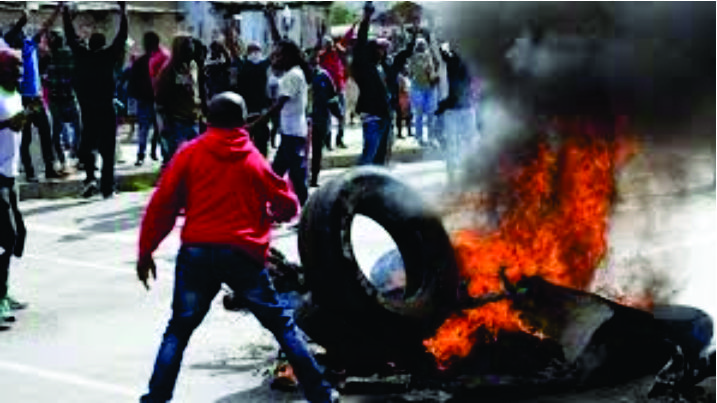
    ABUJA, Nigeria (NPA) — Bianca Odumegwu-Ojukwu, Nigeria’s Minister of Foreign Affairs, has raised concerns over renewed xenophobic tensions and anti-foreigner protests in South Africa, warning that the safety of Nigerian citizens and businesses in the country must not be endangered.

    In a situation report on the protests, the minister said the Nigerian government was closely monitoring developments following recent demonstrations in parts of Pretoria and Johannesburg marked by anti-migrant rhetoric and hostility toward foreign nationals, including Nigerians.

    According to the report, President Bola Ahmed Tinubu had been briefed on the situation and expressed grave concern, calling for stronger intervention by South African security authorities to prevent escalation.

    The ministry said disturbing images circulating on mainstream and social media platforms depicting violence, xenophobic rhetoric, and targeted attacks against foreign nationals had drawn widespread international condemnation.

    However, Nigerian authorities acknowledged recent statements by South African President Cyril Ramaphosa, Home Affairs Minister Leon Schreiber, and Police Minister Firoz Cachalia condemning extra-judicial killings, destruction of property, and anti-foreigner sentiments.

    The anti-migration protests, reportedly organised by local groups between April 27 and April 29, 2026, were largely peaceful under heavy police presence, with officers occasionally deploying teargas to prevent violence.

    The ministry said no Nigerian citizen was killed or had property destroyed during the protests. However, two Nigerian nationals were reported dead in separate incidents involving South African security personnel.

    According to the report, Amamiro Chidiebere Emmanuel died on April 25 from injuries allegedly sustained after being beaten by members of the South African National Defence Force in Port Elizabeth on April 20.

    Another Nigerian, Nnaemeka Matthew Andrew, reportedly died following an alleged encounter with officers of the Tshwane Metro Police, with his body later discovered at the Pretoria Central Mortuary on April 20.

    The Nigerian government described both incidents as “utterly condemnable and unacceptable,” adding that the Nigerian High Commission in South Africa was monitoring investigations and demanding justice.

    The ministry also disclosed that another round of demonstrations is expected between May 4 and May 8, prompting directives from President Tinubu for close monitoring of the situation.

    Nigeria’s Ministry of Foreign Affairs has summoned South Africa’s High Commissioner to Nigeria over the incidents and ongoing tensions.

    According to the statement, the Nigerian High Commission and Consulate in South Africa remain in constant contact with local authorities to minimise risks to Nigerian citizens amid ongoing consultations with senior South African officials.

    The government further announced plans for voluntary repatriation for Nigerians willing to return home due to the rising tensions.

    Officials said about 130 Nigerians had already registered with the country’s diplomatic mission in South Africa for possible evacuation flights, with the number expected to increase as consultations continue with Nigerian community associations in the country.

    The ministry noted that Nigeria played a major role in supporting South Africa’s anti-apartheid liberation struggle and stressed that such historical ties should not be forgotten.

    “It has become a repetitive wave, most especially prior to elections in South Africa, where anti-foreigner opposition parties leverage the situation to garner votes,” the statement said.

    Nigeria also referenced a recent memorandum of understanding signed with South Africa on early warning mechanisms aimed at protecting citizens of both countries during periods of tension and instability.