Category: Africa

  • Nwifuru, Mbah, Umahi, Others Mourn As Dr Ogbonnaya Onu Is Buried In Ebonyi

    Nwifuru, Mbah, Umahi, Others Mourn As Dr Ogbonnaya Onu Is Buried In Ebonyi

    The president, while recognising the immense contributions of the deceased in birthing the ruling All Progress Congress, described the party as a formidable one in the country. He also reiterated his campaign promise of doing his “utmost best to provide good governance, uplift the living standards of the people, and hoist high the APC banner.

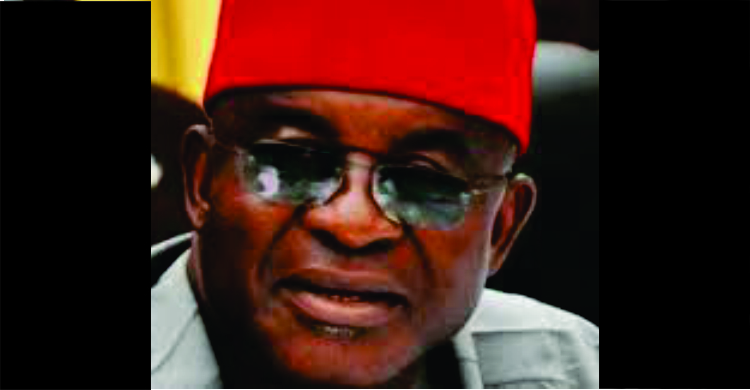
    Dr Ogbonnaya Onu, a notable Nigerian politician, engineer, author, and the first civilian governor of Abia State, who died on 11 April 2024 at 72, has been laid to rest in his hometown, Uburu, in Ebonyi State, Nigeria’s southeast. The founding member of the All Progressives Congress (APC) was buried on November 8, 2024.

    In his solemn remarks about the life and times of the astute politician and administrator, the host governor, H.E. Rt. Hon. Francis Ogbonna Nwifuru eulogised the deceased as a bridge builder, who has inspired generations “and left an enduring example of true leadership” and an immortal “legacy shared by all who benefited from his work”.

    Also at the event, the minister of works and housing, the immediate past governor of Ebonyi State, David Nweze Umahi, who represented President Bola Ahmed Tinubu described Dr Onu as “a perfect gentleman and a committed progressive who dedicated his life to the service of our nation and humanity”.

    President Tinubu pronounced Dr Onu a true progressive and a quintessential politician, who believed “in the ideals of the progressive movement to develop the country and the reason he worked tirelessly for the emergence of APC on the national stage in the 2015 presidential and other elections.

    The president, while recognising the immense contributions of the deceased in birthing the ruling All Progress Congress, described the party as a formidable one in the country. He also reiterated his campaign promise of doing his “utmost best to provide good governance, uplift the living standards of our people, and hoist high the APC banner.”

    The Enugu State Governor, Dr Peter Ndubuisi Mbah, also attended the funeral amongst other dignitaries from within and outside the southeast region.

  • Support Supply Chain Financing: Okonjo Iweala And Others Tell Financial Institutions

    Support Supply Chain Financing: Okonjo Iweala And Others Tell Financial Institutions

    The Director-General of the World Trade Organisation, Dr Ngozi Okonjo-Iweala and other heads of multilateral development banks (MDBs) have called on financial institutions to support Supply Chain Finance (SCF) to empower small businesses and boost trade. This involves the unlocking of working capital and easing the financial burden on suppliers in global value chains as well as ‘discounting of suppliers’ invoices by a bank or financier, allowing businesses to borrow against the value of their outstanding invoices’.

    Heads of the MDBs made the call during the World Bank Group and International Monetary Fund annual meetings in Washington D.C. on 25 October, an event co-hosted by the IFC Managing Director Makhtar Diop.

    WTO’s Director-General, Dr Okonjo-Iweala, emphasised that multilateral development banks have increased trade and supply finance support from US$30 billion annually before the COVID-19 pandemic to nearly US$50 billion in 2023, helping ensure the supply of essential food, medicine and other critical imports. She also pointed out that global supply chain finance, one of the fastest-growing segments of trade finance, is now valued at around US$2.3 trillion.

    She also noted that small businesses in developing countries have yet to fully benefit from trade expansions because of challenges such as weak legal frameworks, inadequate technological infrastructure, and high business costs.

    Okonjo also noted the need for the multilateral development banks to coordinate activities, focusing on increasing financial support through their existing supply chain finance programmes and taking concrete measures to support the legal, policy and operational framework needed for market development. Besides collaborating with financial institutions to increase the diversity of financing products available to small businesses, which she said will unlock trade volumes, and make it more inclusive and competitive, with the multiplier effect of higher development and poverty reduction outcomes in countries around the world.

    Speaking in the same vein, the IFC Managing Director Makhtar Diop highlighted that the “supply chain finance is crucial for empowering emerging market firms, especially SMEs, to engage effectively in both local and global value chains. By providing access to vital financial resources, it enables these businesses to thrive, fostering growth, and generating quality job opportunities,” he said.

    Others who shared their efforts in the expansion of supply chain finance are the senior officials from the European Bank for Reconstruction and Development (EBRD), the African Export-Import Bank (Afreximbank), the Asian Development Bank (ADB), the Islamic Development Bank (ISDB), and IDB Invest (the private sector arm of the Inter-American Development Bank).

    In a joint statement issued at the end of the meeting, the MDBs pledged to strengthen cooperation and leverage their resources to support SMEs in supply chain, technology infrastructure, analytics, training, and financing.

    The statement reads in part: “Supply Chain Finance (SCF) is essential for enabling emerging markets firms, particularly Small and Medium-sized Enterprises (SMEs), to participate in both global and local markets. Greater participation of SME firms in global value chains will increase trade and development opportunities, integrate value chains, and incentivise better environmental and social (E&S) performance.

    However, according to the recent studies conducted by the International Finance Corporation (IFC) and the World Trade Organization (WTO), local availability of SCF, especially in low-income and fragile countries, is scarcer than traditional trade finance due to weaker financial and legal infrastructures, leading to missed economic opportunities.

    Multilateral Development Banks (MDBs) need to collaborate to further increase financial support, improve regulatory frameworks, promote marketplaces, drive E&S agenda, build market capacity, and increase product availability in supply chain finance markets.

    We, the World Trade Organization (WTO), International Finance Corporation (IFC, World Bank Group), African Export-Import Bank (AFREXIMBANK), Asian Development Bank (ADB), European Bank for Reconstruction and Development (EBRD), IDB Invest (IDBI), and International Islamic Trade Finance Corporation (ITFC, Islamic Development Bank Group), will coordinate through the already established Supply Chain Finance Task Force under WTO’s Multilateral Development Banks (MDBs) Working Group to i) increase financial support through their existing SCF programs; ii) strengthen the legal infrastructure; iii) promote common sector-level operating marketplaces; iv) build market awareness and stakeholder capacity; and v) work with financial institutions and fintechs to increase product diversity and availability.

  • Why Nigeria Needs A Well-Articulated MICE Policy To Rival Rwanda USD 60M Industry

    Why Nigeria Needs A Well-Articulated MICE Policy To Rival Rwanda USD 60M Industry

    Rwanda in East Africa has intentionally emerged as the leading destination for international conferences and events and a creative hub in the sub-Saharan Region. Kigali, its eco-friendly capital, is well-connected to the seven continents, with RwandAir, the country’s flag carrier, expanding its routes aggressively. Also, the government, led by President Paul Kagame, has simplified the visa process—offering visas on arrival—making the country attractive for global meetings. Security in the country of about 14 million people, reputed for a low crime rate and significant investment in public safety, has significantly enhanced its appeal to international delegates and investors and raised the bar.

    Modern infrastructure, such as world-class venues like the Kigali Convention Centre, reliable transportation, an eco-friendly urban planning strategy, and international hotel chains, also contributes to the success of the East African country. With the booming Rwanda’s hospitality industry complementing its growing MICE (Meetings, Incentives, Conferences, and Exhibitions) sector. The government has also invested heavily in education, developing a tech-savvy, skilled workforce, particularly in ICT, events management, and hospitality, supported by institutions like the African Leadership University and tech hubs.

    In contrast, despite its large cities like Lagos and Abuja, Nigeria faces challenges that hinder it from profiting from the growing MICE industry to attain its full potential. Security concerns, including terrorism, civil unrest birthed by worsening economic conditions and perennial secessionist agitations, have remained major obstacles to attracting international events. While the country of over 200 million people has significant facilities such as the Eko Convention Centre and others, unreliable infrastructure—particularly in power generation and supply and poor transportation services—diminishes its MICE competitiveness. And despite its creative and tech sectors being very vibrant, particularly in Lagos, brain drain and gaps in technical education hamper further economic growth. Government efforts to promote international events have been slower, fraught with bureaucratic red tape and policy somersaults.

    Notably, Rwanda’s government has played a pivotal role in driving a focused MICE strategy, marketing the country globally, and encouraging private-sector involvement. Nigeria, with its larger population and market potential, could catch up by addressing security concerns and national cohesion challenges, improving its infrastructure, and fostering public-private partnerships. Simplification of the visa policies and robust investments in technical education are other critical steps to enhance its global standing.

    Nigeria’s untapped MICE market has the potential to generate between $500 million to USD 1 billion annually, in contrast to Rwanda’s current USD 60 million—expected to grow to USD 150 million by 2025. The global MICE industry, valued at USD 876 billion in 2022 and projected to reach USD 1.4 trillion by 2028, presents significant opportunities for Nigeria to shore up its foreign exchange earnings to support the ongoing efforts to arrest its spiralling economic crisis.

    In the short and long run, with the right reforms, Nigeria could unlock substantial economic growth by capitalising on this sector, boosting tourism, attracting foreign investments, creating jobs and also diversifying its economy and positioning itself as a key player in Africa’s event and tourism space.

    Aderemi Ogunpitan is the President of IBST Limited (an award-winning Nigerian video production company with affiliates in London, Accra, Douala, Kampala, and Nairobi).