Category: Weather

  • Lagos launches Africa’s first Flood Risk Insurance Scheme for vulnerable residents

    Lagos launches Africa’s first Flood Risk Insurance Scheme for vulnerable residents

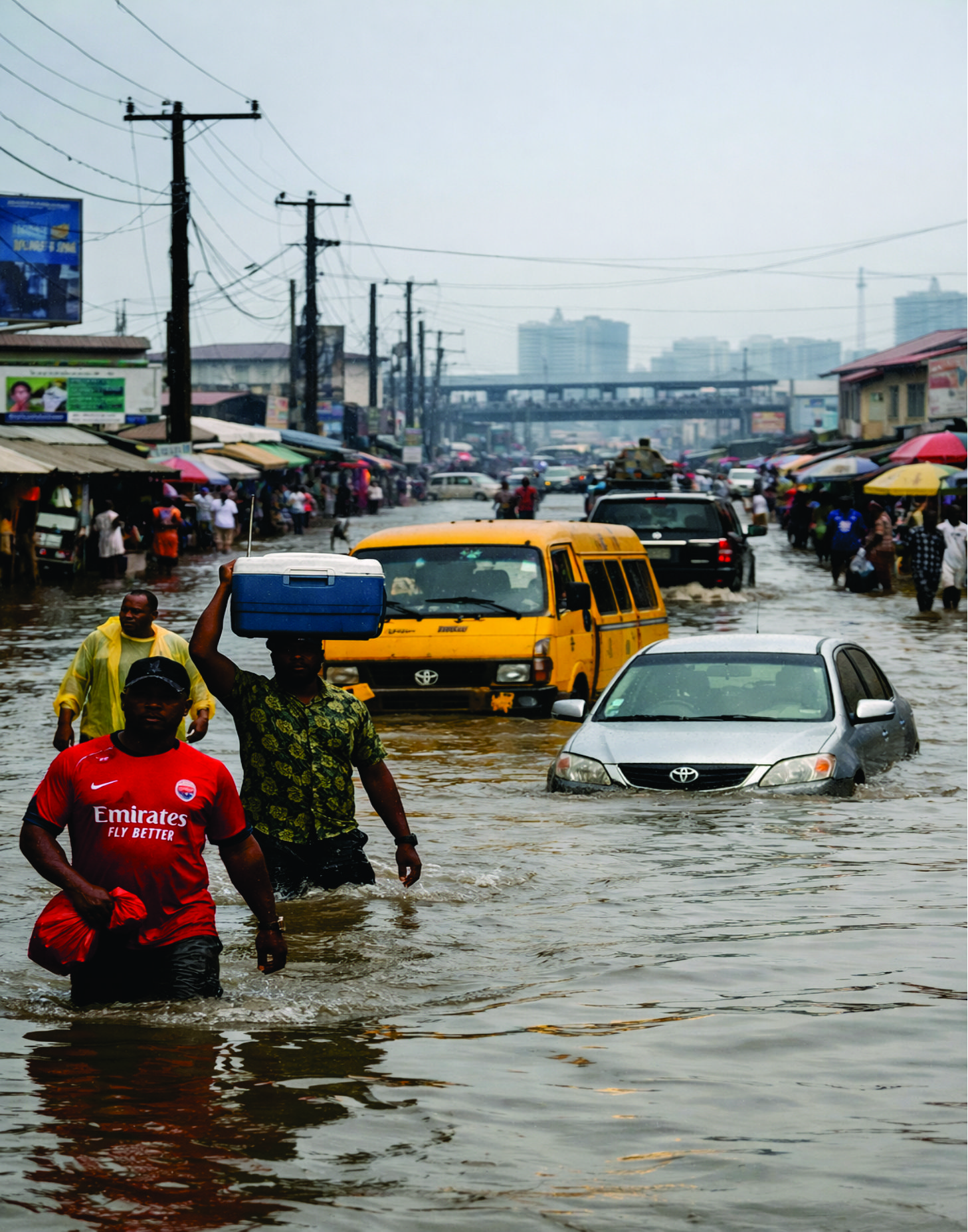
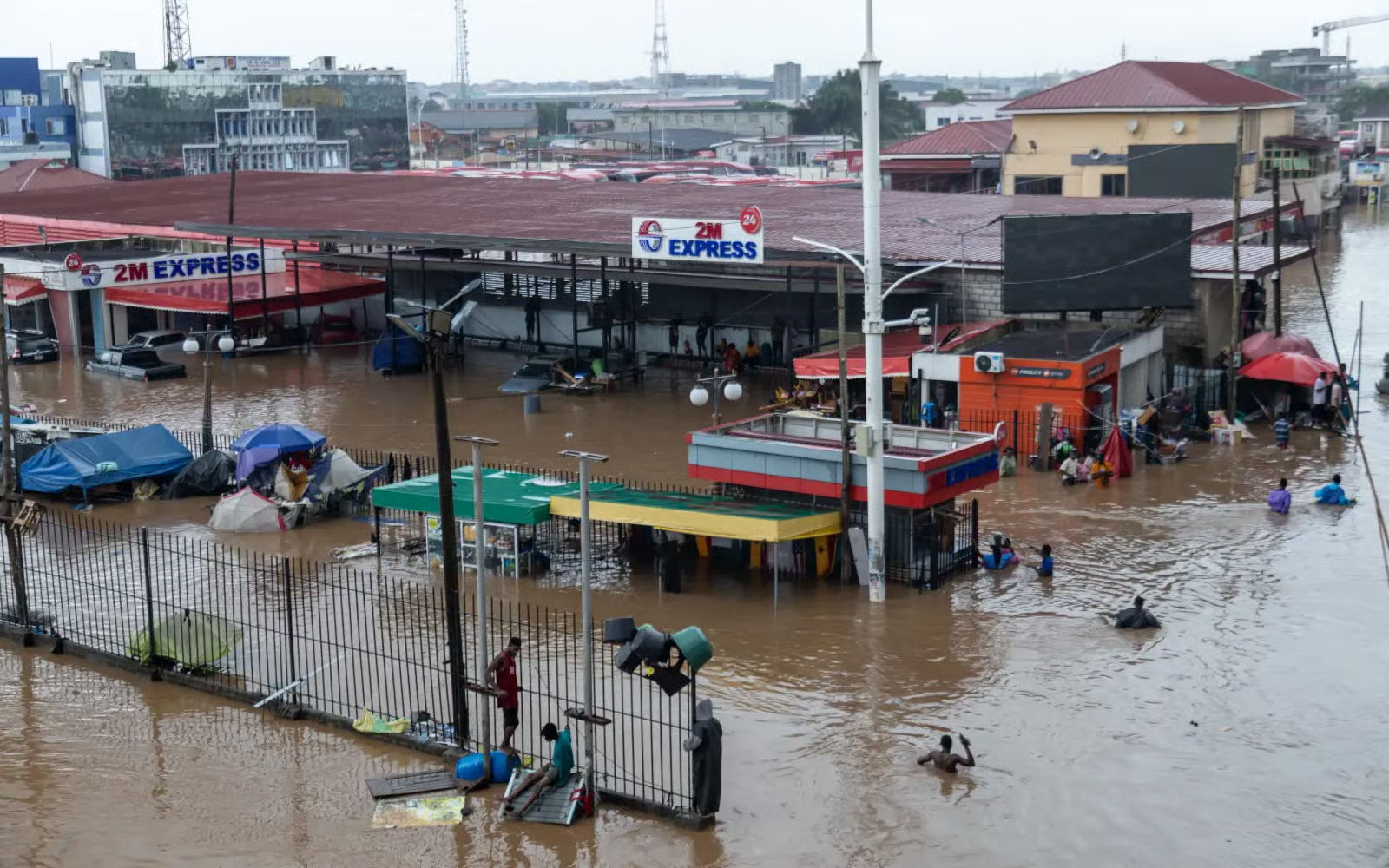
    LAGOS, Nigeria (NPA) — The Lagos State Government has launched what it described as Africa’s first Flood Risk Insurance Policy aimed at providing rapid financial assistance to vulnerable residents affected by flooding across the state.

    Governor Babajide Olusola Sanwo-Olu described the initiative as a major shift from reactive disaster response to proactive climate risk management, saying the programme was designed to protect lives, livelihoods and critical infrastructure in flood-prone communities.

    Speaking during the launch at the Radisson Blu Hotel, Sanwo-Olu said the insurance policy would ensure support reaches flood victims swiftly and transparently whenever disasters occur.

    Represented by the Secretary to the State Government, Abimbola Salu-Hundeyin, the governor disclosed that the scheme would cover more than four million vulnerable residents across seven high-risk local government areas, including Ajeromi-Ifelodun, Alimosho, Amuwo-Odofin, Apapa, Kosofe, Ojo and Somolu.

    According to the state government, the programme provides potential payouts of up to $7.5 million for each flood event.

    Sanwo-Olu noted that beneficiaries would not pay premiums or complete complicated documentation processes, explaining that the initiative is fully funded by the state government using existing social registers, including the Lagos State Residents Registration Agency database.

    He also urged the Federal Government and other states to adopt similar models to strengthen climate resilience nationwide.

    Commissioner for Finance Abayomi Oluyomi described the initiative as a strategic fiscal protection mechanism capable of improving emergency response and post-disaster recovery.

    He warned that Lagos remains increasingly vulnerable to climate-related threats such as sea-level rise and extreme rainfall, with projections suggesting climate inaction could cost the state up to $40 billion by 2050.

    The commissioner disclosed that the German Government, through the InsuResilience Solutions Fund, would finance 90 percent of the insurance premium in the first year, while Lagos State covers the remaining 10 percent.

    Special Adviser to the Governor on Sustainable Development Goals, Oreoluwa Finnih, described the programme as a major milestone in promoting fiscal sustainability and climate resilience.

    Finnih said the scheme would deploy satellite technology for transparency while covering pluvial, fluvial and coastal flooding.

    The programme will also support direct household relief and restoration of damaged public infrastructure through integration with the Lagos State Emergency Management Agency.

    Representatives of the United Nations Development Programme, the European Union, the German Government, the World Bank and the African Development Bank attended the launch event alongside private sector insurance partners.

    Officials said the initiative emerged from collaborations developed after engagements at COP27 in Sharm El Sheikh, Egypt, as part of efforts to build a resilient and future-ready Lagos.

  • Extreme heat threatens global agrifood systems, FAO-WMO Warn

    Extreme heat threatens global agrifood systems, FAO-WMO Warn

    INTERNATIONAL (NPA) — Extreme heat events are pushing agrifood systems to the brink, threatening the livelihoods, health, and productivity of more than a billion people, according to a new joint report released by the Food and Agriculture Organization of the United Nations (FAO) and the World Meteorological Organization (WMO).

    The report, Extreme Heat and Agriculture, launched on Earth Day, warns that rising temperatures are exerting mounting pressure on crops, livestock, fisheries, forests, and the communities that depend on them. FAO Director-General QU Dongyu described extreme heat as a “major risk multiplier,” stressing its compounding effects on agrifood systems. WMO Secretary-General Celeste Saulo added that extreme heat is no longer an isolated climatic hazard but a defining condition for agriculture, noting that early warnings and climate services are vital to adaptation.

    The report outlines how extreme heat affects plants, animals, fish, and humans. For livestock, stress begins at temperatures above 25°C, with chickens and pigs particularly vulnerable. Fish are also at risk, suffering cardiac failure in overheated waters with reduced oxygen levels.

    WMO’s State of the Global Climate 2025 found that more than 90 percent of the global ocean experienced at least one marine heatwave last year. For crops, yield declines typically begin above 30°C, with sensitive crops such as potatoes and barley affected at even lower thresholds. Heat waves also correlate strongly with wildfires, extending fire seasons and intensifying their impacts.

    Human labour is equally endangered. Agricultural workers face rising health risks and productivity losses, with the report warning that in regions such as South Asia, tropical Sub-Saharan Africa, and parts of Central and South America, the number of days too hot to work could rise to 250 annually.

    The danger of extreme heat lies not only in direct impacts but also in its role as a risk multiplier, exacerbating water stress, triggering flash droughts, fueling wildfires, and fostering the spread of pests and diseases.

    To counter these threats, the FAO-WMO report calls for innovation and adaptive measures. Recommendations include selective breeding of heat-resistant livestock, crop choices adjusted to new climate realities, shifting planting windows, and altering management practices to shield crops and agricultural activities.

    Early warning systems are emphasised as critical tools to help farmers prepare for extreme heat, while access to financial services such as cash transfers, insurance, and social protection schemes is highlighted as essential to recovery.

    The report urges governments and international institutions to strengthen resilience at both farm and systemic levels. It calls for collective political will to share risks and transition decisively away from high-emission futures. “Protecting the future of agriculture and ensuring global food security will require not only building on-farm resilience but also exercising international solidarity and collective political will for risk sharing, and a decisive transition away from a high-emissions future,” the report concludes.

    Released on Earth Day, the findings establishes the interconnectedness of climate change, food security, and ecosystem health. With extreme heat already reshaping the conditions under which agriculture operates, FAO and WMO stress that adaptation is not optional but essential to sustaining food production and protecting vulnerable populations.

  • TCN declares force majeure on Ikeja West–Osogbo line after storm damages tower

    TCN declares force majeure on Ikeja West–Osogbo line after storm damages tower

    ABUJA, Nigeria (NPA) — The Transmission Company of Nigeria (TCN) has declared a force majeure on the Ikeja West–Osogbo 330kV transmission line following a severe rainstorm that brought down a transmission tower.

    The incident occurred on April 16, 2026, when the line tripped during the storm due to a fault detected about 14.9 kilometres from the Ikeja West (Ayobo) end of the line.

    In a statement signed by the General Manager, Public Affairs, Ndidi Mbah, on April 19, 2026, TCN said further inspection by its maintenance crew revealed that Tower No. 515 had collapsed, with the structure giving way at its midsection.

    The company said it is mobilising materials and personnel for the re-erection of the fallen tower, while engineers are currently working to dismantle the damaged structure.

    TCN assured that efforts are underway to restore flexibility and redundancy along the corridor, noting that an alternative line remains in service to evacuate bulk power.

    It added that updates would be provided as work progresses.

    As of the time of filing this report, it is unclear how long repairs will take or the extent of areas that may experience blackout as a result of the disruption.

  • Rainstorm damages newly built Kugbo Bus Terminal, causing traffic disruption in Abuja

    Rainstorm damages newly built Kugbo Bus Terminal, causing traffic disruption in Abuja

    ABUJA, Nigeria, April 8, 2026 (NPA) — A heavy rainstorm on Tuesday afternoon damaged parts of the Kugbo Bus/Taxi Terminal in the Federal Capital Territory (FCT), just weeks before its scheduled commencement of operations.

    The storm, which began around 3:30 p.m., tore off sections of the terminal’s roof and scattered debris across the Abuja–Keffi Expressway, leading to severe traffic congestion. Witnesses reported scavengers collecting pieces of the roof and other materials deposited on the road.

    Mr Lere Olayinka, Senior Special Assistant to the FCT Minister on Public Communications and Social Media, confirmed that the rainstorm also caused minor damage to the Nyanya pedestrian bridge and nearby buildings. He emphasised that preliminary reports indicated no injuries or vehicle damage.

    FCT Minister Nyesom Wike directed security personnel to secure the site, restore traffic flow, and prevent disorder. Olayinka assured that immediate repairs would be undertaken to restore the terminal.

    The Kugbo terminal is one of three newly constructed facilities — alongside Mabushi and the Central Business District (CBD) — inaugurated in June 2025 to improve commuter safety and convenience. Designed by Planet Project Ltd., the Kugbo and Mabushi terminals are expected to process over 10,000 passengers daily and accommodate 120 buses and taxis for both intercity and intra-city travel. Each terminal is projected to employ at least 100 workers.

    Although completed and inaugurated last year, the terminals have yet to begin operations due to management approval requirements. On March 27, Minister Wike announced that the Federal Executive Council, under President Bola Tinubu, had approved a Public-Private Partnership arrangement for the Mabushi and Kugbo terminals, paving the way for their imminent launch.

  • NiMet forecasts thunderstorms across Nigeria on April 6, gives important advisory

    NiMet forecasts thunderstorms across Nigeria on April 6, gives important advisory

    ABUJA, NIGERIA, April 5, 2026 (NPA) — The Nigerian Meteorological Agency (NiMet) has released its weather forecast for Monday, April 6, 2026, highlighting sunny conditions in the north, cloudy skies in the central region, and widespread thunderstorms in the south.

    Northern States: Sunny with Isolated Thunderstorms

    Morning: Predominantly sunny skies.

    Afternoon/Evening: Localized thunderstorms expected in Kaduna and Taraba.

    Outlook: Hot and sunny conditions will dominate, with pockets of thunderstorms later in the day.

    Central States: Cloudy Start, Stormy Finish

    Morning: Cloudy skies with intervals of sunshine.

    Afternoon/Evening: Isolated thunderstorms with light rains likely in Nasarawa, Kwara, Kogi, FCT, and Benue.

    Outlook: Calm morning conditions may give way to thunderstorms — residents are advised to plan activities early.

    Southern States: Rain-Soaked Day Ahead

    Morning: Cloudy skies with sunshine intervals. Thunderstorms with light rains are expected in Lagos, Southern Ondo, Edo, Bayelsa, Rivers, Akwa Ibom, Delta, and Cross River.

    Afternoon/Evening: Widespread thunderstorms and light rains forecast for Enugu, Ebonyi, Imo, Anambra, Abia, Ogun, Ondo, Osun, Ekiti, Oyo, Lagos, Delta, Edo, Bayelsa, Rivers, Cross River, and Akwa Ibom.
    Outlook: Increased rainfall activity later in the day — expect wet roads, reduced visibility, and possible disruptions to outdoor activities.

    Important Advisory

    • Strong winds may precede thunderstorms — secure loose objects.
    • Drive cautiously due to slippery roads and reduced visibility.
    • Avoid flood-prone areas during heavy rainfall.
    • Stay hydrated under prevailing warm conditions.
    • Airlines should obtain airport-specific weather reports from NiMet for safe operations.
  • NEMA trains naval personnel and students on disaster management in Port Harcourt

    NEMA trains naval personnel and students on disaster management in Port Harcourt

    PORT HARCOURT, NIGERIA (NPA) — March 13, 2026 — The National Emergency Management Agency (NEMA) has conducted disaster management training for naval personnel and students of the Nigerian Navy Secondary School in Brokiri Town, Port Harcourt, Rivers State.

    The exercise, held on March 11, was supervised by NEMA’s Head of Operations, Eric Ebodaghe, and aimed at strengthening preparedness and response capacity among officers and students of the naval institution. Training sessions covered flood management, evacuation procedures, fire prevention, and practical evacuation drills.

    Facilitators, including Mr. Anyanwu Fortunatus and Mr. Felix Akakara, led interactive sessions and coordinated a hands-on evacuation drill involving all participants.

    In a statement, Ebodaghe urged participants to take the training seriously, noting that the skills acquired would be vital in responding effectively to emergencies. 

    Responding on behalf of the institution, Lt. Cdr. A.M. Koko expressed appreciation to NEMA for the initiative and conveyed gratitude to Director-General Zubaida Umar for supporting the program.

  • NiMet forecasts sunshine, thunderstorms across Nigeria

    NiMet forecasts sunshine, thunderstorms across Nigeria

    ABUJA, NIGERIA (NPA) — March 12, 2026 — The Nigerian Meteorological Agency (NiMet) has released its forecast for Friday, 13th March 2026.

    Sunny skies are expected across the Northern region throughout the day, with isolated thunderstorms likely over parts of Kaduna and Taraba States later.

    In the Central States, the morning will bring sunny skies with patches of clouds, while isolated thunderstorms and light rains are anticipated in Plateau, the Federal Capital Territory, Nasarawa, Kwara, Benue, Niger, and Kogi States by afternoon and evening.

    Southern States will experience a cloudy atmosphere with intervals of sunshine in the morning, alongside isolated thunderstorms in Oyo, Ogun, Cross River, and Lagos. Later in the day, thunderstorms with light rains are expected across Edo, Ekiti, Oyo, Imo, Enugu, Abia, Anambra, Osun, Bayelsa, Rivers, Ondo, Ogun, Lagos, Delta, Cross River, and Akwa Ibom States.

    NiMet advised residents in storm-prone areas to take precautions, as thunderstorms may be accompanied by strong winds. Northern residents were urged to stay hydrated, avoid prolonged sun exposure, and seek cooler environments.

    Airline operators are encouraged to obtain airport-specific weather information from NiMet for effective planning.

  • FG to Establish Fire Stations in 109 Senatorial Districts

    FG to Establish Fire Stations in 109 Senatorial Districts

    KANO, NIGERIA — The Federal Government has announced plans to establish fire stations in all 109 senatorial districts across the country as part of efforts to mitigate fire disasters and strengthen emergency response.

    Controller General of the Federal Fire Service (FFS), Dr Olumode Samuel-Adeyemi, disclosed this during an on-the-spot assessment of the Singer Market in Kano State, following the February 14 fire incident.

    Samuel-Adeyemi said a dedicated fire post would be established at Singer Market to curb recurring outbreaks. He conveyed the condolences of the Minister of Interior, Dr Olubunmi Tunji-Ojo, to the government and people of Kano State, particularly traders who lost lives and property worth billions of naira.

    Strengthening Response and Prevention

    The CG explained that the initiative is part of a broader plan to:

    • Expand fire coverage nationwide through senatorial and local government fire stations.
    • Construct water reservoirs in major markets to ensure quick access to water during emergencies.
    • Collaborate with the Nigeria Police Force and Nigeria Security and Civil Defence Corps for crowd control during incidents.
    • Intensify public education and inspections through the Inspectorate and Enforcement Unit to enforce compliance with fire safety standards.

    He identified faulty electrical wiring, unsafe fuel storage, cooking inside shops, use of generators, lithium battery installations, and unattended appliances as major causes of market fires.

    Samuel-Adeyemi also noted that although firefighters arrived at Singer Market within 20 minutes, access was delayed due to obstructed roads. He appealed to Nigerians to give right of way to fire trucks during emergencies.

    Legislative Backing

    The CG added that the proposed amendment of the Fire Service Act would strengthen enforcement powers, including the authority to seal premises that fail to install required fire safety equipment.

    He commended the Kano State Fire Service and other emergency agencies for their cooperation and assured continued federal support in equipment and training.