

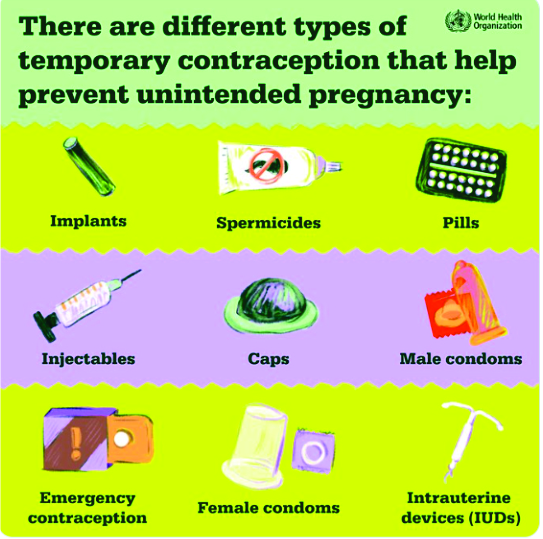
ABUJA, NIGERIA — (NPA) March 16, 2026 — The World Health Organisation (WHO) Nigeria has outlined several contraceptive methods available to prevent pregnancy for both men and women.
In a statement posted on X, the global health body categorised contraceptives into hormonal methods, non-hormonal options such as condoms and copper IUDs, permanent surgical procedures like vasectomies or female sterilisation, and emergency contraception after intercourse.
WHO noted that effectiveness varies, and not all methods suit everyone, urging individuals to consult health workers for guidance.
Despite widespread awareness, contraceptive use in Nigeria remains low. Academic Journals report that only 12–18% of women of reproductive age use modern contraceptives, contributing to high rates of unintended pregnancies, unsafe abortions, and sexually transmitted infections. Fertility and maternal mortality rates remain among the highest globally.
However, challenges persist. Cultural and religious resistance, spousal opposition, myths about side effects, limited access in rural areas, and inadequate youth-friendly services all hinder uptake. These barriers continue to drive high fertility rates and poor reproductive health outcomes, underscoring the urgent need for stronger education, policy support, and community engagement.

