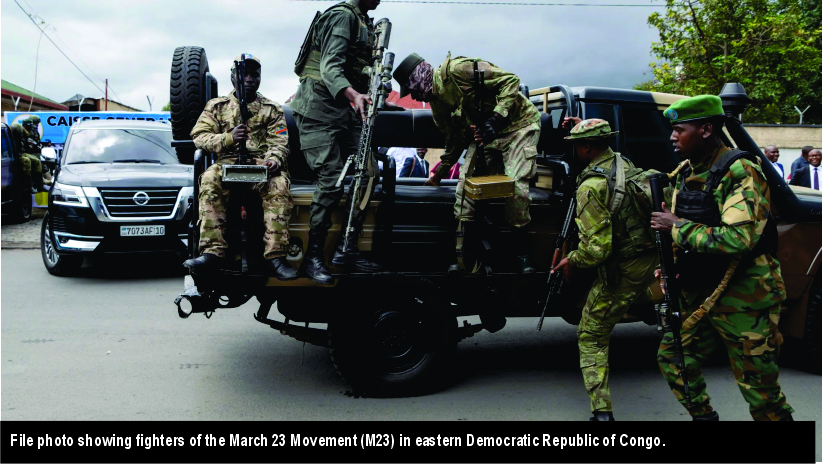
LAGOS, NIGERIA (NPA), March 3, 2026 — The United States has imposed sanctions on the Rwandan Defence Force (RDF) and four senior military officers for providing direct operational support to the March 23 Movement (M23) rebels in eastern Democratic Republic of the Congo (DRC). The sanctions, announced on March 2, 2026, by the U.S. Department of State and signed by Principal Deputy Spokesperson Thomas “Tommy” Pigott, accuse Rwanda of violating commitments under the Washington Accords, an agreement reached between DRC President Félix Tshisekedi and Rwandan President Paul Kagame. The statement noted that RDF-backed M23 forces recently captured the Congolese city of Uvira, in breach of the accord.
The U.S. condemned M23 for committing grave human rights abuses, including summary executions and violence against civilians, particularly women and children. It stressed that RDF support has enabled the rebels to seize sovereign Congolese territory and continue these atrocities. “The United States stands firm in its support for peace and stability in eastern DRC and the wider region,” the statement read. “The Washington Accords mark a decisive turning point for the Great Lakes region, setting a new course for peace, cooperation, and prosperity among neighbours. Today’s action demonstrates the U.S. resolve to uphold the Washington Accords. As President Trump has made clear, the United States is prepared to use all available tools to ensure the DRC and Rwanda deliver on the promises of this historic agreement.”
Formed in 2012 by former members of the National Congress for the Defence of the People (CNDP), M23 rebels accuse the Congolese government of failing to honour a 2009 peace deal. Predominantly composed of Tutsi fighters, the group has long been suspected of receiving support from Rwanda, though Kigali denies this. Since its resurgence in 2021, M23 has captured significant territory in North Kivu, destabilising the region. While the rebels claim to be defending the rights of Congolese Tutsis and demanding political representation, critics argue their campaign is driven by territorial ambitions and political leverage, worsening humanitarian crises and regional tensions.