
INTERNATIONAL, April 6, 2026 (NPA) — From potential to skills and real jobs, young women across Western and Central Africa are reshaping their futures through training and employment opportunities provided by the Sub-Saharan Africa Women’s Empowerment and Demographic Dividend project (SWEDD/SWEDD+).
Since its inception in 2015, the initiative has reached nearly 3 million women and adolescent girls, linking education, skills development, and access to health services with real economic pathways. More than 255,000 participants have acquired practical skills and transitioned into stable employment, showing how investment in women’s education and workforce participation strengthens families, communities, and local economies.
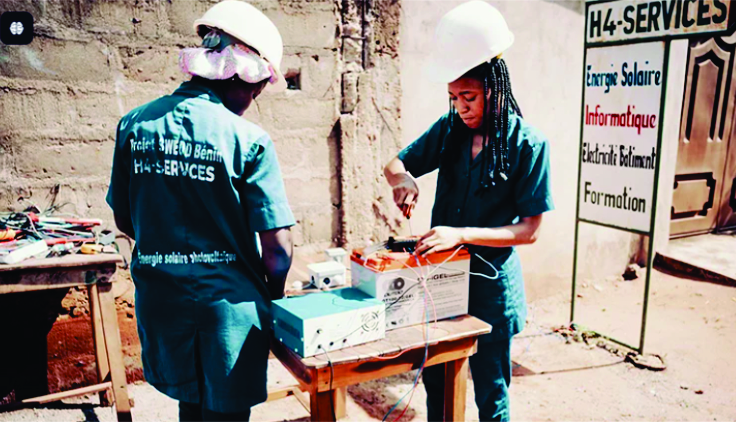
Across the region, stories of transformation abound. In Benin, Angelique and Odette, who left school early due to financial hardship, were trained in solar photovoltaic installation through SWEDD. Today, they work with a private company, installing solar panels and bringing renewable energy to rural villages. “Now we’re motivated and earning money to support our families. We’re happy to bring solar energy to the villages,” Angelique said, her pride evident.
Harmelle, also from Benin, faced similar challenges after leaving school at 14 and becoming a widow at a young age. With her twin sister, she joined a SWEDD entrepreneurship program in snail farming. The training and starter kit provided not only income but also stability. “When I started farming, there were difficulties, but then we began earning money, and everyone was better off,” she recalled.
In Chad, Djogoita pursued midwifery, inspired by her father’s service as a police officer. Her training now allows her to provide essential maternal and child health services. “When they bring me a pregnant woman or a child, I can use the knowledge I gained to help them,” she said proudly, highlighting the confidence and purpose her new role has given her.
These individual stories reflect a broader shift. While about 40% of young women in West and Central Africa remain outside school, training, or employment, SWEDD+ is changing trajectories by expanding opportunities, building confidence, and strengthening institutional capacity for equal rights.
The World Bank Group emphasizes that investing in women is one of the smartest economic bets for powering local economies. By equipping young women with relevant skills and connecting them to jobs, programs like SWEDD+ turn human potential into productive employment that fuels inclusive and sustainable growth.
As the activities marking the International Women’s Month wind down, the voices of Angelique, Odette, Harmelle, and Djogoita is a remind that Africa’s future resilience is already taking shape — one empowered young woman at a time, trained, employed, and determined to drive change in her community.

