

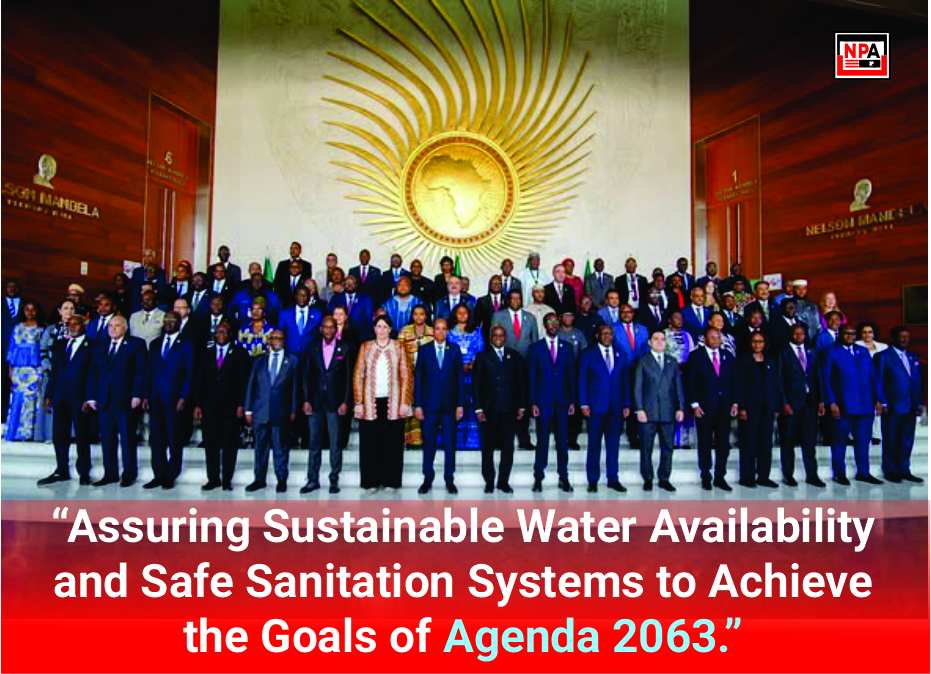
ADDIS ABABA, ETHIOPIA: The African Union Executive Council has opened its 48th Ordinary Session in Addis Ababa with a strong call for unity among member states, sustainable water management, and accelerated continental integration. The meeting comes against the backdrop of political instability and leadership changes across several African countries, as well as renewed debates over regional power blocs.
The two-day session, which began Wednesday at the AU headquarters, is being held under the Union’s 2026 theme: “Assuring Sustainable Water Availability and Safe Sanitation Systems to Achieve the Goals of Agenda 2063.” The theme reflects growing concerns over water security, particularly disputes along the River Nile, where Ethiopia’s recent inauguration of a major hydropower dam has raised tensions with downstream nations such as Egypt.
AU Commission Chairperson H.E. Mahmoud Ali Youssouf underscored the importance of water as a collective resource, urging member states to view it as a tool for peace and cooperation amid climate change. He also expressed concern over political instability, unconstitutional changes of government, and persistent security threats in the Sahel and Horn of Africa, noting both progress and setbacks in countries such as Gabon, Guinea, Madagascar, and Guinea-Bissau.
On continental integration, Youssouf highlighted the African Continental Free Trade Area (AfCFTA) as a cornerstone for economic transformation. He called for innovative financing mechanisms and greater involvement of specialized agencies, the private sector, civil society, and philanthropic foundations. “More than ever, the continent needs to capitalize on its instruments to boost the momentum of development and integration, reflecting on innovative sources of financing and involving all actors, however marginal they may seem,” he said.
According to the Council, the 48th Ordinary Session reaffirms the AU’s commitment to strengthening governance, advancing peace and security, and accelerating the implementation of Africa’s shared development agenda under Agenda 2063.

