
Nigeria, EU strengthen strategic partnership at Ministerial Dialogue, issue joint Communiqué
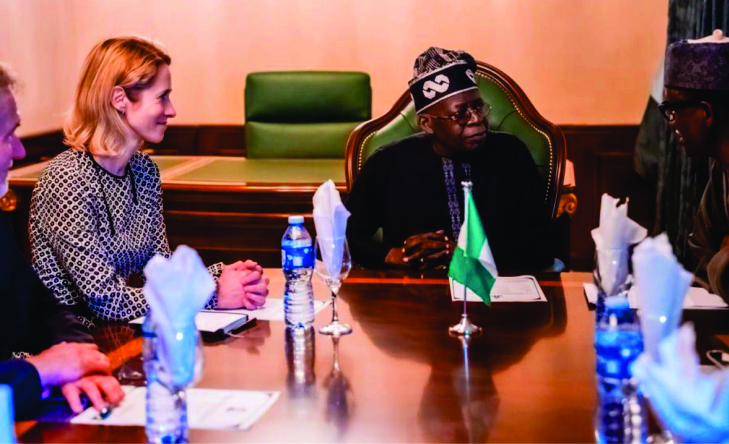
ABUJA, NIGERIA (NPA) — 26 March 2026 — Nigeria and the European Union (EU) have reaffirmed their strategic partnership, pledging deeper cooperation across peace, security, trade, climate, migration, and democratic governance during the Eighth Ministerial Dialogue held in Abuja. The meeting was co-chaired by Nigeria’s Foreign Minister, H.E. Yusuf Maitama Tuggar, and the EU’s High Representative for Foreign Affairs and Security Policy, H.E. Kaja Kallas.
The dialogue provided an opportunity to consolidate recent engagements and advance practical cooperation. At a time of global geopolitical uncertainty, both sides stressed the importance of reinforcing alliances that deliver tangible benefits to citizens. President Bola Ahmed Tinubu was formally invited to Brussels by the President of the European Council, with Tinubu expressing readiness to accept.
Multilateralism and Global Peace
Nigeria and the EU reiterated their commitment to multilateralism, democracy, human rights, and the rule of law. They emphasised protecting fundamental freedoms, including gender equality and freedom of expression. The EU reaffirmed support for reforming the UN Security Council to give Africa stronger representation.
Both sides restated support for peace in conflict zones such as Ukraine, the Middle East, Sudan, South Sudan, the Democratic Republic of Congo, Somalia, and the Sahel.
Climate, Energy, and West African Security
Climate change and energy transition featured prominently. Nigeria and the EU agreed to dialogue on renewable energy investment in solar, wind, and clean hydrogen, recognising Nigeria’s potential. They also pledged to strengthen climate resilience, particularly in the Lake Chad Basin.
On regional security, the EU acknowledged Nigeria’s pivotal role in safeguarding democracy and stability in West Africa. Both sides pledged enhanced collaboration on counter-terrorism, intelligence sharing, and preventing the financing of terrorism. They expressed readiness to support the operationalisation of the ECOWAS Standby Force.
Peace, Security, and Humanitarian Action
The communiqué highlighted the first Peace, Security and Defence Dialogue held in Brussels in February 2026. The EU signalled readiness to step up support for Nigeria’s security challenges, including possible assistance under the European Peace Facility and renewed support for the Multi-National Joint Task Force around Lake Chad.
Both sides emphasised protecting civilians, particularly children affected by terrorism, and expressed concern over the deteriorating situation in the Sahel. Humanitarian cooperation remains central, with the EU committing €33 million in 2026 to support vulnerable populations in Nigeria’s North-East and North-West.
Migration and Mobility
Migration was recognised as a multidimensional issue requiring humane responses. Nigeria and the EU reaffirmed readiness to deepen cooperation on migration governance, tackling irregular migration, trafficking, and smuggling.
A milestone was the initialling of the EU–Nigeria Readmission Agreement, with both sides expressing willingness to expedite its signature. The agreement will enhance cooperation on return, readmission, and reintegration, while also exploring legal migration pathways, including a potential Talent Partnership. Dialogue on visa policy was also agreed.
Trade, Investment, and Global Gateway
The EU remains Nigeria’s largest trading and investment partner. Both sides welcomed progress from the Senior Officials’ Trade and Investment Dialogue and technical working groups. Nigeria was encouraged to adopt the draft bill on Geographical Indications to strengthen trade facilitation.
The EU’s Global Gateway strategy was highlighted as a driver of social, green, and digital transition. Current priorities in Nigeria include green energy, agriculture, digitalisation, transport, health, and education. Notable projects include the Omi-Eko electric waterways system in Lagos, supported by €361 million from the EU, EIB, and France. Additional initiatives announced include loans for healthcare manufacturing, agriculture value chains, and optic fibre rollout.
Science, Technology, and Digital Cooperation
Nigeria and the EU welcomed negotiations on a science, technology, and innovation agreement, expected to be finalised by June 2026. Nigerian participation in EU research programmes has doubled under Horizon Europe compared to Horizon 2020.
Education cooperation under Erasmus+ continues to thrive, with Nigeria ranking first in Africa for Erasmus Mundus scholarships. Both sides pledged to expand opportunities for Nigerian institutions and students, particularly in renewable energy, agriculture innovation, and digital entrepreneurship.
Digital transformation was acknowledged as a pillar of sustainable development. The EU–Nigeria Digital Economy Package will focus on infrastructure, eGovernance, cybersecurity, and digital skills development.
Looking Ahead
The dialogue concluded with both sides agreeing to hold regular annual ministerial dialogues, with the ninth session scheduled for Brussels in 2027. The EU delegation expressed gratitude for Nigeria’s hospitality and reaffirmed commitment to deepening cooperation across all areas of mutual concern.
Von der Leyen outlines vision for a stronger, more independent Europe in 2026 State of the Union address
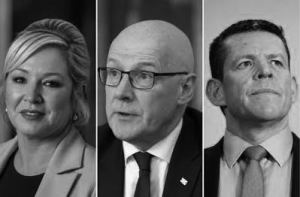
Scotland, Wales, and Northern Ireland leaders intensify push to break away from UK
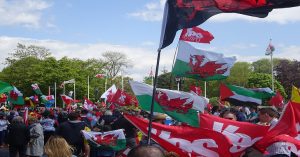
Scotland, Wales and Northern Ireland leaders plan fresh push for self-determination
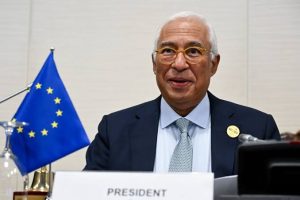
EU unity crucial as bloc prepares for 2028-2034 budget, President Costa says

France’s top court blocks social media ban for under-15s
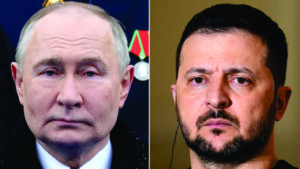
JUST IN: EU releases €1.4bn from frozen Russian assets to support Ukraine
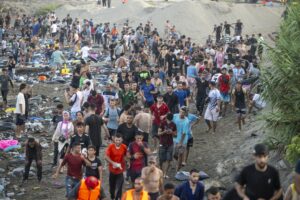
Spain warns irregular entry through Ceuta, Melilla does not grant right to stay or access EU
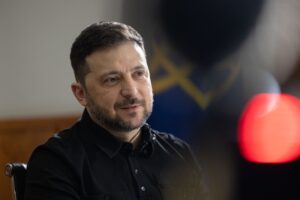
Zelenskyy calls for tougher sanctions on Russian missile industry, unveils European anti-ballistic shield initiative
- Tinubu commissions NRS Headquarters, says new tax reforms will drive prosperity
- Akwa Ibom governor approves appointment letters for 4,000 civil service recruits
- Climate change anxiety is rising — and so is the willingness to act on it
- Golden Globes want to make a comeback this year. Hollywood isn’t buying
- Baseball boosts TBS, NFL gives ESPN a kick and streamers love ‘Squid’
Community Discussion