
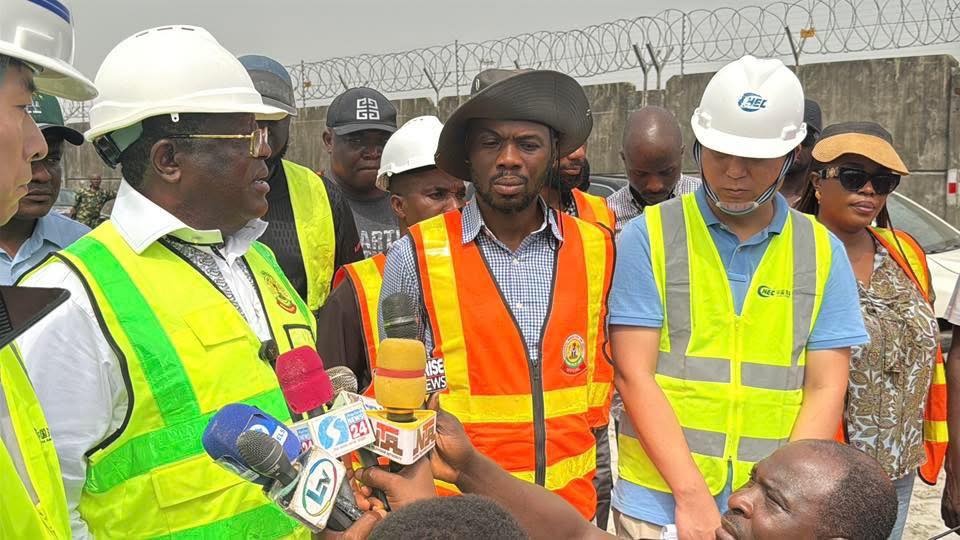
LAGOS, NIGERIA (NPA): Nigeria’s Minister of Works, Senator David Umahi, has announced that the first section of the Lagos–Calabar Coastal Highway will be commissioned in May 2026.
Umahi made the disclosure on Saturday, February 21, 2026, during an inspection of the project, which is designed to connect Lagos in the southwest to the South-South and South-East regions.
Engineering Challenges and Progress
According to a statement by Francis Nwaze, Senior Special Assistant to the Minister of Works (Media), Umahi highlighted the administration’s determination under President Bola Ahmed Tinubu to deliver transformative infrastructure despite difficult terrain and environmental challenges. He noted that deep soil conditions, with pits reaching over 20 metres, had tested engineering limits but were being successfully managed.
The minister praised HITECH Construction Company for its resilience, explaining that unexpected soil discoveries were being addressed at the contractor’s cost without any upward review of the project sum. “No other contractor can bear this kind of risk. You have proven that you are not working for money, but for the success of the country,” Umahi said.
Road Opening Timeline
Umahi disclosed that the 3-kilometre stretch currently under inspection is nearing completion, with sub-filling expected to be concluded within days. Once opened, motorists will be able to drive seamlessly from Ahmadu Bello Way through Lekki, with access extending toward the Dangote Refinery axis as work progresses on Section Two.
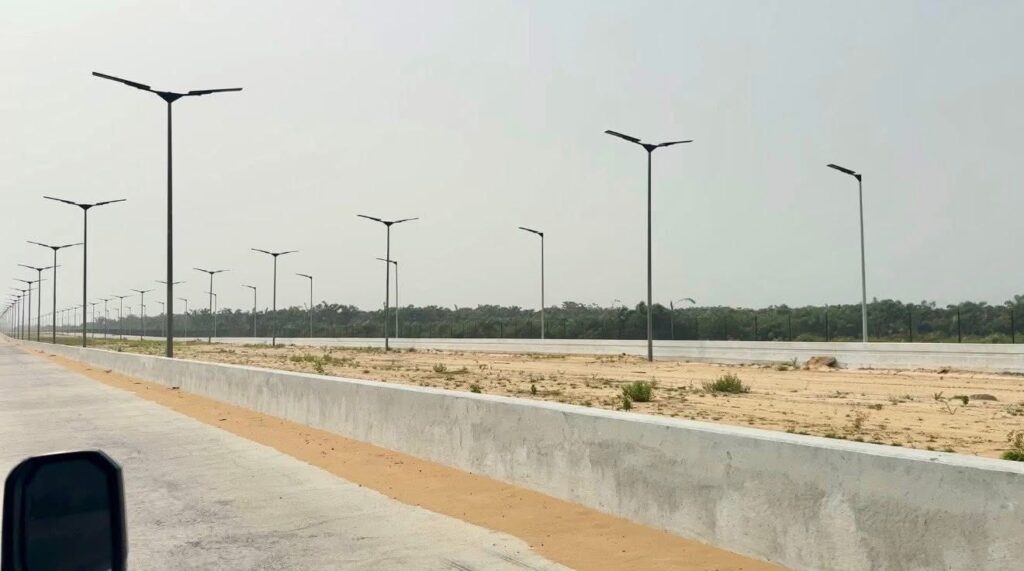
Credit: Facebook / Francis Nwaze
Security and Public Conduct
The minister condemned acts of vandalism along the corridor, including the cutting of metal fences and dumping of refuse into manholes, warning that such behaviour endangers lives and infrastructure. He commended security agencies for their vigilance and assured that offenders would be prosecuted.
Broader Reform Agenda
Umahi linked the project’s success to the broader reform agenda of the Tinubu administration, stressing that it represents national development rather than the efforts of a single institution. He pointed to recent macroeconomic indicators—including naira stability, foreign reserves at $49 billion, and inflation reduced to about 15%—as evidence of progress.
“These are not magical. They are evidence of the hand of God upon the president,” Umahi said, urging Nigerians to support ongoing reforms and infrastructure initiatives. He called for responsible public engagement, emphasizing that the project transcends personalities and institutions.