Category: International

  • EU approves €90 billion Ukraine support package as Russia intensifies attacks

    EU approves €90 billion Ukraine support package as Russia intensifies attacks

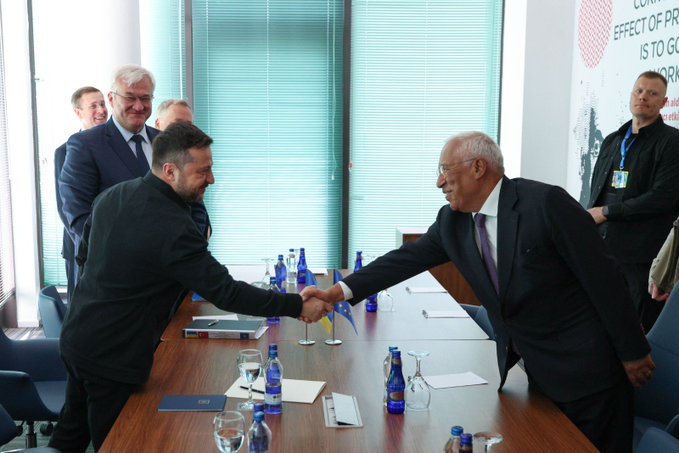
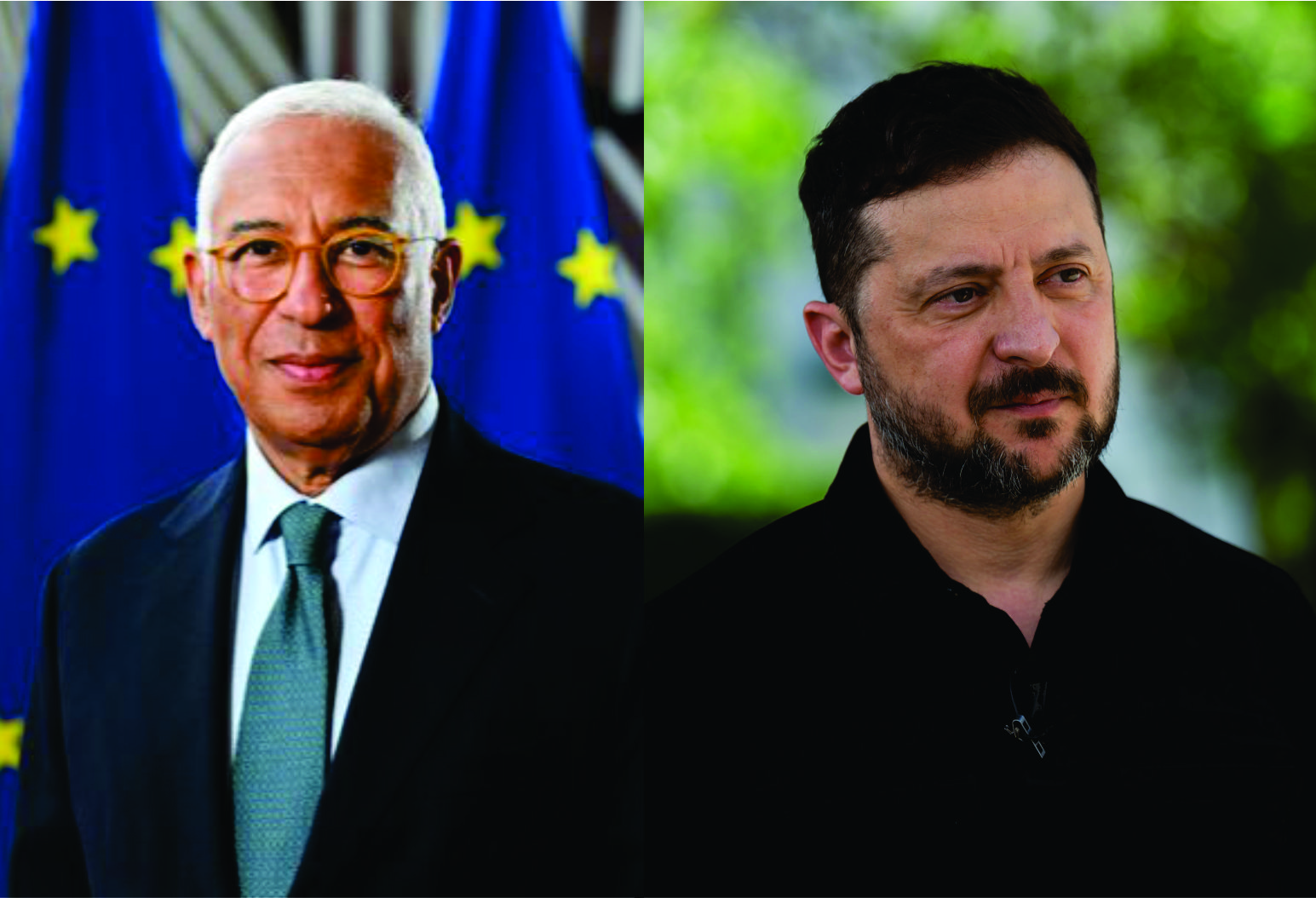
    BRUSSELS, Belgium (NPA) — President of the European Commission, Ursula von der Leyen, has congratulated the Ukrainian Parliament and President Volodymyr Zelenskyy for the swift ratification of key agreements tied to the European Union’s €90 billion support package for Ukraine.

    Von der Leyen disclosed on Thursday that the approval of the documents clears the way for the first tranche of disbursements expected in June 2026.

    “This hard work paves the way for the first disbursements in June,” she stated.

    The European Commission president revealed that she held a telephone conversation with Zelenskyy on Wednesday, during which she reaffirmed Europe’s continued support for Ukraine amid the ongoing war with Russia.

    According to her, Europe remains committed to strengthening Ukraine’s defence capabilities as Russian forces intensify aerial assaults and military operations across the country.

    “Air defence and drone and counter-drone capabilities are among Europe’s most urgent defence priorities, and Ukraine will be fully integrated into these efforts,” von der Leyen said.

    She noted that the Ukraine Support Loan would significantly contribute to Kyiv’s military and economic resilience, with €28.3 billion expected to be released this year alone to support Ukraine’s defence needs.

    The EU chief also said discussions with Zelenskyy covered Ukraine’s path toward membership of the European Union, adding that the coming weeks would be critical in advancing the accession process.

    Responding to the development, Zelenskyy expressed gratitude to members of the Ukrainian Parliament for promptly ratifying the agreement with the European Union.

    The Ukrainian president said the €90 billion package would strengthen the country’s resilience, support reconstruction efforts, and enhance its capacity to defend its sovereignty against Russian aggression.

    “The funds will strengthen our resilience and help protect the lives of our people, rebuild what has been destroyed by Russian strikes, and defend our independence,” Zelenskyy stated.

    “This was one of the most important votes — one that demonstrates the constructive nature of our joint work and our readiness to hear one another. Unity in Ukraine is what always works for Ukraine,” he added.

    Zelenskyy also thanked European partners for what he described as unwavering support for Ukraine’s defence, diplomacy, and recovery efforts.

    “Ukraine is defending Europe with all its strength, and full support for Ukraine will certainly strengthen all of Europe as well,” he said.

    The latest development comes as Russia continues to intensify missile and drone attacks across Ukraine in what analysts describe as some of the heaviest bombardments since the war began in February 2022 following Russia’s full-scale invasion of Ukraine.

    This week alone, Russian strikes reportedly targeted several Ukrainian cities, damaging energy infrastructure, residential buildings, and military facilities while causing civilian casualties.

    Since the outbreak of the war in 2022, Ukraine has increasingly sought long-term strategies to resist Russian military pressure by strengthening domestic defence production, expanding drone technology, and deepening military cooperation with Western allies.

    Kyiv has also accelerated efforts to develop homegrown military capabilities aimed at sustaining its resistance and protecting its sovereignty amid the prolonged conflict.

  • Hegseth: US will stop killings of Christians in Nigeria

    Hegseth: US will stop killings of Christians in Nigeria

    INTERNATIONAL (NPA) — United States Secretary of Defence Pete Hegseth has disclosed that American forces recently eliminated a top ISIS commander in Nigeria, allegedly responsible for attacks against Christians and threats targeting the United States homeland.

    Hegseth made the remarks during a cabinet meeting chaired by President Donald Trump at the White House, where he outlined efforts undertaken by the U.S. government to combat terrorism and protect vulnerable Christian communities in Nigeria.

    According to the U.S. defence chief, President Trump had directed the Department of Defence about a year ago to intensify efforts aimed at countering ISIS-linked violence against Christians in Nigeria.

    “Maybe a year ago, he heard the call of Nigerian Christians who were being targeted and killed by ISIS in Nigeria,” Hegseth said during the meeting.

    “He said, ‘Pete, I want the War Department to focus on ensuring that we do everything possible to protect those Christians,’” he added.

    The secretary noted that the operation required extensive intelligence gathering and strategic partnerships, which he said took time to develop behind the scenes.

    According to him, U.S. forces eventually deployed critical assets that led to the successful targeting of ISIS operatives in Nigeria.

    “Over the last month, there hasn’t been much coverage of this: we killed ISIS number two in Nigeria, who was most responsible for killing Christians and trying to target the U.S. homeland,” Hegseth stated.

    He further disclosed that intelligence obtained during the operation led to subsequent strikes against other ISIS fighters operating within Nigeria, noting that the US will eliminate the killers of Nigerian Christians.

    “Because of the intelligence we gathered, we have since killed hundreds of ISIS members who were targeting and killing Christians in Nigeria, creating a whole new opportunity there,” he said.

    The high-ranking U.S. official argued that several national security operations carried out under President Trump’s leadership often receive little public attention despite their strategic significance.

    “There is a lot that the President is doing to protect the American people that the President deserves credit for,” Hegseth stated.

    Nigeria has continued to battle insurgency and terrorist activities in parts of the country, particularly in the North-East, where extremist groups linked to the Islamic State and Boko Haram have carried out deadly attacks on communities, security personnel, and religious groups over the years.

  • Arab, Islamic bloc condemns Somaliland’s Jerusalem Embassy

    Arab, Islamic bloc condemns Somaliland’s Jerusalem Embassy

    Riyadh, SAUDI ARABIA (NPA) — Foreign ministers from Saudi Arabia and several Arab and Islamic countries have condemned the opening of a purported Somaliland embassy in occupied Jerusalem, describing the move as illegal and a violation of international law.

    According to the Saudi Press Agency, the ministers issued the condemnation in a joint statement released on Saturday in Riyadh.

    The statement was signed by the foreign ministers of Saudi Arabia, Egypt, Qatar, Jordan, Türkiye, Pakistan, Indonesia, Djibouti, Somalia, Palestine, Oman, Sudan, Yemen, Lebanon, Mauritania, Kuwait, Algeria, Bangladesh, and Morocco.

    The ministers described the move by the self-declared Somaliland region as “illegal and unacceptable,” saying it constituted a flagrant violation of international law and relevant international resolutions.

    They also said the development represented a direct infringement on the legal and historical status of occupied Jerusalem.

    The ministers reaffirmed their rejection of unilateral measures aimed at changing realities in occupied Jerusalem or granting legitimacy to arrangements that contradict international law and United Nations resolutions.

    They stressed that East Jerusalem has remained an occupied Palestinian territory since 1967 and maintained that any action intended to alter its legal or historical status is null and void and without legal effect.

    The joint statement further reiterated support for the unity, sovereignty, and territorial integrity of the Federal Republic of Somalia, while rejecting what it described as any unilateral sovereignty claims.

    Somaliland, a self-declared republic in northern Somalia, declared independence from Somalia in 1991, although it has not received widespread international recognition.

    The ministers’ position reflects continuing regional and international support for Somalia’s territorial integrity amid longstanding disputes over Somaliland’s status.

    According to the Saudi Press Agency, the ministers urged adherence to international law and relevant United Nations resolutions regarding the status of Jerusalem and Palestinian territories.

  • Russia accuses Ukraine of deadly drone strike on university dormitory

    Russia accuses Ukraine of deadly drone strike on university dormitory

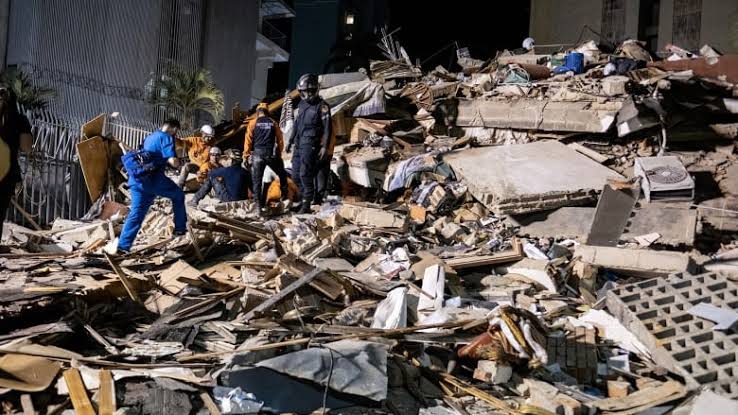
    MOSCOW, Russia (NPA) — Russia has accused Ukraine of carrying out a deadly drone strike on a college building and dormitory belonging to Lugansk State Pedagogical University in Starobelsk, in the self-proclaimed Lugansk People’s Republic (LPR), killing at least four people and injuring dozens.

    In a statement issued on Friday, the Russian Ministry of Foreign Affairs alleged that the attack was carried out overnight on May 22 using four fixed-wing unmanned aerial vehicles (UAVs). According to the ministry, 86 children aged between 14 and 18 were inside the five-storey dormitory when the strike occurred, causing part of the building to collapse to the second floor.

    Russian authorities said at least 40 people were injured, while rescue operations remained ongoing at the scene. Nearby residential houses, administrative buildings, and social facilities were also reportedly damaged in the attack.

    The Russian government described the strike as a “deliberate terrorist attack” targeting civilians and accused the Ukrainian government of escalating the conflict through what it called “inhuman terror against defenceless children.”

    “This strike could not have been accidental. It was a deliberate attack on civilians,” the statement said.

    Russia further alleged that the attack was conducted using long-range weapons supplied to Ukraine by NATO countries, claiming foreign specialists provided technical assistance, intelligence data, and target designation support for the operation.

    The Investigative Committee of Russia has since opened a criminal case into the incident, with authorities vowing to identify and prosecute those responsible.

    The Foreign Ministry also accused Ukrainian President Volodymyr Zelenskyy and the Ukrainian government of hypocrisy over previous concerns expressed about children affected by the war.

    Russia called on international organisations, governments, and the global community to condemn the attack and warned that silence over the incident would amount to complicity.

    The ministry expressed condolences to the families of those killed and wished the injured a speedy recovery.

    Ukraine has not publicly responded to the allegations at the time of filing this report.

  • EU parliament condemns Russia’s Baltic allegations, backs Estonia, Latvia, Lithuania

    EU parliament condemns Russia’s Baltic allegations, backs Estonia, Latvia, Lithuania

    INTERNATIONAL (NPA) — The leadership of the European Parliament has strongly condemned what it described as “unfounded and dangerous” allegations by Russia against the Baltic states of Latvia, Estonia and Lithuania, expressing full solidarity with the three European Union member nations amid rising regional tensions.

    In a statement released by the Conference of Presidents of the European Parliament, EU leaders rejected claims by Moscow that the Baltic countries were preparing hostile actions against Russia or allowing their territories, airspace, or military facilities to be used for attacks against the Russian Federation.

    The European Parliament said Latvia had categorically dismissed the accusations as disinformation, warning that the allegations were part of a broader campaign of intimidation, provocation and fake narratives targeted at EU member states.

    According to the statement, the accusations come amid repeated incursions of unidentified drones into the airspace and territory of the Baltic states, describing such actions as unacceptable and dangerous to regional stability.

    “The security of the Baltic states is the security of the European Union as a whole,” the statement read, stressing that no EU member state should face threats, intimidation or coercive pressure from Russia.

    The European Parliament leadership also urged the European Commission, the EU High Representative and the Council to continue supporting Estonia, Latvia and Lithuania in close coordination with NATO.

    The lawmakers called for stronger airspace surveillance, enhanced counter-drone capabilities and improved situational awareness across the region to prevent further incursions.

    They further appealed for intensified efforts to combat disinformation, protect the EU’s eastern flank and counter fake news campaigns that threaten European democracy and security.

    The statement concluded with a call for unity among EU member states, warning against what it described as Russian attempts to destabilise neighbouring countries, undermine European security and divide the bloc.

  • Pakistan PM Sharif hails strong ties with China at 75th Diplomatic Anniversary

    Pakistan PM Sharif hails strong ties with China at 75th Diplomatic Anniversary

    ISLAMABAD, Pakistan (NPA) — Shehbaz Sharif has praised the longstanding relationship between Pakistan and China during a ceremony marking the 75th anniversary of diplomatic relations between both countries.

    Speaking on Thursday in Islamabad before Pakistani and Chinese officials as well as members of the diplomatic corps, Prime Minister Sharif described the relationship between the two nations as historic and enduring.

    According to him, Pakistan was the first Muslim-majority country to officially recognise China and among the earliest countries globally to establish diplomatic relations with Beijing.

    “Seventy-five years ago, our founding fathers laid down the foundation of our bilateral diplomatic relations, and it went to the credit of Pakistan that we were the first Muslim country to recognise China and one of the first few countries around the globe,” Sharif stated.

    The Pakistani leader said relations between the two countries have continued to grow stronger over the decades, noting that China has consistently stood by Pakistan during difficult periods.

    “Throughout these 75 years, Chinese leadership and the people of China stood with Pakistan like a solid rock,” he added.

    Sharif also recalled Pakistan’s role in strengthening ties with China during the 1960s, referencing the historic first flight that landed in Beijing decades ago as part of expanding engagement between both nations.

    The Prime Minister reaffirmed Pakistan’s commitment to the One China policy, stressing that Islamabad would continue to support Beijing without hesitation.

    “To this day and forever, we will support the One China policy without fear or favour,” he said.

    Sharif further described the China-Pakistan Economic Corridor as a major symbol of China’s commitment to Pakistan’s economic development.

    According to him, the project, established under the Belt and Road Initiative championed by Xi Jinping, has contributed significantly to infrastructure growth and economic progress across Pakistan.

    The anniversary event highlighted decades of diplomatic, economic and strategic cooperation between the two countries, widely regarded as close regional allies.

  • Starmer says UK net migration down 82%, unveils free bus travel plan amid deepening economic hardship

    Starmer says UK net migration down 82%, unveils free bus travel plan amid deepening economic hardship

    LONDON, United Kingdom (NPA) — Keir Starmer has claimed that net migration into the United Kingdom has fallen by 82 per cent, saying his government is delivering on its promise to restore control of British borders and strengthen national security.

    In a statement he issued on Thursday, the British Prime Minister said his administration remains committed to overhauling the country’s immigration system and reducing dependence on foreign labour, which fuels mass immigration to the United Kingdom.

    “I know there’s more to do. We’re introducing a skills-based migration system that rewards contribution and ends our reliance on cheap overseas workers,” Starmer stated.

    The Prime Minister said the measures form part of broader efforts by his government to build what he described as a more secure and economically stable Britain.

    However, analysts and critics have continued to raise concerns over illegal migration into the country, alleging that approximately 70,000 illegal migrants have entered the UK through the English Channel since Starmer assumed office as Prime Minister.

    According to reports, the majority of the migrants reportedly applied for asylum upon arrival, fueling ongoing debate over border security and pressure on public services and the British economy.

    The issue of illegal migration remains one of the most contentious political challenges facing the UK government amid rising economic concerns and growing public scrutiny over immigration policies.

    In another development, Starmer announced that children across England will enjoy free bus travel throughout August as part of measures aimed at easing financial pressure on families.

    “We know that families are still feeling the cost-of-living pressure, so we’re delivering immediate support,” the Prime Minister said in a separate statement.

    According to him, the initiative is designed to help families cope with rising living expenses during the school holiday period while also reducing transportation costs for households.

    Starmer further disclosed that his administration is taking additional steps to reduce the cost of everyday food items and put more money back into the pockets of citizens.

    The announcement comes amid mounting economic pressures in the United Kingdom, including inflation concerns and the impact of ongoing instability linked to the conflict in the Middle East.

    Earlier, the British government unveiled plans to subsidise groceries for struggling families as part of wider measures aimed at cushioning the effects of the cost-of-living crisis across the country.

  • Vandals desecrate 140 Belgian military graves, authorities launch investigation

    Vandals desecrate 140 Belgian military graves, authorities launch investigation

    BRUSSELS, Belgium (NPA) — Belgium’s Minister of Defence and Foreign Trade, Theo Francken has announced that about 140 Belgian military graves were vandalised overnight between Monday, May 18 and Tuesday, May 19, at the military cemetery in Houthulst.

    According to the minister, the cemetery, which is managed by the War Heritage Institute, suffered extensive damage after vandals pried loose a large number of metal memorial plaques from gravestones.

    He disclosed that around 10 gravestones were severely damaged or completely broken during the attack, while several memorial plaques were also badly damaged.

    Francken stated that all displaced grave plaques had since been recovered by the WHI War Graves Service.

    “We are deeply saddened and shocked by this shameless act of vandalism at a place where we safeguard the memory of those who gave their lives for our country, our freedom, and our democracy,” the minister said.

    Authorities described the incident as a desecration of a sacred memorial site dedicated to fallen soldiers who died in service to Belgium.

    The Belgian police have since launched an investigation into the circumstances surrounding the vandalism.

    As of the time of filing this report, authorities had not identified the individual or group responsible for the attack, while the motive behind the desecration also remains unclear.

    The incident has sparked outrage among residents and officials, with calls for those responsible to be brought to justice.

  • Russia, China declare support for multipolar world order, reject global hegemony

    Russia, China declare support for multipolar world order, reject global hegemony

    INTERNATIONAL (NPA) — The governments of Russia and China have jointly declared support for the establishment of a multipolar world order and a new framework for international relations, warning against what they described as growing hegemonism, bloc confrontation and unilateral control of global affairs.

    The joint statement comes as Vladimir Putin paid a state visit to China shortly after Donald Trump departed the country.

    In a Joint Declaration released on May 20, both countries said the current international system is undergoing a “profound transformation” as global power shifts away from dominance by a small group of states toward what they called a more balanced and polycentric world order.

    The declaration, titled “Joint Declaration of the Russian Federation and the People’s Republic of China on the Establishment of a Multipolar World and a New Type of International Relations,” reaffirmed longstanding cooperation between the two nations and referenced a series of previous bilateral agreements dating back to 1997.

    According to the statement, Russia and China described themselves as major centres of influence in the emerging multipolar system and pledged to continue playing what they called a constructive role in maintaining global balance and reforming international relations.

    The two countries argued that the global political landscape has changed significantly since the end of World War II and the Cold War, pointing to the rise of sovereign states across Asia, Africa, Latin America, the Caribbean and the Middle East.

    They noted that the growing influence of developing nations and regional organisations demonstrates that attempts by certain countries to unilaterally dominate global affairs or impose their interests on other states have failed.

    The declaration also criticised what it described as neocolonial tendencies in modern international politics, including the use of unilateral force, hegemonic policies, military alliances and bloc confrontation.

    Russia and China warned that repeated violations of international law and weakening global governance institutions are creating new threats to peace and development, adding that the world risks returning to what they described as the “law of the jungle.”

    As part of the declaration, both countries called on the international community to adopt principles aimed at building what they described as a more equal and orderly international system.

    The first principle emphasised openness and mutually beneficial cooperation among sovereign states, while rejecting coercive policies and attempts to divide the world into rival blocs.

    According to the statement, every country has the right to choose its own political and economic development model without outside interference.

    The declaration also stressed the principle of “indivisible and equal security,” arguing that no country should strengthen its security at the expense of another.

    Russia and China opposed the expansion of military alliances, proxy conflicts and hybrid warfare, while calling for disputes to be resolved peacefully through dialogue and respect for the security concerns of all nations.

    The two governments further advocated reforms to global governance institutions, including the United Nations, insisting that developing countries should have greater representation and influence in international decision-making.

    According to the declaration, the UN Charter remains the fundamental basis of international relations and should not be replaced by rules imposed by a limited group of countries.

    The statement also emphasised cultural and civilizational diversity, arguing that no civilisation or value system should be regarded as superior to another.

    Russia and China condemned the politicisation of human rights issues and opposed the use of human rights as justification for interference in the internal affairs of sovereign states.

    The declaration additionally called for stronger dialogue among civilisations, religions and cultures, saying such engagement is necessary to promote mutual understanding and global stability.

    Both countries concluded by pledging to continue developing a shared vision for what they described as a more equitable multipolar world and a new type of international relations based on equality, sovereignty and mutual respect.

  • U.S. Treasury sanctions flotilla organisers, Muslim Brotherhood networks backing Hamas

    U.S. Treasury sanctions flotilla organisers, Muslim Brotherhood networks backing Hamas

    WASHINGTON, D.C. (NPA) — The U.S. Department of the Treasury’s Office of Foreign Assets Control (OFAC) has announced sweeping sanctions against individuals and organisations linked to Hamas, targeting both the organisers of a pro‑Hamas flotilla attempting to reach Gaza and key actors within Muslim Brotherhood networks that support the militant group.

    The action, unveiled on May 19, 2026, reinforces Washington’s determination to dismantle Hamas’s global financial and logistical support structures.

    Treasury Secretary Scott Bessent described the flotilla as “a ludicrous attempt to undermine President Trump’s successful progress toward lasting peace in the region,” adding that the U.S. will continue to sever Hamas’s international funding channels.

    The flotilla was organised by the Popular Conference for Palestinians Abroad (PCPA), a group Washington says is clandestinely controlled by Hamas. OFAC designated four individuals: Saif Hashim Kamel Abukishek, a Spain‑based member of PCPA’s General Secretariat and a central figure in the flotilla’s Steering Committee; Hisham Abdallah Sulayman Abu Mahfuz, acting Secretary General and President of PCPA based in Jordan; Mohammed Khatib, Belgium‑based European coordinator for Samidoun, a PFLP front organisation; and Jaldia Abubakra Aueda, Samidoun’s coordinator in Madrid.

    Treasury noted that so‑called humanitarian flotillas linked to sanctioned groups pose significant compliance risks for financial institutions. It emphasised that legitimate humanitarian aid must be safeguarded, while terrorist‑linked operations will be disrupted.

    The sanctions also extend to Hamas‑aligned religious networks. In 2014, Hamas leaders created a coordinating body to align religious discourse with its ideology, appointing Marwan Abu Ras as head. OFAC designated Abu Ras and the Palestinian Scholars Association for acting on behalf of Hamas.

    OFAC further targeted operatives tied to HASM, an Egypt‑based violent offshoot of the Muslim Brotherhood. Karim Sayed Ahmed Moghny, a Hamas operative who directed militant activity and collaborated with HASM, was designated for supporting both Hamas and HASM. Muhammad Jamal Hassan al‑Najjar, involved in weapons acquisition and funding Hamas salaries, was also sanctioned. Sherif Ahmed Ewis Ahmed, a senior HASM official linked to explosives procurement, was added to the list.

    Under Executive Order 13224, all property and interests of the designated individuals in the U.S. are blocked. U.S. persons are prohibited from engaging in transactions with them, and foreign financial institutions risk secondary sanctions if they facilitate significant dealings.

    Treasury emphasised that the goal of sanctions is not punishment but behavioural change. OFAC reiterated that individuals may petition for removal from the Specially Designated Nationals (SDN) List if they demonstrate compliance with U.S. law.

    Hamas, designated as a Foreign Terrorist Organisation since 2001, continues to rely on international partners to expand its influence and sustain violent operations. The latest sanctions highlight Washington’s strategy of targeting both direct operatives and the wider networks — including flotilla organisers, religious institutions, and Brotherhood affiliates — that enable Hamas’s activities.

    By striking at these financial and organisational lifelines, the U.S. aims to reinforce its broader diplomatic push for peace in Gaza while curbing the reach of groups accused of undermining stability in the Middle East.