Category: International

  • Oil prices dip to $103.77 as Trump pauses Iran strike for talks

    Oil prices dip to $103.77 as Trump pauses Iran strike for talks

    INTERNATIONAL (NPA) — Crude benchmarks fell after U.S. President Donald Trump announced he had temporarily halted a planned military strike on Iran to allow negotiations aimed at ending the Middle East war.

    Trump, in a social media post late Monday, said the United States was “ready to resume attacks if a deal is not reached,” but emphasised that diplomacy was being given a chance.

    By midday trading, Brent futures for July delivery slipped $1.13 (1%) to $110.97 per barrel, while U.S. West Texas Intermediate (WTI) June contracts edged down 28 cents (0.3%) to $108.38.

    The more active July WTI contract dropped 61 cents (0.6%) to $103.77. Analysts noted that prices had touched their highest levels in weeks during the previous session before Trump’s comments triggered a reversal.

    “Markets are swinging from one headline to the next, but without any real breakthrough toward ending the conflict,” said Ole Hansen of Saxo Bank, adding that Trump’s remarks were the immediate catalyst for Tuesday’s decline.

    The ongoing war has effectively shut down the Strait of Hormuz, a vital corridor that normally carries about 20% of global oil and liquefied natural gas shipments. The International Energy Agency (IEA) described the closure as the largest single disruption to world energy supplies in decades.

    Iranian state media reported that Tehran’s latest peace proposal to Washington includes a halt to hostilities across all fronts, U.S. troop withdrawals from areas near Iran, and reparations for war damage.

    Domestically, the U.S. Energy Department disclosed that a record 9.9 million barrels were drawn from the Strategic Petroleum Reserve last week, reducing stockpiles to 374 million barrels, the lowest since July 2024. Industry forecasts suggest U.S. crude inventories fell by another 3.4 million barrels in the week ending May 15, with official data from the Energy Information Administration expected Wednesday.

  • Trump halts planned Iran strikes after Gulf leaders’ intervention, signals possible nuclear deal talks

    Trump halts planned Iran strikes after Gulf leaders’ intervention, signals possible nuclear deal talks

    WASHINGTON, United States (NPA) — President Donald Trump has called off the planned resumption of US military strikes against Iran, citing ongoing diplomatic interventions by Gulf leaders and renewed prospects for a negotiated settlement.

    Trump said the decision followed engagements with the Emir of Qatar, Tamim bin Hamad Al Thani, Saudi Crown Prince Mohammed bin Salman, and United Arab Emirates President Mohamed bin Zayed Al Nahyan.

    In a post on his Truth Social account, the US President said he had instructed the American military to suspend the planned strike on the Iran, which had been scheduled for the following day.

    He said “serious negotiations” were now underway, adding that, based on the assessment of Gulf leaders, a deal was likely to be reached that would be acceptable to the United States as well as other countries in the Middle East and beyond.

    Trump reiterated that any potential agreement would include a strict prohibition on Iran acquiring nuclear weapons.

    “NO NUCLEAR WEAPONS FOR IRAN!” he declared.

    In the statement, Trump said: “Based on my respect for the above-mentioned Leaders, I have instructed Secretary of War, Pete Hegseth, the Chairman of the Joint Chiefs of Staff, General Daniel Caine, and the United States Military, that we will NOT be doing the scheduled attack of Iran tomorrow.”

    However, he added that US forces remain on standby and fully prepared to launch a large-scale military operation “on a moment’s notice” should negotiations fail or an acceptable deal not be reached.

    The development comes after Trump earlier issued a warning to Iran, insisting that time was running out to reach an agreement or face severe military consequences.

    Tensions have remained high amid the ongoing conflict dynamics in the Middle East, with the Strait of Hormuz emerging as a critical flashpoint with significant implications for global energy markets and international security.

  • Donald Trump warns Iran “time is running out” over agreement with US

    Donald Trump warns Iran “time is running out” over agreement with US

    WASHINGTON D.C., U.S (NPA) — Donald Trump has warned the Islamic Republic of Iran to move quickly toward reaching an agreement with the United States aimed at resolving the conflict between both nations.

    In a terse post shared on Truth Social on Sunday, Trump wrote: “For Iran, the clock is ticking, and they better get moving, FAST, or there won’t be anything left of them. TIME IS OF THE ESSENCE! President DJT.”

    The U.S. president, however, did not specify any deadline or timeframe for Tehran to comply, nor did he elaborate on the consequences Iran could face if negotiations fail.

    The growing standoff around the Strait of Hormuz has remained at the centre of the crisis, with both Washington and Tehran making competing claims over control and possible blockades of the critical global oil transit route.

    The uncertainty surrounding the conflict has continued to rattle international energy markets, contributing to rising global oil prices.

    Analysts say the situation currently appears to be in a state of stalemate as geopolitical tensions continue to deepen amid fears of wider regional instability.

    Earlier in a related development, the United Arab Emirates announced that its air defence systems intercepted multiple drones, with one reportedly striking an electrical generator near the Barakah Nuclear Power Plant. The Gulf country said it is investigating the projectiles that came through its southern borders.

  • JUST IN: Drone hits electrical generator at Barakah Nuclear Power Plant in United Arab Emirates

    JUST IN: Drone hits electrical generator at Barakah Nuclear Power Plant in United Arab Emirates

    ABU DHABI, United Arab Emirates (NPA) — The Ministry of Defence of the United Arab Emirates has confirmed that the country’s air defence systems engaged three drones that entered the nation’s airspace on Sunday, with one striking an electrical generator outside the perimeter of the Barakah Nuclear Power Plant.

    In a statement issued on Sunday, the Ministry said the drones entered the country from the western border on May 17, 2026.

    According to the Ministry, two of the drones were successfully intercepted by air defence systems, while the third drone hit an electrical generator located outside the inner perimeter of the nuclear facility in the Al Dhafra area.

    Authorities said investigations are ongoing to determine the source of the drone attacks, adding that further details would be released upon the conclusion of the probe.

    The Ministry of Defence stressed that the UAE remains on high alert and fully prepared to confront any threats targeting the country’s security and stability.

    It added that the armed forces would continue to firmly counter all attempts aimed at undermining the nation’s sovereignty, national interests, and critical infrastructure.

  • WHO declares Bundibugyo Ebola outbreak in DRC and Uganda a global health emergency

    WHO declares Bundibugyo Ebola outbreak in DRC and Uganda a global health emergency

    GENEVA, Switzerland (NPA) — The World Health Organisation (WHO) has declared the outbreak of Ebola disease caused by the Bundibugyo virus in the Democratic Republic of the Congo (DRC) and Uganda a Public Health Emergency of International Concern (PHEIC), warning of significant risks of regional and international spread.

    In a statement issued on 17 May 2026, the WHO Director-General said the outbreak does not yet meet the criteria of a pandemic emergency under the International Health Regulations (2005) but requires urgent international coordination. He praised the governments of the DRC and Uganda for their transparency and commitment to tackling the crisis.

    As of 16 May 2026, the WHO reported eight laboratory-confirmed cases, 246 suspected cases, and 80 suspected deaths in Ituri Province, DRC, across Bunia, Rwampara, and Mongbwalu health zones. Two confirmed cases, including one death, were reported in Kampala, Uganda, within 24 hours of each other, both involving travellers from DRC. Another confirmed case was detected in Kinshasa, raising concerns about wider spread.

    Clusters of community deaths with symptoms consistent with Bundibugyo virus disease have been reported, alongside four deaths among healthcare workers, pointing to hospital-based transmission and gaps in infection prevention. WHO warned that the outbreak may be larger than currently detected due to limited surveillance and weak epidemiological links.

    The agency described the event as “extraordinary” because the Bundibugyo strain has no approved vaccines or therapeutics, unlike Ebola-Zaire. The outbreak is occurring in urban and semi-urban hotspots, increasing the risks of rapid spread. Ongoing insecurity, humanitarian crises, and high population mobility in Eastern DRC further complicate containment.

    International spread has already been documented, with confirmed cases in Uganda. Neighbouring countries with porous borders and high mobility are considered at high risk. WHO stressed that international coordination is essential to prevent further spread and ensure effective surveillance, treatment, and community engagement.

    WHO urged affected countries to activate national emergency mechanisms, scale up surveillance, contact tracing, laboratory testing, and infection prevention, and engage communities through local leaders and healers to improve case reporting and early treatment. It also called for safe burials conducted by trained personnel, strengthened border health measures, and restricted travel for suspected cases.

    For neighbouring states, the WHO advised urgent preparedness, including rapid response teams, diagnostic capacity, and community surveillance. For other countries, the WHO cautioned against border closures, noting such measures lack a scientific basis and could worsen informal cross-border movements.

    The Director-General announced plans to convene an Emergency Committee to refine temporary recommendations and guide international response. WHO emphasised the need for research and clinical trials to develop Bundibugyo-specific treatments and vaccines.

    The declaration of a PHEIC underscores the seriousness of the Bundibugyo Ebola outbreak, which has already spread beyond DRC’s Ituri Province into Uganda and Kinshasa. WHO warned that weak transparency and inadequate preparedness could undermine containment efforts. The global health body urged swift, coordinated action to safeguard lives and prevent further destabilisation in the region.

  • Trump responds to Reverend Dachomo’s cries over killings of Christians

    Trump responds to Reverend Dachomo’s cries over killings of Christians

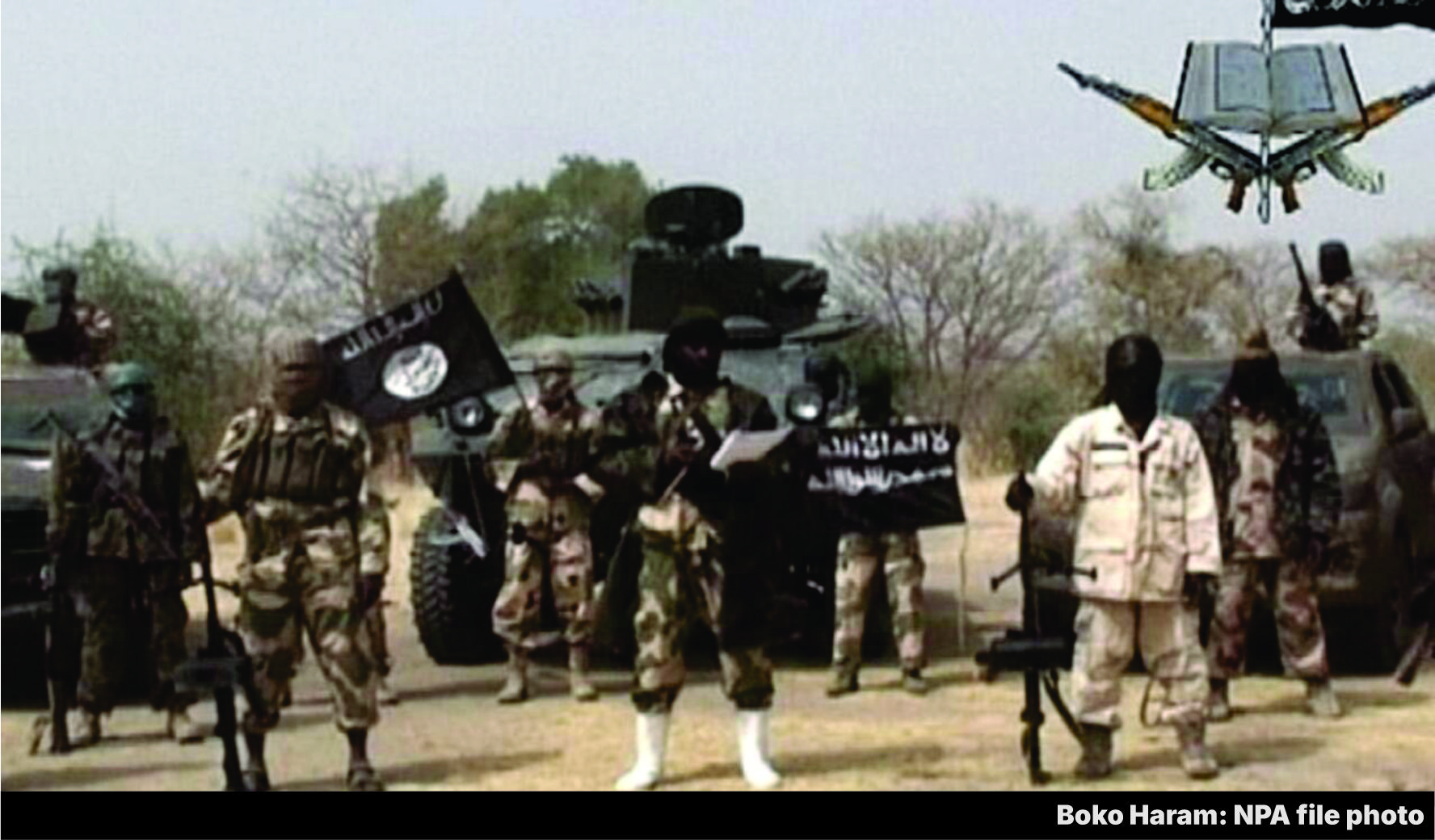
    INTERNATIONAL (NPA) — The President of the United States, Donald Trump, has amplified the calls of Reverend Ezekiel Dachomo, Regional Leader of the Church of Christ in Nations (COCIN), over the alleged killings of Christians in Nigeria.

    Trump reposted a video of the cleric on his Truth Social platform, Saturday, with the caption: “NIGERIA PASTOR SPEAKS OUT — THE WORLD NEEDS TO LISTEN.”

    In the emotional video, Rev. Dachomo appealed directly to the international community and the United States government, saying: “United Nations, I know you are watching me. American Senate, you are watching what I am doing, what I am saying here? Special Adviser, tell Trump now! Tell Trump to save our lives in Nigeria. They are killing Christians, massacring Christians in Nigeria.”

    Rev. Dachomo has consistently raised alarm over repeated attacks and killings of Christians in parts of Nigeria’s North-Central region, particularly Plateau State, urging the international community to intervene.

    On April 27, 2026, the cleric called for global attention following the killing of an entire pastor’s family in Barkin Ladi Local Government Area of Plateau State.

    The victims — Reverend Ayuba Choji, his wife and their two children, Precious and Ishaya — were allegedly killed by suspected Islamist extremists before they were buried three days later in Kwi community. Their only surviving son reportedly escaped through a window during the attack.

    On May 13, Dachomo again raised concerns over fresh attacks in Plateau State that reportedly left six persons dead.

    Earlier on April 26, the cleric also demanded justice for a teenage girl whose hand was allegedly amputated in Northern Nigeria after her family reportedly refused to approve an Islamist marriage proposal.

    Dachomo described the incident as one of the moments when “the heart can no longer carry the weight of silence.”

    Similarly, on April 12, 2026, the COCIN leader condemned the killing of five members of a family in Mbwelle village, Forof District, Bokkos Local Government Area of Plateau State.

    According to him, the attack was allegedly carried out by armed Fulani assailants emerging from a nearby settlement reportedly under military protection.

    Several other incidents of killings, attacks and alleged persecution have also been documented by the cleric on his X (formerly Twitter) account.

    The renewed attention comes amid the redesignation of Nigeria as a Country of Particular Concern (CPC) over alleged persistent violence on Christians and alleged government inaction.

    The Nigerian government has repeatedly denied allegations that Christians are specifically targeted, insisting that insecurity, killings and abductions across the country affect Christians, Muslims and adherents of traditional religions alike.

    As of the time of filing this report, the Nigerian Presidency had yet to officially respond to Trump’s latest post.

    The development also comes hours after the United States military and the Nigerian Army carried out a joint operation that eliminated Abu-Bilal al-Minuki, described as the global second-in-command of ISIS.

    Trump announced the operation on his Truth Social platform, describing it as a meticulously planned overnight mission executed by American forces alongside the Armed Forces of Nigeria.

    President Bola Ahmed Tinubu also praised the operation, declaring that terrorists have no hiding place in Nigeria.

  • IDF announces killing of senior Hamas commander Izz al-Din al-Haddad, other militants linked to October 7 attack

    IDF announces killing of senior Hamas commander Izz al-Din al-Haddad, other militants linked to October 7 attack

    INTERNATIONAL (NPA) — The Israel Defence Forces has announced the elimination of Izz al-Din al-Haddad, head of Hamas’ military wing and one of the last remaining senior commanders of the group, accusing him of playing a central role in the planning of the October 7 attack in Israel in which about 1,200 people were killed and more than 250 others abducted.

    According to the IDF, al-Haddad assumed a top leadership position within Hamas following the elimination of Mohammed Sinwar and subsequently worked to rebuild the group’s military capabilities while coordinating multiple attacks against Israeli civilians and Israeli troops.

    The Israeli military alleged that throughout the ongoing conflict, al-Haddad was directly involved in the captivity of several Israeli hostages held by Hamas in Gaza and managed the group’s hostage detention system.

    The IDF further claimed that the Hamas commander surrounded himself with hostages in an attempt to shield himself from targeted military operations.

    In a separate operation, the Israeli military also announced the elimination of Hamer Iyad Muhammad Almatouk and Khaled Muhammad Salem Joudeh, described as senior Hamas operatives.

    According to the IDF, the two militants infiltrated Israel during the October 7 attack and had recently attempted to carry out additional attacks against Israeli troops operating in the area.

    The military also confirmed the killing of Abd al-Rahman Mahmoud Jumaa Shaafi, identified as a member of Hamas’ Bureij Battalion, allegedly involved in coordinating attacks against Israeli forces.

    Meanwhile, reports emerging from Gaza indicated that burial arrangements were underway for al-Haddad and the other slain Hamas fighters.

  • BREAKING: Nigerian-born ISIS Global Deputy Abu-Bilal al-Minuki killed in Joint US-Nigeria operation —Trump

    BREAKING: Nigerian-born ISIS Global Deputy Abu-Bilal al-Minuki killed in Joint US-Nigeria operation —Trump

    INTERNATIONAL (NPA) — United States President Donald Trump has announced the killing of Abu-Bilal al-Minuki, described as the global second-in-command of ISIS, during a joint overnight operation carried out by United States and Nigerian forces.

    Trump disclosed the development in a post on his Truth Social platform, saying the operation was “meticulously planned” and successfully executed by American troops alongside the Armed Forces of Nigeria.

    According to the US President, the slain terrorist had been hiding in Africa while allegedly coordinating extremist operations targeting civilians across the continent and planning attacks against Americans.

    Trump stated that the elimination of al-Minuki would significantly weaken ISIS’s global operational structure and reduce the group’s influence in Africa and beyond.

    Part of Trump’s statement reads: “Tonight, at my direction, brave American forces and the Armed Forces of Nigeria flawlessly executed a meticulously planned and very complex mission to eliminate the most active terrorist in the world from the battlefield. Abu-Bilal al-Minuki, second in command of ISIS globally, thought he could hide in Africa, but little did he know we had sources who kept us informed on what he was doing. He will no longer terrorize the people of Africa, or help plan operations to target Americans. With his removal, ISIS’s global operation is greatly diminished. Thank you to the Government of Nigeria for your partnership on this operation.”

    Abu-Bilal al-Minuki, also known as Abu Bakr ibn Muhammad ibn Ali al-Mainuki, was believed to be a Nigerian-born extremist from Mainok in Borno State. Security reports identified him as one of the most influential ISIS commanders operating within Africa, particularly in the Lake Chad region.

    He reportedly served as a top leader within the Islamic State West Africa Province (ISWAP) and oversaw operations linked to ISIS’s General Directorate of Provinces, coordinating funding, logistics and operational guidance for affiliated terror cells.

    The United States government had designated him a Specially Designated Global Terrorist in June 2023 over allegations of coordinating kidnappings, armed attacks and extortion activities across Nigeria and neighbouring countries.

    Security analysts described his death as one of the most significant counterterrorism successes recorded in Africa in recent years, noting that the development could weaken ISWAP’s operational capacity across the Sahel and Lake Chad Basin.

  • Body of second missing US soldier recovered in Morocco

    Body of second missing US soldier recovered in Morocco

    RABBAT, Morocco (NPA) — The body of a second U.S. service member declared missing during the African Lion 2026 exercise has been recovered in Morocco, officials confirmed on Wednesday.

    According to a joint statement by the U.S. Army and Morocco’s Royal Armed Forces, search and rescue teams retrieved the remains of Specialist Mariyah Symone Collington, 19, an air and missile defense crew member, from a coastal cave roughly 500 meters from where she and another soldier went missing near Cap Draa, Tan Tan.

    Collington’s recovery follows the earlier discovery of 1st Lieutenant Kendrick Lamont Key Jr., whose body was found on May 9. Both soldiers disappeared on May 2 during a training exercise near a cliff at the Cap Draa Training Area.

    The multinational exercise, which brought together U.S., Moroccan, and partner forces, immediately launched coordinated search operations involving ground, air, and maritime assets. Officials said the mission remains active as investigations continue into the circumstances surrounding the incident.

    United States Africa Command (AFRICOM) emphasised that the soldiers were participating in a critical joint exercise designed to strengthen interoperability and regional security. The disappearance prompted an urgent response, highlighting the risks inherent in complex multinational training operations.

    The recovery of Collington’s remains marks a solemn moment for the U.S. military and its allies, underscoring the sacrifices made in pursuit of readiness and cooperation.

  • Russia announces successful test of 35,000-kilometre Sarmat Missile system

    Russia announces successful test of 35,000-kilometre Sarmat Missile system

    MOSCOW, Russia (NPA) — Russia says it has successfully conducted another test of its Sarmat intercontinental ballistic missile system, describing the weapon as one of the most powerful strategic deterrence platforms in the world.

    The announcement was made on Tuesday by the Russian Ministry of Foreign Affairs through its official Telegram channel following a report presented to President Vladimir Putin by Commander of the Strategic Missile Forces, Sergei Karakayev, via videoconference.

    According to the Russian government, development of the Sarmat missile system began in 2011, while details of the programme and its capabilities were first publicly unveiled in 2018.

    Russian officials claimed the missile possesses capabilities exceeding those of many existing strategic missile systems, including an operational range of more than 35,000 kilometres.

    The statement further claimed that the Sarmat missile can travel along both ballistic and suborbital trajectories, enabling it to bypass existing and future missile defence systems.

    Moscow also described the missile as more powerful than the Soviet-era Voevoda missile system currently in service, alleging that the total yield of its warhead is more than four times greater than that of comparable Western systems.

    While Russian officials highlighted the missile’s long-range capability, independent verification of some of the performance claims remains limited. Military analysts generally estimate that intercontinental ballistic missiles launched from Russia toward the mainland United States could reach targets within approximately 20 to 30 minutes, depending on trajectory and launch conditions.

    Speaking after receiving the report, President Vladimir Putin said Russia resumed efforts to modernise its strategic deterrence systems in the early 2000s following the withdrawal of the United States from the Anti-Ballistic Missile Treaty in 2002.

    “We were forced to think about ensuring our strategic security in the new reality and preserving the strategic balance of forces,” Putin said.

    According to him, Russia subsequently began developing advanced weapons systems capable of overcoming missile defence networks.

    Putin also referenced several other strategic weapons programmes currently deployed or under development by Russia, including the Avangard intercontinental-range missile system, the Kinzhal hypersonic missile and the Oreshnik medium-range missile system.

    He added that work was nearing completion on the Poseidon unmanned underwater vehicle and the Burevestnik global-range cruise missile, both powered by compact nuclear propulsion systems.

    The latest announcement comes amid heightened geopolitical tensions between Russia and Western countries over the ongoing conflict in Ukraine and broader security concerns in Europe.