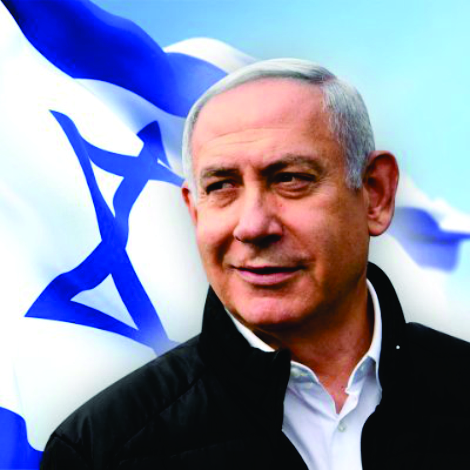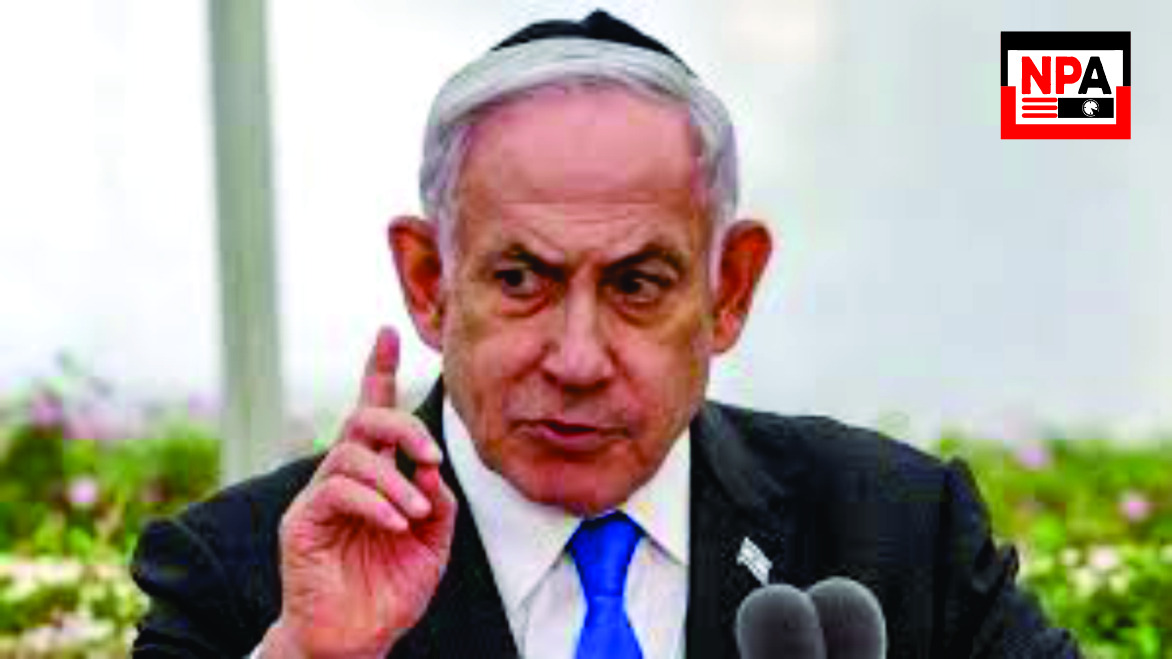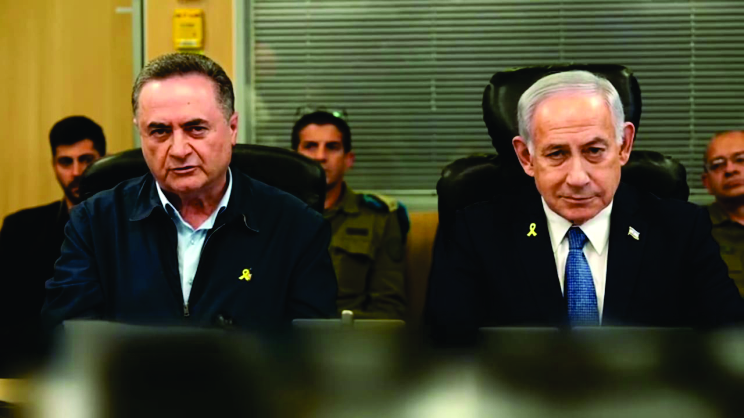
LAGOS, NIGERIA (NPA): Israeli Prime Minister Benjamin Netanyahu has praised his country’s ties with India ahead of the arrival of Indian Prime Minister Narendra Modi for a state visit this week. Speaking at the opening of a government meeting, Netanyahu described Modi as a “personal friend” and highlighted the close relationship forged between the two leaders in recent years. “This week, expression will be given to the special relationship that has been forged between Israel and the global power that is India, and between myself and Prime Minister Modi,” he said.
Netanyahu noted that Modi’s visit would provide an opportunity to deepen cooperation in economic, diplomatic, and security fields. He also spoke of building a broader alliance of nations across continents to counter radical movements in the Middle East. Modi is expected to arrive in Israel on Wednesday, deliver an address at the Knesset, and participate in an innovation event in Jerusalem. The two leaders will also visit Yad Vashem together. Netanyahu emphasized that the visit would advance collaboration in high-tech, artificial intelligence, and quantum computing, underscoring the growing strategic partnership between Israel and India.
India and Israel already maintain strong ties in defense, technology, and trade. Since the establishment of diplomatic relations in 1992, cooperation has expanded significantly, with India emerging as one of Israel’s largest defense customers.
Both countries also collaborate in agriculture, water management, cybersecurity, and innovation. In 2026, they adopted a joint working plan to strengthen strategic cooperation while engaging in regional peace initiatives, including support for the Gaza Peace Plan.
KYIV, UKRAINE (NPA): Ukrainian President Volodymyr Zelenskyy has said that it would be in the best interest of both Ukraine and Belarus to become members of the European Union. Speaking in an interview with Belarusian independent outlet Dzerkalo, Zelenskyy acknowledged uncertainty over whether Belarusians support the idea, but argued that EU membership would benefit both countries economically, geopolitically, and in terms of independence.
He urged Belarusians to look beyond years of anti-European propaganda, dismissing fears that EU integration would lead to higher prices, lower wages, or economic decline. Zelenskyy emphasized that the decision would ultimately rest with the Belarusian people, but stressed that peaceful relations, mutual respect for sovereignty, and an end to cross-border hostilities were essential. “The best thing that can be is peaceful relations, when we respect each other’s sovereignty and missiles do not fly from one country to another,” he said, adding that Belarus did not start the war against Ukraine.
Ukraine’s potential accession to the EU carries significant consequences. For Kyiv, membership would open access to the single market, attract investment, and accelerate reforms in governance and rule of law. Politically, it would anchor Ukraine firmly within the Western bloc, reducing Russian influence. For the EU, enlargement eastward would expand its population and territory but also require major financial commitments for reconstruction and agricultural support. Security challenges, migration pressures, and budgetary strains would intensify, though Ukraine’s membership could strengthen the EU’s global standing if managed with unity and balance.
LAGOS, NIGERIA (NPA): Nigerian media organisation Newpost Africa Media Publishing® (Newpost Africa) has announced its return following a successful restructuring process. The relaunch underscores the company’s renewed commitment to delivering journalism of the highest standards—anchored in integrity, balance, and diversity.
Positioning itself as “Nigeria’s independent, world-class media organisation”, Newpost Africa emphasized its founding principles of strict editorial neutrality, an uncompromising stance against propaganda, and reporting that informs without bias or distortion. The organisation stressed that credible journalism is indispensable to democratic societies and informed citizenship.
In a statement issued on February 22, 2026, Newpost Africa encouraged stakeholders and readers to actively engage with its mission. “By sharing perspectives and experiences, you contribute to a platform that values truth, dialogue, and collective responsibility in shaping the public record,” the statement read.
Driven by a team of seasoned professionals and supported by a global network of journalists and writers, Newpost Africa said it is well-positioned to deliver timely coverage of rapidly evolving stories with speed, clarity, and analytical depth—while maintaining accuracy and editorial discipline.
Its editorial focus remains firmly on Nigeria and the African continent, ensuring accountability from policymakers, institutions, and power brokers. At the same time, the organisation pledged to continue reporting on international developments that shape Africa’s place in the global context.
The relaunch, according to the statement, is not merely a return but a reaffirmation of purpose and a strategic commitment to excellence in journalism. “This relaunch is a reaffirmation of our mission to uphold the highest standards of journalism and to serve as a trusted voice in Nigeria, Africa, and beyond,” the organisation noted.
KABUL, AFGHANISTAN (News Agencies): Pakistan says it has launched strikes on armed groups in Afghanistan after blaming recent suicide bombings, including attacks during the Muslim holy month of Ramadan, on fighters it says are operating from its neighbour’s territory.
Kabul has repeatedly denied allowing armed groups to use Afghan territory to stage attacks in Pakistan.
Afghanistan’s Ministry of Defence on Sunday said “dozens of innocent civilians, including women and children, were martyred and wounded” when strikes hit a school and homes in the eastern provinces of Nangarhar and Paktika.
Nangarhar police told the AFP news agency the bombardment started about midnight (19:30 GMT on Saturday) and hit three districts.
“Civilians were killed. In one house, there were 23 family members. Five wounded people were taken out,” police spokesperson Sayed Tayeeb Hammad said.
The Afghan Defence Ministry said it will “deliver an appropriate and calculated response” to the Pakistani strikes.
The two countries have been locked in an increasingly bitter dispute since the Taliban authorities retook control of Afghanistan in 2021.
Pakistani military action killed 70 Afghan civilians from October to December, according to the United Nations mission in Afghanistan.
Several rounds of negotiations followed an initial ceasefire brokered by Qatar and Turkiye, but they have failed to produce a lasting agreement.
Saudi Arabia intervened this month, mediating the release of three Pakistani soldiers captured by Afghanistan in October.
The deteriorating relationship has had repercussions for people in both countries with the land border largely closed for months.
Russian President Vladimir Putin met Cuban Foreign Minister Bruno Rodriguez on Wednesday in the Kremlin, where he said that new restrictions imposed on the communist-run island were “unacceptable”, Russian state news agencies reported.
A senior Russian diplomat said last week that Moscow would provide aid to Havana, including material assistance, to help navigate a U.S. attempt to starve the island of oil.
“Now is a special period, new sanctions. You know how we feel about this,” Putin told Rodriguez, according to the TASS news agency. “We do not accept anything like this.”
The Kremlin chief said relations between Russia and Cuba were developing “on a positive track”, TASS reported.
Russian Foreign Minister Sergei Lavrov told his Cuban counterpart in a separate meeting on Wednesday that Moscow was urging the U.S. not to impose a full naval blockade on the island and was advocating negotiations instead.
Dmitry Peskov, Putin’s spokesman, was quoted as saying by TASS on Wednesday that Moscow did not discuss the Cuba issue with Washington. Russia, Ukraine and the U.S. concluded trilateral peace talks in Geneva earlier on Wednesday.
WASHINGTON, D.C., US: President Donald Trump has wrapped up talks with Israeli Prime Minister Benjamin Netanyahu at the White House amid heightened tensions in the Middle East over Iran’s uranium enrichment program, which continues despite pressure from both Washington and Tel Aviv.
In a post on his Truth Social platform, Trump described the meeting as “very good,” highlighting the “tremendous relationship” between the United States and Israel. He added, however, that “nothing definitive” was agreed upon, aside from his insistence that negotiations with Iran should continue to determine whether a deal can be reached. “If it can, I let the Prime Minister know that will be a preference. If it cannot, we will just have to see what the outcome will be,” Trump wrote.
The president’s cryptic remarks have left foreign policy analysts uncertain about the concrete results of the meeting, particularly as the US continues to deploy aircraft carriers and other military assets to the region.
Trump, signalling a preference for diplomacy over direct confrontation, warned Tehran against repeating past mistakes: “Last time Iran decided that they were better off not making a deal, and they were hit with Midnight Hammer — that did not work well for them. Hopefully this time they will be more reasonable and responsible.”
Meanwhile, tensions remain high across the Middle East, with speculation mounting over possible US military action in response to Iran’s human rights abuses. Recent protests in the Persian Gulf nation reportedly resulted in mass casualties, further fuelling uncertainty about Washington’s next steps.
Photo credit: Facebook/The Prime Minister of Israel
Police and civilian self-defence groups killed 28 alleged gang members in Port-au-Prince, the Haiti capital, in an overnight operation, authorities said Tuesday.
Doctors Without Borders (MSF) suspended its operations in Port-au-Prince due to threats and violence from police forces, further exacerbating the healthcare crisis in the country.
The crisis in Haiti is a complex and multifaceted issue that has been escalating over the past few years. It began with the assassination of President Jovenel Moïse in 2021, which created a power vacuum. The country has since struggled with political instability, with multiple leadership changes.
Armed gangs have taken control of large parts of the capital, Port-au-Prince, leading to widespread violence of a lawless fiefdom proportion. These gangs are responsible for numerous killings, kidnappings, and other violent acts.
The violence has led to a severe humanitarian crisis, with thousands of people displaced from their homes. Many are living in dire conditions, facing food insecurity and lack of access to basic services.
The United Nations and other international organisations have called for urgent action to address the crisis in response to the dire situation in the crisis ridden country in the Caribbean Sea and the North Atlantic Ocean.
The Director-General of the World Trade Organisation, Dr Ngozi Okonjo-Iweala and other heads of multilateral development banks (MDBs) have called on financial institutions to support Supply Chain Finance (SCF) to empower small businesses and boost trade. This involves the unlocking of working capital and easing the financial burden on suppliers in global value chains as well as ‘discounting of suppliers’ invoices by a bank or financier, allowing businesses to borrow against the value of their outstanding invoices’.
Heads of the MDBs made the call during the World Bank Group and International Monetary Fund annual meetings in Washington D.C. on 25 October, an event co-hosted by the IFC Managing Director Makhtar Diop.
WTO’s Director-General, Dr Okonjo-Iweala, emphasised that multilateral development banks have increased trade and supply finance support from US$30 billion annually before the COVID-19 pandemic to nearly US$50 billion in 2023, helping ensure the supply of essential food, medicine and other critical imports. She also pointed out that global supply chain finance, one of the fastest-growing segments of trade finance, is now valued at around US$2.3 trillion.
She also noted that small businesses in developing countries have yet to fully benefit from trade expansions because of challenges such as weak legal frameworks, inadequate technological infrastructure, and high business costs.
Okonjo also noted the need for the multilateral development banks to coordinate activities, focusing on increasing financial support through their existing supply chain finance programmes and taking concrete measures to support the legal, policy and operational framework needed for market development. Besides collaborating with financial institutions to increase the diversity of financing products available to small businesses, which she said will unlock trade volumes, and make it more inclusive and competitive, with the multiplier effect of higher development and poverty reduction outcomes in countries around the world.
Speaking in the same vein, the IFC Managing Director Makhtar Diop highlighted that the “supply chain finance is crucial for empowering emerging market firms, especially SMEs, to engage effectively in both local and global value chains. By providing access to vital financial resources, it enables these businesses to thrive, fostering growth, and generating quality job opportunities,” he said.
Others who shared their efforts in the expansion of supply chain finance are the senior officials from the European Bank for Reconstruction and Development (EBRD), the African Export-Import Bank (Afreximbank), the Asian Development Bank (ADB), the Islamic Development Bank (ISDB), and IDB Invest (the private sector arm of the Inter-American Development Bank).
In a joint statement issued at the end of the meeting, the MDBs pledged to strengthen cooperation and leverage their resources to support SMEs in supply chain, technology infrastructure, analytics, training, and financing.
The statement reads in part: “Supply Chain Finance (SCF) is essential for enabling emerging markets firms, particularly Small and Medium-sized Enterprises (SMEs), to participate in both global and local markets. Greater participation of SME firms in global value chains will increase trade and development opportunities, integrate value chains, and incentivise better environmental and social (E&S) performance.
However, according to the recent studies conducted by the International Finance Corporation (IFC) and the World Trade Organization (WTO), local availability of SCF, especially in low-income and fragile countries, is scarcer than traditional trade finance due to weaker financial and legal infrastructures, leading to missed economic opportunities.
Multilateral Development Banks (MDBs) need to collaborate to further increase financial support, improve regulatory frameworks, promote marketplaces, drive E&S agenda, build market capacity, and increase product availability in supply chain finance markets.
We, the World Trade Organization (WTO), International Finance Corporation (IFC, World Bank Group), African Export-Import Bank (AFREXIMBANK), Asian Development Bank (ADB), European Bank for Reconstruction and Development (EBRD), IDB Invest (IDBI), and International Islamic Trade Finance Corporation (ITFC, Islamic Development Bank Group), will coordinate through the already established Supply Chain Finance Task Force under WTO’s Multilateral Development Banks (MDBs) Working Group to i) increase financial support through their existing SCF programs; ii) strengthen the legal infrastructure; iii) promote common sector-level operating marketplaces; iv) build market awareness and stakeholder capacity; and v) work with financial institutions and fintechs to increase product diversity and availability.