Category: International

  • BREAKING: UAE intercepts Iranian missiles, drones as Gulf tensions escalates

    BREAKING: UAE intercepts Iranian missiles, drones as Gulf tensions escalates

    INTERNATIONAL (NPA) — Tensions in the Middle East escalated sharply on Monday as the United Arab Emirates Ministry of Defense announced that its air defence systems were actively intercepting incoming ballistic missiles, cruise missiles, and drones launched from Iran, signalling a possible collapse of the fragile ceasefire arrangement involving the United States and the Islamic Republic of Iran.

    In an official statement, the ministry confirmed that explosions and loud sounds heard across various parts of the country were linked to ongoing interception operations by the UAE’s air defence systems.

    “UAE air defence systems are actively engaging missiles and UAV threats,” the ministry stated, adding that the noises reported nationwide were the result of defensive military operations targeting incoming aerial threats.

    The latest development came shortly after Iranian authorities claimed responsibility for attacks targeting U.S. naval assets in the Strait of Hormuz, one of the world’s most strategic maritime oil routes.

    The reported exchange marks a significant escalation in regional hostilities and raises concerns over wider instability across the Gulf region, particularly involving U.S. military interests and allied states.

    As of the time of filing this report, neither the United States nor Israel had issued an official response to the claims or the unfolding military developments.

  • Modi thanks voters as NDA sweeps multiple Indian states in assembly elections

    Modi thanks voters as NDA sweeps multiple Indian states in assembly elections

    NEW DELHI, India (NPA) — Indian Prime Minister Narendra Modi has expressed gratitude to voters across several states following strong performances by the National Democratic Alliance (NDA) in the latest Assembly elections, describing the results as a reaffirmation of public trust in the alliance’s governance agenda.

    The NDA, a centre-right political coalition led by the Bharatiya Janata Party (BJP), is headed nationally by Modi and has continued to expand its influence across key regions of India.

    In Tamil Nadu, Modi, in a series of statements on his X handle, thanked voters who supported the alliance and pledged continued focus on public welfare and development, saying the government would remain committed to addressing citizens’ concerns and improving living standards. He also congratulated the Tamilaga Vettri Kazhagam (TVK) for its performance, noting the importance of constructive political competition.

    In Kerala, Modi acknowledged both NDA supporters and opposition gains, thanking those who voted for the alliance while also congratulating the United Democratic Front (UDF) on its electoral success. He reiterated that the central government would continue to prioritise Kerala’s development needs and work towards long-term progress for the state.

    In Puducherry, the Prime Minister praised NDA workers for their grassroots mobilisation and sustained engagement with voters, crediting their efforts and the governance record of Chief Minister N. Rangasamy’s administration for securing another mandate. He described the result as an endorsement of continuity in governance and development-oriented leadership.

    Turning to Assam, Modi applauded NDA campaign workers for their “round-the-clock efforts,” saying the alliance’s growth over the past decade reflected strong public confidence in its development agenda. He declared that Assam had once again “blessed BJP-NDA,” thanking voters for what he described as a decisive mandate for progress and transformation.

    He also highlighted a significant political outcome in West Bengal, praising party workers for their long-standing efforts on the ground and resilience in challenging conditions. Describing the result as historic, Modi said the election reflected strong public support for what he termed the “politics of good governance,” and pledged that the NDA would work to deliver opportunity, dignity, and inclusive development for all sections of society.

    Across the results, Modi emphasised that the NDA’s performance demonstrated continued public backing for its development-focused agenda, while assuring voters that the alliance would intensify efforts to meet their aspirations in the coming term.

  • Guðbrandsson, Abou Jamous named laureates of 31st Council of Europe North-South Prize

    Guðbrandsson, Abou Jamous named laureates of 31st Council of Europe North-South Prize

    STRASBOURG, France (NPA) — The jury of the North-South Centre of the Council of Europe has announced Bragi Guðbrandsson and Rami Abou Jamous as laureates of the 31st edition of the North-South Prize of the Council of Europe, in recognition of their exceptional contributions to human rights, democracy, and intercultural dialogue.

    The award, established in 1995, honours individuals and institutions from both the Global North and South who have demonstrated sustained commitment to strengthening human rights, the rule of law, and international solidarity. Previous recipients include former Soviet leader Mikhail Gorbachev, former Irish President Mary Robinson, musician Bob Geldof, and singer Peter Gabriel, reflecting the prize’s long-standing tradition of recognising global figures who influence peace and social justice.

    Bragi Guðbrandsson, a distinguished children’s rights advocate, was recognised for his pioneering work in child protection systems across Europe and beyond, particularly his development of the Barnahus (“Children’s House”) model, which has reshaped how justice systems respond to cases involving violence and sexual abuse against children. His leadership within international human rights frameworks, including collaborations with the Council of Europe and the United Nations, has helped establish stronger, more child-sensitive justice practices and reinforced global standards in child protection.

    Rami Abou Jamous, a renowned war correspondent, was awarded for his courageous and independent journalism from conflict zones, especially his reporting from Gaza, where he has documented the realities of life under war in extremely dangerous conditions. The jury highlighted his contribution to advancing North-South dialogue through frontline reporting and his role in amplifying the voices of civilians affected by conflict, underscoring the risks faced by journalists working in active war zones.

    The award ceremony is scheduled to take place on 19 May at noon (1pm CET) at the Portuguese Parliament in Lisbon, and will be presided over by Speaker José Pedro Aguiar-Branco, with the presentation made by Portuguese President António José Seguro in the presence of senior Council of Europe officials and distinguished guests.

    Organisers noted that this year’s edition carries added significance, coinciding with the 40th anniversary of Portugal’s accession to the Council of Europe, a milestone reflecting decades of democratic engagement within the institution.

  • U.S. launches “Project Freedom” to escort neutral ships through Strait of Hormuz

    U.S. launches “Project Freedom” to escort neutral ships through Strait of Hormuz

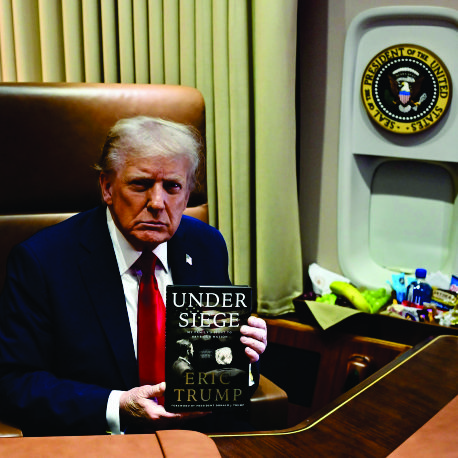
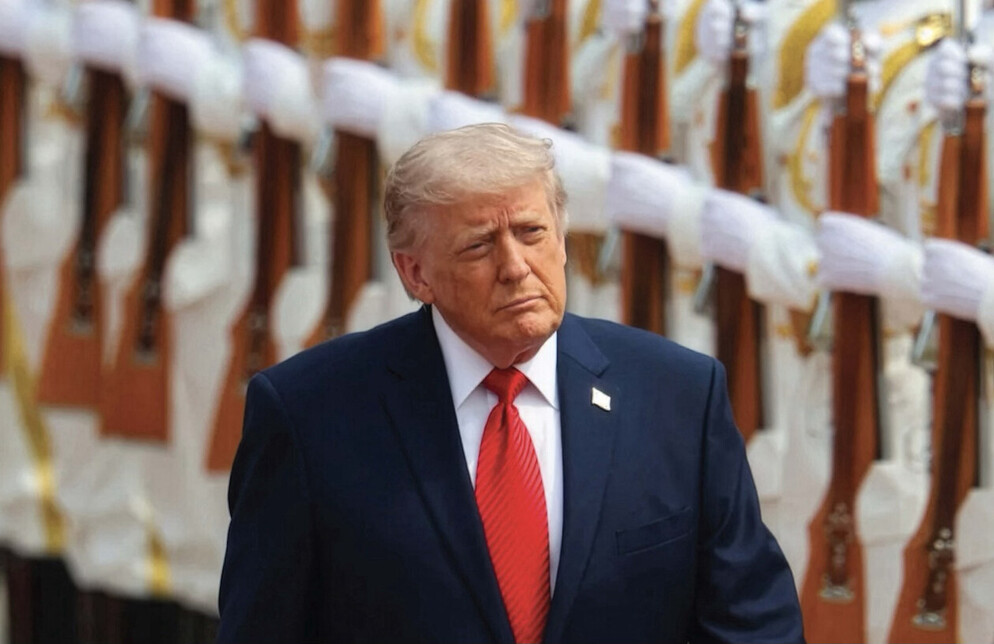
    INTERNATIONAL (NPA) — The President of the United States, Donald Trump, has announced that Washington will assist neutral countries in freeing their ships currently stranded in the Strait of Hormuz amid the heightened tensions in the Middle East.

    Trump said numerous nations, uninvolved in the ongoing regional dispute, had requested U.S. support to secure the safe passage of their vessels. He emphasized that the initiative, dubbed Project Freedom, is intended as a humanitarian gesture to protect neutral ships and crews caught in the crisis.

    According to the president, U.S. representatives have assured affected countries that their ships will be guided safely out of restricted waterways beginning Monday morning, Middle East time. He noted that discussions with Iran are ongoing and could yield positive outcomes for regional stability.

    Trump stressed that many of the stranded ships are running low on food and essential supplies, underscoring the humanitarian urgency of the operation. He described the effort as goodwill toward Iran, the Middle East, and the wider international community.

    The president warned that any interference with the humanitarian process would be met “forcefully,” while reiterating that the primary goal is to free neutral nations, companies, and crews who are “victims of circumstance” and have no involvement in the regional conflict.

  • U.S. warns shipping firms against paying Iran for Strait of Hormuz passage

    U.S. warns shipping firms against paying Iran for Strait of Hormuz passage

    WASHINGTON, United States (NPA) — The United States Department of the Treasury has warned shipping operators, financial institutions and maritime service providers against making payments to Iran for safe passage through the Strait of Hormuz, citing serious sanctions risks.

    In an alert issued on May 1, the Office of Foreign Assets Control (OFAC) said it had received reports of alleged Iranian threats to commercial shipping and demands for “toll” payments in exchange for secure transit through the strategic waterway.

    According to the advisory, the payments could take several forms, including fiat currency, digital assets, informal swaps, offsets and charitable donations allegedly directed to Iranian-linked organisations and embassy accounts.

    OFAC warned that both U.S. and non-U.S. entities could face sanctions exposure for participating in such transactions.

    The agency stated that U.S. sanctions generally prohibit American persons and U.S.-owned foreign entities from engaging in transactions involving the Government of Iran or the Islamic Revolutionary Guard Corps (IRGC), which Washington designates as a Foreign Terrorist Organization.

    The Treasury Department also cautioned that non-U.S. financial institutions involved in the transactions risk secondary sanctions that could restrict access to the American financial system. “Non-U.S. persons engaging with blocked Iranian digital asset exchanges may also risk sanctions for operating in or supporting the sanctioned Iranian financial sector,” the statement said.

    The advisory further warned insurers, reinsurers and other maritime-linked businesses that facilitating such payments could expose them to civil and criminal liability under U.S. sanctions laws.

    OFAC urged maritime service providers to conduct enhanced due diligence on vessels attempting to transit the Strait of Hormuz and to investigate possible dealings with Iranian authorities.

    The agency advised operators to examine voyage plans for signs of transit through Iranian territorial waters and seek details from counterparties regarding any safe-passage arrangements involving Iran.

    The U.S. government also reiterated that vessels entering or departing Iranian ports remain subject to multiple sanctions authorities targeting Iran’s shipping, petroleum and petrochemical sectors.

    Mariners were encouraged to coordinate with U.S. naval authorities, including the Fifth Fleet and NAVCENT NCAGS, for operational guidance in the region.

    The Strait of Hormuz remains one of the world’s most strategically important maritime chokepoints, handling a significant share of global oil and gas shipments amid rising geopolitical tensions in the Gulf region.

  • Reverend Dachomo decries killing of Christian family in Plateau as U.S. lawmakers move to restrict security aid to Nigeria

    Reverend Dachomo decries killing of Christian family in Plateau as U.S. lawmakers move to restrict security aid to Nigeria

    JOS, Nigeria (NPA) — Reverend Ezekiel Dachomo, Regional Leader of the Church of Christ in Nations (COCIN), has condemned the killing of an entire Christian family in Plateau State, describing it as yet another tragic example of persecution in Northern Nigeria.

    The victims — Rev. Ayuba Choji, his wife, and two children, Precious and Ishaya — were allegedly killed by radical Islamists on April 27, 2026, and laid to rest three days later in Kwi, Barkin Ladi Local Government Area. Their only surviving son managed to escape through a window during the attack.

    “My heart bleeds for Nigeria. How can you kill a man of God and his family just because of his choice of worship?” Dachomo lamented.

    In a statement on Friday, the cleric—who has been at the forefront of global awareness campaigns on the killing of Christians in Nigeria—urged citizens and the international community to resist indifference, stressing that families are breaking and faith is being tested. He called for justice, compassion, and an end to the cycle of violence.

    Meanwhile, in Washington, Representative Riley Moore, head of the U.S. Congressional Committee investigating alleged Christian genocide in Nigeria, criticized the Tinubu administration for allegedly spending millions lobbying Congress while failing to adequately address the crisis.

    Moore noted that the U.S. House of Representatives Appropriations Committee recently passed the annual State Department funding bill, which includes provisions restricting security assistance to Nigeria unless specific criteria are met. These includes effective response to violence and accountability for perpetrators, Prioritization of resources for internally displaced persons, and facilitation of safe return and resettlement of displaced communities.

    The bill requires the U.S. Secretary of State, Marco Rubio, to certify Nigeria’s compliance before half of the allocated funds can be released.

    The development adds to mounting international concern over violence against Christians in Nigeria, as local clerics and global lawmakers continue to call for urgent action to protect vulnerable communities and restore peace.

    The Nigerian government has consistently denied allegations of a Christian genocide, stressing that victims of terrorist attacks include Christians, Muslims, and animists alike. Officials argue that armed groups are indiscriminately targeting families and communities across the country, leaving widespread devastation in their wake.

  • Trump intensifies feud with German Chancellor Merz over criticism of Iran war: “Fix your broken country”

    Trump intensifies feud with German Chancellor Merz over criticism of Iran war: “Fix your broken country”

    INTERNATIONAL (NPA) — President Donald Trump has intensified his public criticism of German Chancellor Friedrich Merz following disagreements over the United States’ stance and military actions against the Islamic Republic of Iran.

    Trump, in a series of posts on his Truth Social platform, expressed anger over Merz’s criticism of Washington’s approach toward Iran, accusing the German leader of interfering in matters relating to global security and nuclear threats.

    In his latest remarks, Trump urged the German Chancellor to focus more attention on resolving the Russia-Ukraine conflict, which he claimed Merz had been “totally ineffective” in handling, as well as addressing Germany’s domestic challenges, including immigration and energy concerns.

    Trump also defended his administration’s position on Iran, arguing that efforts to neutralize Tehran’s nuclear ambitions were making the world — including Germany — safer.

    “Spend more time fixing your broken country in the areas of immigration and energy, and less time interfering with those that are getting rid of the Iran nuclear threat,” Trump said.

    Earlier, the U.S. president accused Merz of tolerating the possibility of Iran acquiring nuclear weapons.

    “The Chancellor of Germany, Friedrich Merz, thinks it’s OK for Iran to have a Nuclear Weapon. He doesn’t know what he’s talking about,” Trump wrote.

    “If Iran had a Nuclear Weapon, the whole World would be held hostage,” he added.

    Trump further claimed that previous world leaders had failed to adequately confront Iran’s nuclear ambitions, insisting that his administration was taking necessary action that should have been implemented long ago.

    The American president also took aim at Germany’s economy, suggesting that the country’s current economic challenges reflected weak leadership.

    “No wonder Germany is doing so poorly, both economically and otherwise,” he stated.

    Meanwhile, Trump disclosed that the United States was reviewing the possibility of reducing American troop presence in Germany, adding that a final determination would be made in the near future. The latest exchange marks a further deterioration in relations between Washington and Berlin amid broader disagreements over Iran, European security and the ongoing Russia-Ukraine war.

  • Israel intercepts Gaza‑bound flotilla, thanks Greece for cooperation

    Israel intercepts Gaza‑bound flotilla, thanks Greece for cooperation

    INTERNATIONAL (NPA) — The Israeli Government has announced that the Israeli Defense Force (IDF) successfully blocked what it described as attempts to breach the lawful naval blockade on Gaza, preventing the arrival of vessels from the latest flotilla, including one intercepted last night.

    Officials clarified that all participants removed from the vessels were taken off unharmed. In coordination with the Greek Government, Israel confirmed that those transferred from the flotilla will be disembarked on a Greek beach in the coming hours. Israel expressed gratitude to Greece for its cooperation and urged groups interested in humanitarian aid to Gaza to channel assistance through the Gaza Board of Peace (BOP)—an international body overseeing post‑war governance, reconstruction, and humanitarian coordination.

    The government noted that the BOP also issued a statement supporting Israel’s action, warning that breaches of the lawful naval blockade will not be permitted.

    The latest flotilla, known as the Global Sumud Flotilla, was intercepted near the Greek island of Crete in the eastern Mediterranean. Several vessels had departed from European ports including Marseille (France), Barcelona (Spain), and Syracuse (Italy), before converging en route to Gaza in an attempt to break the blockade.

  • U.S. sanctions 35 entities in crackdown on Iran’s shadow banking network

    U.S. sanctions 35 entities in crackdown on Iran’s shadow banking network

    WASHINGTON, D.C. (NPA) — The U.S. Department of the Treasury has imposed fresh sanctions on 35 entities and individuals linked to Iran’s shadow banking network, in a move aimed at disrupting financial channels used to evade sanctions and fund militant activities.

    The action, announced on April 28 by the Treasury’s Office of Foreign Assets Control (OFAC), targets networks accused of facilitating billions of dollars in illicit transactions tied to Iran’s oil trade and support for armed groups, including the Islamic Revolutionary Guard Corps.

    According to the Treasury, the shadow banking system enables Iran to access the global financial system, process payments for oil exports, procure sensitive materials for weapons programmes, and channel funds to allied groups across the Middle East.

    U.S. Treasury Secretary Scott Bessent said the measures form part of Washington’s broader “maximum economic pressure” campaign against Tehran.

    “Iran’s shadow banking system serves as a critical financial lifeline for its armed forces, enabling activities that disrupt global trade and fuel violence across the Middle East,” Bessent said, warning that financial institutions engaging with such networks risk severe penalties.

    The sanctions were issued under Executive Orders 13902 and 13224, which target Iran’s financial sector and counterterrorism-related activities. Officials said the designations build on earlier actions taken in January 2026 against similar networks.

    Central to the crackdown are so-called “rahbar” companies—private intermediaries that manage offshore shell firms used to move funds on behalf of sanctioned Iranian banks. These entities coordinate with exchange houses and front companies across multiple jurisdictions to facilitate payments linked to oil sales and other restricted trade.

    Among those targeted is Farab Soroush Afagh Qeshm Company, identified as a key facilitator for Shahr Bank, along with several affiliated firms and individuals accused of enabling illicit oil transactions and financial transfers.

    The Treasury also sanctioned multiple companies tied to major Iranian banks, including Bank Sepah, Bank Mellat, Bank Sina and Parsian Bank, citing their roles in supporting Iran’s financial operations and, in some cases, its missile programme.

    In addition, several front companies operating in jurisdictions such as the United Kingdom and Hong Kong were designated for allegedly helping process millions of dollars in oil-related payments.

    The action forms part of a wider U.S. effort under the National Security Presidential Memorandum-2 to curb Iran’s ability to generate revenue through sanctions evasion. Since February 2025, OFAC says it has sanctioned nearly 1,000 Iran-linked individuals, entities, vessels and aircraft.

    Alongside the designations, OFAC issued a warning to global financial institutions and maritime operators over potential sanctions risks associated with making transit-related payments to Iran, particularly involving passage through the Strait of Hormuz.

    Under the measures, all assets of designated individuals and entities within U.S. jurisdiction are frozen, and U.S. persons are prohibited from engaging in transactions with them. Foreign entities could also face penalties for facilitating dealings with sanctioned actors.

    The Treasury said the move is intended to increase economic pressure on Iran while limiting its capacity to fund activities viewed by Washington as destabilising to regional and global security.

  • Russia details April 25 Mali terror attacks, blames Europe and Ukraine for training militants

    Russia details April 25 Mali terror attacks, blames Europe and Ukraine for training militants

    MOSCOW, Russia (NPA) — Russia has presented an account of the challenges faced by its military personnel in Mali during the April 25, 2026 terrorist assault, when militants nearly overran the country in a coordinated attack. According to a statement issued by the Russian Ministry of Foreign Affairs on Tuesday via its Telegram channel, the Ministry of Defence reported that at around 5:30 a.m., illegal armed groups of Jama’at Nusrat al‑Islam wal‑Muslimin (JNIM) and the Azawad Liberation Front (FLA), under joint command, attempted to carry out an armed coup d’état in Mali.

    Four major populated areas — Bamako, Sevare, Gao, and Kidal — were attacked simultaneously by an estimated 12,000 fighters, reportedly trained with the involvement of Ukrainian and European mercenary instructors using Western‑made Stinger and Mistral MANPADS.

    Russia said in Bamako, militants attempted to seize key facilities, including the presidential palace. Mali’s Defence Minister was killed when a suicide vehicle‑borne explosive device detonated near his residence.

    It noted that units of Russia’s African Corps engaged the enemy forces in fierce fighting, inflicting heavy losses and forcing militants to abandon their plans. Russian forces carried out UAV airstrikes, helicopter sorties, and Su‑24 combat missions, destroying hundreds of militants, vehicles, and equipment. The Ministry reported that enemy losses amounted to more than 2,500 fighters, 102 vehicles, 152 motorcycles, and multiple mortars.

    The African Corps detachment in Kidal fought encircled for over 24 hours, repelling four massive attacks before withdrawing alongside Malian forces.

    Russia emphasized that its intervention prevented a coup d’état, preserved Mali’s legitimate government, and averted mass civilian casualties. Medical specialists are providing aid to wounded civilians, while Russian units continue reconnaissance and strikes against regrouping militant forces.

    The Ministry warned that the situation in Mali remains difficult, with militants regrouping and maintaining aggressive intentions.

    Newpost Africa reported earlier that the African Union, Ghana and Senegal condemned the terrorists’ attacks with the President of the Confederation of Sahel States, Ibrahim Traoré, issuing a communiqué denouncing it.

    Yesterday, Mali’s Prime Minister, General Abdoulaye Maïga, said in a press conference that the ultimate goal of the terrorists was to seize power by dismantling the institutions of the Republic and halting the Transition process. He noted, however, that this had failed, stressing that the country remains on the path of progress.