Category: International

  • WTO, ITC launch WEIDE Program in Jordan to empower women entrepreneurs

    WTO, ITC launch WEIDE Program in Jordan to empower women entrepreneurs

    INTERNATIONAL (NPA) — The World Trade Organization (WTO) has congratulated 46 women-led businesses in Jordan selected to benefit from the Women Exporters in the Digital Economy (WEIDE) Fund, a program designed to strengthen their participation in international trade through digital commerce. The announcement was made in Amman on April 23 at a launch event organized by the Jordan Enterprise Development Corporation (JEDCO), the program’s local partner.

    The beneficiaries were chosen from a pool of 469 applicants and will undergo a one-year program combining technical assistance, mentorship, access to international business networks, and financial support. The WEIDE Fund, launched in 2024 by the WTO Secretariat and the International Trade Center (ITC), is currently being implemented in four countries, including Jordan.

    WTO Director-General Ngozi Okonjo-Iweala, speaking virtually, said: “Digital trade is reshaping the global economy and creating new pathways for women entrepreneurs to participate in international trade. Ensuring women’s participation is essential for inclusive growth and the creation of even more jobs.”

    ITC Executive Director Pamela Coke-Hamilton emphasized that the program equips women-led businesses with both finance and digital skills to scale sustainably. Jordan’s Minister of Industry, Trade and Supply, Yarub Qudah, described the initiative as part of national efforts to enhance women’s economic participation, calling it “an economic necessity.”

    Dana AlZoubi, Acting CEO of JEDCO, noted that the program provides technical support, training, and grants totaling $1.4 million. Beneficiaries are divided into two tracks: the Discovery Track, offering $5,000 grants to early-stage businesses, and the Booster Track, providing up to $30,000 for advanced firms ready to expand globally.

    Ahead of the launch, participants attended training sessions covering business development, digital trade, financial management, and soft skills such as leadership and negotiation. A pitch competition selected Hanan Aqeel, Manager of Khayrat Alsahra, to represent Jordan at an international trade fair.

    The WEIDE Fund is supported by the United Arab Emirates, the FIFA World Cup Qatar 2022 Legacy Fund, and the Kingdom of Bahrain. Besides Jordan, it is also active in the Dominican Republic, Mongolia, and Nigeria.

  • UNIFIL mourns Indonesian peacekeeper, cites UN Resolution 1701

    UNIFIL mourns Indonesian peacekeeper, cites UN Resolution 1701

    INTERNATIONAL (NPA) — The United Nations Interim Force in Lebanon (UNIFIL) has expressed deep sorrow over the death of Corporal Rico Pramudia, an Indonesian peacekeeper who succumbed to injuries sustained in a projectile explosion at his base in Adchit Al Qusayr on March 29.

    Corporal Pramudia, 31, passed away on Thursday, April 24, 2026, at a hospital in Beirut after weeks of critical care.

    In a statement, UNIFIL extended condolences to his family, friends, the Indonesian Army, and the Government and people of Indonesia, describing the loss as tragic and irreparable.

    The mission called on all actors to uphold their obligations under international law and ensure the safety and security of UN personnel and property at all times. UNIFIL stressed that deliberate attacks on peacekeepers constitute grave violations of international humanitarian law and UN Security Council Resolution 1701, warning that such acts may amount to war crimes.

    Adopted in August 2006, Resolution 1701 ended the 34-day conflict between Israel and Hezbollah. It called for a full cessation of hostilities, the withdrawal of Israeli forces from southern Lebanon, and the deployment of Lebanese armed forces alongside UNIFIL peacekeepers. The resolution also strengthened UNIFIL’s mandate, authorizing it to monitor hostilities, support humanitarian access, and assist the Lebanese government in securing its borders to prevent the flow of arms to non-state actors.

    UNIFIL reaffirmed its commitment to maintaining peace and stability in southern Lebanon, while honoring the sacrifice of Corporal Pramudia and the dedication of all peacekeepers serving under the UN flag.

  • EU unleashes sweeping 20th sanctions blitz on Russia, targets energy, banks, crypto and war machine

    EU unleashes sweeping 20th sanctions blitz on Russia, targets energy, banks, crypto and war machine

    BRUSSELS, Belgium (NPA) — The European Union has approved its 20th package of sanctions against Russia, targeting key sectors of its economy, including energy, finance, trade and the military-industrial complex, in response to Moscow’s ongoing war in Ukraine.

    The new measures, described as one of the most expansive in two years, include 120 additional individual listings and a broad range of economic restrictions aimed at weakening Russia’s war capacity and sustaining pressure on its leadership.

    Announcing the decision, EU foreign policy chief Kaja Kallas said the bloc remains committed to supporting Ukraine while intensifying pressure on Russia to end the conflict and engage in meaningful peace negotiations.

    The sanctions package places significant emphasis on curbing Russia’s energy revenues, with new restrictions spanning oil exploration, refining and transport. The EU also moved to tighten measures against Russia’s so-called “shadow fleet,” adding 46 vessels to its sanctions list, bringing the total number of affected ships to 632.

    Additional measures include a future maritime services ban on Russian crude oil and petroleum products, coordinated with G7 partners, and a prohibition on transactions involving key Russian ports used to bypass existing restrictions.

    In the financial sector, the EU imposed transaction bans on 20 Russian banks and sanctioned several foreign financial institutions accused of facilitating sanctions evasion. The bloc also expanded its restrictions to cover cryptocurrency activities, banning Russian-based crypto platforms and targeting digital assets linked to the Russian economy.

    The package further tightens restrictions on Russia’s military-industrial complex, designating 58 companies and individuals involved in the production of military equipment, including drones. It also targets entities in third countries accused of supplying critical technologies to Russia’s defence sector.

    Trade measures were expanded, with new export bans covering industrial goods, chemicals and machinery, alongside import restrictions on raw materials and metals that generate revenue for Russia. The EU also activated an anti-circumvention mechanism to prevent re-export of sensitive goods through third countries.

    In a move to enhance accountability, the EU sanctioned individuals and entities linked to the alleged deportation and indoctrination of Ukrainian children, as well as those accused of appropriating Ukrainian cultural heritage and spreading state-backed propaganda.

    The sanctions package also extends measures against Belarus for its role in supporting Russia’s war efforts, including new listings tied to its military-industrial sector.

    The EU reaffirmed its continued support for Ukraine’s sovereignty and territorial integrity, stressing its commitment to maintaining and increasing pressure on Russia until a just and lasting peace is achieved.

  • BREAKING: Trump orders U.S. Navy to destroy Iranian boats laying mines in Strait of Hormuz

    BREAKING: Trump orders U.S. Navy to destroy Iranian boats laying mines in Strait of Hormuz

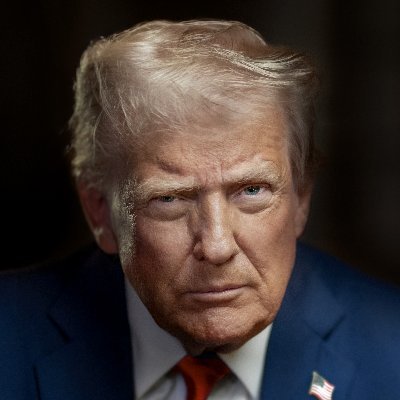
    INTERNATIONAL (NPA) — U.S. President Donald Trump has directed the Navy to destroy any Iranian vessels found laying mines in the Strait of Hormuz, following Tehran’s closure of the vital waterway.

    Trump, in a statement posted on Truth Social, said there should be “no hesitation” in carrying out the order. He added that U.S. mine-sweeping operations are already underway and instructed that the activity be intensified.

    “The United States Navy is to shoot and kill any boat, small boats though they may be, that is putting mines in the waters of the Strait of Hormuz. There is to be no hesitation. Additionally, our mine sweepers are clearing the Strait right now. I am hereby ordering that activity to continue, but at a tripled-up level,” Trump wrote.

    In another statement, the U.S. President claimed Iran is struggling with internal divisions. “Iran is having a very hard time figuring out who their leader is! They just don’t know! The infighting is between the ‘Hardliners,’ who have been losing badly on the battlefield, and the ‘Moderates,’ who are not very moderate at all (but gaining respect!), is crazy! We have total control over the Strait of Hormuz. No ship can enter or leave without the approval of the United States Navy. It is sealed up tight until such time as Iran is able to make a deal,” Trump declared.

    The Strait of Hormuz, a critical transit route for global oil and gas shipments, has become the focal point of escalating tensions between Iran, the United States, and Israel. Analysts note that control of the strait could ultimately determine the trajectory of the conflict, given its centrality to Iran’s economy and U.S. strategic interests.

    Iran’s closure of the strait and Washington’s countermove highlight the high stakes of the confrontation, with both sides seeking to assert dominance over one of the world’s most important maritime chokepoints.

  • Iran’s President Pezeshkian decries blockade, calls for dialogue amid deadlock with U.S.

    Iran’s President Pezeshkian decries blockade, calls for dialogue amid deadlock with U.S.

    INTERNATIONAL (NPA) — Iranian President Masoud Pezeshkian has reiterated his country’s readiness to engage in dialogue and reach agreements with the United States, even as tensions escalate and scheduled peace talks falter.

    In a statement on Thursday, Pezeshkian said that “bad faith, siege, and threats are the main obstacles to genuine negotiation.” He accused unnamed counterparts of hypocrisy, noting the contradiction between their public claims and actual actions.

    Posting separately on his verified X account, the Iranian leader emphasized that the Islamic Republic continues to welcome dialogue and agreement but warned that breaches of commitments, blockades, and threats remain barriers to progress. “The world sees your endless hypocritical rhetoric and contradiction between claims and actions,” he wrote, again without naming specific individuals.

    The remarks follow the collapse of a planned second round of talks in Islamabad, Pakistan, aimed at ending hostilities involving Iran, the United States, and Israel. Iran accused Washington of breaching a ceasefire agreement by imposing a blockade on its ports. U.S. President Donald Trump has maintained that the blockade will remain until a deal is reached.

    The deadlock is seen an attestation of the deep mistrust between both sides, with Iran insisting on the removal of blockades as a precondition for meaningful negotiations, while the U.S. continues to press for broader concessions with it in place.

  • WTO DG Okonjo-Iweala celebrates Lord Nick Stern at 80, highlights trade’s role in sustainability

    WTO DG Okonjo-Iweala celebrates Lord Nick Stern at 80, highlights trade’s role in sustainability

    INTERNATIONAL (NPA) — The Director-General of the World Trade Organization (WTO), Dr Ngozi Okonjo-Iweala, has joined global leaders in celebrating Lord Nick Stern, renowned economist and Chair of the Grantham Research Institute on Climate Change and the Environment at the London School of Economics (LSE), who recently marked his 80th birthday.

    In a statement, Okonjo-Iweala described Lord Stern as one of the foremost intellectuals and practitioners who has worked tirelessly to demonstrate the compatibility of growth, jobs, and climate action through the New Climate Economy initiative.

    She also participated in a high-level panel at LSE alongside Christine Lagarde, President of the European Central Bank, and Kristalina Georgieva, Managing Director of the International Monetary Fund.

    Okonjo-Iweala noted that despite global disruptions, trade can be part of the solution to sustainability and environmental challenges. She extended her appreciation to Professor Larry Kramer, President and Vice Chancellor of LSE, for moderating the session.

    Reflecting on Earth Day, the WTO chief emphasised the role of communities worldwide in driving lasting change to make the planet more liveable. “We cannot achieve this without aligning trade to sustainability and environmental stewardship,” she said.

    Okonjo-Iweala stressed that WTO members are working together to ensure that open and fair trade accelerates a green and just transition, particularly for vulnerable populations.

    /

  • CENTCOM Denies claims Iranian vessels evaded US blockade

    CENTCOM Denies claims Iranian vessels evaded US blockade

    INTERNATIONAL (NPA) — The US Central Command (CENTCOM) has dismissed reports that Iranian vessels successfully breached the ongoing American blockade against Iran.

    In a statement, CENTCOM confirmed that US forces have directed 29 vessels to turn around or return to port as part of enforcement operations. Media reports had alleged that several commercial ships — including M/V Hero II, M/V Hedy, and M/V Dorena — slipped past the blockade to deliver millions of barrels of oil.

    CENTCOM described these claims as inaccurate. It clarified that Hero II and Hedy remain anchored in Chah Bahar, Iran, after being intercepted earlier in the week, while Dorena is under escort by a US Navy destroyer in the Indian Ocean following an earlier attempt to violate the blockade.

    The command stressed that evading a US blockade is “impossible,” citing America’s global reach. “American forces are operating and enforcing the blockade across the Middle East and beyond,” the statement said.

    The blockade has been a major source of tension between Washington and Tehran. Iran recently withdrew from a second round of talks with the United States, accusing the blockade of violating ceasefire terms.

    US President Donald Trump has insisted the blockade will remain in place until Washington secures agreement with Iran on key demands and a pathway to ending the war.

  • US sanctions Iranian missile and drone procurement networks

    US sanctions Iranian missile and drone procurement networks

    INTERNATIONAL (NPA) — The United States has imposed sweeping sanctions on 14 individuals, entities, and aircraft linked to Iran, Türkiye, and the United Arab Emirates (UAE) for their roles in procuring or transporting weapons and components for the Iranian regime. The measures, announced on 21 April 2026 by the Treasury Department’s Office of Foreign Assets Control (OFAC), form part of Economic Fury, Washington’s campaign to counter Iran’s missile and drone programs.

    Treasury Secretary Scott Bessent said the sanctions underscore America’s determination to hold Tehran accountable for destabilising global energy markets and targeting civilians with missiles and drones. “Under President Trump’s leadership, as part of Economic Fury, Treasury will continue to follow the money and target the Iranian regime’s recklessness and those who enable it,” he declared.

    The action builds on National Security Presidential Memorandum 2, which directs the US government to curtail Iran’s ballistic missile program, deny it nuclear weapons capability, and restrict the Islamic Revolutionary Guard Corps (IRGC) from accessing resources that sustain its activities. It also represents the fifth round of non‑proliferation designations since UN sanctions were reimposed in September 2025 following Iran’s “significant non‑performance” of nuclear commitments.

    Targeting Shahed UAV Procurement

    OFAC sanctioned three individuals tied to Iran’s Pishgam Electronic Safeh Company (PESC), already blacklisted in 2023 for supplying the IRGC Aerospace Force Self Sufficiency Jihad Organization. PESC procured thousands of servomotors used in Shahed‑136 one‑way attack drones, which have been deployed against US and allied targets.

    Those designated include Tehran‑based currency exchanger Kamal Sabah Balkhkanlu, accused of facilitating payments for PESC’s procurement of carbon fibre and servomotors; Mohammad Vahidi, linked to shipments routed through Dubai; and Danial Khalili, who acted as PESC’s agent in receiving and delivering items.

    Ballistic Missile Propellant Precursors

    Sanctions also hit Türkiye‑based Emti Fiber Textile Import Export Trade Limited Company for supplying cotton linters to Iran’s Pardisan Rezvan Shargh International Private Joint Stock Company. Cotton linters are processed into nitrocellulose, a key ingredient in solid propellant rocket motors used in ballistic missiles.

    OFAC further designated Iran’s Adak Pargas Pars Trading Company and its executives Hamidreza Roknifard and Mostafa Roknifard for facilitating procurement of sodium perchlorate, another missile propellant precursor. The company had previously assisted German national Marco Klinge, sanctioned in 2025 for supplying materials to Iran’s Defence Industries Organization.

    Action Against Mahan Air

    The sanctions extend to Iran’s Mahan Air, long accused of transporting weapons and UAV systems for the IRGC‑Qods Force. OFAC designated Mahan Air in 2011 under counter‑terrorism authorities and again in 2019 under non‑proliferation measures.

    Entities linked to Mahan Air include Sepehr Kaveh Kish International Trading Company, its executives Gholam Abbas Ataei Aghdam and Jamshid Hosseinzadeh, and manager Mohammad Hossein Mahdian. OFAC also targeted Saman Air Services Company, a Mahan subsidiary that facilitated UAV shipments to Venezuela in coordination with state airline Conviasa.

    Dubai‑based Chabok FZCO was sanctioned for procuring US‑origin aircraft components for Mahan Air. Additionally, two Boeing 777 aircraft, EP‑MTE and EP‑MTB, were identified as property in which Mahan Air has an interest.

    Sanctions Implications

    As a result of the designations, all property and interests in property of the sanctioned individuals and entities within US jurisdiction are blocked. US persons are prohibited from engaging in transactions with them, and entities owned 50 percent or more by designated persons are also blocked.

    Violations may result in civil or criminal penalties, with OFAC enforcing sanctions on a strict liability basis. Foreign financial institutions risk secondary sanctions if they knowingly conduct significant transactions on behalf of designated persons.

    OFAC emphasised that the ultimate goal of sanctions is behavioural change, not punishment. It noted that individuals and entities may petition for removal from the Specially Designated Nationals (SDN) list if they demonstrate compliance with US law.

    Broader Context

    Iran has increasingly relied on Shahed‑series drones to strike energy infrastructure and civilian targets across the Middle East. Washington argues that Tehran’s procurement networks in Türkiye, the UAE, and beyond are critical to sustaining these operations. By targeting facilitators, suppliers, and transporters, the US aims to deplete Iran’s missile inventories and prevent reconstitution of its production capacity.

    The latest measures reinforce Washington’s dual approach: constraining Iran’s weapons programs while signalling to international partners that cooperation with Tehran’s procurement networks carries significant risks.

    Secretary Bessent concluded: “The Iranian regime must be held accountable for its extortion of global energy markets and indiscriminate targeting of civilians with missiles and drones. Treasury will continue to act decisively against those who enable Iran’s destabilising activities.”

  • Three years of war in Sudan, EU calls for immediate ceasefire

    Three years of war in Sudan, EU calls for immediate ceasefire

    AFRICA/INTERNATIONAL (NPA) — The European Union has renewed its call for peace in Sudan as the country enters its third year of war, warning that the conflict continues to devastate lives and undermine the aspirations of the 2018/19 revolution.

    In a statement on 21 April 2026, the EU High Representative reaffirmed the Union’s commitment to Sudan’s unity, sovereignty, and territorial integrity, rejecting unilateral attempts to establish parallel governance that could risk partition. Preventing escalation into a full‑scale regional war, the EU stressed, remains paramount.

    The statement highlighted the Sudan Conference in Berlin held on 15 April, which demonstrated international resolve to pressure the Sudanese Armed Forces (SAF), the Rapid Support Forces (RSF), and affiliated militias to end hostilities.

    Recalling the October 2025 Council Conclusions, the EU urged all actors to engage in negotiations towards an immediate and lasting ceasefire. It expressed readiness to support credible peace initiatives, including international monitoring mechanisms, and called on external actors to stop fuelling the war.

    Sudan’s humanitarian crisis is worsening, with civilians targeted, famine conditions persisting, and mass displacement destabilising communities and the wider region. The EU condemned attacks on civilians, healthcare facilities, aid workers, and humanitarian convoys, stressing that obstruction of relief efforts may constitute war crimes.

    At the Berlin Conference, donors pledged €1.5 billion in aid, including €812 million from the EU and its Member States, to support humanitarian response and protect critical infrastructure.

    The EU also denounced grave violations of international humanitarian and human rights law, including systematic sexual and gender‑based violence, with rape used as a weapon of war. It pledged support for accountability mechanisms such as the UN Fact‑Finding Mission and the ICC, noting that sanctions targeting the war economy remain under consideration.

    Reaffirming support for Sudanese aspirations for democratic governance, the EU welcomed the Joint Call to End the War and Advance a Sudanese‑Owned Political Process, agreed by civilian actors at the Berlin Conference under the AU‑led Quintet. The statement concluded: “It is long overdue to bring this devastating conflict to an end.”

  • AU Deputy Chairperson Haddadi urges paradigm shift in global cooperation at WBG/IMF Spring Meetings

    AU Deputy Chairperson Haddadi urges paradigm shift in global cooperation at WBG/IMF Spring Meetings

    INTERNATIONAL (NPA) — The African Union Commission (AUC) has urged a fundamental shift in multilateral cooperation to support job creation and economic transformation across the continent.

    Speaking at the Joint Ministerial Committee of the Boards of Governors of the World Bank Group and the International Monetary Fund during the 2026 Spring Meetings in Washington, AUC Deputy Chairperson Selma Malika Haddadi stressed that Africa’s demographic strength must be harnessed through deliberate action to create more and better‑paid jobs.

    “For Africa, this is not an abstract policy question. It is an urgent development, economic, and stability imperative,” Haddadi said. She emphasised that Africa’s greatest asset is its people, particularly youth and women, but warned that prosperity will only be realised if enabling conditions are created.

    The Deputy Chairperson welcomed the World Bank report’s central message that job creation requires deliberate investment in infrastructure, digital public systems, skills development, institutional strengthening, regulatory certainty, and private sector growth. “Job creation does not happen by chance, but requires deliberate action to build the right enabling environment,” she noted.

    Haddadi, however, criticised the current multilateral system, saying it has not consistently provided the robust and predictable support needed for Africa’s transformation. “Too often, support remains fragmented, reactive, and insufficiently aligned with regional and continental development priorities and opportunities,” she said.

    She pointed to frameworks such as Agenda 2063 and the African Continental Free Trade Area (AfCFTA) as evidence of Africa’s political resolve and institutional capacity to drive reforms. Member States, she added, are undertaking difficult reforms to strengthen competitiveness, enterprise, and employment.

    The AU–World Bank partnership, Haddadi said, has elevated the conversation by linking jobs more clearly to infrastructure, energy, trade, skills, industrialisation, and financial inclusion. What is now required, she argued, is a paradigm shift: “From fragmented initiatives to coordinated delivery, from short‑term interventions to long‑term transformation, and from dialogue to implementation at scale.”

    In closing, Haddadi underscored that job creation is central to Africa’s future. “Creating the enabling environment for more and better‑paid jobs is not peripheral to Africa’s future. It is central to resilience, dignity, and shared prosperity,” she said.