Category: International

  • IDF announces killing of senior Hamas commander Izz al-Din al-Haddad, other militants linked to October 7 attack

    IDF announces killing of senior Hamas commander Izz al-Din al-Haddad, other militants linked to October 7 attack

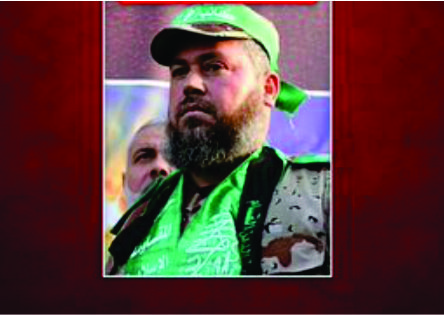
    INTERNATIONAL (NPA) — The Israel Defence Forces has announced the elimination of Izz al-Din al-Haddad, head of Hamas’ military wing and one of the last remaining senior commanders of the group, accusing him of playing a central role in the planning of the October 7 attack in Israel in which about 1,200 people were killed and more than 250 others abducted.

    According to the IDF, al-Haddad assumed a top leadership position within Hamas following the elimination of Mohammed Sinwar and subsequently worked to rebuild the group’s military capabilities while coordinating multiple attacks against Israeli civilians and Israeli troops.

    The Israeli military alleged that throughout the ongoing conflict, al-Haddad was directly involved in the captivity of several Israeli hostages held by Hamas in Gaza and managed the group’s hostage detention system.

    The IDF further claimed that the Hamas commander surrounded himself with hostages in an attempt to shield himself from targeted military operations.

    In a separate operation, the Israeli military also announced the elimination of Hamer Iyad Muhammad Almatouk and Khaled Muhammad Salem Joudeh, described as senior Hamas operatives.

    According to the IDF, the two militants infiltrated Israel during the October 7 attack and had recently attempted to carry out additional attacks against Israeli troops operating in the area.

    The military also confirmed the killing of Abd al-Rahman Mahmoud Jumaa Shaafi, identified as a member of Hamas’ Bureij Battalion, allegedly involved in coordinating attacks against Israeli forces.

    Meanwhile, reports emerging from Gaza indicated that burial arrangements were underway for al-Haddad and the other slain Hamas fighters.

  • BREAKING: Nigerian-born ISIS Global Deputy Abu-Bilal al-Minuki killed in Joint US-Nigeria operation —Trump

    BREAKING: Nigerian-born ISIS Global Deputy Abu-Bilal al-Minuki killed in Joint US-Nigeria operation —Trump

    INTERNATIONAL (NPA) — United States President Donald Trump has announced the killing of Abu-Bilal al-Minuki, described as the global second-in-command of ISIS, during a joint overnight operation carried out by United States and Nigerian forces.

    Trump disclosed the development in a post on his Truth Social platform, saying the operation was “meticulously planned” and successfully executed by American troops alongside the Armed Forces of Nigeria.

    According to the US President, the slain terrorist had been hiding in Africa while allegedly coordinating extremist operations targeting civilians across the continent and planning attacks against Americans.

    Trump stated that the elimination of al-Minuki would significantly weaken ISIS’s global operational structure and reduce the group’s influence in Africa and beyond.

    Part of Trump’s statement reads: “Tonight, at my direction, brave American forces and the Armed Forces of Nigeria flawlessly executed a meticulously planned and very complex mission to eliminate the most active terrorist in the world from the battlefield. Abu-Bilal al-Minuki, second in command of ISIS globally, thought he could hide in Africa, but little did he know we had sources who kept us informed on what he was doing. He will no longer terrorize the people of Africa, or help plan operations to target Americans. With his removal, ISIS’s global operation is greatly diminished. Thank you to the Government of Nigeria for your partnership on this operation.”

    Abu-Bilal al-Minuki, also known as Abu Bakr ibn Muhammad ibn Ali al-Mainuki, was believed to be a Nigerian-born extremist from Mainok in Borno State. Security reports identified him as one of the most influential ISIS commanders operating within Africa, particularly in the Lake Chad region.

    He reportedly served as a top leader within the Islamic State West Africa Province (ISWAP) and oversaw operations linked to ISIS’s General Directorate of Provinces, coordinating funding, logistics and operational guidance for affiliated terror cells.

    The United States government had designated him a Specially Designated Global Terrorist in June 2023 over allegations of coordinating kidnappings, armed attacks and extortion activities across Nigeria and neighbouring countries.

    Security analysts described his death as one of the most significant counterterrorism successes recorded in Africa in recent years, noting that the development could weaken ISWAP’s operational capacity across the Sahel and Lake Chad Basin.

  • Body of second missing US soldier recovered in Morocco

    Body of second missing US soldier recovered in Morocco

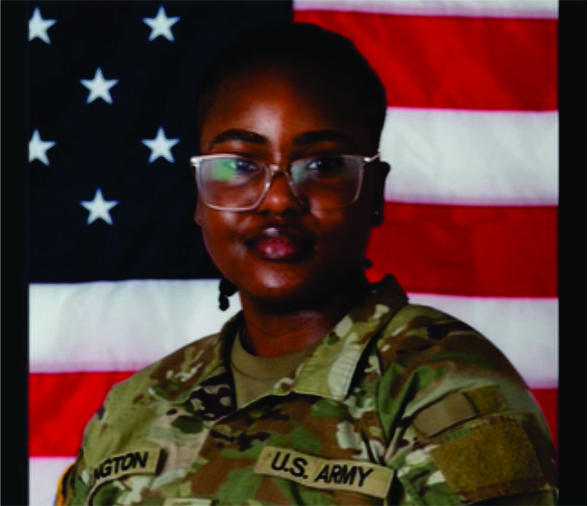
    RABBAT, Morocco (NPA) — The body of a second U.S. service member declared missing during the African Lion 2026 exercise has been recovered in Morocco, officials confirmed on Wednesday.

    According to a joint statement by the U.S. Army and Morocco’s Royal Armed Forces, search and rescue teams retrieved the remains of Specialist Mariyah Symone Collington, 19, an air and missile defense crew member, from a coastal cave roughly 500 meters from where she and another soldier went missing near Cap Draa, Tan Tan.

    Collington’s recovery follows the earlier discovery of 1st Lieutenant Kendrick Lamont Key Jr., whose body was found on May 9. Both soldiers disappeared on May 2 during a training exercise near a cliff at the Cap Draa Training Area.

    The multinational exercise, which brought together U.S., Moroccan, and partner forces, immediately launched coordinated search operations involving ground, air, and maritime assets. Officials said the mission remains active as investigations continue into the circumstances surrounding the incident.

    United States Africa Command (AFRICOM) emphasised that the soldiers were participating in a critical joint exercise designed to strengthen interoperability and regional security. The disappearance prompted an urgent response, highlighting the risks inherent in complex multinational training operations.

    The recovery of Collington’s remains marks a solemn moment for the U.S. military and its allies, underscoring the sacrifices made in pursuit of readiness and cooperation.

  • Russia announces successful test of 35,000-kilometre Sarmat Missile system

    Russia announces successful test of 35,000-kilometre Sarmat Missile system

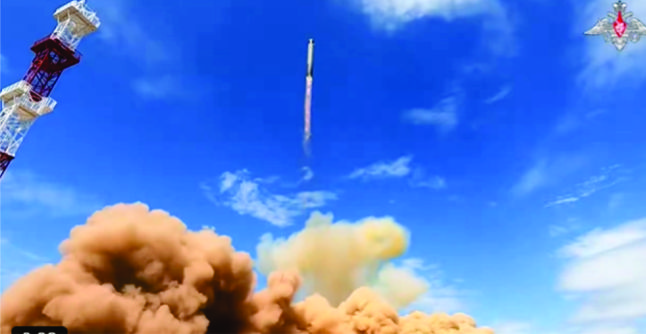
    MOSCOW, Russia (NPA) — Russia says it has successfully conducted another test of its Sarmat intercontinental ballistic missile system, describing the weapon as one of the most powerful strategic deterrence platforms in the world.

    The announcement was made on Tuesday by the Russian Ministry of Foreign Affairs through its official Telegram channel following a report presented to President Vladimir Putin by Commander of the Strategic Missile Forces, Sergei Karakayev, via videoconference.

    According to the Russian government, development of the Sarmat missile system began in 2011, while details of the programme and its capabilities were first publicly unveiled in 2018.

    Russian officials claimed the missile possesses capabilities exceeding those of many existing strategic missile systems, including an operational range of more than 35,000 kilometres.

    The statement further claimed that the Sarmat missile can travel along both ballistic and suborbital trajectories, enabling it to bypass existing and future missile defence systems.

    Moscow also described the missile as more powerful than the Soviet-era Voevoda missile system currently in service, alleging that the total yield of its warhead is more than four times greater than that of comparable Western systems.

    While Russian officials highlighted the missile’s long-range capability, independent verification of some of the performance claims remains limited. Military analysts generally estimate that intercontinental ballistic missiles launched from Russia toward the mainland United States could reach targets within approximately 20 to 30 minutes, depending on trajectory and launch conditions.

    Speaking after receiving the report, President Vladimir Putin said Russia resumed efforts to modernise its strategic deterrence systems in the early 2000s following the withdrawal of the United States from the Anti-Ballistic Missile Treaty in 2002.

    “We were forced to think about ensuring our strategic security in the new reality and preserving the strategic balance of forces,” Putin said.

    According to him, Russia subsequently began developing advanced weapons systems capable of overcoming missile defence networks.

    Putin also referenced several other strategic weapons programmes currently deployed or under development by Russia, including the Avangard intercontinental-range missile system, the Kinzhal hypersonic missile and the Oreshnik medium-range missile system.

    He added that work was nearing completion on the Poseidon unmanned underwater vehicle and the Burevestnik global-range cruise missile, both powered by compact nuclear propulsion systems.

    The latest announcement comes amid heightened geopolitical tensions between Russia and Western countries over the ongoing conflict in Ukraine and broader security concerns in Europe.

  • Corrupt public officials fuel global human trafficking networks, UNODC warns

    Corrupt public officials fuel global human trafficking networks, UNODC warns

    VIENNA, Austria (NPA) — The United Nations Office on Drugs and Crime (UNODC) has warned that corruption remains a major driver of human trafficking worldwide, enabling criminal networks to recruit, transport and exploit victims while evading justice.

    In a new publication titled Hidden Links: ‘Corruption and Human Trafficking’, the UN agency said traffickers often rely on corrupt public officials and private sector actors who accept bribes, collude with criminal groups or deliberately ignore illegal activities.

    According to UNODC, the relationship between corruption and trafficking has created what it described as a “hidden alliance” that allows organised crime to flourish while victims remain trapped in exploitation.

    The report explained that corruption plays a role at virtually every stage of the trafficking chain, from recruitment and transportation to exploitation and obstruction of justice.

    It noted that corrupt officials may issue fraudulent documents, ignore irregularities at border crossings or facilitate the movement of victims across jurisdictions in exchange for financial inducements.

    “Without corruption, trafficking networks would struggle to move victims, conceal operations or evade justice,” the publication stated.

    UNODC further warned that corruption among law enforcement officials, labour inspectors, prosecutors and other authorities creates an environment where traffickers can operate with little fear of prosecution.

    According to the report, some officials falsify inspection outcomes, obstruct investigations or deliberately ignore exploitation taking place in industries considered high-risk for trafficking, including agriculture, construction, fisheries and domestic work.

    The agency said survivors of trafficking frequently report encounters with police officers and public officials who fail to protect them or allegedly exploit their vulnerability.

    The publication also stressed that corruption linked to human trafficking is not limited to specific countries or institutions.

    “It cuts across borders, sectors and institutions,” the report stated, adding that private recruitment agencies, transport operators and employers also contribute to trafficking networks in some cases.

    To address the growing challenge, UNODC called for stronger anti-corruption safeguards within public institutions and broader investigations that treat trafficking cases as corruption-related crimes.

    The agency also urged governments to strengthen protection mechanisms for victims and whistle-blowers, improve witness protection systems and enhance international cooperation against transnational trafficking networks.

    According to UNODC, disrupting financial flows and exposing corrupt officials are critical to dismantling trafficking operations globally.

    The organisation said it is supporting countries to strengthen legislation imposing tougher penalties on public officials involved in trafficking, while also training investigators to identify corruption and suspicious financial transactions linked to organised crime.

  • Russian drone attacks against Ukraine resume as 3-day truce ends

    Russian drone attacks against Ukraine resume as 3-day truce ends

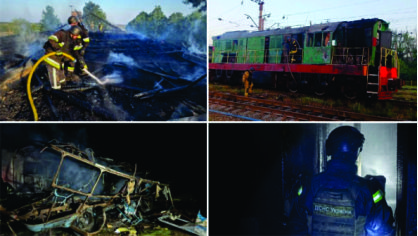
    KYIV, Ukraine (NPA) — Russian drone attacks resumed across Ukraine following the expiration of a three-day truce between Moscow and Kyiv, with explosions and air raid alerts reported in the Ukrainian capital overnight.

    Ukrainian President Volodymyr Zelenskyy said Russia launched more than 200 attack drones against Ukraine after the temporary ceasefire came to an end.

    According to Zelenskyy, the attacks targeted multiple regions across the country, including Kyiv, Dnipro, Zhytomyr, Mykolaiv, Sumy, Kharkiv and Chernihiv.

    “Russia itself chose to end the partial silence that had lasted for several days,” Zelenskyy said in a statement on Monday.

    He stated that Russian forces also carried out more than 30 air strikes and dropped over 80 aerial bombs along frontline areas during the renewed offensive.

    The Ukrainian president said air defence systems intercepted several of the drones, but confirmed that civilian infrastructure suffered damage in a number of locations.

    “Energy facilities, apartment buildings, and a kindergarten were damaged, and there was also a strike on an ordinary civilian locomotive on the railway,” he said.

    Zelenskyy added that several people were injured in the attacks, while fatalities were also recorded.

    “People have been reported injured as a result of these strikes. And, unfortunately, there are fatalities. My condolences to the family and loved ones,” he added.

    The Ukrainian leader accused Moscow of escalating the conflict and reiterated Kyiv’s position that Russia must take concrete steps toward ending the war.

    “We have said that we will respond in kind to all Russian steps. Russia must end this war, and it is Russia that must take the step toward a real, lasting ceasefire,” Zelenskyy said.

    He also called for continued international pressure on Moscow, insisting that sanctions against Russia should remain in place and be strengthened until a sustainable peace agreement is achieved.

    “It is important that there be no easing of pressure and that partners do not stand aside, but continue working together for security, justice, and a reliable peace,” he said.

  • WHO confirms safe evacuation of passengers from hantavirus-stricken cruise ship in Tenerife

    WHO confirms safe evacuation of passengers from hantavirus-stricken cruise ship in Tenerife

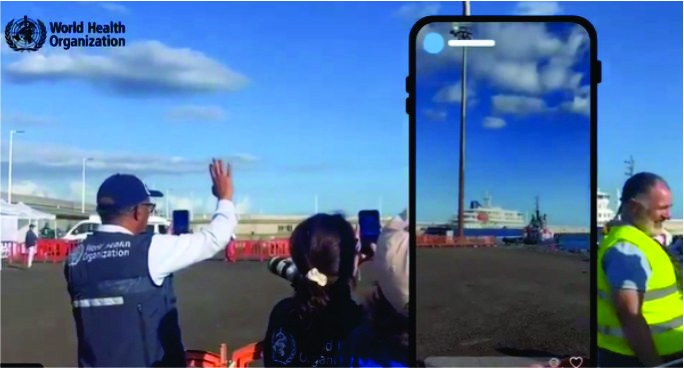
    GENEVA, Switzerland (NPA) — Director-General of the World Health Organisation Tedros Adhanom Ghebreyesus has confirmed the successful evacuation of all passengers aboard the Hantavirus-stricken cruise ship, MV Hondius, off the coast of Tenerife.

    “MV Hondius has now left the shores of Tenerife. All passengers have safely disembarked and are either on their way or have arrived home,” Tedros said in a statement on Monday.

    He commended Spain for what he described as the effective execution of a complex humanitarian and public health operation.

    According to him, the operation demonstrated strong leadership, professionalism and technical expertise.

    Tedros, however, cautioned that monitoring efforts would continue despite the successful evacuation.

    “The work is not over,” he said, adding that the WHO would continue to coordinate closely with health experts from countries involved in the response operation.

    “We have requested that they report to WHO on the health and well-being of passengers and crew through the IHR platform weekly,” he stated.

    “Continued international coordination is essential to protect everyone’s health.”

    Earlier, Spain’s Minister of Territorial Policy and Democratic Memory, Ángel Víctor Torres Pérez, confirmed that the MV Hondius had departed Tenerife and was heading to the Netherlands.

    “The Government has concluded this humanitarian and emergency health operation in an effective and rigorous manner,” he said.

    Torres Pérez described the response period as days of intense activity and praised residents and emergency personnel in the Canary Islands for their cooperation and professionalism.

    “The Canary Islands once again demonstrated to the world its solidarity and humanity,” he said.

    He also thanked citizens and health professionals for prioritising scientific guidance and public safety during the operation.

  • Nigeria strengthens security ties with U.S. through NSA’s high-level visit

    Nigeria strengthens security ties with U.S. through NSA’s high-level visit

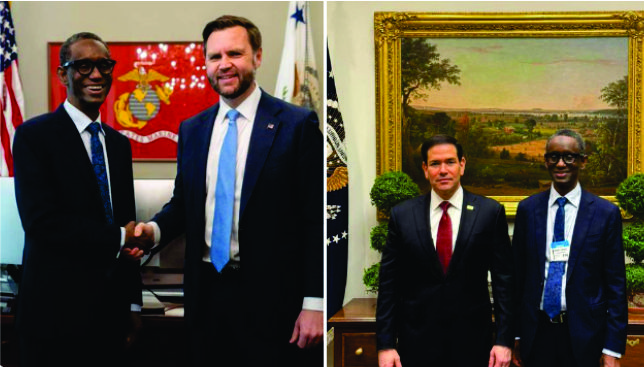
    ABUJA, Nigeria (NPA) — Nigeria’s Minister of Information and National Orientation, Mohammed Idris, has commended last week’s visit by the National Security Adviser (NSA), Mallam Nuhu Ribadu, to Washington, D.C., where he held strategic meetings with U.S. Vice President J.D. Vance, Secretary of State and Acting National Security Adviser Marco Rubio, and other senior officials of the United States government.

    The engagement, according to the minister, builds on the foundation laid in 2025, when Nigeria and the United States established the Nigeria–U.S. Joint Working Group (JWG) to deepen collaboration in tackling Nigeria’s security challenges.

    In a statement issued yesterday, Idris noted: “Last week, Nigeria’s National Security Adviser, Mallam Nuhu Ribadu, who heads the Nigerian side of the JWG, paid a three-day working visit to the United States, meeting with Vice President J.D. Vance, Secretary of State Marco Rubio, and other senior officials of the U.S. government.”

    The Minister emphasized that the Nigerian government fully recognizes the importance of international cooperation and engagement in securing the nation. He added that President Bola Ahmed Tinubu is determined to explore all avenues to work closely with global partners to bolster Nigeria’s security architecture.

    The Nigeria–U.S. Joint Working Group has already developed a roadmap that both countries are committed to implementing. Ribadu’s visit was aimed at strengthening this partnership, which spans intelligence sharing, defence cooperation, capacity building, border security, and other critical areas, while advancing the roadmap’s implementation.

    Idris concluded by reaffirming the government’s central objective: “The goal remains the total security and protection of Nigerian lives, property, and territory.”

    This latest engagement underscores Nigeria’s resolve to confront evolving threats with the support of international allies, while positioning the country as a proactive player in global security cooperation.

  • Zelenskyy, UAE President discuss security cooperation amid Iranian drone threats

    Zelenskyy, UAE President discuss security cooperation amid Iranian drone threats

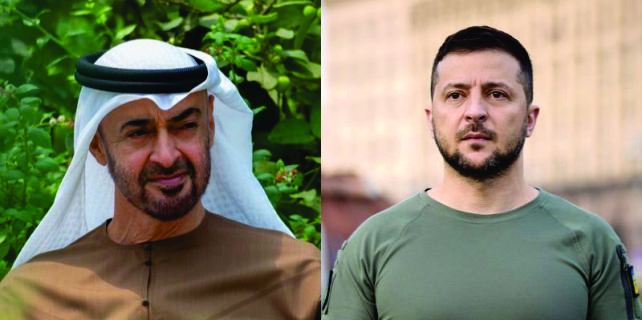
    KYIV, Ukraine (NPA) — Volodymyr Zelenskyy on Monday held a telephone conversation with the President of the United Arab Emirates, Mohamed bin Zayed Al Nahyan, focusing on regional security and ongoing cooperation between both countries.

    According to the Ukrainian president, discussions centred on renewed drone attacks launched by Iran against Gulf countries, including the UAE and Kuwait.

    Zelenskyy condemned the attacks and stressed the importance of continued security collaboration between Ukraine and the UAE to protect lives and infrastructure in the Gulf region.

    “Against this backdrop, it is critical that our teams continue to work closely together in the area of security. I was glad to hear that Ukrainian expertise is truly helping build reliable protection for lives. We discussed continuing this work,” Zelenskyy said.

    Ukraine and the UAE had earlier signed a defence cooperation agreement at the onset of the conflict involving the United States, Israel and Iran, aimed at strengthening the UAE’s air defence capabilities against Iranian-made drones.

    The Ukrainian president also thanked Sheikh Mohamed bin Zayed Al Nahyan for his role in facilitating the return of Ukrainian prisoners of war from Russian captivity as part of recent prisoner exchange arrangements.

    “We count on this work to continue,” Zelenskyy said.

    The leaders also discussed bilateral cooperation in the energy sector and other strategic areas.

    “I am grateful to the UAE that our agreements are being implemented on the basis of reciprocity and that Ukraine is also receiving the support it needs, including in the energy sector. We also discussed other potential projects in various areas. Thank you!” he added.

  • Nigeria, Jordan sign defence cooperation, intelligence sharing agreement

    Nigeria, Jordan sign defence cooperation, intelligence sharing agreement

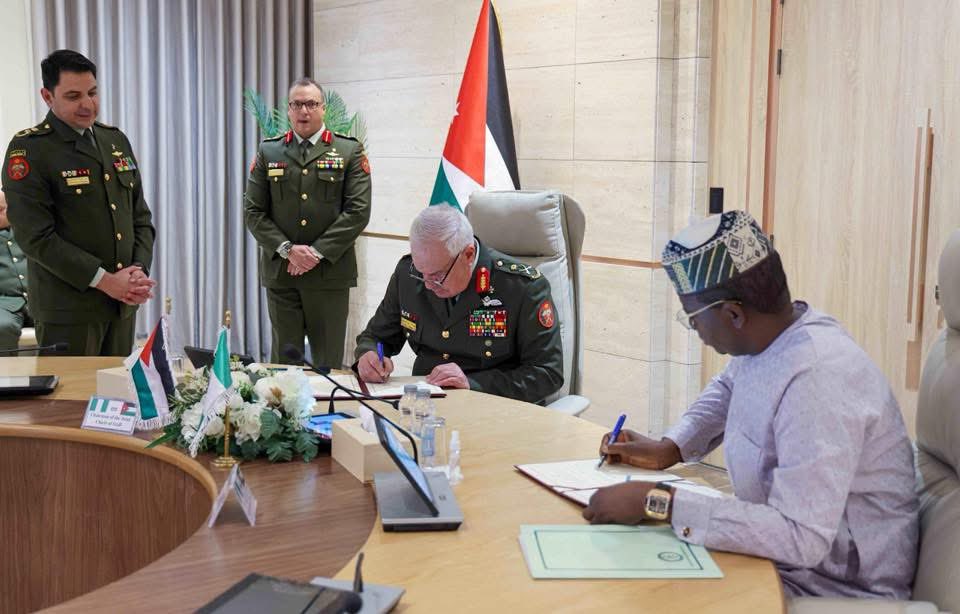
    ABUJA, Nigeria (NPA) — Nigeria and Jordan have signed a defence cooperation and intelligence-sharing agreement aimed at strengthening bilateral security collaboration.

    The development was disclosed by Nigeria’s Minister of State for Defence, Bello Matawalle, following meetings in Amman with the Chairman of the Joint Chiefs of Staff of the Jordanian Armed Forces, Yousef A. Alhnaity.

    According to Matawalle, the Memorandum of Understanding (MoU) was signed on behalf of the Government of the Federal Republic of Nigeria and the Government of the Hashemite Kingdom of Jordan.

    “On behalf of the Government of the Federal Republic of Nigeria, I signed a Memorandum of Understanding (MoU) with the Government of the Hashemite Kingdom of Jordan on Defence Cooperation and Intelligence Sharing,” the minister said in a statement issued on Monday.

    He noted that the agreement is intended to deepen cooperation between the two countries in addressing evolving security threats confronting Nigeria.

    According to the minister, the challenges facing the country have become increasingly complex, asymmetric and cross-border in nature.

    Matawalle said the agreement aligns with the security strategy of President Bola Ahmed Tinubu’s administration, which he described as a “bottoms-up approach” toward achieving peace, security and stability across the country.

    The latest agreement comes as Nigeria intensifies defence and security cooperation with several countries amid ongoing counter-terrorism and anti-banditry operations, particularly in the northern region.

    Nigeria has continued to battle insurgency, banditry and kidnapping activities that have affected communities and major highways in different parts of the country.

    Security analysts have repeatedly called for stronger international cooperation, intelligence sharing and improved military coordination to address the persistent attacks and growing insecurity.

    The Nigerian government has expressed optimism that expanded defence partnerships with foreign allies will strengthen ongoing operations and improve national security outcomes.