Category: International

  • UAE air defenses repel fresh Iranian missile and drone barrage

    UAE air defenses repel fresh Iranian missile and drone barrage

    MIDDLE EAST, NIGERIA, April 6, 2026 (NPA) — The United Arab Emirates’ Air Defense systems successfully engaged a new wave of hostile projectiles, intercepting 12 ballistic missiles, 2 cruise missiles, and 19 drones launched from Iran in the early hours of April 6.

    The Ministry of Defense confirmed the latest attack and emphasized that the country’s defense forces remain on high alert. Since the onset of these brazen Iranian strikes, UAE Air Defenses have confronted a staggering total of 519 ballistic missiles, 26 cruise missiles, and 2,210 drones, underscoring the scale and persistence of the threat.

    The most recent assault resulted in four injuries, ranging from minor to severe. This brings the cumulative number of casualties to 221 individuals of diverse nationalities, including Emirati, Egyptian, Sudanese, Ethiopian, Filipino, Pakistani, Iranian, Indian, Bangladeshi, Sri Lankan, Azerbaijani, Yemeni, Ugandan, Eritrean, Lebanese, Afghan, Bahraini, Comorian, Turkish, Iraqi, Nepali, Nigerian, Omani, Jordanian, Palestinian, Ghanaian, Indonesian, Swedish, Tunisian, Moroccan, and Russian.

    No fatalities were recorded in the latest incident. Overall, the attacks have claimed the lives of two martyrs, including a Moroccan civilian contractor with the armed forces, while 10 civilian deaths have been documented among Pakistani, Nepali, Bangladeshi, Palestinian, Indian, and Egyptian nationals.

    The Ministry of Defense reiterated its unwavering readiness to confront any threat, stressing that the UAE will firmly counter attempts to undermine its sovereignty. Officials highlighted that the armed forces remain committed to safeguarding national security, protecting citizens and residents, and ensuring the stability of the state and its vital interests.

  • BREAKING: Israeli-U.S. airstrike kills top Iranian Intelligence Chief amid Strait of Hormuz Standoff

    BREAKING: Israeli-U.S. airstrike kills top Iranian Intelligence Chief amid Strait of Hormuz Standoff

    MIDDLE EAST, April 6, 2026 (NPA) — An Israeli and United States joint airstrike early Monday has killed Majid Hademi, the head of the Iranian Revolutionary Guard Corps (IRGC) intelligence.

    Iranian authorities confirmed the death, attributing it directly to coordinated strikes by U.S. and Israeli warplanes. The killing comes as tensions escalate following U.S. President Donald Trump’s ultimatum that Iran has 48 hours to reopen the Strait of Hormuz or face devastating attacks on its critical infrastructure and energy facilities.

    Since the outbreak of hostilities with the United States and Israel, Iran’s senior military leadership has become prime targets. Analysts note that hardly a week passes without a high-ranking official being eliminated, beginning with the earlier killing of former Supreme Leader Ayatollah Khaneinei. The pattern underscores a deliberate strategy to weaken Iran’s command structure.

    Tuesday’s deadline is being closely monitored by global observers.

    Analysts warn that if Iran fails to allow oil tankers safe passage through the Strait of Hormuz, the conflict could escalate further, potentially destabilizing the wider Middle East and sending shockwaves through global energy markets.

  • Trump threatens Armageddon in 48 hours if Iran fails to open Strait of Hormuz

    Trump threatens Armageddon in 48 hours if Iran fails to open Strait of Hormuz

    INTERNATIONAL, April 5, 2026 (NPA) — U.S. President Donald Trump has issued a dramatic ultimatum, warning that Armageddon (destruction) on Iran will begin Tuesday at 8:00 P.M. Eastern Time if Tehran refuses to reopen the Strait of Hormuz. The closure of the vital shipping lane has already driven up global oil prices, shaking economies worldwide.

    In a fiery post on Truth Social, Trump vowed that Iran’s defiance would trigger the destruction of critical infrastructure, including power plants and bridges. He wrote: “Tuesday, 8:00 P.M. Eastern Time! Tuesday will be Power Plant Day, and Bridge Day, all wrapped up in one, in Iran. There will be nothing like it!!! Open the Strait, you crazy bastards, or you’ll be living in Hell — JUST WATCH!”

    Iran responded with defiance, pledging to set the Middle East ablaze if Trump carries out his threat. Officials in Tehran warned of catastrophic consequences across the Gulf region.

    With less than 48 hours to the deadline, diplomatic efforts are intensifying, but fighting inside Iran shows no sign of easing, leaving the world bracing for what could be a historic escalation.

  • UN warns credit ratings penalize developing nations, calls for reform

    UN warns credit ratings penalize developing nations, calls for reform

    LAGOS, NIGERIA, April 5, 2026 (NPA) — The United Nations has raised an alarm that developing countries are being priced out of affordable finance needed for sustainable development, with sovereign credit ratings often overstating risk and ignoring long-term economic potential. Speaking at the opening of the UN Economic and Social Council (ECOSOC) Special Meeting on Credit Ratings, Deputy Secretary-General Amina Mohammed, delivering remarks on behalf of Secretary-General António Guterres, said the current system relies too heavily on “outdated and incomplete information,” leaving poorer nations unfairly penalized in global capital markets.

    “Adequate and timely finance is the fuel that drives sustainable development,” Mohammed warned. “Today that fuel is running perilously low, and it’s getting more costly.” She highlighted that developing countries face nearly $1.4 trillion in annual debt servicing costs, with more than 3.4 billion people living in nations that spend more on debt interest than on health or education. Rising fuel and raw material costs linked to global instability, coupled with climate disasters, are intensifying fiscal pressures and slowing growth, she added.

    Mohammed linked the debate on credit ratings to broader debt reform efforts, citing initiatives such as a borrowers’ platform, principles for responsible sovereign borrowing and lending, and a UN-led process bringing together debtor and creditor countries, private creditors, and civil society. She also pointed to the planned African Credit Rating Agency as a step toward improving data, transparency, and risk assessment.

    Calling for a reimagining of sovereign ratings, Mohammed urged a shift from speculation to investment, with methodologies that capture both vulnerability and opportunity. She stressed that affordable borrowing for development strengthens future solvency, noting that investment in health, education, infrastructure, climate resilience, and renewable energy reduces risk and builds prosperity. “It’s time to turn credit ratings from barriers into contributors to long-term finance and sustainable development,” she said.

  • Iran’s internet blackout hits record 37 days, deepens uncertainty

    Iran’s internet blackout hits record 37 days, deepens uncertainty

    MIDDLE EAST, April 5, 2026 (NPA) — Iran’s internet blackout has become the longest nation-scale shutdown ever recorded, now in its 37th consecutive day after 864 hours, according to NetBlocks. The disruption has triggered severe social and economic consequences, cutting off communication among citizens, families, and communities, while blocking access to vital information and limiting the ability to organize or express dissent.

    Education has been hampered as students and teachers lose access to online platforms, and healthcare services reliant on telemedicine have been restricted. The blackout has also isolated the population from the global community, fuelling uncertainty and reducing transparency.

    Economically, the shutdown has damaged businesses dependent on online transactions, banking, and international trade. Small enterprises and freelancers who rely on digital platforms for income have been hit hardest, losing clients and revenue during the prolonged outage.

    Foreign investors view the blackout as a sign of instability, discouraging investment and weakening growth. Overall, the blackout not only suppresses freedom of expression but also undermines economic resilience and development.

    As of filing this report, Iranian authorities have yet to communicate when or how the internet blackout will end.

  • WHO warns: Stroke deaths rising fast in Africa, urges immediate lifestyle changes

    WHO warns: Stroke deaths rising fast in Africa, urges immediate lifestyle changes

    INTERNATIONAL, April 5, 2026 (NPA) — The World Health Organisation (WHO) has outlined measures to prevent stroke, a serious medical emergency that occurs when blood flow to the brain is interrupted by a blockage or bleeding, leading to brain cell death.

    WHO urged people to adopt healthier lifestyles, including eating well, staying physically active, maintaining a healthy weight, and avoiding tobacco and alcohol. Stroke, often called a “brain attack,” is one of the leading causes of death and disability worldwide, requiring urgent medical attention to reduce long-term damage.

    There are three main types of stroke: ischemic, caused by blood clots blocking vessels; haemorrhagic, resulting from ruptured blood vessels; and transient ischemic attack (TIA), or “mini-stroke,” which produces temporary symptoms but signals future risk. Symptoms often appear suddenly and can be remembered with the acronym BE FAST: Balance problems, Eye changes, Facial drooping, Arm weakness, Speech difficulties, and Time — stressing the need for immediate help. Treatment ranges from clot-busting drugs and surgery to therapies that manage bleeding, while rehabilitation through physical, occupational, and speech therapy is vital for recovery.

    In Africa, stroke has become a growing public health crisis. Incidence rates reach as high as 316 per 100,000 annually, with prevalence up to 1,460 per 100,000. Alarmingly, the three-year fatality rate exceeds 80% in some regions.

    About 70% of global stroke deaths and 87% of stroke-related disability occur in low- and middle-income countries, including many across Africa, where limited access to emergency care and rehabilitation has made stroke one of the fastest-rising causes of death and disability.

  • Kemi Badenoch vows to restore church funding, defend Britain’s Christian heritage

    Kemi Badenoch vows to restore church funding, defend Britain’s Christian heritage

    INTERNATIONAL, April 5, 2026 (NPA) — Kemi Badenoch, Leader of the Conservative Party, has declared that Britain is a Christian country, pledging that her party will continue to honour the nation’s Christian heritage through concrete action rather than words alone.

    In her Easter message, Badenoch announced plans to restore funding for the Listed Places of Worship Grant Scheme, which had recently been capped by the government. She emphasized that local churches must be properly maintained and repaired, underscoring their role not only as places of worship but also as vital centres of community life.

    “Churches matter,” she said, noting that in towns and villages across the United Kingdom, they stand as symbols of pride and history, often stretching back centuries. Badenoch warned that neglecting them risks losing irreplaceable heritage.

    She reiterated that the Conservative Party believes it has a responsibility to safeguard churches for future generations. “What are we for if not to conserve the very best of our country and our society for those yet to come?” she asked. Her statement concluded with a pledge: “Conservatives will protect our heritage and build a stronger country.”

  • JUST IN: Second F-15 pilot rescued from Iran’s mountains in Daring U.S. rescue

    JUST IN: Second F-15 pilot rescued from Iran’s mountains in Daring U.S. rescue

    INTERNATIONAL, April 5, 2026 (NPA) — In a breathtaking mission that unfolded deep inside hostile territory, U.S. special forces have rescued the second crew member of an F-15 fighter jet shot down over Iran. The officer, a weapons systems specialist, was wounded but managed to evade capture for more than 24 hours in the treacherous mountains before being pulled to safety.

    The downing of the jet set off a frantic race between American commandos and Iran’s Revolutionary Guard Corps (IRGC), both determined to find the missing officer. U.S. officials confirmed that both crew members were eventually rescued in separate operations inside Iran, marking one of the most audacious missions in recent memory.

    Saturday’s extraction was carried out by an elite commando unit under heavy air cover. Sources described a torrent of fire unleashed to secure the officer’s escape, with all U.S. forces now safely out of Iran.

    The drama began Friday when the pilot and weapons officer ejected and made contact via comms. The pilot was rescued within hours, though Iran managed to strike a U.S. Blackhawk helicopter during that mission, wounding crew members but failing to stop the aircraft. The second officer’s rescue required a day-long search across rugged terrain.

    Behind the scenes, the CIA orchestrated a deception campaign, spreading false intelligence inside Iran to mislead enemy forces while deploying advanced surveillance to pinpoint the officer’s location. Once identified, the Pentagon and White House coordinated the rescue, with President Trump ordering immediate action.

    Trump later hailed the mission on Truth Social as “one of the most daring search and rescue operations in U.S. history.” He confirmed the officer, a colonel, sustained injuries but is expected to recover.

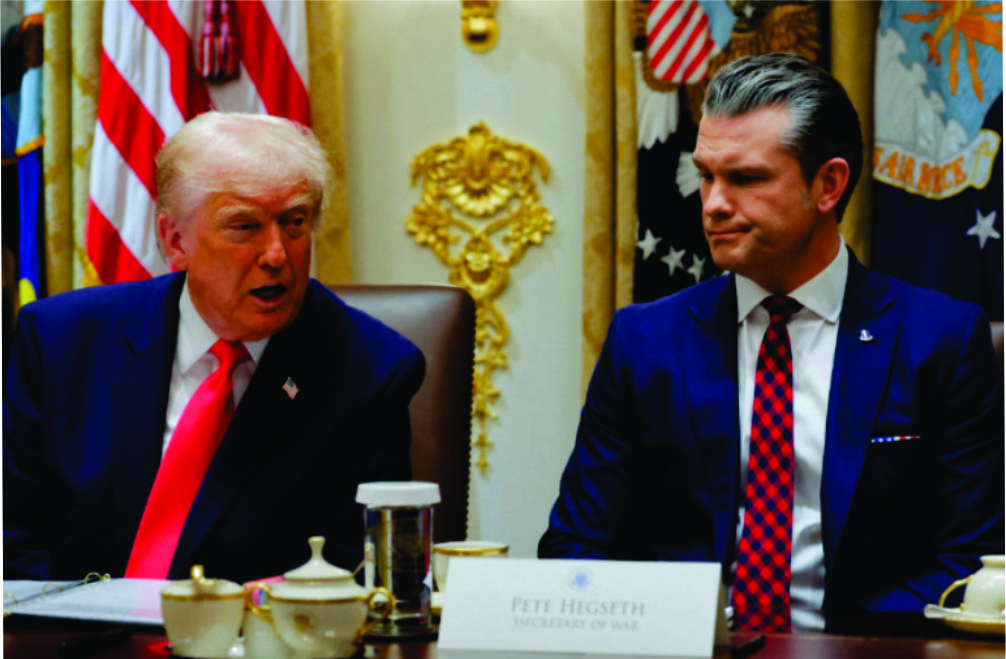
    A White House official said the president remained in the Oval Office throughout Saturday, receiving constant updates from Defense Secretary Pete Hegseth as the mission unfolded.

  • Netanyahu’s Easter message: Israel protects Christians amid persecution in Syria, Lebanon, Nigeria, and beyond

    Netanyahu’s Easter message: Israel protects Christians amid persecution in Syria, Lebanon, Nigeria, and beyond

    MIDDLE EAST, April 5, 2026 (NPA) — The Israeli Prime Minister Benjamin Netanyahu, in his Easter Message on Sunday, extended warm felicitations to Christians in Israel, the United States, and across the globe, wishing them a blessed and joyful Easter celebration filled with peace and renewal.

    In his statement, Netanyahu highlighted that Christians continue to face persecution across much of the Middle East, citing Syria, Lebanon, Nigeria, Turkey, and beyond. He stressed that Israel remains the only nation in the region where the Christian community is actively protected, nurtured, and allowed to grow and prosper without fear.

    The statement reads in part: “In this land where the story began, as missiles are fired at our capital — referencing the ongoing exchange of attacks between Israel and Iran amid the broader conflict involving the United States and the Persian Gulf nation — the holy city of Jerusalem stands resilient. As the US and Israel remain firm against the Iranian regime and its terror proxies, we continue to steadfastly safeguard the freedom of worship for all faiths, especially at this sacred time.”

    Netanyahu further prayed that the message of renewal, hope, and faith would shine brightly in the homes and hearts of the faithful. He emphasised that even under fire, his government’s commitment remains unwavering — defending life, safeguarding liberty, and ensuring that every believer, regardless of background, can pray in peace and security.

  • WHO Chief condemns attacks on Sudan’s health facilities

    WHO Chief condemns attacks on Sudan’s health facilities

    INTERNATIONAL, April 4, 2026 (NPA) — The Director-General of the World Health Organisation (WHO), Dr. Tedros Adhanom Ghebreyesus, has urged warring parties in Sudan to immediately halt attacks on healthcare facilities, warning that the escalating violence is costing lives and crippling vital services.

    In a statement issued today, Ghebreyesus drew attention to a series of recent assaults on hospitals, health workers, and patients. He described the situation as a “new spate of tragic attacks on health across Sudan,” noting that incidents have included killings, assaults, looting, and damage from air strikes.

    He referenced the April 2 drone strike on Al-Jabalain Teaching Hospital in White Nile State, which killed 10 healthcare workers and injured 22 others. A day earlier, another strike on the central medical warehouse in Rabak injured three people, including a pharmacist, and left unexploded ordnance inside the facility.

    On the same day, the Family Hospital in Al-Daein, East Darfur, was looted, with patients and staff assaulted and expelled. The hospital is located just blocks from Al-Daein Teaching Hospital, which was recently destroyed in a strike that killed at least 70 people, including patients and health workers.

    Similar violence was reported on March 25 in Al-Kurmuk, Blue Nile State, where a hospital was looted, equipment destroyed, and staff and patients forced out. One health worker was critically injured.

    “The continued attacks on health care facilities, health workers and patients who depend on them are unacceptable. This worrying pattern reveals a level of disregard for human life that no responsible actor can tolerate,” Ghebreyesus warned.

    The WHO chief stressed that protecting healthcare is a fundamental obligation under international humanitarian law and called for accountability for those responsible.