Category: Africa

  • Ghana condemns Mali Terror attack, mourns victims, issues security advisory to citizens and traders

    Ghana condemns Mali Terror attack, mourns victims, issues security advisory to citizens and traders

    ACCRA, Ghana (NPA) — The Ministry of Foreign Affairs Ghana has expressed solidarity with Mali following deadly coordinated terrorist attacks that struck multiple military positions, including the capital, Bamako.

    In a press release issued Monday, the Government of Ghana said the April 25 attacks resulted in the death of Mali’s Defence Minister, Sadio Camara, alongside several military personnel and civilians.

    The Ghanaian government conveyed its condolences to the Malian authorities and people, describing the development as a tragic escalation of insecurity in the Sahel region.

    “Violent extremism must have no place in our world, and we must step up collective efforts to end this horror,” the statement said.

    Amid the deteriorating security situation, Ghana advised its citizens residing in Mali to exercise heightened caution, limit non-essential movements, and maintain regular contact with its embassy in Bamako.

    It also directed Ghanaian traders and transport operators plying routes into Mali to suspend travel until further notice, citing ongoing efforts by Malian authorities to stabilise the situation.

    The government said it is working closely with relevant authorities in Mali and would provide updates on when trading activities can safely resume.

    Reaffirming its position, Ghana stressed that the safety and well-being of its nationals remain a top priority as it continues to monitor developments in the region.

  • AES condemns Mali terror attacks, reaffirms support as AU backs Bamako

    AES condemns Mali terror attacks, reaffirms support as AU backs Bamako

    OUAGADOUGOU, Burkina Faso (NPA) — The President of the Confederation of Sahel States, Ibrahim Traoré, has issued a communiqué following the large-scale terrorist attacks carried out across the Republic of Mali on April 25, 2026.

    The attacks were reportedly carried out by militants linked to Jama’at Nusrat al-Islam wal-Muslimin (JNIM), alongside Tuareg separatist fighters from the Azawad Liberation Front (FLA).

    In the statement signed on April 25, Traoré said the assaults targeted multiple locations across Malian territory and were part of a broader pattern of aggression against the Sahel bloc in its pursuit of sovereignty.

    He noted that the scale, coordination, logistics, and weaponry deployed indicated that the attacks were long planned, with the objective of inflicting heavy casualties on defence and security forces while spreading terror among civilian populations in Mali and across the Sahel.

    According to the communiqué, the persistence of such “barbaric and inhumane” attacks suggests the involvement of forces opposed to the Sahel’s liberation efforts under the AES framework.

    However, the statement said the attackers’ objectives were ultimately thwarted by the “professional, courageous and determined” response of the Malian Armed Forces, which successfully repelled the assaults.

    The AES emphasised that the attacks would not weaken the resolve of Sahelian states, stressing that the peoples of the region remain committed to living in freedom, peace, and dignity despite ongoing security challenges.

    The bloc extended condolences to families of those killed and wished a speedy recovery to the injured, while expressing “full, unconditional and fraternal solidarity” with the Malian people, government, and armed forces. It also paid tribute to the troops for their role in neutralising the attackers.

    The communiqué further conveyed appreciation to partner states and allies for their support, reaffirming the confederation’s commitment to strengthening cooperation in the face of security threats and continuing its pursuit of sovereignty and stability in the region.

    Meanwhile, the Chairperson of the African Union Commission, Mahmoud Ali Youssouf, strongly condemned the attacks, warning that such violence risks exposing civilian populations to significant harm.

    He reiterated the Commission’s commitment to promoting peace, security, good governance, and stability in Mali, and expressed full solidarity with the Malian people, security forces, and national authorities.

  • Russia reacts to Mali terror attacks, alleges militants trained by Western security agencies

    Russia reacts to Mali terror attacks, alleges militants trained by Western security agencies

    BAMAKO, Mali (NPA) — The Ministry of Foreign Affairs of Russia has reacted to Saturday’s coordinated terrorist attacks in the Mali, alleging that some of the armed groups involved may have received training from Western security agencies.

    In a statement released on Sunday, Moscow said that on April 25, armed anti-government groups carried out a series of coordinated assaults targeting the capital, Bamako, as well as key regions including Mopti, Gao and Kidal.

    The attacks were reportedly led by militants linked to Jama’at Nusrat al-Islam wal-Muslimin (JNIM), alongside Tuareg separatist fighters from the Azawad Liberation Front (FLA). Russian authorities stated that approximately 250 militants attempted to storm the Bamako-Sénou International Airport and a nearby military installation.

    According to the statement, the Malian Armed Forces successfully repelled the assault and have since launched follow-up operations aimed at neutralising the attackers and restoring security in affected areas. Moscow further claimed that the militants “may have been trained by Western security agencies,” though it did not provide evidence to substantiate the allegation.

    Russia expressed deep concern over the escalation, warning that the attacks pose a direct threat to the stability of Mali and the wider Sahel region, as  terrorist networks continue to maintain a presence across several countries, including Nigeria, where groups such as Boko Haram and the Islamic State West Africa Province remain active.

    The Russian Embassy in Mali confirmed that no Russian nationals were reported among the victims, adding that the mission is in contact with Malian authorities and closely monitoring the situation on the ground.

    The Foreign Ministry advised Russian citizens to avoid travel to Mali, citing ongoing security risks. Those currently in the country were urged to exercise heightened caution and adhere strictly to safety guidelines issued by local authorities.

    “Moscow will continue to closely monitor developments and coordinate with partners to address emerging security challenges,” the statement added.

    Saturday’s attacks highlight the deepening instability in Mali, where insurgent and separatist groups have stepped up operations despite ongoing counterterrorism efforts by national forces and international partners. The Malian government has frequently accused Western powers, particularly France, of aiding the militants by providing arms and intelligence to undermine its security apparatus. France has consistently denied these allegations, insisting it is not working with any group to destabilize the region.

  • Senegal, AU, Turkey, international community condemn Mali terrorist attacks

    Senegal, AU, Turkey, international community condemn Mali terrorist attacks

    DAKAR, Senegal(NPA) — Senegalese President Bassirou Diomaye Faye has strongly condemned the coordinated terrorist attacks in the Republic of Mali carried out today by the Al-Qaeda–linked group Jama’at Nusrat al-Islam wal-Muslimin (JNIM) and Tuareg separatists from the Azawad Liberation Front (FLA).

    Fighting erupted in Bamako, Gao, Kidal, Sévaré, and around the Kati military base near the capital, with the FLA claiming to have seized control of Kidal.

    In a statement, President Faye expressed solidarity with Mali, noting: “In the face of the ordeal and widespread killings and destruction by the terrorists, the Senegalese people, and in my own name, stand firmly with the Malian Government, the Defense and Security Forces, and the entire Malian people.” He reiterated Senegal’s commitment to work alongside Mali and other countries in the sub-region toward restoring peace and security.

    As of the time of filing this report, Malian military authorities announced that the situation had been brought under control, describing the assault as the most coordinated attack against the government in years.

    The African Union has also condemned the attacks, warning they endanger civilians and undermine regional stability.

    Turkey and other international actors also issued strong condemnations, pledging solidarity with Mali. The U.S. Embassy in Mali advised citizens to shelter in place and avoid travel.

    Mali has faced persistent insecurity since 2012, with jihadist groups linked to Al-Qaeda and ISIS operating alongside Tuareg separatists. The country’s military junta, led by Assimi Goïta, relies heavily on Russian-backed Africa Corps mercenaries after expelling French forces and UN peacekeepers.

    Today’s attacks in Mali were carried out by JNIM (Al-Qaeda affiliate) and Tuareg separatists (FLA), striking multiple cities including Bamako and Kidal. The violence has drawn widespread condemnation across Africa and internationally, underscoring the worsening instability in the Sahel.

  • NiDCOM urges Nigerians in South Africa to stay cautious as xenophobic unrest spreads

    NiDCOM urges Nigerians in South Africa to stay cautious as xenophobic unrest spreads

    ABUJA, Nigeria (NPA) — Abike Dabiri, Chairman of the Nigerians in Diaspora Commission (NiDCOM), has urged Nigerians in South Africa to adhere strictly to the advisory issued by the Nigerian Embassy in Johannesburg. She noted that Minister of State for Foreign Affairs, Amb. Bianca Ojukwu, has been engaging her South African counterpart on the matter. Dabiri also called on the African Union (AU) to intervene in what she described as “dastardly xenophobic attacks against blacks in South Africa.”

    The advisory, dated April 24, 2026, was signed by Abdur-Rahman Balogun, Head of Media, Public Relations and Protocols Unit at NiDCOM. It follows a circular from the Consulate General of Nigeria in Johannesburg (Ref No: CGJHB/AD/209/VOL.1, April 22, 2026), which reported unrest in East London, Cape Town, Durban, and KwaZulu-Natal.

    NiDCOM advised Nigerians to avoid confrontation, refrain from unnecessary movements, monitor local media for updates, remain indoors, and stay away from business premises until April 28, 2026. The Commission stressed the importance of vigilance and adherence to safety guidelines during this period of heightened tension.

    On April 22, 2026, the Government of Ghana summoned the South African Ambassador to Accra over xenophobic attacks targeting Ghanaians living in South Africa. The latest wave of violence has been widely condemned across Africa and internationally, with calls for stronger measures to protect foreign nationals.

    NiDCOM emphasized that the advisory is part of ongoing efforts to protect Nigerians abroad and ensure they remain informed about developments that may affect their safety.

    The Commission also encouraged Nigerians in South Africa to stay connected to official communication channels and report any incidents promptly, reiterating its commitment to safeguarding the welfare of citizens in the diaspora.

  • Kenyan Government, civil servants sign deal to boost healthcare access

    Kenyan Government, civil servants sign deal to boost healthcare access

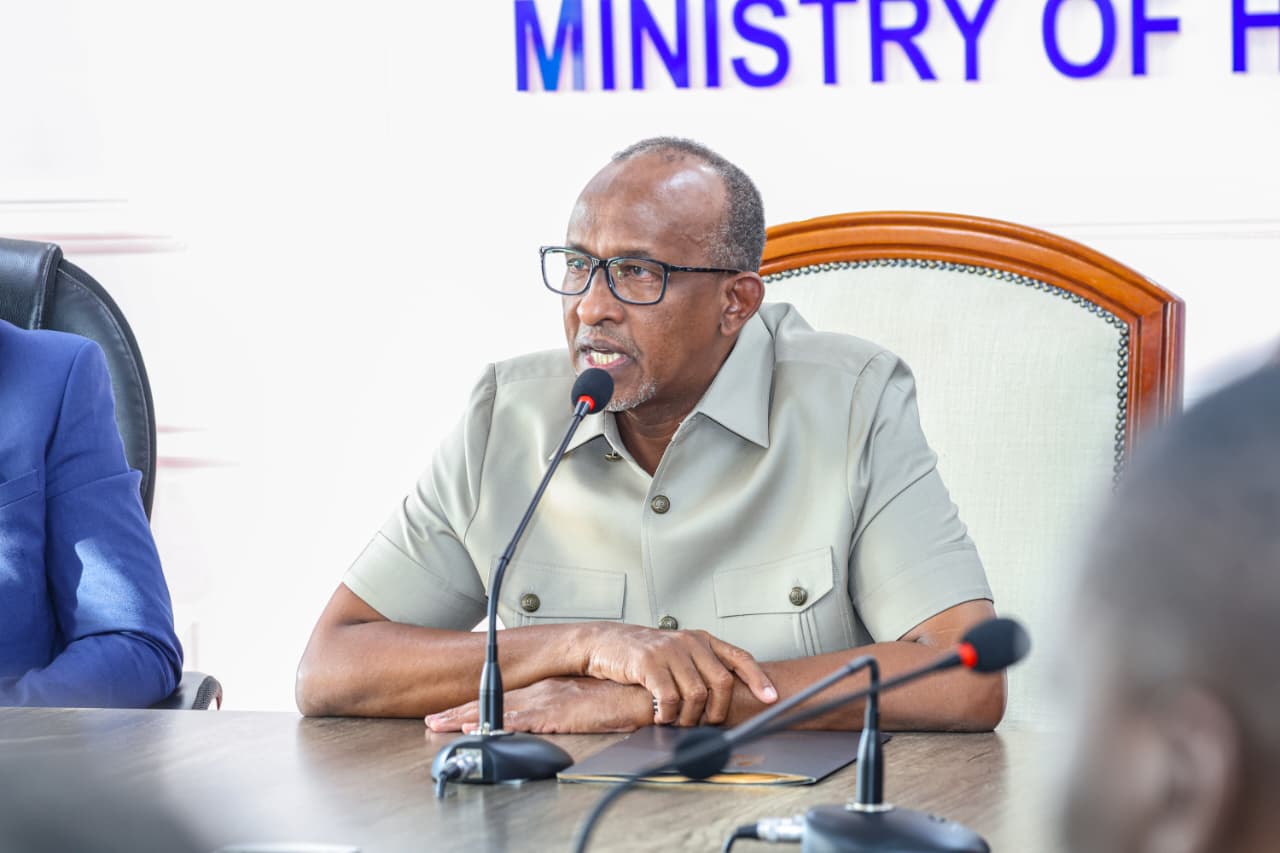
    NAIROBI, Kenya (NPA) — Health Cabinet Secretary Aden Duale on Thursday chaired the signing of a Joint Communiqué between the government and civil servants, outlining measures to improve healthcare services for public officers under the Public Officers Medical Scheme Fund (POMSF).

    The agreement provides for the immediate removal of the tariff-locking mechanism within the Social Health Authority (SHA) system to ease access challenges at the point of care. In the interim, contracted facilities are barred from charging civil servants out-of-pocket fees, with strict tariff provisions suspended pending nationwide negotiations.

    To address urgent cases, Duale announced the creation of a Joint Rapid Response Desk comprising SHA, the State Department for Public Service, and the Union of Kenya Civil Servants (UKCS). The desk will coordinate the release of civil servants detained in health facilities and review unauthorized charges to facilitate refunds.

    Nationwide tariff negotiations for private and faith-based Level 3 to Level 6 facilities will begin on April 28, 2026, and are expected to conclude within four weeks. Duale emphasized that under the revised framework, the “walk-in, walk-out” principle will apply strictly, with no co-payments permitted. Facilities breaching contractual terms will face enforcement action, including de-contracting.

    SHA will maintain and regularly update a public list of approved facilities, strengthen accountability through claims audits, fraud detection, and performance monitoring, and expand regional sensitisation forums. The POMSF manual will also be updated and published to improve accessibility and understanding.

    The meeting was attended by Medical Services PS Dr. Ouma Oluga, UKCS Secretary General Lawrence Nyaguti, SHA CEO Dr. Mercy Mwangangi, Digital Health Agency CEO Eng. Anthony Lenayara, and other senior officials.

  • FG reaffirms commitment to Lagos–Abidjan corridor, raises design and funding challenges

    FG reaffirms commitment to Lagos–Abidjan corridor, raises design and funding challenges

    ABUJA, Nigeria (NPA)— The Federal Government has reaffirmed its commitment to the delivery of the 1,028-kilometre Lagos–Abidjan Corridor project, a flagship regional highway aimed at boosting trade and connectivity across West Africa, while flagging key design and funding concerns that must be resolved before full implementation.

    Minister of Works, David Umahi, gave the assurance during a high-level meeting in Abuja with delegations from the ECOWAS Commission and the African Development Bank.

    The corridor, spanning five countries — Côte d’Ivoire, Ghana, Togo, Benin, and Nigeria — is designed to link Abidjan to Lagos, forming a major transport backbone along the West African coast.

    According to a statement signed by Francis Nwaze, Senior Special Assistant to the Minister of Works (Media), Umahi said the administration of Bola Ahmed Tinubu remains fully committed to infrastructure development, describing the Lagos–Abidjan highway as a critical component of a broader network of strategic road projects across Nigeria and the region.

    He disclosed that Nigeria’s section of the corridor, estimated at about 79.5 kilometres, will be constructed using reinforced concrete technology with three lanes on each carriageway—exceeding the two-lane design proposed by ECOWAS.

    However, the minister raised concerns over unresolved technical and structural issues, including what he described as an unequal distribution of corridor length among participating countries and design elements that do not reflect on-ground realities.

    “On the engineering side, there are unresolved issues on the Lagos–Abidjan corridor. The distribution of corridor length across countries is unequal and can only be resolved at the level of heads of state,” Umahi said.

    He added that Nigeria is developing an alternative design model tailored to local conditions, expected to be completed within two weeks, incorporating existing infrastructure and practical implementation challenges.

    Umahi also stressed that decisions on financing frameworks must be agreed upon by heads of state before the project can proceed to procurement.

    “Once the design is finalized and approved, the funding model must be agreed at the highest political level. Until then, moving into procurement and financing is premature,” he stated.

    Despite the challenges, he reaffirmed Nigeria’s commitment, noting that the project would enhance regional trade and integration by linking national infrastructure systems across borders.

    Earlier, ECOWAS Director of Transport, Chris Appiah, said the visit formed part of ongoing consultations with member states to harmonize technical designs and address outstanding issues.

    On financing, the AfDB delegation, led by Salawou Mike Moukaila, described the corridor as a top priority, revealing that the bank is undertaking an identification mission across 25 countries to develop a financing framework.

    Moukaila noted growing interest from co-financiers globally, emphasizing that the bank is positioning itself to lead funding mobilization efforts for the project.

    He also underscored Nigeria’s strategic importance to the corridor, citing the country’s role as a major origin point for trade flows along the route.

    The AfDB delegation commended the Federal Government’s ongoing infrastructure drive, describing the Lagos–Abidjan Corridor as a “game changer” for regional connectivity across West, Central, and East Africa.

  • Ghana summons South African envoy as fresh xenophobic incidents rekindle fears of past attacks

    Ghana summons South African envoy as fresh xenophobic incidents rekindle fears of past attacks

    ACCRA, Ghana (NPA) — The Government of Ghana has summoned the Acting High Commissioner of South Africa over recent xenophobic incidents targeting foreign nationals, including Ghanaians.

    In a statement issued by the Ministry of Foreign Affairs Ghana, the envoy, Mr. Thando Dalamba, was invited by Foreign Affairs Minister Samuel Okudzeto Ablakwa to explain reported acts of intimidation and harassment captured in widely circulated videos.

    Ablakwa expressed strong concern over an incident in KwaZulu-Natal Province, where a Ghanaian resident was allegedly confronted and asked to prove his legal status before being told to leave the country. He described the development as a violation of the dignity and rights of law-abiding individuals.

    The minister warned of rising tensions, noting that some foreign nationals, including Ghanaians, have been advised to remain indoors for safety. While no casualties have been reported in the latest incidents, he cautioned that similar episodes in the past resulted in loss of lives and property.

    Reaffirming longstanding ties between both nations, Ablakwa recalled Ghana’s historic support for South Africa’s anti-apartheid struggle and the contributions of Kwame Nkrumah to the country’s liberation.

    He stressed that attacks on foreign nationals undermine African unity and called for immediate measures to ensure the safety of Ghanaians, prevent escalation, and guarantee that such incidents do not recur.

    In response, the South African envoy acknowledged the concerns and said authorities in Pretoria are monitoring the situation closely, with efforts underway to restore calm and hold perpetrators accountable.

    South Africa has experienced several waves of xenophobic violence in the past, notably in 2008, 2015 and 2019, when attacks on foreign nationals led to deaths, displacement and destruction of businesses. These incidents have drawn widespread condemnation across Africa and prompted repeated calls for stronger protections for migrants and foreign residents.

    The ministry reiterated its commitment to protecting Ghanaian citizens abroad and pledged continued engagement with relevant authorities to safeguard their welfare.

  • ECOWAS strengthens regional creative industries at MASA 2026

    ECOWAS strengthens regional creative industries at MASA 2026

    ABUJA, Nigeria (NPA) — The Economic Community of West African States (ECOWAS) has reaffirmed its commitment to promoting culture as a tool for regional integration and sustainable development through its participation in the 14th edition of the Abidjan Performing Arts Market (MASA), held from April 11 to 18, 2026.

    The eight-day event, themed “Performing Arts in Africa: A Tool for Economic and Social Integration,” showcased diverse cultural and creative performances and was inaugurated by Prime Minister Robert Beugré Mambé at the Palace of Culture.

    MASA, held biennially, serves as a strategic platform for showcasing African performing arts, fostering professional exchanges, artistic excellence, and market access for cultural actors. ECOWAS’s participation aligns with its vision to harness culture for regional cohesion, increase visibility of its programs, and support the development of creative industries in West Africa.

    Economists have long highlighted the creative economy’s importance to West Africa’s growth. In Nigeria, the sector contributes approximately $1.8 billion to GDP and is a leading job creator, employing millions across music, film, fashion, and digital arts. Nollywood alone produces over 2,500 films annually, while Afrobeats continues to dominate global music charts.

    Despite its successes, the sector faces challenges including inadequate infrastructure, poor training academies, and limited access to financing. Analysts argue that addressing these gaps is essential to unlocking the full potential of the creative economy.

    ECOWAS’s involvement in MASA 2026 underscores its determination to strengthen regional creative industries, positioning culture not only as an engine of economic growth but also as a driver of social integration and sustainable development across West Africa.

  • Extreme heat threatens global agrifood systems, FAO-WMO Warn

    Extreme heat threatens global agrifood systems, FAO-WMO Warn

    INTERNATIONAL (NPA) — Extreme heat events are pushing agrifood systems to the brink, threatening the livelihoods, health, and productivity of more than a billion people, according to a new joint report released by the Food and Agriculture Organization of the United Nations (FAO) and the World Meteorological Organization (WMO).

    The report, Extreme Heat and Agriculture, launched on Earth Day, warns that rising temperatures are exerting mounting pressure on crops, livestock, fisheries, forests, and the communities that depend on them. FAO Director-General QU Dongyu described extreme heat as a “major risk multiplier,” stressing its compounding effects on agrifood systems. WMO Secretary-General Celeste Saulo added that extreme heat is no longer an isolated climatic hazard but a defining condition for agriculture, noting that early warnings and climate services are vital to adaptation.

    The report outlines how extreme heat affects plants, animals, fish, and humans. For livestock, stress begins at temperatures above 25°C, with chickens and pigs particularly vulnerable. Fish are also at risk, suffering cardiac failure in overheated waters with reduced oxygen levels.

    WMO’s State of the Global Climate 2025 found that more than 90 percent of the global ocean experienced at least one marine heatwave last year. For crops, yield declines typically begin above 30°C, with sensitive crops such as potatoes and barley affected at even lower thresholds. Heat waves also correlate strongly with wildfires, extending fire seasons and intensifying their impacts.

    Human labour is equally endangered. Agricultural workers face rising health risks and productivity losses, with the report warning that in regions such as South Asia, tropical Sub-Saharan Africa, and parts of Central and South America, the number of days too hot to work could rise to 250 annually.

    The danger of extreme heat lies not only in direct impacts but also in its role as a risk multiplier, exacerbating water stress, triggering flash droughts, fueling wildfires, and fostering the spread of pests and diseases.

    To counter these threats, the FAO-WMO report calls for innovation and adaptive measures. Recommendations include selective breeding of heat-resistant livestock, crop choices adjusted to new climate realities, shifting planting windows, and altering management practices to shield crops and agricultural activities.

    Early warning systems are emphasised as critical tools to help farmers prepare for extreme heat, while access to financial services such as cash transfers, insurance, and social protection schemes is highlighted as essential to recovery.

    The report urges governments and international institutions to strengthen resilience at both farm and systemic levels. It calls for collective political will to share risks and transition decisively away from high-emission futures. “Protecting the future of agriculture and ensuring global food security will require not only building on-farm resilience but also exercising international solidarity and collective political will for risk sharing, and a decisive transition away from a high-emissions future,” the report concludes.

    Released on Earth Day, the findings establishes the interconnectedness of climate change, food security, and ecosystem health. With extreme heat already reshaping the conditions under which agriculture operates, FAO and WMO stress that adaptation is not optional but essential to sustaining food production and protecting vulnerable populations.