Category: Middle East

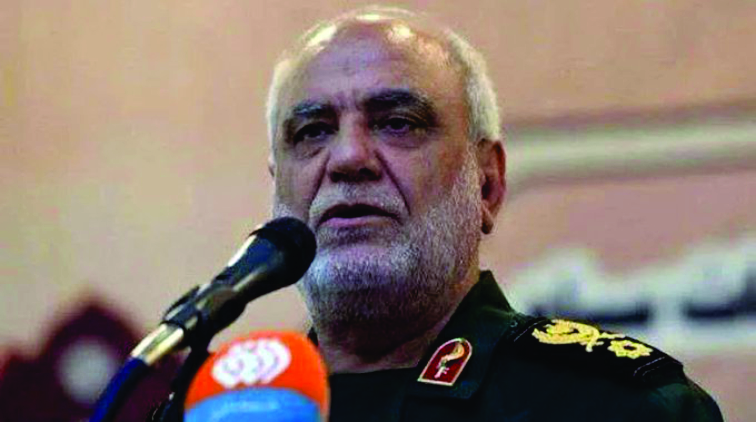
  • BREAKING: Israeli attacks kill Ali Larijani, Secretary of Iran’s Supreme National Security Council 

    BREAKING: Israeli attacks kill Ali Larijani, Secretary of Iran’s Supreme National Security Council 

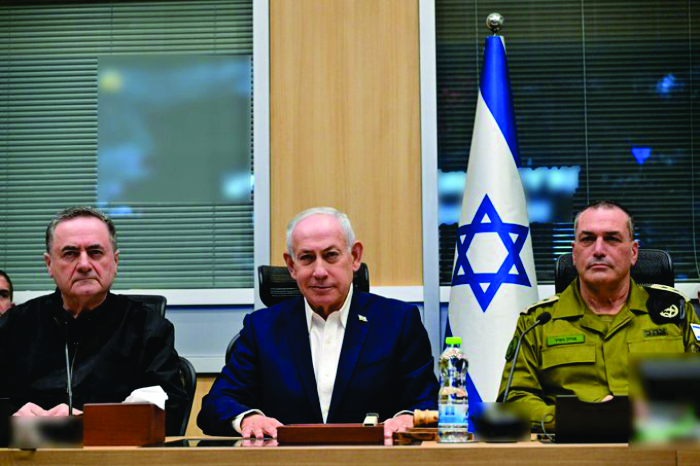
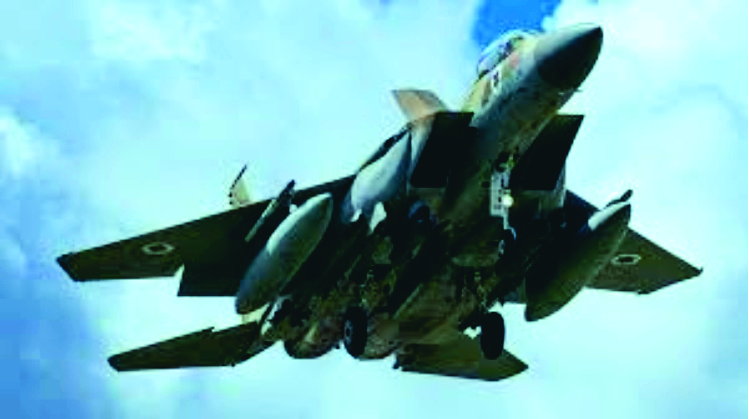
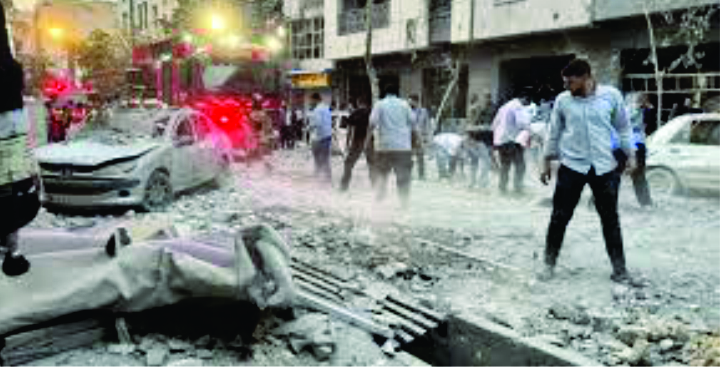
    MIDDLE EAST — (NPA) March 17, 2026 — The Israel Defence Force (IDF) said it conducted an airstrike last night in Iran’s capital, Tehran, targeting the outspoken Iranian Secretary of Iran’s Supreme National Security Council (SNSC), Ali Larijani.

    Initial reports suggested uncertainty about the outcome, but a later statement from the Israeli Defence Minister Israel Katz claimed the mission achieved its objective.

    Last week, Newpost Africa reported that Ali Larijani, Secretary of Iran’s Supreme National Security Council (SNSC), accused the United States and Israel of attempting to destabilise Iran amid the ongoing conflict. In a televised interview marking the war’s eighth day, Larijani argued that the “problem is Iran itself… not a minor change but the total breakdown of the country.”

    He alleged that the initial attacks by the US and Israel were intended to provoke collapse, referencing what he described as the “martyrdom of Imam Khamenei and other children of the revolution.” According to Larijani, Washington’s strategy relied on “shock” tactics aimed at overthrowing the government and dividing Iranian territory. He further noted that “even today, Mr Trump’s published message claimed Iran is being torn apart.”

  • EU announces €458 million in humanitarian aid for the Middle East

    EU announces €458 million in humanitarian aid for the Middle East

    INTERNATIONAL — (NPA) March 16, 2026 — The European Commission has approved €458 million in humanitarian aid for Palestine, Lebanon, Syria, Jordan, and Egypt in 2026. This comes as major donors withdraw from the region and international humanitarian law faces unprecedented strain.

    A statement by EU Spokesperson Eva Hrncirova clarified that Syria will receive €210 million to sustain emergency response and protection nationwide. More than a year after the fall of the Assad regime in December 2024, 16.5 million people still require aid, including 3.2 million returnees facing destroyed infrastructure and limited livelihoods. Funding covers food, healthcare, shelter, clean water, and education.

    In Palestine, €124 million will support food, health, protection, shelter, and education under extremely difficult conditions. Over 3.3 million people remain in need — 2.1 million in Gaza and 1.2 million in the West Bank. Gaza faces malnutrition, a collapsed healthcare system, and systematic obstruction of aid.

    Lebanon will receive €100 million for emergency healthcare, basic assistance, protection, shelter, and education. Needs are acute: even before the current crisis, over three million people required aid. In March 2026, Israeli airstrikes displaced more than 800,000 people. EU humanitarian airbridge flights are already delivering medical and relief supplies.

    Jordan will receive €15.5 million to sustain essential services such as health and protection, meeting the needs of refugees both in and outside camps. Egypt will receive €8 million for multi-sectoral assistance, including education for out-of-school children and disaster preparedness. Egypt currently hosts over 1.5 million refugees and asylum seekers, notably from Sudan and Gaza.

  • Middle East War: UAE air defences intercept 6 ballistic missiles and 21 drones from Iran

    Middle East War: UAE air defences intercept 6 ballistic missiles and 21 drones from Iran

    MIDDLE EAST — (NPA) March 16, 2026 — The United Arab Emirates military on Monday intercepted another barrage of Iranian missiles and drones. According to a statement released by the UAE Ministry of Foreign Affairs, six ballistic missiles and 21 drones launched from Iran were successfully intercepted.

    The ministry noted that “since the start of Iran’s brazen attacks, UAE air defences have dealt with 304 ballistic missiles, 15 cruise missiles, and 1,627 drones.”

    The UAE confirmed that these attacks have resulted in the deaths of two members of its armed forces and five civilians of Pakistani, Nepalese, Bangladeshi, and Palestinian nationalities. Additionally, 145 others were injured, including individuals from Emirati, Egyptian, Sudanese, Ethiopian, Filipino, Pakistani, Iranian, Indian, Bangladeshi, Sri Lankan, Azerbaijani, Yemeni, Ugandan, Eritrean, Lebanese, Afghan, Bahraini, Comorian, Turkish, Iraqi, Nepalese, Nigerian, Omani, Jordanian, Palestinian, Ghanaian, Indonesian, and Swedish nationalities.

    The UAE Ministry of Defence reiterated its readiness to confront any threats, vowing to firmly respond to actions aimed at destabilising the country’s security. It emphasised its commitment to safeguarding the nation’s sovereignty, stability, and national interests.

  • Trump urges global action to secure the Strait of Hormuz, all eyes on China

    Trump urges global action to secure the Strait of Hormuz, all eyes on China

    INTERNATIONAL (NPA) — March 15, 2026 — U.S. President Donald Trump has urged the international community to take responsibility for securing the Strait of Hormuz, following Iran’s seizure of the vital energy transport corridor. The appeal comes in the wake of a U.S. military strike on Iran’s Khagar Island.

    In a post on Truth Social on Saturday, Trump declared: “The United States of America has beaten and completely decimated Iran, both militarily, economically, and in every other way. But the countries of the world that receive oil through the Hormuz Strait must take care of that passage, and we will help — A LOT!”

    Trump emphasised that the U.S. would coordinate with affected nations to restore safe passage for oil shipments, some of which have already been disrupted by Iranian drone attacks. “This should have always been a team effort, and now it will be,” he wrote. “It will bring the world together toward harmony, security, and everlasting peace.”

    The Strait of Hormuz is a critical route for global energy supplies, including shipments to China. Analysts note that Beijing’s response remains uncertain, given its longstanding ties with Tehran.

    Meanwhile, Iran has continued launching drones and missiles at Gulf states, accusing them of hosting U.S. bases involved in the recent strikes. On Sunday, the UAE Ministry of Foreign Affairs reported intercepting several Iranian projectiles targeting its territory.

  • UAE air defences intercept another wave of Iranian missiles and drones

    UAE air defences intercept another wave of Iranian missiles and drones

    INTERNATIONAL — (NPA) March 15 — The United Arab Emirates authorities announced that its air defence system intercepted four ballistic missiles and six drones launched from Iran on March 15, 2026.

    According to a statement from the UAE Ministry of Foreign Affairs, the latest interception adds to a growing tally since the start of Iranian attacks. In total, UAE air defences have dealt with 298 ballistic missiles, 15 cruise missiles, and 1,606 drones.

    The ministry noted that the Iranian strikes have caused the deaths of six individuals of Emirati, Pakistani, Nepalese, and Bangladeshi nationalities, while 142 others sustained minor to moderate injuries. The injured include people of diverse backgrounds, among them Emirati, Egyptian, Sudanese, Ethiopian, Filipino, Pakistani, Iranian, Indian, Bangladeshi, Sri Lankan, Azerbaijani, Yemeni, Ugandan, Eritrean, Lebanese, Afghan, Bahraini, Comorian, Turkish, Iraqi, Nepalese, Nigerian, Omani, Jordanian, Palestinian, Ghanaian, Indonesian, and Swedish nationals.

    The UAE Ministry of Defence stressed that the country remains on high alert and fully prepared to counter any threats. It reaffirmed its commitment to firmly respond to actions aimed at destabilising the state’s security, while ensuring the preservation of sovereignty, stability, and the protection of national interests and capabilities.

  • 3 Iranian female footballers opt to return home after humanitarian visa offer

    3 Iranian female footballers opt to return home after humanitarian visa offer

    SPORTS— (NPA) March 15, 2026—Three members of Iran’s women’s national football team have chosen to return to their country despite being granted humanitarian visas in Australia.

    According to ABC News, Home Affairs Minister Tony Burke confirmed the decision, noting that the players were given multiple opportunities to explore their options but ultimately decided to rejoin their team in Iran.

    The move comes after seven players and staff sought asylum following the Women’s Asian Cup tournament in Australia. Four of those individuals have now reversed course and left the country.

    Burke emphasised that while the government ensured the women had access to safe alternatives, the broader circumstances influencing their choices could not be removed.

    “The Australian government has done everything it could to make sure these women were provided with the chance for a safe future in Australia,” he said. “Australians should be proud that it was here they experienced genuine choices and support.”

    The Iranian squad arrived in Australia on March 1, just one day after U.S. and Israeli air strikes killed Iran’s Supreme Leader, Ayatollah Ali Khamenei. Tensions were evident during the tournament, with some players refusing to sing the national anthem before their opening match against South Korea. Iranian state television later branded the team “traitors.”

    Under Iran’s penal code, charges of treason or corruption can carry severe penalties, including lengthy imprisonment or even execution.

    Initially, five players fled their team hotel on the Gold Coast, fearing persecution if they returned home. They were granted humanitarian visas, followed shortly by another player and a staff member. However, within days, one of the seven asylum seekers had already decided to return to Iran—a choice now echoed by three more teammates.

  • US strikes Iran’s Kharg Island as Trump warns of total destruction of oil assets

    US strikes Iran’s Kharg Island as Trump warns of total destruction of oil assets

    ABUJA, NIGERIA — (NPA) MARCH 14 — The United States Army Central Command (CENTCOM) has confirmed a large-scale precision strike on Iran’s oil-rich Kharg Island and the epicentre of its oil and industry.

    In a statement on Saturday, CENTCOM said the operation destroyed naval mine storage facilities, missile bunkers, and multiple military sites, successfully hitting more than 90 Iranian targets while deliberately preserving the island’s oil infrastructure.

    Following the attack, US President Donald Trump warned that any further Iranian attempt to block vessels in the Strait of Hormuz would trigger the destruction of Iran’s oil and gas assets on Kharg Island. The island, which handles about 90% of Iran’s crude exports, sits near the Strait of Hormuz — a strategic chokepoint through which 20% of global oil flows. Control or disruption of Kharg directly impacts global energy markets and regional security.

    A portion of the CENTCOM statement read: “Last night, U.S. forces executed a large-scale precision strike on Kharg Island, Iran. The strike destroyed naval mine storage facilities, missile storage bunkers, and multiple other military sites. U.S. forces successfully struck more than 90 Iranian military targets on Kharg Island, while preserving the oil infrastructure.”

    Iran has vowed to retaliate by targeting energy production facilities across the region if its oil and gas infrastructure comes under attack.

    The escalation between the United States, Israel, and Iran shows no sign of easing. The confrontation began two weeks ago, with Iran launching missile strikes on Gulf nations and energy infrastructure in a bid to drive up global energy costs as part of its war strategy.

    Meanwhile, the Organisation of Petroleum Exporting Countries (OPEC) has expressed concern over the rising tensions, warning that any prolonged disruption in the Strait of Hormuz or Kharg Island could destabilise global oil supply and trigger sharp price increases. OPEC urged restraint from all parties, stressing the need to safeguard energy infrastructure critical to the stability of international markets.

  • US places $10 million high-stakes bounty on Supreme Leader and other Iranian leaders

    US places $10 million high-stakes bounty on Supreme Leader and other Iranian leaders

    INTERNATIONAL — (NPA) MARCH 14 — The U.S. State Department has offered $10 million and a pathway to resettlement in America for Iranians who can reveal the whereabouts of ten senior figures in the Islamic Republic’s power structure. The move is part of Washington’s campaign against the Islamic Revolutionary Guard Corps (IRGC).

    Supreme Leader Mojtaba Khamenei — son of the late Ayatollah Ali Khamenei — and Ali Larijani, national security adviser and veteran politician, are the most recognisable names. Not all ten are identified; four positions, including the secretary of the defence council, are listed only by title, reflecting rapid turnover after recent airstrikes and the assassination of Ayatollah Ali Khamenei in late February.

    The bounty notably excludes some of Iran’s top leadership. President Masoud Pezeshkian, Chief Justice Gholam-Hossein Mohseni-Eje’i, and Ayatollah Alireza Arafi — who assumed collective leadership after Khamenei’s death — are absent. Foreign Minister Abbas Araghchi, who joined Friday’s pro-Palestinian march in Tehran alongside Larijani and Pezeshkian, also escaped inclusion.

    The timing coincided with Quds Day demonstrations, where leaders reaffirmed support for the Palestinian cause. Yet beneath the political theatre lies a deeper vulnerability: Iran’s economy has been battered for years by sanctions, mismanagement, and corruption. Inflation and soaring costs have left citizens struggling. Against this backdrop, Washington’s promise of reward and relocation may resonate more strongly, offering not just money but escape from a system many feel has failed them.

    This bounty program continues America’s strategy of targeting the IRGC’s upper ranks — not through battlefield confrontation alone, but by incentivising insider betrayal. Whether Iranians will respond remains uncertain, but the U.S. is betting that economic desperation, coupled with the lure of a new life abroad, could succeed where military strikes and sanctions have struggled.

  • UAE intercepts fresh wave of Iranian missiles and drones amid escalating conflict

    UAE intercepts fresh wave of Iranian missiles and drones amid escalating conflict

    LAGOS, NIGERIA (NPA) — March 13, 2026 — The United Arab Emirates’ air defence systems intercepted seven ballistic missiles and 27 unmanned aerial vehicles (UAVs) launched from Iran, the UAE Ministry of Defence announced Friday.

    The latest strikes bring the total number of attacks on the UAE since the outbreak of war on February 28 to 285 ballistic missiles, 15 cruise missiles, and 1,567 UAVs.

    According to the ministry, the attacks resulted in six fatalities among Emirati, Pakistani, Nepali, and Bangladeshi nationals, and 141 injuries ranging from minor to moderate. Those injured include citizens of the UAE, Egypt, Sudan, Ethiopia, the Philippines, Pakistan, Iran, India, Bangladesh, Sri Lanka, Azerbaijan, Yemen, Uganda, Eritrea, Lebanon, Afghanistan, Bahrain, Comoros, Türkiye, Iraq, Nepal, Nigeria, Oman, Jordan, Palestine, Ghana, Indonesia, Sweden, Kenya, Tanzania, Somalia, Morocco, Algeria, South Africa, and the United Kingdom.

    “The Ministry of Defence remains fully prepared to deal with any threats and will firmly confront attempts to undermine state security, ensuring the protection of sovereignty, stability, and national interests,” the statement said.

    The conflict, which erupted between the United States, Israel, and Iran, has seen Iran target Gulf energy infrastructure, contributing to volatility in global oil markets. While Tehran insists its strikes are aimed at U.S. bases and assets, several civilian facilities — including homes and airports — have been hit, raising questions about Iran’s objectives in the region.

  • Fire breaks out on nuclear-powered USS Gerald R. Ford, sailors injured

    Fire breaks out on nuclear-powered USS Gerald R. Ford, sailors injured

    LAGOS, NIGERIA (NPA) — March 13, 2026 — The U.S. Naval Forces Central Command/U.S. 5th Fleet has confirmed a fire incident aboard USS Gerald R. Ford (CVN-78), the United States Navy’s newest and largest aircraft carrier.

    The fire broke out on March 12 in the ship’s main laundry spaces. In a statement, officials stressed: “The cause of the fire was not combat-related and is contained.” They further clarified: “There is no damage to the ship’s propulsion plant, and the aircraft carrier remains fully operational.”

    Two sailors sustained non-life-threatening injuries and are receiving medical treatment in stable condition. “Additional information will be provided when available,” the statement added.

    The Gerald R. Ford Carrier Strike Group continues operations in the Red Sea in support of Operation Epic Fury.

    Commissioned in 2017, USS Gerald R. Ford is the lead ship of its class, designed to replace the Nimitz-class carriers. The nuclear-powered supercarrier spans over 1,100 feet, displaces about 100,000 tons, and can carry more than 75 aircraft. It incorporates advanced technologies such as electromagnetic launch systems and improved radar, representing a significant leap in U.S. naval engineering and global power projection.