Category: Middle East

  • Ukraine and Saudi Arabia sign defence cooperation pact

    Ukraine and Saudi Arabia sign defence cooperation pact

    INTERNATIONAL (NPA) — 27 March 2026 — Ukraine has signed a landmark defence cooperation agreement with Saudi Arabia, positioning itself as a global security partner following its battlefield experience in the war with Russia.

    The document, signed as part of the meeting between President Volodymyr Zelenskyy and Crown Prince Mohammed bin Salman Al Saud, establishes a framework for future contracts, technological collaboration and investment, while strengthening Ukraine’s role as a security donor.

    In a statement on Friday, Zelenskyy said Ukraine was ready to share its expertise and defence systems with Saudi Arabia to enhance the protection of lives. “Now into the fifth year, Ukrainians are resisting the same kind of terrorist attacks – ballistic missiles and drones – that the Iranian regime is currently carrying out in the Middle East and the Gulf region. Saudi Arabia also has capabilities that are of interest to Ukraine, and this cooperation can be mutually beneficial,” he noted.

    The Ukrainian leader added that discussions also covered the wider Middle East and Gulf situation, Russia’s support for Iran, developments in fuel markets and prospects for energy cooperation.
  • IDF confirms killing of IRGC Navy Commander Alireza Tangsiri and Intelligence Chief Behnam Rezaei

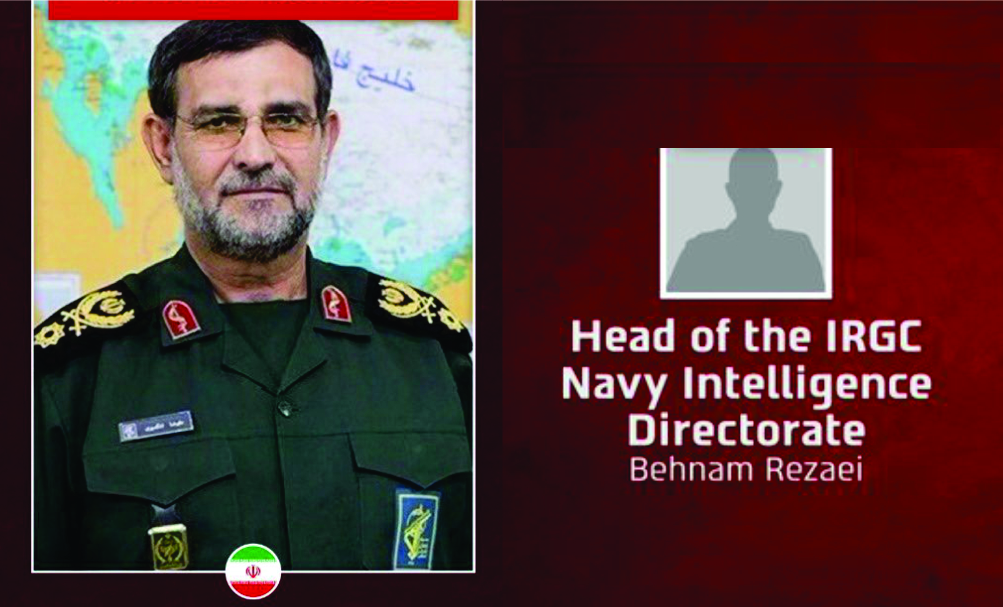
    IDF confirms killing of IRGC Navy Commander Alireza Tangsiri and Intelligence Chief Behnam Rezaei

    MIDDLE EAST (NPA) — 26 March 2026 — The Israel Defence Forces (IDF) have officially announced the killing of Admiral Alireza Tangsiri, Commander of the Islamic Revolutionary Guard Corps (IRGC) Navy.

    In a statement, the IDF noted that Tangsiri had served in the role for the past eight years, following earlier senior positions within the IRGC Navy, including overseeing what Israel described as the regime’s terror activities.

    The IDF accused him of responsibility for repeated strikes against oil tankers and trading vessels, portraying him as a central figure who posed a threat to maritime navigation and freedom of trade in the Strait of Hormuz and the wider international maritime domain.

    According to the statement, during Operation Roaring Lion, Tangsiri directed efforts to close the Strait of Hormuz and oversaw maritime attacks against countries in the Middle East, as well as against U.S. and allied energy infrastructure.

    The IDF added that he was directly implicated in disrupting the global economy and had been subject to numerous international sanctions due to his involvement in attacks on vessels in international waters, as well as in the transfer of air defence systems and unmanned aerial vehicles (UAVs) to Russia and Syria.

    The statement further revealed that another senior Iranian military official was killed alongside Tangsiri — Behnam Rezaei, Head of the IRGC Navy Intelligence Directorate. Rezaei was said to have been responsible for intelligence collection on regional countries and for leading cooperation with various intelligence organisations.

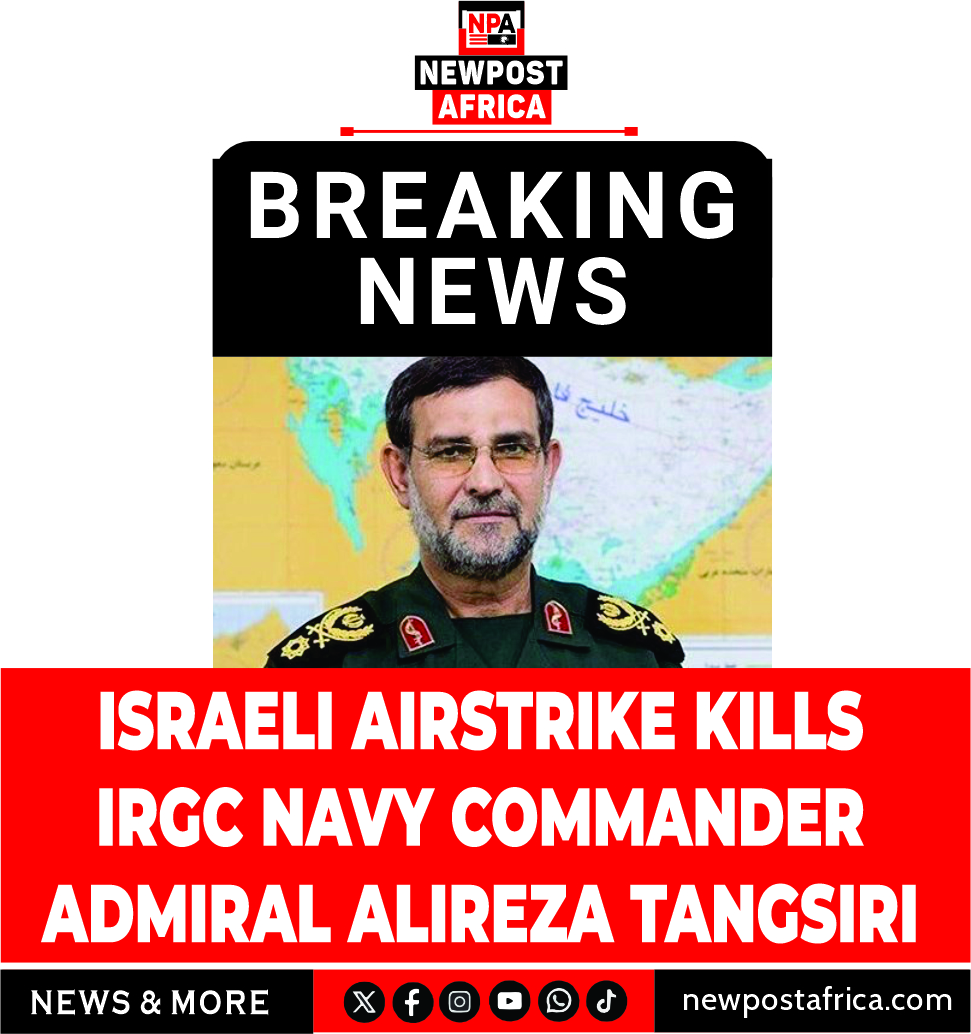
  • BREAKING: Israeli airstrike kills IRGC Navy Commander Admiral Alireza Tangsiri

    BREAKING: Israeli airstrike kills IRGC Navy Commander Admiral Alireza Tangsiri

    MIDDLE EAST (NPA) — March 26, 2026 — An Israeli official has announced that Admiral Alireza Tangsiri, commander of the Islamic Revolutionary Guard Corps (IRGC) Navy, was killed in a targeted airstrike on the Iranian port city of Bandar Abbas, near the strategic Strait of Hormuz.

    According to reports in the Jerusalem Post, the strike occurred on Thursday. Also, it claimed the lives of several of Tangsiri’s senior aides, who were buried under the rubble of a collapsed building. Israeli defence sources confirmed involvement, though Iran has yet to issue an official statement.

    Admiral Tangsiri, who had led the IRGC Navy since August 2018, had recently adopted a more aggressive posture in the Gulf, particularly around the Strait of Hormuz. Just last week, he threatened retaliation against U.S. facilities in the region, warning civilians to avoid oil installations linked to American interests.

    The reported killing of Tangsiri marks a significant escalation in Israel-Iran tensions and raises concerns about potential instability in one of the world’s most vital energy corridors.

  • Ukraine’s drone offensive halves Russia’s oil shipments as global oil markets hangs in the balance

    Ukraine’s drone offensive halves Russia’s oil shipments as global oil markets hangs in the balance

    INTERNATIONAL (NPA) — March 25, 2026: Russia’s ambitions to cash in on soaring global oil demand amid Middle East turmoil have suffered a devastating setback, as Ukrainian drone attacks cripple nearly half of its export capacity.

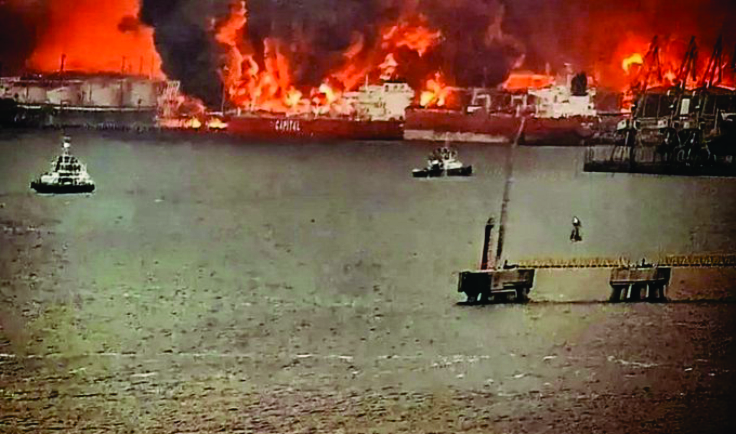
    Massive fires erupted at Russia’s Baltic Sea ports, Primorsk and Ust-Luga, forcing the suspension of oil shipments for the second time in a week. The Ust-Luga terminal, which handles about 700,000 barrels of oil daily, was struck overnight, sparking an inferno that continues to rage. The port is a vital hub for petroleum products, coal, and fertilizers.

    Primorsk, Russia’s largest Baltic oil port with a capacity of 1 million barrels per day, was also targeted earlier on March 22. That strike ignited fuel storage tanks, halting operations and compounding the disruption.

    The scale of the damage is staggering: about 2 million barrels per day—roughly 40% of Russia’s export capacity—has been knocked offline. Novorossiysk, another critical port on the Black Sea, has also faced interruptions following a drone attack earlier this month.

    MarineTraffic data shows at least 50 vessels stranded in the Gulf of Finland, awaiting clearance to dock at the paralyzed ports. Local media, including Helsingin Sanomat, report that smoke from Ust-Luga’s burning fuel tanks—33 in total, with capacity exceeding 500 rail tank cars—is visible from Finland’s coastline, stretching for dozens of kilometers.

    Russia’s oil lifeline to global markets now hangs in the balance, as Ukraine’s precision strikes continue to dismantle Moscow’s export infrastructure.

  • Herzog praises Lebanon’s expulsion of Iranian envoy, calls it a bold step

    Herzog praises Lebanon’s expulsion of Iranian envoy, calls it a bold step

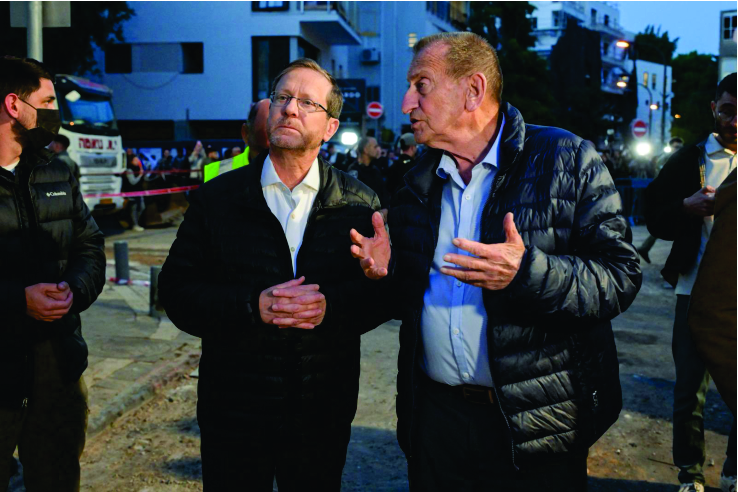
    MIDDLE EAST (NPA) — March 25, 2026 — Israeli President Isaac Herzog has hailed Lebanon’s decision to expel the Iranian Ambassador, describing it as a bold and historic move. He said the action marks a watershed moment and could signal broader regional changes if the influence of Iran and its proxies is curtailed.

    Herzog made the remarks while visiting the site of an Iranian missile strike in Tel Aviv, which recently hit an affluent part of the city. Addressing the nation, he stressed that missiles “do not distinguish between person and person, and neither do we — the entire nation stands together in this battle.”

    The president praised Israel’s rescue forces and municipal teams for their dedication and professionalism in responding to the attack. He commended the Tel Aviv operations center for its effective management, innovative approaches, and uncompromising commitment to residents’ safety. Herzog emphasised that such resilience demonstrates the unity of Israeli society in the face of external threats.

    “I wish to thank Tel Aviv Mayor Ron Huldai and his team, and I wish to strengthen the citizens of Israel from north to south. Together we will stand and prevail,” Herzog concluded, underscoring his message of solidarity and determination.

  • UAE intercepts latest incoming Iranian missiles and drones 

    UAE intercepts latest incoming Iranian missiles and drones 

    MIDDLE EAST (NPA) — March 24, 2026 — The Ministry of Defence of the United Arab Emirates (UAE) announced that its air defence systems intercepted waves of Iranian ballistic missiles, cruise missiles, and drones fired at the country on Tuesday, March 24, 2026.

    According to official figures, the latest assault involved 17 unmanned aerial vehicles (UAVs) and five ballistic missiles. Cumulatively, the UAE has faced 1,806 UAVs, 15 cruise missiles, and 357 ballistic missiles launched against it. Despite successful interceptions, several critical civilian and oil infrastructures were hit, including fuel storage facilities, power distribution lines, and sections of port installations, causing temporary disruptions in energy supply and trade operations in the Gulf nation.

    Over the weekend, Gulf countries convened an emergency meeting to address the escalating attacks. In a joint communiqué, member states strongly condemned Iran’s actions, describing them as violations of international law and direct threats to regional stability. The statement emphasised solidarity with the UAE, called for restraint, and urged the international community to take decisive steps to prevent further aggression.

    The communiqué also highlighted the broader implications of the strikes, warning that continued targeting of energy and civilian infrastructures could destabilise global oil markets and exacerbate humanitarian challenges across the region.

  • Netanyahu vows continued strikes in Iran war, claims killing of two nuclear scientists

    Netanyahu vows continued strikes in Iran war, claims killing of two nuclear scientists

    MIDDLE EAST (NPA) — March 23, 2026 — Israeli Prime Minister Benjamin Netanyahu on Monday held discussions with United States President Donald Trump regarding the ongoing war involving the US, Israel, and the Islamic Republic of Iran.

    Netanyahu revealed that the talks focused on consolidating the “tremendous achievements” made by Israel and the US in the conflict, while exploring additional strategies to secure their war objectives in a framework that protects the vital interests of both nations.

    In a televised broadcast, on Monday, monitored by Newpost Africa, Netanyahu stressed that diplomatic engagements would not deter Israel from continuing military operations in Iran and Lebanon.

    “We are crushing the missile program and the nuclear program, and continuing to inflict severe blows on Hezbollah,” he declared. “Just days ago, we eliminated two more nuclear scientists — and the hand is still outstretched.”

    The Prime Minister emphasised that Israel’s security priorities remain unchanged, regardless of the outcome of ongoing US talks with Iran. He insisted that Israel would safeguard its national interests under any scenario, reinforcing his government’s resolve to maintain pressure on Tehran and its allies.

    Observers note that Netanyahu’s remarks underscore Israel’s determination to pursue a hardline military approach while simultaneously engaging in high‑level diplomatic coordination with Washington. The statement also highlights the dual track of Israel’s strategy: combining battlefield operations with international negotiations to secure long‑term security guarantees.

  • Trump pauses military strikes on Iran for five days as talks begin

    Trump pauses military strikes on Iran for five days as talks begin

    MIDDLE EAST (NPA) — March 23, 2026 — U.S. President Donald Trump’s “peace through strength” mantra may be showing results, following his announcement on Monday via his Truth Social account that the United States and Iran have, over the past two days, begun what he described as “very good and productive conversations” aimed at achieving a complete resolution of hostilities in the Middle East.

    Trump clarified that, based on the tenor and tone of these in-depth, detailed, and constructive discussions — which are expected to continue throughout the week — he has instructed the Department of War to postpone any planned military strikes against Iranian power plants and energy infrastructure for five days. He stressed that the pause is conditional on the success of ongoing meetings and negotiations.

    The statement, reproduced in full, reads: “I AM PLEASED TO REPORT THAT THE UNITED STATES OF AMERICA, AND THE COUNTRY OF IRAN, HAVE HAD, OVER THE LAST TWO DAYS, VERY GOOD AND PRODUCTIVE CONVERSATIONS REGARDING A COMPLETE AND TOTAL RESOLUTION OF OUR HOSTILITIES IN THE MIDDLE EAST. BASED ON THE TENOR AND TONE OF THESE IN DEPTH, DETAILED, AND CONSTRUCTIVE CONVERSATIONS, WHICH WILL CONTINUE THROUGHOUT THE WEEK, I HAVE INSTRUCTED THE DEPARTMENT OF WAR TO POSTPONE ANY AND ALL MILITARY STRIKES AGAINST IRANIAN POWER PLANTS AND ENERGY INFRASTRUCTURE FOR A FIVE DAY PERIOD, SUBJECT TO THE SUCCESS OF THE ONGOING MEETINGS AND DISCUSSIONS. THANK YOU FOR YOUR ATTENTION TO THIS MATTER! PRESIDENT DONALD J. TRUMP.”

    The announcement comes amid heightened tensions in the Middle East, where the conflict involving the United States, Israel, and Iran has destabilised oil markets and damaged critical civilian infrastructure. Trump’s decision to delay strikes is being interpreted as a cautious step toward de-escalation, while leaving open the possibility of military action should talks fail.

  • Pakistan and Iraq urge dialogue to ease Middle East tensions

    Pakistan and Iraq urge dialogue to ease Middle East tensions

    INTERNATIONAL (NPA) — March 23, 2026 — Pakistan and Iraq have jointly stressed that dialogue and adherence to international law remain essential for ensuring peace, security, and stability in the Middle East and beyond. This was part of a phone discussion held between Pakistan’s Deputy Prime Minister and Foreign Minister, Senator Mohammad Ishaq Dar, and Iraq’s Deputy Prime Minister and Foreign Minister, Fuad Hussein, on the prevailing regional situation.

    In a statement released Monday by Pakistan’s Ministry of Foreign Affairs (@ForeignOfficePk), both leaders expressed deep concern over the ongoing escalation in the region and its wider implications for global stability.

    The statement reads in part: “DPM/FM underscored the need for collective efforts to de-escalate tensions and prevent further instability, emphasising that dialogue and adherence to international law remain essential for ensuring peace, security, and stability in the region and beyond.”

    The call comes amid mounting tensions in the Middle East, driven by the ongoing conflict involving the United States, Israel, and Iran. The crisis has already had far-reaching consequences, including volatility in global oil prices and damage to critical civilian infrastructure across the region.

    Both ministers reaffirmed their countries’ commitment to working with regional and international partners to promote peace and stability. They emphasised that constructive engagement, rather than confrontation, is the only viable path forward to prevent further humanitarian and economic fallout.

  • Iranian attacks will get to you, Netanyahu warns Europe to join fight

    Iranian attacks will get to you, Netanyahu warns Europe to join fight

    MIDDLE EAST (NPA) — March 22, 2026 — Israeli Prime Minister Benjamin Netanyahu has declared that Europe is not safe from Iranian attacks after Iran reportedly fired an intercontinental ballistic missile over 4,000 km, striking Diego Garcia—an American-British military base in the Indian Ocean.  

    Netanyahu made the declaration when he inspected the impact site of an Iranian missile attack on March 21, 2026, in the Israeli town of Dimona on Saturday.

    He said, “I’ve been warning for years. Leaders of the free world. The leaders of the moderate states, what more are you waiting for? President Trump has correctly said that Israel and the United States, in this great partnership; we are fighting the battle, not only for ourselves but for all of you. And he asks a simple question: where are you? And it’s time to head to President Trump’s call.”

    Dimona hosts a facility widely believed to house the region’s only nuclear arsenal, though Israel has never officially acknowledged possessing nuclear weapons. Iran’s atomic energy organisation accused the U.S. and Israel of targeting Natanz but said no radioactive leakage was reported.

    The Israeli military said interception attempts were made as the missiles approached, but it is still unclear if the nuclear site was hit. Iranian state television framed the strike as a “response” to Natanz. 

    The UN nuclear watchdog, the International Atomic Energy Agency (IAEA), has not yet issued a statement confirming damage or a leak at the site, as it urged restraint to avoid the risk of a nuclear accident.