Category: Middle East

  • Muslim foreign ministers condemn closure of Al‑Aqsa Mosque gates amid regional tensions

    Muslim foreign ministers condemn closure of Al‑Aqsa Mosque gates amid regional tensions

    ABUJA, NIGERIA (NPA) — March 11, 2026 — The foreign ministers of Pakistan, Egypt, Jordan, the United Arab Emirates, Indonesia, Türkiye, Saudi Arabia, and Qatar have jointly condemned the closure of the gates of Al‑Aqsa Mosque/Al‑Haram Al‑Sharif in Jerusalem.

    In a statement issued Wednesday, the ministers said that “security restrictions on access to the Old City of Jerusalem and its places of worship, coupled with discriminatory and arbitrary access restrictions to other places of worship in the Old City, constitute a flagrant violation of international law, including international humanitarian law, the historical and legal status quo, and the principle of unrestricted access to places of worship.”

    The ministers declared their “absolute rejection and condemnation of this illegal and unjustified measure, as well as Israel’s continued provocative actions at Al‑Aqsa Mosque/Al‑Haram Al‑Sharif and against worshippers.” They stressed that Israel has no sovereignty over occupied Jerusalem or its Islamic and Christian holy sites.

    They reiterated that the entire Al‑Aqsa Mosque compound, covering 144 dunams, is a place of worship exclusively for Muslims, and affirmed that the Jerusalem Endowments and Al‑Aqsa Mosque Affairs Department, affiliated with Jordan’s Ministry of Awqaf and Islamic Affairs, is the sole legal authority with jurisdiction to administer the mosque and regulate entry.

    The ministers called on Israel to immediately reopen the gates and refrain from obstructing Muslim worshippers’ access. They also urged the international community to adopt a firm position compelling Israel to halt ongoing violations and illegal practices against Islamic and Christian holy sites in Jerusalem.

    It remains unclear how Israel, already engaged in heavy fighting with Hezbollah in the north and with troops stationed along the Gaza frontier beyond the Yellow Line, will respond. Overall, Israel is at war and on its highest level of alert, making it difficult to suggest that it could reopen the mosque gates at a time when it is battling on multiple fronts.

  • Trump warns Iran of ‘death, fire, and fury’ if Strait of Hormuz oil flow is blocked

    Trump warns Iran of ‘death, fire, and fury’ if Strait of Hormuz oil flow is blocked

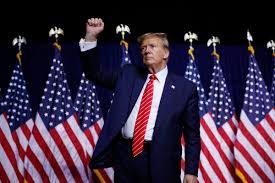
    INTERNATIONAL (NPA) — March 10, 2026 — U.S. President Donald Trump has warned of devastating consequences for Iran if it continues to disrupt maritime traffic in the Strait of Hormuz, a vital global oil route.

    Iran recently announced the closure of the Strait and threatened to attack oil tankers attempting to pass through, halting traffic and driving energy prices higher worldwide. The move is part of Iran’s strategy to pressure the United States and Israel to halt military operations against it.

    In a statement posted Tuesday on his Truth Social account, Trump said: “If Iran does anything that stops the flow of oil within the Strait of Hormuz, they will be hit by the United States of America twenty times harder than they have been hit thus far. Death, fire, and fury will reign upon them.” He added that U.S. strikes would target infrastructure to make it “virtually impossible for Iran to ever be rebuilt as a nation.”

    Global oil prices surged above $100 per barrel following Iran’s announcement. However, coordinated releases of strategic reserves by several countries, combined with Trump’s assurance that the war “will soon be over,” helped ease market pressure on Tuesday.

    The Strait of Hormuz, located between Oman and Iran, is one of the world’s most critical energy chokepoints, with roughly one‑fifth of global oil supplies passing through daily. Any prolonged disruption could have severe consequences for international markets.

    The conflict, now in its second week, has already seen heavy fighting and casualties. It remains unclear how Iran will respond to Trump’s latest warning as tensions continue to escalate.

  • Israeli President Herzog visits northern communities after Hezbollah attacks

    Israeli President Herzog visits northern communities after Hezbollah attacks

    INTERNATIONAL (NPA) — March 10, 2026 — Israeli President Isaac Herzog visited northern Israel on Tuesday to comfort residents following recent Hezbollah attacks.

    During the visit, Herzog met with the family of Staff Sergeant Maher Khatib, an engineering fighter who was killed in Lebanon a few days earlier. He offered condolences to Khatib’s widow, two daughters, and the Druze community, praising their resilience and contribution to the Israel Defence Forces (IDF).

    Herzog began his tour at the Golan Regional Council’s emergency operations centre in Katzrin, where he observed preparedness measures alongside Council Head Yehuda Doha and his team. “I saw up close how they operate during an emergency—with professionalism, dedication, and great responsibility for the residents’ security,” he said.

    He later travelled to Majdal Shams to console Khatib’s family, describing them as “a noble family, grieving and in pain, that serves as a testament to the spirit of heroism and devotion—of the Druze community and of all IDF fighters.”

    The president concluded his visit at an Iron Dome battery, where he praised commanders and air defence soldiers for their round‑the‑clock work intercepting rockets and protecting millions of Israelis.

    The escalation follows Hezbollah’s attacks on northern Israel in response to ongoing Israeli and U.S. operations in Iran. Israel’s deployment of soldiers into Lebanon has displaced many civilians, with two Israeli soldiers killed in the fighting, including Staff Sergeant Khatib.

  • BREAKING: Iran’s Supreme Leader Mojtaba Khamenei Critically Injured in Israeli Strike

    BREAKING: Iran’s Supreme Leader Mojtaba Khamenei Critically Injured in Israeli Strike

    Lagos, Nigeria — March 9, 2026 — The newly appointed Iranian Supreme Leader, Mojtaba Khamenei, has reportedly been targeted in an Israeli airstrike in Tehran.

    Iranian state television confirmed the strike, stating that Khamenei was “seriously injured from an Israeli strike.”

    Further details are expected as the situation develops.

  • Trump urges Australia to grant asylum to Iranian women’s soccer team or send them to US

    Trump urges Australia to grant asylum to Iranian women’s soccer team or send them to US

    Washington, D.C., US — March 9, 2026 — U.S. President Donald Trump has called on Australian authorities not to force the Iranian women’s national soccer team to return to Tehran after the players refused to sing the national anthem during a recent match, as war rages back home.

    In a statement on his Truth Social account, Trump warned that sending the team back would be a grave mistake. “Australia is making a terrible humanitarian mistake by allowing the Iran National Woman’s Soccer team to be forced back to Iran, where they will most likely be killed. Don’t do it, Mr Prime Minister, give ASYLUM. The U.S. will take them if you won’t,” he wrote.

    Trump urged Australian Prime Minister Anthony Albanese to grant the players asylum, while declaring America’s readiness to accept them if Australia declines.

    The Iranian women’s team faces serious risks in Tehran after their silent protest. State media has branded them “wartime traitors,” raising fears of persecution, imprisonment, or worse. Several players have already sought asylum in Australia, while international voices continue to press for their protection.

    Iranian state television and conservative commentators have accused the players of treason, intensifying concerns about their safety should they be forced to return.

  • Israel increases defence production for war with Iran and Hezbollah

    Israel increases defence production for war with Iran and Hezbollah

    Jerusalem, Israel (NPA) — March 9, 2026 — The Israeli Ministry of Defence (IMOD) has intensified production of military equipment, including munitions, to sustain operations in the ongoing war with Iran. The announcement came during a visit by IMOD Director General Maj. Gen. (Res.) Amir Baram to Elbit Systems, where he conducted a situational assessment with company leadership on scaling up production rates to meet anticipated defence requirements and potential expansion into additional theatres.

    “The central focus of the Ministry of Defence, per the Minister of Defence’s directive, is aerial munitions. Months of preparation and early readiness have enabled the IDF to operate with virtually no constraints in Iran and Lebanon. At the same time, we are now working to replenish all munitions expended in order to be prepared for any scenario. The decisions we made to expand and accelerate production lines in Israel before the operation will now allow us to take production rates to the next level,” Baram stated.

    The Director General expressed gratitude to Elbit Systems and other defence industries for their mobilisation. “Israel has a unique ecosystem that no other country can match: a distinctive integration between the IDF, the Defence Ministry, and the defence industries that enables the rapid translation of operational needs and battlefield lessons into real-time modifications and upgrades, creating exceptionally fast feedback loops,” he added.

    The visit was also attended by IMOD Deputy Director General and Head of the Planning Department, Itamar Graff; Deputy Director General and Head of the Defence Procurement Directorate (DPD) Ze’ev Landau; General Manager of Elbit Systems Land Yehuda (Udi) Vered; and other senior officials.

  • Dangote Refinery raises fuel to ₦1,175 amid global oil surge

    Dangote Refinery raises fuel to ₦1,175 amid global oil surge

    Lagos, Nigeria — March 9, 2026 — The Dangote Petroleum Refinery has announced its fourth ex-depot price adjustment since March 2, raising the gantry price of Premium Motor Spirit (PMS), or petrol, to ₦1,175 per litre and Automotive Gas Oil (AGO), commonly known as diesel, to ₦1,620 per litre. The latest increase marks the third upward revision in just one week, underscoring mounting pressure on Nigeria’s downstream sector amid global market volatility.

    According to petroleumprice.ng, Nigeria’s downstream industry monitoring platform, the new pricing template has been communicated to marketers following earlier adjustments this month. The changes come after a temporary suspension of petrol loading operations and restricted truck-out activities, which had fueled speculation of an imminent price hike.

    Under the revised structure, petrol has jumped from ₦995 per litre, while diesel has surged from ₦1,430 per litre, reflecting sharp increases in domestic fuel costs. The adjustments coincide with a spike in international crude benchmarks: as of 1:00 pm WAT, Brent crude traded at $102.8 per barrel (+10.91%), while WTI crude stood at $101.0 (+11.08%).

    Analysts warn that the latest increases are likely to ripple through Nigeria’s economy, driving up the cost of goods and services in a petroleum-dependent market. Industry observers note that while the government is expected to benefit from higher revenues amid the Middle East conflict involving the United States, Israel, and Iran, pressure is mounting for authorities to deploy subsidies or other interventions to stabilise domestic prices.

  • Iran security chief accuses U.S. of seeking Iran’s disintegration

    Iran security chief accuses U.S. of seeking Iran’s disintegration

    Tehran (NPA) — March 8, 2026 — Ali Larijani, Secretary of Iran’s Supreme National Security Council (SNSC), has accused the United States and Israel of attempting to fragment Iran through the ongoing military conflict. In a televised interview marking the war’s eighth day, Larijani said their “problem is ‘Iran’ itself… not a minor change but the total breakdown of the country.”

    He claimed the initial attacks, including the “martyrdom of Imam Khamenei and other children of the revolution,” were designed to trigger collapse. According to Larijani, Washington’s strategy relied on “shock” tactics to overthrow the government and divide Iranian territory. “Even today, Mr Trump’s published message claimed Iran is being torn apart,” he noted.

    Larijani argued the U.S. miscalculated: “They wanted to trap the people in a state of shock and awe, but they failed because the Iranian people have seen such trials before.” He added, “They did not expect the Iranians not to let go; now they are desperate.”

    He dismissed rumours of military defections, insisting the IRGC, Army, and Basij remain active. He accused the U.S. of trying to incite ethnic divisions, particularly among Kurds, but said they “know the Americans treat them transactionally and have no loyalty.”

    Condemning attacks on schools and hospitals, Larijani said, “Trump does not understand. Iranians may have differences, but they stand by Iran.” He also mocked Trump’s suggestion of deciding Iran’s future leader, calling it “backwards” and insulting.

    On U.S. casualties, Larijani alleged figures were understated and claimed American soldiers had been captured in some countries. He warned regional states against hosting U.S. bases: “If Israel has attacked us, why do you allow it to use your bases? It is Iran’s right to respond.”

    Larijani vowed to continue missile strikes until compensation is paid. “Our missile reservoirs are upright,” he said, rejecting claims of weakened capabilities. He concluded by thanking Iranians for their “zeal and pride” and warned: “Any talk that creates division is a deadly poison… We are passing through the peak of the war.”

  • Arab League holds extraordinary session, condemns Iranian attacks

    Arab League holds extraordinary session, condemns Iranian attacks

    INTERNATIONAL (NPA) — March 9, 2026 — Jordan’s Deputy Prime Minister and Minister of Foreign Affairs and Expatriates, Ayman Safadi, on Sunday participated in an extraordinary session of the Arab League Council at the ministerial level to discuss Iranian attacks on Arab countries.

    The video conference meeting was chaired by the United Arab Emirates following a request from Jordan, Bahrain, Saudi Arabia, Oman, Qatar, Kuwait, and Egypt.

    Safadi condemned Iran’s “unjustified” attacks targeting Jordan and Gulf states, according to Al Mamlaka TV. He underscored Jordan’s solidarity with the Gulf Cooperation Council (GCC), affirming support for measures taken by brotherly nations to counter Iranian aggression and protect citizens, security, and sovereignty. He also expressed appreciation for the Arab states’ support for Jordan.

    “The security of Arab nations is one,” Safadi stressed, urging a unified stance against hostilities. “Arab countries are facing brutal attacks targeting their security, stability, sovereignty, citizens, residents and facilities.”

    The minister reiterated Jordan’s solidarity with Lebanon, emphasising the need for joint efforts to safeguard its stability and sovereignty. On Palestine, he highlighted the importance of collective action to support the people’s right to freedom and the establishment of an independent state.

    Safadi warned that Arab national security faces growing challenges requiring new protection mechanisms, proposing that the council’s next ordinary session later this month focus on strategic reforms. He concluded by stressing dialogue as the primary means of resolving disputes.

    The meeting ended with a resolution condemning Iranian attacks and affirming pan-Arab solidarity.

  • BREAKING: Iran appoints Mojtaba Khamenei as Supreme Leader despite Israeli warning

    BREAKING: Iran appoints Mojtaba Khamenei as Supreme Leader despite Israeli warning

    INTERNATIONAL (NPA) — March 8, 2026 — After days of speculation, Iran’s Assembly of Experts announced on Sunday that Mojtaba Khamenei, a cleric and the second son of the late Supreme Leader Ayatollah Ali Khamenei, has been formally selected as the country’s new Supreme Leader.

    The announcement comes amid heightened tensions following remarks by Israeli Defense Minister Israel Katz, who warned that any successor to the late Ayatollah would be considered a target for elimination. 

    Mojtaba Khamenei, 56, has long been regarded as an influential figure within Iran’s political and religious establishment, despite never holding elected office. His appointment marks a historic moment, as Iran’s system traditionally discourages hereditary succession. However, his close ties to the Revolutionary Guards and clerical networks positioned him as a strong candidate.

    Born in Mashhad in 1969, Mojtaba studied at the Qom Seminary and rose to prominence as a mid-ranking cleric. He briefly served in the Iran–Iraq War before gaining influence through his role in the Basij militia and his proximity to the Islamic Revolutionary Guard Corps. 

    Known for his behind-the-scenes influence, he was widely believed to have played a role in shaping Iran’s domestic politics during the 2009 Green Movement protests. His leadership is expected to consolidate power within the Khamenei family.