Category: Middle East

  • Netanyahu vows continued strikes in Iran war, claims killing of two nuclear scientists

    Netanyahu vows continued strikes in Iran war, claims killing of two nuclear scientists

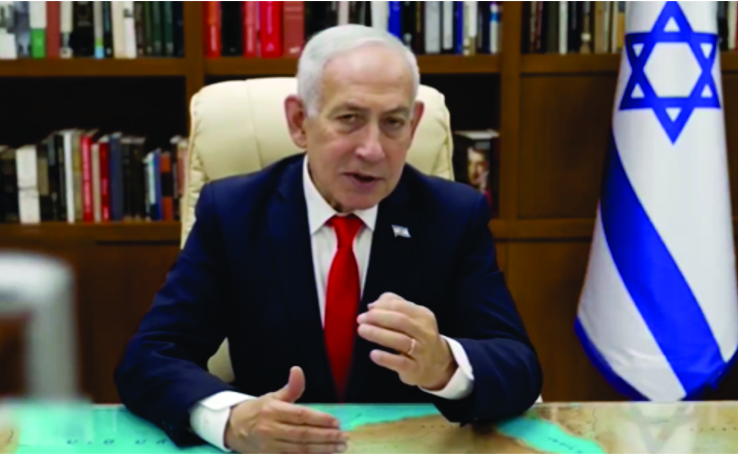
    MIDDLE EAST (NPA) — March 23, 2026 — Israeli Prime Minister Benjamin Netanyahu on Monday held discussions with United States President Donald Trump regarding the ongoing war involving the US, Israel, and the Islamic Republic of Iran.

    Netanyahu revealed that the talks focused on consolidating the “tremendous achievements” made by Israel and the US in the conflict, while exploring additional strategies to secure their war objectives in a framework that protects the vital interests of both nations.

    In a televised broadcast, on Monday, monitored by Newpost Africa, Netanyahu stressed that diplomatic engagements would not deter Israel from continuing military operations in Iran and Lebanon.

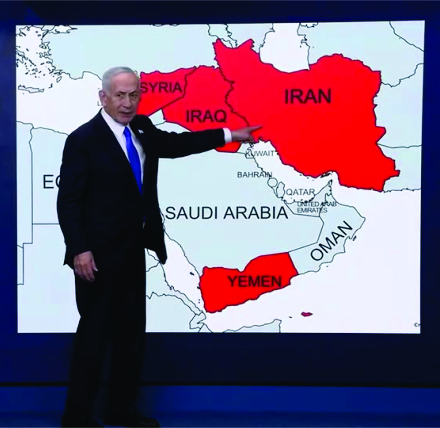
    “We are crushing the missile program and the nuclear program, and continuing to inflict severe blows on Hezbollah,” he declared. “Just days ago, we eliminated two more nuclear scientists — and the hand is still outstretched.”

    The Prime Minister emphasised that Israel’s security priorities remain unchanged, regardless of the outcome of ongoing US talks with Iran. He insisted that Israel would safeguard its national interests under any scenario, reinforcing his government’s resolve to maintain pressure on Tehran and its allies.

    Observers note that Netanyahu’s remarks underscore Israel’s determination to pursue a hardline military approach while simultaneously engaging in high‑level diplomatic coordination with Washington. The statement also highlights the dual track of Israel’s strategy: combining battlefield operations with international negotiations to secure long‑term security guarantees.

  • Trump pauses military strikes on Iran for five days as talks begin

    Trump pauses military strikes on Iran for five days as talks begin

    MIDDLE EAST (NPA) — March 23, 2026 — U.S. President Donald Trump’s “peace through strength” mantra may be showing results, following his announcement on Monday via his Truth Social account that the United States and Iran have, over the past two days, begun what he described as “very good and productive conversations” aimed at achieving a complete resolution of hostilities in the Middle East.

    Trump clarified that, based on the tenor and tone of these in-depth, detailed, and constructive discussions — which are expected to continue throughout the week — he has instructed the Department of War to postpone any planned military strikes against Iranian power plants and energy infrastructure for five days. He stressed that the pause is conditional on the success of ongoing meetings and negotiations.

    The statement, reproduced in full, reads: “I AM PLEASED TO REPORT THAT THE UNITED STATES OF AMERICA, AND THE COUNTRY OF IRAN, HAVE HAD, OVER THE LAST TWO DAYS, VERY GOOD AND PRODUCTIVE CONVERSATIONS REGARDING A COMPLETE AND TOTAL RESOLUTION OF OUR HOSTILITIES IN THE MIDDLE EAST. BASED ON THE TENOR AND TONE OF THESE IN DEPTH, DETAILED, AND CONSTRUCTIVE CONVERSATIONS, WHICH WILL CONTINUE THROUGHOUT THE WEEK, I HAVE INSTRUCTED THE DEPARTMENT OF WAR TO POSTPONE ANY AND ALL MILITARY STRIKES AGAINST IRANIAN POWER PLANTS AND ENERGY INFRASTRUCTURE FOR A FIVE DAY PERIOD, SUBJECT TO THE SUCCESS OF THE ONGOING MEETINGS AND DISCUSSIONS. THANK YOU FOR YOUR ATTENTION TO THIS MATTER! PRESIDENT DONALD J. TRUMP.”

    The announcement comes amid heightened tensions in the Middle East, where the conflict involving the United States, Israel, and Iran has destabilised oil markets and damaged critical civilian infrastructure. Trump’s decision to delay strikes is being interpreted as a cautious step toward de-escalation, while leaving open the possibility of military action should talks fail.

  • Pakistan and Iraq urge dialogue to ease Middle East tensions

    Pakistan and Iraq urge dialogue to ease Middle East tensions

    INTERNATIONAL (NPA) — March 23, 2026 — Pakistan and Iraq have jointly stressed that dialogue and adherence to international law remain essential for ensuring peace, security, and stability in the Middle East and beyond. This was part of a phone discussion held between Pakistan’s Deputy Prime Minister and Foreign Minister, Senator Mohammad Ishaq Dar, and Iraq’s Deputy Prime Minister and Foreign Minister, Fuad Hussein, on the prevailing regional situation.

    In a statement released Monday by Pakistan’s Ministry of Foreign Affairs (@ForeignOfficePk), both leaders expressed deep concern over the ongoing escalation in the region and its wider implications for global stability.

    The statement reads in part: “DPM/FM underscored the need for collective efforts to de-escalate tensions and prevent further instability, emphasising that dialogue and adherence to international law remain essential for ensuring peace, security, and stability in the region and beyond.”

    The call comes amid mounting tensions in the Middle East, driven by the ongoing conflict involving the United States, Israel, and Iran. The crisis has already had far-reaching consequences, including volatility in global oil prices and damage to critical civilian infrastructure across the region.

    Both ministers reaffirmed their countries’ commitment to working with regional and international partners to promote peace and stability. They emphasised that constructive engagement, rather than confrontation, is the only viable path forward to prevent further humanitarian and economic fallout.

  • Iranian attacks will get to you, Netanyahu warns Europe to join fight

    Iranian attacks will get to you, Netanyahu warns Europe to join fight

    MIDDLE EAST (NPA) — March 22, 2026 — Israeli Prime Minister Benjamin Netanyahu has declared that Europe is not safe from Iranian attacks after Iran reportedly fired an intercontinental ballistic missile over 4,000 km, striking Diego Garcia—an American-British military base in the Indian Ocean.  

    Netanyahu made the declaration when he inspected the impact site of an Iranian missile attack on March 21, 2026, in the Israeli town of Dimona on Saturday.

    He said, “I’ve been warning for years. Leaders of the free world. The leaders of the moderate states, what more are you waiting for? President Trump has correctly said that Israel and the United States, in this great partnership; we are fighting the battle, not only for ourselves but for all of you. And he asks a simple question: where are you? And it’s time to head to President Trump’s call.”

    Dimona hosts a facility widely believed to house the region’s only nuclear arsenal, though Israel has never officially acknowledged possessing nuclear weapons. Iran’s atomic energy organisation accused the U.S. and Israel of targeting Natanz but said no radioactive leakage was reported.

    The Israeli military said interception attempts were made as the missiles approached, but it is still unclear if the nuclear site was hit. Iranian state television framed the strike as a “response” to Natanz. 

    The UN nuclear watchdog, the International Atomic Energy Agency (IAEA), has not yet issued a statement confirming damage or a leak at the site, as it urged restraint to avoid the risk of a nuclear accident.

  • Israel orders destruction of Litani River Bridges, intensifies Lebanon offensive, demolitions

    Israel orders destruction of Litani River Bridges, intensifies Lebanon offensive, demolitions

    MIDDLE EAST (NPA) — March 22, 2026 — Israeli President Israel Katz and Prime Minister Benjamin Netanyahu have directed the Israeli Defence Force (IDF) to immediately destroy all bridges over the Litani River, citing their use for terrorist activity and the movement of Hezbollah fighters and weapons southward. The leadership also ordered the acceleration of demolitions in Lebanese border villages, modeled after operations in Beit Hanoun and Rafah in Gaza, to thwart threats to Israeli settlements.

    According to a statement by President Katz on Sunday, the IDF is pressing forward “with full force” in its ground manoeuvre in Lebanon, aiming to eliminate Hezbollah positions, reach anti-tank lines, and secure controlling points to protect northern communities. Katz vowed: “Israel is determined not to allow the reality of before October 7th to return. We promised to protect the residents of the north — and that is exactly what we will do.”

    The escalation comes as Israel reels from heavy Iranian missile attacks on the nuclear-site town of Dimona, which left many civilians injured and infrastructure damaged. The war with Iran has now entered its twentieth day, showing no sign of abating.

  • Iran strikes Israeli nuclear-site town of Dimona, injuring many

    Iran strikes Israeli nuclear-site town of Dimona, injuring many

    MIDDLE EAST(NPA) — March 22, 2026 — An Iranian missile has reportedly struck the Israeli town of Dimona on Saturday, home to a nuclear facility, in what Tehran described as retaliation for an earlier strike on its Natanz enrichment complex.

    Dimona hosts a facility widely believed to house the region’s only nuclear arsenal, though Israel has never officially acknowledged possessing nuclear weapons. Iran’s atomic energy organisation accused the U.S. and Israel of targeting Natanz but said no radioactive leakage was reported.

    According to AFP, Israeli authorities confirmed a direct hit on a building in Dimona, with emergency responders treating 33 injured, including a 10-year-old boy in serious condition from shrapnel wounds. Paramedics described “extensive damage and chaos” at the scene. 

    The Israeli military said interception attempts were made as the missiles approached, but it is still unclear if the nuclear site was hit. Iranian state television framed the strike as a “response” to Natanz. 

    The UN nuclear watchdog, the International Atomic Energy Agency (IAEA), has not yet issued a statement confirming damage or a leak at the site, as it urged restraint to avoid the risk of a nuclear accident.

  • Iran labels Al Jazeera HQ in Doha a legitimate target, orders immediate evacuation

    Iran labels Al Jazeera HQ in Doha a legitimate target, orders immediate evacuation

    MIDDLE EAST (NPA) — March 22, 2026 — Iran’s Islamic Revolutionary Guard Corps (IRGC) on March 21 has reportedly issued an evacuation notice for residents of Doha, Qatar, explicitly identifying Al Jazeera’s headquarters as a potential target.

    The IRGC claimed that Doha was hosting U.S. forces and promoting anti-Iranian narratives, declaring such sites “legitimate targets.” The warning urged residents to leave areas near U.S. military facilities and hostile media centres without delay.

    The announcement shocked observers, as Qatar and its state-funded Al Jazeera network have often been viewed as sympathetic to Iran. Analysts note that years of cooperation and favourable coverage appear to have been cast aside, underscoring the volatility of alliances in the region.

    Since the outbreak of war with the United States and Israel, Iran has repeatedly launched missiles and drones at Gulf states, prompting regional governments to coordinate defences and present a united front against what they describe as escalating Iranian aggression. The latest threat against Al Jazeera adds a new dimension, targeting not only military assets but also influential media institutions.

  • Trump slams NATO as ‘Paper Tiger’ over Strait of Hormuz reopening

    Trump slams NATO as ‘Paper Tiger’ over Strait of Hormuz reopening

    INTERNATIONAL (NPA) — March 20, 2026 — U.S. President Donald Trump has sharply criticized NATO allies for refusing to join a U.S.-led coalition to secure the Strait of Hormuz, amid heightened tensions with Iran following joint military operations by the United States and Israel.

    In a post on his Truth Social account Friday, Trump accused NATO of weakness, declaring: “Without the U.S.A., NATO is a paper tiger!” He argued that member states failed to act against what he described as the threat of a “nuclear-powered Iran.”

    Trump noted that despite the U.S. claiming military success against Iran, NATO countries still refused to contribute to efforts to reopen the Strait of Hormuz. He accused them of hypocrisy, saying they complain about soaring oil prices caused by the blockade but “don’t want to help open the Strait,” which he described as a straightforward military maneuver with little risk.

    The President went further, branding NATO members as “cowards” and warning that the United States would remember their inaction. His remarks underscore growing tensions between Washington and its allies over burden-sharing and collective security responsibilities.

    The Strait of Hormuz, a critical global shipping lane, has been at the center of recent conflict, with disruptions driving up energy costs worldwide. Trump’s criticism reflects his longstanding frustration with NATO’s reliance on U.S. military power and his push for allies to take on greater responsibility in global security matters.

  • Pakistan PM calls Lebanon’s leader as Israel strikes back hard to protect citizens from Hezbollah escalation

    Pakistan PM calls Lebanon’s leader as Israel strikes back hard to protect citizens from Hezbollah escalation

    MIDDLE EAST (NPA) — March 20, 2026 — Pakistan’s Prime Minister, Muhammad Shehbaz Sharif, on Friday held a telephone conversation with Lebanon’s Prime Minister, Nawaf Salam, extending Eid‑ul‑Fitr greetings while condemning what he described as “Israeli aggression” in Lebanon.

    In a statement, Sharif expressed solidarity with Lebanon, lamenting civilian casualties and displacement. He called for an immediate ceasefire and urged dialogue to restore peace and stability in the region.

    However, regional observers note that the crisis stems from Hezbollah’s rocket attacks on Israel, which have dragged Lebanon into a wider conflict involving Iran, the United States, and Israel. Hezbollah, an Iranian‑backed proxy, has long resisted calls to disarm despite Lebanon’s pledges to rein in non‑state armed groups.

    Israel, facing relentless rocket fire on its towns and cities, has launched full‑scale military operations to protect its citizens. Officials in Jerusalem argue that Lebanon’s failure to dismantle Hezbollah left Israel with no choice but to act decisively.

    While Pakistan and Lebanon emphasize diplomacy, analysts stress that Israel’s campaign reflects its determination to safeguard national security against one of the most heavily armed militias in the world. The ongoing conflict underscores the deep divisions in international responses, with some governments condemning Israel’s strikes while others highlight Hezbollah’s responsibility for destabilizing the region.

  • WTO warns Middle East conflict could slow global trade in latest report

    WTO warns Middle East conflict could slow global trade in latest report

    INTERNATIONAL (NPA) — March 20, 2026 — The World Trade Organization (WTO) says global trade growth will slow in 2026, after stronger‑than‑expected gains last year driven by booming demand for AI‑related products.

    According to the WTO’s latest Global Trade Outlook published on March 19, merchandise trade is forecast to grow by 1.9% in 2026, down from 4.6% in 2025, before picking up slightly to 2.6% in 2027. Services trade is also expected to ease, rising 4.8% in 2026 compared with 5.3% in 2025. Together, goods and services trade will expand by 2.7% in 2026, compared with 4.7% last year.

    The slowdown is linked to the ongoing Middle East conflict, which has disrupted transport routes and raised energy prices. If oil and gas prices stay high, WTO economists warn global GDP growth could fall by 0.3 percentage points, while trade growth could drop by 0.5 points — with energy‑importing regions like Asia and Europe hit hardest.

    The conflict has already blocked traffic through the Strait of Hormuz, a vital global shipping lane. This has disrupted fertilizer exports critical for farming and raised food security concerns in countries such as India, Thailand, and Brazil. Gulf states, heavily dependent on food imports, also face rising costs. Transport disruptions have cancelled tens of thousands of flights and increased insurance premiums, adding further strain on businesses and consumers worldwide.

    Despite these risks, WTO Director‑General Ngozi Okonjo‑Iweala stressed that trade remains resilient, supported by high‑tech goods and digital services. She urged governments to keep trade policies predictable and strengthen supply chains to cushion the impact.

    There is some upside: if the conflict ends quickly and AI‑related spending continues, trade growth could rise to 2.4% in 2026 and 2.7% in 2027. But if energy prices remain high, the outlook will stay fragile.

    In 2025, AI‑enabling goods such as semiconductors and data equipment grew by nearly 22%, accounting for almost half of global trade growth. WTO economists say this sector could continue to offset some of the negative effects of tariffs and geopolitical tensions, offering hope that technology will remain a bright spot in otherwise uncertain times.