Category: International

  • WTO warns Middle East conflict could slow global trade in latest report

    WTO warns Middle East conflict could slow global trade in latest report

    INTERNATIONAL (NPA) — March 20, 2026 — The World Trade Organization (WTO) says global trade growth will slow in 2026, after stronger‑than‑expected gains last year driven by booming demand for AI‑related products.

    According to the WTO’s latest Global Trade Outlook published on March 19, merchandise trade is forecast to grow by 1.9% in 2026, down from 4.6% in 2025, before picking up slightly to 2.6% in 2027. Services trade is also expected to ease, rising 4.8% in 2026 compared with 5.3% in 2025. Together, goods and services trade will expand by 2.7% in 2026, compared with 4.7% last year.

    The slowdown is linked to the ongoing Middle East conflict, which has disrupted transport routes and raised energy prices. If oil and gas prices stay high, WTO economists warn global GDP growth could fall by 0.3 percentage points, while trade growth could drop by 0.5 points — with energy‑importing regions like Asia and Europe hit hardest.

    The conflict has already blocked traffic through the Strait of Hormuz, a vital global shipping lane. This has disrupted fertilizer exports critical for farming and raised food security concerns in countries such as India, Thailand, and Brazil. Gulf states, heavily dependent on food imports, also face rising costs. Transport disruptions have cancelled tens of thousands of flights and increased insurance premiums, adding further strain on businesses and consumers worldwide.

    Despite these risks, WTO Director‑General Ngozi Okonjo‑Iweala stressed that trade remains resilient, supported by high‑tech goods and digital services. She urged governments to keep trade policies predictable and strengthen supply chains to cushion the impact.

    There is some upside: if the conflict ends quickly and AI‑related spending continues, trade growth could rise to 2.4% in 2026 and 2.7% in 2027. But if energy prices remain high, the outlook will stay fragile.

    In 2025, AI‑enabling goods such as semiconductors and data equipment grew by nearly 22%, accounting for almost half of global trade growth. WTO economists say this sector could continue to offset some of the negative effects of tariffs and geopolitical tensions, offering hope that technology will remain a bright spot in otherwise uncertain times.

  • BREAKING: U.S.–Israel strikes kill two more senior Iranian officials

    BREAKING: U.S.–Israel strikes kill two more senior Iranian officials

    MIDDLE EAST (NPA) — March 20, 2026 — Iran’s Islamic Revolutionary Guard Corps (IRGC) has confirmed the deaths of two senior figures in overnight strikes carried out jointly by the United States and Israel, on March 20, 2026.

    Brigadier General Ali Mohammad Naeini, the IRGC’s spokesperson, was among those killed. A veteran of the Iran–Iraq War and a key architect of the corps’ “soft war” strategies, Naeini had served as spokesman since 2024. The IRGC denounced the attack as a “cowardly terrorist act” by what it called the “American-Zionist alliance.”

    Reports also point to the killing of General Ismail Ahmadi, intelligence chief of the Basij paramilitary force. The Basij plays a central role in domestic security and surveillance, and Ahmadi’s death is seen as a major setback for Iran’s internal enforcement network.

    The twin losses highlight an intensifying campaign against Iran’s military and intelligence elite, raising fears of further instability and retaliation across the region. Analysts warn that the strikes not only weaken Iran’s propaganda and security apparatus but also risk escalating tensions in the already volatile Middle East.

  • Nigeria, UK sign landmark migration and trade agreements

    Nigeria, UK sign landmark migration and trade agreements

    ABUJA, NIGERIA (NPA) — March 19, 2026 — Nigeria and the United Kingdom have signed three major memoranda of understanding covering migration partnership, organised immigration crime and border security, as well as expanded business visas for UK firms operating in Nigeria.

    According to a statement by the Ministry of Interior, Interior Minister Olubunmi Tunji‑Ojo explained that the agreements reflect Nigeria’s push for a transparent, rules‑based migration system that is safe, orderly, and mutually beneficial. He stressed that the deals are designed to tackle abuse of legal pathways, strengthen border control, and ensure that migration contributes positively to national development.

    Quoting the minister, the statement noted that the agreements will boost trade, ease mobility for businesses, and support Nigeria’s drive toward a trillion‑dollar economy under President Bola Ahmed Tinubu. Tunji‑Ojo added that the new framework removes barriers linked to irregular migration and creates opportunities for legitimate travel and investment.

    The United Kingdom’s Home Secretary, Shabana Mahmood, described Nigeria as a leading bilateral partner with a shared vision for deeper cooperation. She emphasised that the partnership demonstrates the UK’s commitment to working closely with Nigeria on both security and economic fronts.

    UK Trade Envoy Florence Eshalomi highlighted that expanded visas will unlock economic growth opportunities for both countries, enabling British firms to operate more freely in Nigeria while encouraging stronger commercial ties. She noted that the agreements are expected to foster innovation, create jobs, and strengthen the long‑standing relationship between the two nations.

    Officials from both sides underscored that the memoranda represent not just technical cooperation but a strategic partnership aimed at addressing global migration challenges while advancing prosperity and stability.

  • Five members of sex trafficking ring sentenced to 120 years in prison

    Five members of sex trafficking ring sentenced to 120 years in prison

    INTERNATIONAL (NPA) — March 19, 2026 — Sentences have been handed down in the case against a group that trafficked seven individuals, including two minors. Five defendants were sentenced today to nearly 120 years in prison for their roles in a violent sex trafficking ring led by Kimani Jones, 32, also known as Statik. Jones received 54 years, while his father, Tremayne Lambert, 50, also known as Bayrock, was sentenced to 30 years. Both men, from Montgomery, Alabama, were convicted after a five‑day trial in October 2025. The court ordered Jones and Lambert to pay $1,010,926.50 and $510,850 in restitution, respectively.

    Three co‑defendants who pleaded guilty were also sentenced. Joseph Keon Bowe, 39, of Notasulga, Alabama, received 235 months in prison and must pay $3,200 in restitution. Daryle Gardner, 32, of Marbury, Alabama, was sentenced to 195 months and ordered to pay $5,000. Aleecia Scott, 30, of Dothan, Alabama, was sentenced to 36 months of probation and ordered to pay $1,000.

    “Today’s lengthy sentences reflect the heinous conduct of the defendants, who abused numerous women and girls for years,” said Assistant Attorney General A. Tysen Duva. Acting U.S. Attorney Kevin Davidson added, “We hope these sentences provide justice for the victims and send a clear message that we will relentlessly pursue traffickers.”

    Evidence showed Jones ran the operation for five years, forcing women and girls into commercial sex through violence and abuse. He rented hotel rooms, posted online ads, dictated where victims lived, and set daily earning quotas. He used intimidation, firearms, and drug addiction to maintain control. Victims were beaten, sexually assaulted, and threatened, including one minor dragged by the throat and others struck so severely they suffered broken bones and teeth.

    Lambert enforced rules and monitored victims, while Bowe, Gardner, and Scott acted as enforcers and drivers. Jones was convicted of multiple counts of sex trafficking of minors and adults, while Lambert was convicted of three counts of sex trafficking.

    The case was investigated by Homeland Security Investigations and Alabama law enforcement agencies, and prosecuted by the Justice Department’s Human Rights and Special Prosecution Section.

  • Macron urges de‑escalation in Middle East, calls for civilian infrastructure protection

    Macron urges de‑escalation in Middle East, calls for civilian infrastructure protection

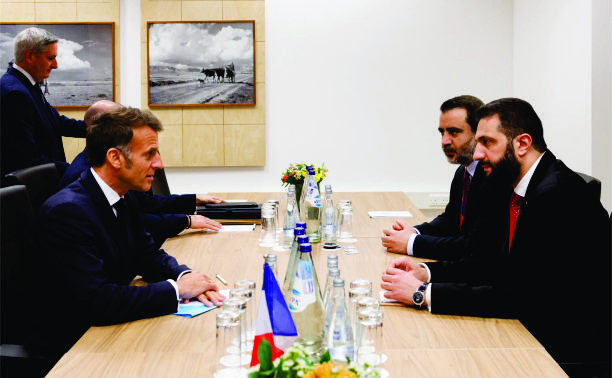
    INTERNATIONAL (NPA) — March 19, 2026 — French President Emmanuel Macron has called on the warring parties in the Middle East to open a path toward de‑escalation and restore stability in the region.

    Macron, in a statement released Thursday, urged the immediate implementation of a moratorium on strikes targeting civilian infrastructure, including water and energy facilities. He stressed that freedom and security of navigation must be restored, referencing the ongoing logjam in the Strait of Hormuz.

    He emphasised that as the region enters a period of religious celebrations and renewal, tempers must cool and fighting must cease to allow for the prospect of a negotiated and sustainable solution.

    Macron’s statement follows similar remarks by United Nations Secretary‑General António Guterres, who urged the United States, Israel, and Iran to halt hostilities and pave the way for dialogue. 

    Guterres warned that intensified attacks and counterattacks in Iran, Israel, and across the Gulf have already struck key energy installations, threatening both regional security and global energy supplies.

  • BREAKING: UN Secretary‑General calls for an end to Iran conflict for energy security

    BREAKING: UN Secretary‑General calls for an end to Iran conflict for energy security

    INTERNATIONAL (NPA) — March 19, 2026 — United Nations Secretary‑General António Guterres has called on the United States and Israel to end the war against Iran, while also urging Tehran to halt its attacks on neighbouring nations. He made the appeal on Thursday following his meeting with the European Council in Brussels.

    Guterres warned that the escalating conflict in the Middle East — particularly involving Iran, Israel, and the United States — poses grave risks to regional stability and global energy security, citing disruptions in the Strait of Hormuz as a critical concern. He stressed the importance of multilateralism and closer cooperation between the European Union, the United Nations, and global partners.

    The Secretary‑General urged restraint and diplomacy, calling for collective action to prevent further escalation and to safeguard humanitarian principles. He condemned the attacks on energy infrastructure in West Asia, warning of severe global economic consequences, and appealed for dialogue to restore peace, stability, and the free flow of goods and energy. His remarks echoed widespread concerns about blockades and rising oil prices.

    Guterres further called for stronger international cooperation to defend multilateralism and prevent additional humanitarian crises, insisting that only through unity and diplomacy can the region move toward lasting peace and security.

  • Modi, King Abdullah II discuss West Asia crisis, attacks on energy infrastructure

    Modi, King Abdullah II discuss West Asia crisis, attacks on energy infrastructure

    INTERNATIONAL (NPA) — March 19, 2026 — Indian Prime Minister Narendra Modi, on Thursday, held a phone conversation with His Majesty King Abdullah II of Jordan, during which he extended advance congratulations on the Blessed Eid al-Fitr.

    In the call, Prime Minister Modi expressed deep concern over developments in West Asia and reaffirmed the urgent need for dialogue and diplomacy to restore peace, security, and stability in the region. He condemned recent attacks targeting energy infrastructure, warning that such actions risk escalating an already destructive conflict.

    According to a statement released Thursday, Modi stressed that both India and Jordan support the free flow of goods and energy without obstacles, referencing the Iranian blockade and attacks on vessels in the Strait of Hormuz, which have negatively impacted global oil prices. He insisted that both nations stand firmly in support of unhindered transit of goods and energy across international waters.

    The Prime Minister also thanked King Abdullah II for Jordan’s efforts in facilitating the safe return of Indian citizens stranded in the region. He noted that the ongoing war involving the United States, Israel, and the Islamic Republic of Iran shows no concrete sign of ending, despite repeated international calls for diplomacy and dialogue among the parties.

  • Tinubu Urges UK to boost investment, security, and energy cooperation as King Charles III bids farewell

    Tinubu Urges UK to boost investment, security, and energy cooperation as King Charles III bids farewell

    ABUJA, NIGERIA (NPA) — March 19, 2026 — At Windsor Castle this morning, His Majesty King Charles III and Her Majesty Queen Camilla bid farewell to President Bola Ahmed Tinubu and Nigeria’s First Lady, Senator Oluremi Tinubu, marking the conclusion of Tinubu’s landmark state visit to England.

    During the State Banquet held in his honour, King Charles described the friendship between England and Nigeria as a “partnership of equals” that has strengthened shared security, boosted prosperity, and inspired hope for the future. He emphasised the deep cultural and spiritual ties between both nations, praising the contributions of Nigerians in Britain and stressing the importance of moving forward together with respect, trust, and shared purpose.

    On his part, President Tinubu called for stronger economic cooperation, greater investment in Nigeria’s energy, infrastructure, and technology sectors, and deeper collaboration on security. He urged enhanced defence and intelligence partnerships to combat terrorism, stressed the need for balanced migration policies, and sought UK support in skills development and renewable energy projects to drive Nigeria’s transition to sustainable power.

    Tinubu reaffirmed Nigeria’s commitment to the UK–Nigeria Strategic Partnership framework, emphasising shared humanity, cultural ties, and the importance of unity. He positioned Nigeria as a key partner for the UK in Africa, underlining that stronger bilateral ties would contribute to regional stability and prosperity. He also urged Nigerians abroad to be ambassadors of peace and progress, reminding them that their conduct reflects the nation’s values on the global stage.

  • President Trump honours fallen service members at solemn dignified transfer ceremony

    President Trump honours fallen service members at solemn dignified transfer ceremony

    NORTH AMERICA (NPA) — March 19, 2026 — U.S. President Donald Trump, on Wednesday, attended the dignified transfer ceremony for six American heroes who lost their lives in a refuelling plane crash in the war against the Islamic Republic of Iran. The solemn event took place at Dover Air Force Base in Delaware.

    The six servicemen honoured were Major John A. Klinner, Capt. Ariana G. Savino, Tech. Sgt. Ashley B. Pruitt, Capt. Seth R. Koval, Capt. Curtis J. Angst, and Tech. Sgt. Tyler H. Simmons.

    The dignified transfer ceremony paid tribute to their ultimate sacrifice and underscored the nation’s gratitude for their service. 

    The solemn military tradition in which the remains of U.S. service members killed in action are returned to American soil is conducted with full honours, symbolising respect and national appreciation. The ceremony typically takes place at Dover Air Force Base, where fallen troops are received by military personnel, family members, and sometimes national leaders before being prepared for burial.

  • BREAKING: Sweden confirms Execution of citizen in Iran amid war tensions

    BREAKING: Sweden confirms Execution of citizen in Iran amid war tensions

    Sweden’s Foreign Minister, Maria Malmer Stenergard, announced on Wednesday that Iran has executed a Swedish citizen. The announcement follows confirmation from Iranian officials that this marks the first execution of a man convicted of spying since the outbreak of the U.S.-Israeli war.

    Stenergard described the development as deeply troubling, noting that it underscores the heightened risks faced by foreign nationals in Iran during the ongoing conflict. The execution is expected to further strain diplomatic relations between Tehran and Stockholm, while adding to international concerns over Iran’s use of capital punishment in politically sensitive cases.