Category: International

  • U.S. launches “Project Freedom” to escort neutral ships through Strait of Hormuz

    U.S. launches “Project Freedom” to escort neutral ships through Strait of Hormuz

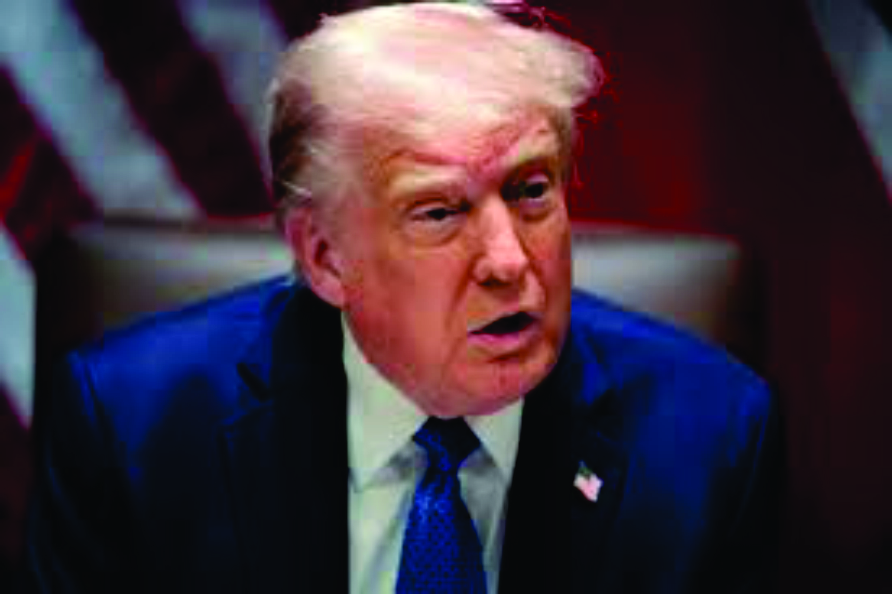
    INTERNATIONAL (NPA) — The President of the United States, Donald Trump, has announced that Washington will assist neutral countries in freeing their ships currently stranded in the Strait of Hormuz amid the heightened tensions in the Middle East.

    Trump said numerous nations, uninvolved in the ongoing regional dispute, had requested U.S. support to secure the safe passage of their vessels. He emphasized that the initiative, dubbed Project Freedom, is intended as a humanitarian gesture to protect neutral ships and crews caught in the crisis.

    According to the president, U.S. representatives have assured affected countries that their ships will be guided safely out of restricted waterways beginning Monday morning, Middle East time. He noted that discussions with Iran are ongoing and could yield positive outcomes for regional stability.

    Trump stressed that many of the stranded ships are running low on food and essential supplies, underscoring the humanitarian urgency of the operation. He described the effort as goodwill toward Iran, the Middle East, and the wider international community.

    The president warned that any interference with the humanitarian process would be met “forcefully,” while reiterating that the primary goal is to free neutral nations, companies, and crews who are “victims of circumstance” and have no involvement in the regional conflict.

  • U.S. warns shipping firms against paying Iran for Strait of Hormuz passage

    U.S. warns shipping firms against paying Iran for Strait of Hormuz passage

    WASHINGTON, United States (NPA) — The United States Department of the Treasury has warned shipping operators, financial institutions and maritime service providers against making payments to Iran for safe passage through the Strait of Hormuz, citing serious sanctions risks.

    In an alert issued on May 1, the Office of Foreign Assets Control (OFAC) said it had received reports of alleged Iranian threats to commercial shipping and demands for “toll” payments in exchange for secure transit through the strategic waterway.

    According to the advisory, the payments could take several forms, including fiat currency, digital assets, informal swaps, offsets and charitable donations allegedly directed to Iranian-linked organisations and embassy accounts.

    OFAC warned that both U.S. and non-U.S. entities could face sanctions exposure for participating in such transactions.

    The agency stated that U.S. sanctions generally prohibit American persons and U.S.-owned foreign entities from engaging in transactions involving the Government of Iran or the Islamic Revolutionary Guard Corps (IRGC), which Washington designates as a Foreign Terrorist Organization.

    The Treasury Department also cautioned that non-U.S. financial institutions involved in the transactions risk secondary sanctions that could restrict access to the American financial system. “Non-U.S. persons engaging with blocked Iranian digital asset exchanges may also risk sanctions for operating in or supporting the sanctioned Iranian financial sector,” the statement said.

    The advisory further warned insurers, reinsurers and other maritime-linked businesses that facilitating such payments could expose them to civil and criminal liability under U.S. sanctions laws.

    OFAC urged maritime service providers to conduct enhanced due diligence on vessels attempting to transit the Strait of Hormuz and to investigate possible dealings with Iranian authorities.

    The agency advised operators to examine voyage plans for signs of transit through Iranian territorial waters and seek details from counterparties regarding any safe-passage arrangements involving Iran.

    The U.S. government also reiterated that vessels entering or departing Iranian ports remain subject to multiple sanctions authorities targeting Iran’s shipping, petroleum and petrochemical sectors.

    Mariners were encouraged to coordinate with U.S. naval authorities, including the Fifth Fleet and NAVCENT NCAGS, for operational guidance in the region.

    The Strait of Hormuz remains one of the world’s most strategically important maritime chokepoints, handling a significant share of global oil and gas shipments amid rising geopolitical tensions in the Gulf region.

  • Reverend Dachomo decries killing of Christian family in Plateau as U.S. lawmakers move to restrict security aid to Nigeria

    Reverend Dachomo decries killing of Christian family in Plateau as U.S. lawmakers move to restrict security aid to Nigeria

    JOS, Nigeria (NPA) — Reverend Ezekiel Dachomo, Regional Leader of the Church of Christ in Nations (COCIN), has condemned the killing of an entire Christian family in Plateau State, describing it as yet another tragic example of persecution in Northern Nigeria.

    The victims — Rev. Ayuba Choji, his wife, and two children, Precious and Ishaya — were allegedly killed by radical Islamists on April 27, 2026, and laid to rest three days later in Kwi, Barkin Ladi Local Government Area. Their only surviving son managed to escape through a window during the attack.

    “My heart bleeds for Nigeria. How can you kill a man of God and his family just because of his choice of worship?” Dachomo lamented.

    In a statement on Friday, the cleric—who has been at the forefront of global awareness campaigns on the killing of Christians in Nigeria—urged citizens and the international community to resist indifference, stressing that families are breaking and faith is being tested. He called for justice, compassion, and an end to the cycle of violence.

    Meanwhile, in Washington, Representative Riley Moore, head of the U.S. Congressional Committee investigating alleged Christian genocide in Nigeria, criticized the Tinubu administration for allegedly spending millions lobbying Congress while failing to adequately address the crisis.

    Moore noted that the U.S. House of Representatives Appropriations Committee recently passed the annual State Department funding bill, which includes provisions restricting security assistance to Nigeria unless specific criteria are met. These includes effective response to violence and accountability for perpetrators, Prioritization of resources for internally displaced persons, and facilitation of safe return and resettlement of displaced communities.

    The bill requires the U.S. Secretary of State, Marco Rubio, to certify Nigeria’s compliance before half of the allocated funds can be released.

    The development adds to mounting international concern over violence against Christians in Nigeria, as local clerics and global lawmakers continue to call for urgent action to protect vulnerable communities and restore peace.

    The Nigerian government has consistently denied allegations of a Christian genocide, stressing that victims of terrorist attacks include Christians, Muslims, and animists alike. Officials argue that armed groups are indiscriminately targeting families and communities across the country, leaving widespread devastation in their wake.

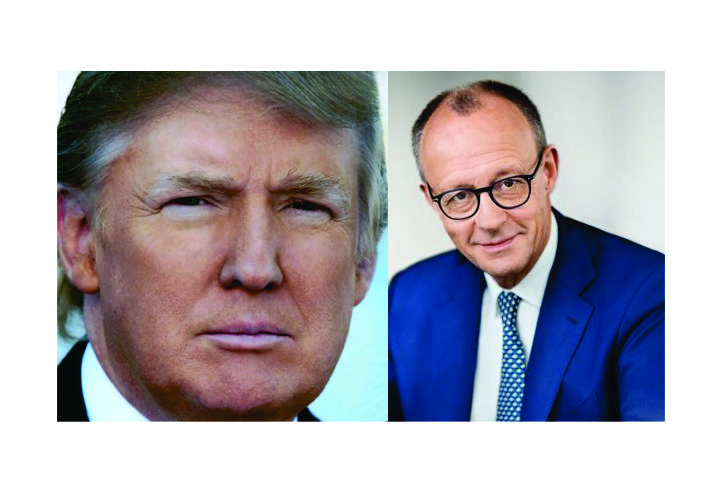
  • Trump intensifies feud with German Chancellor Merz over criticism of Iran war: “Fix your broken country”

    Trump intensifies feud with German Chancellor Merz over criticism of Iran war: “Fix your broken country”

    INTERNATIONAL (NPA) — President Donald Trump has intensified his public criticism of German Chancellor Friedrich Merz following disagreements over the United States’ stance and military actions against the Islamic Republic of Iran.

    Trump, in a series of posts on his Truth Social platform, expressed anger over Merz’s criticism of Washington’s approach toward Iran, accusing the German leader of interfering in matters relating to global security and nuclear threats.

    In his latest remarks, Trump urged the German Chancellor to focus more attention on resolving the Russia-Ukraine conflict, which he claimed Merz had been “totally ineffective” in handling, as well as addressing Germany’s domestic challenges, including immigration and energy concerns.

    Trump also defended his administration’s position on Iran, arguing that efforts to neutralize Tehran’s nuclear ambitions were making the world — including Germany — safer.

    “Spend more time fixing your broken country in the areas of immigration and energy, and less time interfering with those that are getting rid of the Iran nuclear threat,” Trump said.

    Earlier, the U.S. president accused Merz of tolerating the possibility of Iran acquiring nuclear weapons.

    “The Chancellor of Germany, Friedrich Merz, thinks it’s OK for Iran to have a Nuclear Weapon. He doesn’t know what he’s talking about,” Trump wrote.

    “If Iran had a Nuclear Weapon, the whole World would be held hostage,” he added.

    Trump further claimed that previous world leaders had failed to adequately confront Iran’s nuclear ambitions, insisting that his administration was taking necessary action that should have been implemented long ago.

    The American president also took aim at Germany’s economy, suggesting that the country’s current economic challenges reflected weak leadership.

    “No wonder Germany is doing so poorly, both economically and otherwise,” he stated.

    Meanwhile, Trump disclosed that the United States was reviewing the possibility of reducing American troop presence in Germany, adding that a final determination would be made in the near future. The latest exchange marks a further deterioration in relations between Washington and Berlin amid broader disagreements over Iran, European security and the ongoing Russia-Ukraine war.

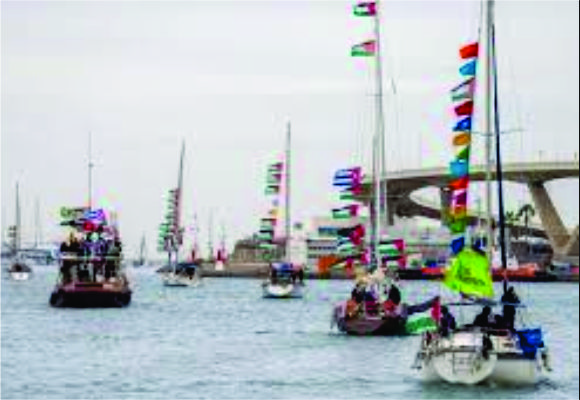
  • Israel intercepts Gaza‑bound flotilla, thanks Greece for cooperation

    Israel intercepts Gaza‑bound flotilla, thanks Greece for cooperation

    INTERNATIONAL (NPA) — The Israeli Government has announced that the Israeli Defense Force (IDF) successfully blocked what it described as attempts to breach the lawful naval blockade on Gaza, preventing the arrival of vessels from the latest flotilla, including one intercepted last night.

    Officials clarified that all participants removed from the vessels were taken off unharmed. In coordination with the Greek Government, Israel confirmed that those transferred from the flotilla will be disembarked on a Greek beach in the coming hours. Israel expressed gratitude to Greece for its cooperation and urged groups interested in humanitarian aid to Gaza to channel assistance through the Gaza Board of Peace (BOP)—an international body overseeing post‑war governance, reconstruction, and humanitarian coordination.

    The government noted that the BOP also issued a statement supporting Israel’s action, warning that breaches of the lawful naval blockade will not be permitted.

    The latest flotilla, known as the Global Sumud Flotilla, was intercepted near the Greek island of Crete in the eastern Mediterranean. Several vessels had departed from European ports including Marseille (France), Barcelona (Spain), and Syracuse (Italy), before converging en route to Gaza in an attempt to break the blockade.

  • U.S. sanctions 35 entities in crackdown on Iran’s shadow banking network

    U.S. sanctions 35 entities in crackdown on Iran’s shadow banking network

    WASHINGTON, D.C. (NPA) — The U.S. Department of the Treasury has imposed fresh sanctions on 35 entities and individuals linked to Iran’s shadow banking network, in a move aimed at disrupting financial channels used to evade sanctions and fund militant activities.

    The action, announced on April 28 by the Treasury’s Office of Foreign Assets Control (OFAC), targets networks accused of facilitating billions of dollars in illicit transactions tied to Iran’s oil trade and support for armed groups, including the Islamic Revolutionary Guard Corps.

    According to the Treasury, the shadow banking system enables Iran to access the global financial system, process payments for oil exports, procure sensitive materials for weapons programmes, and channel funds to allied groups across the Middle East.

    U.S. Treasury Secretary Scott Bessent said the measures form part of Washington’s broader “maximum economic pressure” campaign against Tehran.

    “Iran’s shadow banking system serves as a critical financial lifeline for its armed forces, enabling activities that disrupt global trade and fuel violence across the Middle East,” Bessent said, warning that financial institutions engaging with such networks risk severe penalties.

    The sanctions were issued under Executive Orders 13902 and 13224, which target Iran’s financial sector and counterterrorism-related activities. Officials said the designations build on earlier actions taken in January 2026 against similar networks.

    Central to the crackdown are so-called “rahbar” companies—private intermediaries that manage offshore shell firms used to move funds on behalf of sanctioned Iranian banks. These entities coordinate with exchange houses and front companies across multiple jurisdictions to facilitate payments linked to oil sales and other restricted trade.

    Among those targeted is Farab Soroush Afagh Qeshm Company, identified as a key facilitator for Shahr Bank, along with several affiliated firms and individuals accused of enabling illicit oil transactions and financial transfers.

    The Treasury also sanctioned multiple companies tied to major Iranian banks, including Bank Sepah, Bank Mellat, Bank Sina and Parsian Bank, citing their roles in supporting Iran’s financial operations and, in some cases, its missile programme.

    In addition, several front companies operating in jurisdictions such as the United Kingdom and Hong Kong were designated for allegedly helping process millions of dollars in oil-related payments.

    The action forms part of a wider U.S. effort under the National Security Presidential Memorandum-2 to curb Iran’s ability to generate revenue through sanctions evasion. Since February 2025, OFAC says it has sanctioned nearly 1,000 Iran-linked individuals, entities, vessels and aircraft.

    Alongside the designations, OFAC issued a warning to global financial institutions and maritime operators over potential sanctions risks associated with making transit-related payments to Iran, particularly involving passage through the Strait of Hormuz.

    Under the measures, all assets of designated individuals and entities within U.S. jurisdiction are frozen, and U.S. persons are prohibited from engaging in transactions with them. Foreign entities could also face penalties for facilitating dealings with sanctioned actors.

    The Treasury said the move is intended to increase economic pressure on Iran while limiting its capacity to fund activities viewed by Washington as destabilising to regional and global security.
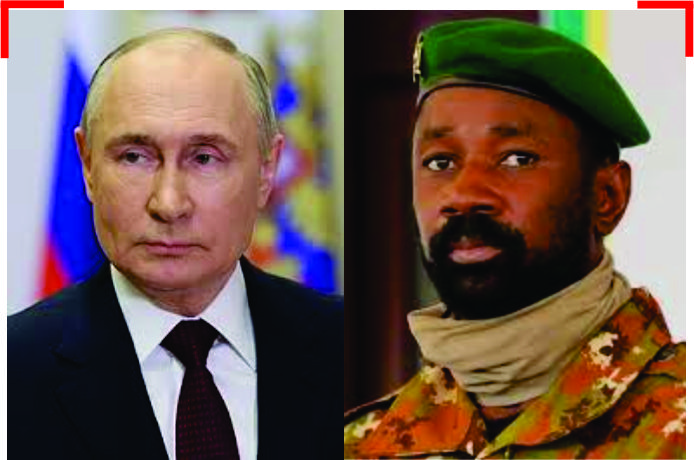
  • Russia details April 25 Mali terror attacks, blames Europe and Ukraine for training militants

    Russia details April 25 Mali terror attacks, blames Europe and Ukraine for training militants

    MOSCOW, Russia (NPA) — Russia has presented an account of the challenges faced by its military personnel in Mali during the April 25, 2026 terrorist assault, when militants nearly overran the country in a coordinated attack. According to a statement issued by the Russian Ministry of Foreign Affairs on Tuesday via its Telegram channel, the Ministry of Defence reported that at around 5:30 a.m., illegal armed groups of Jama’at Nusrat al‑Islam wal‑Muslimin (JNIM) and the Azawad Liberation Front (FLA), under joint command, attempted to carry out an armed coup d’état in Mali.

    Four major populated areas — Bamako, Sevare, Gao, and Kidal — were attacked simultaneously by an estimated 12,000 fighters, reportedly trained with the involvement of Ukrainian and European mercenary instructors using Western‑made Stinger and Mistral MANPADS.

    Russia said in Bamako, militants attempted to seize key facilities, including the presidential palace. Mali’s Defence Minister was killed when a suicide vehicle‑borne explosive device detonated near his residence.

    It noted that units of Russia’s African Corps engaged the enemy forces in fierce fighting, inflicting heavy losses and forcing militants to abandon their plans. Russian forces carried out UAV airstrikes, helicopter sorties, and Su‑24 combat missions, destroying hundreds of militants, vehicles, and equipment. The Ministry reported that enemy losses amounted to more than 2,500 fighters, 102 vehicles, 152 motorcycles, and multiple mortars.

    The African Corps detachment in Kidal fought encircled for over 24 hours, repelling four massive attacks before withdrawing alongside Malian forces.

    Russia emphasized that its intervention prevented a coup d’état, preserved Mali’s legitimate government, and averted mass civilian casualties. Medical specialists are providing aid to wounded civilians, while Russian units continue reconnaissance and strikes against regrouping militant forces.

    The Ministry warned that the situation in Mali remains difficult, with militants regrouping and maintaining aggressive intentions.

    Newpost Africa reported earlier that the African Union, Ghana and Senegal condemned the terrorists’ attacks with the President of the Confederation of Sahel States, Ibrahim Traoré, issuing a communiqué denouncing it.

    Yesterday, Mali’s Prime Minister, General Abdoulaye Maïga, said in a press conference that the ultimate goal of the terrorists was to seize power by dismantling the institutions of the Republic and halting the Transition process. He noted, however, that this had failed, stressing that the country remains on the path of progress.

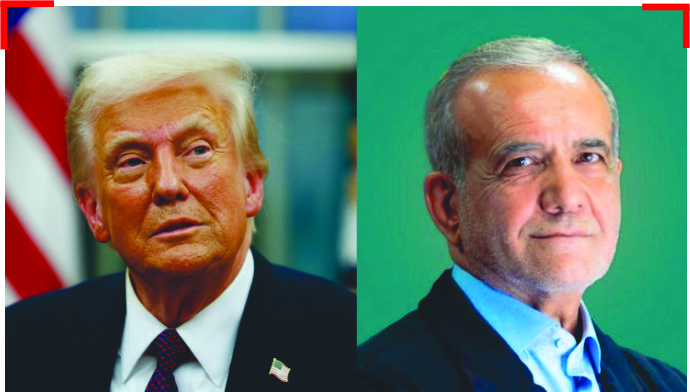
  • Donald Trump claims Iran in ‘State of Collapse,’ begging US to lift blockade

    Donald Trump claims Iran in ‘State of Collapse,’ begging US to lift blockade

    INTERNATIONAL (NPA) — United States President Donald Trump has claimed that Iran informed Washington it is in a “state of collapse” following escalating tensions linked to the blockade of the Strait of Hormuz.

    In a post on Truth Social, today, Trump said Iran is seeking the immediate reopening of the strategic waterway as it grapples with internal leadership challenges.

    “Iran has just informed us that they are in a ‘State of Collapse.’ They want us to ‘Open the Hormuz Strait,’ as soon as possible, as they try to figure out their leadership situation,” Trump wrote.

    The Strait of Hormuz, a vital global shipping route, has become central to the ongoing conflict, with disruptions to maritime activities significantly affecting international trade flows and energy supplies.

    The standoff in the Strait of Hormuz has triggered economic shocks across multiple regions, particularly in Africa. In Nigeria, the aviation sector is facing mounting pressure due to rising aviation fuel costs as well as the pump price of premium motor spirit, while other markets, including Kenya, are experiencing sharp economic imbalances linked to soaring petroleum prices.

    Efforts to de-escalate tensions appear stalled, as planned talks between the United States and Iran over the weekend were reportedly cancelled at the last minute, with both sides showing limited willingness to advance negotiations.

    The continued uncertainty has heightened concerns over global economic stability, as markets closely watch developments in the region.

  • Amnesty International condemns Russia’s extremist labeling of LGBTI groups

    Amnesty International condemns Russia’s extremist labeling of LGBTI groups

    INTERNATIONAL (NPA) — Amnesty International has condemned a ruling by the St. Petersburg City Court designating the Russian LGBT Network an “extremist organisation,” warning that the decision deepens state‑led persecution of LGBTI people in Russia.

    The rights group noted this is the third such ruling within a month, following similar designations against Coming Out and the LGBT Resource Centre in March. The Russian government had already labelled the so‑called “international LGBT movement” as “extremist” in 2023, a move Amnesty says entrenched systemic discrimination.

    In a statement, Amnesty urged Russian authorities to immediately stop misusing anti‑extremism legislation to repress LGBTI people, reverse homophobic policies, and guarantee rights in line with international human rights law.

    The group further called for the abolition of discriminatory legislation and stressed that the rulings represent a dangerous escalation in Russia’s campaign against sexual minorities.

  • NATO concludes Locked Shields 2026 cyber drill as 41 nations test defences against rising threats

    NATO concludes Locked Shields 2026 cyber drill as 41 nations test defences against rising threats

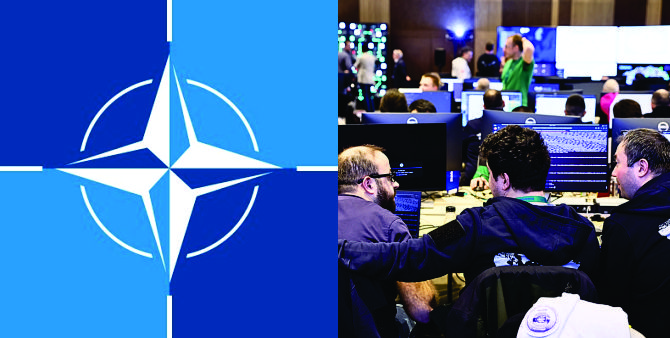
    TALLINN, Estonia (NPA) — The North Atlantic Treaty Organization (NATO) Cooperative Cyber Defence Centre of Excellence (CCDCOE) has concluded its flagship cyber defence exercise, Locked Shields 2026, bringing together thousands of experts from across the globe to test responses to large-scale cyber threats.

    The exercise, described as the world’s largest live-fire cyber defence drill, involved more than 4,000 participants from 41 nations who simulated real-time attacks targeting critical infrastructure, military systems, air defence networks and electronic voting platforms.

    According to CCDCOE Director Tõnis Saar, the exercise pushed teams to defend systems essential to everyday life while confronting increasingly sophisticated cyber threats.

    “At Locked Shields, teams must protect the IT systems that keep our everyday life running… The key now is to translate lessons learned into real-world readiness, especially as artificial intelligence transforms both cyber defence and attacks,” Saar said.

    Participants were grouped into 16 multinational teams, with top-performing teams emerging from Latvia and Singapore, followed by a joint team comprising Germany, Austria, Luxembourg and Switzerland, and another representing France and Sweden.

    Exercise Director Dan Ungureanu said the initiative aims to strengthen cooperation and build trust among nations in defending cyberspace.

    “Our ultimate goal is to enhance collaboration between nations and build a shared understanding of how to strengthen resilience,” he said, commending nearly 5,000 contributors worldwide.

    Also speaking, Estonia’s Minister of Defence Hanno Pevkur highlighted the growing complexity of cyber threats, noting that the exercise reflects real-world challenges facing governments and security institutions.

    He said Estonia remains committed to hosting the exercise and fostering international cooperation in cyber defence.

    Organised annually since 2010 by the CCDCOE in partnership with industry and academic institutions, Locked Shields remains a key platform for improving global preparedness against evolving cyber threats.