
U.S. sanctions 35 entities in crackdown on Iran’s shadow banking network
WASHINGTON, D.C. (NPA) — The U.S. Department of the Treasury has imposed fresh sanctions on 35 entities and individuals linked to Iran’s shadow banking network, in a move aimed at disrupting financial channels used to evade sanctions and fund militant activities.
The action, announced on April 28 by the Treasury’s Office of Foreign Assets Control (OFAC), targets networks accused of facilitating billions of dollars in illicit transactions tied to Iran’s oil trade and support for armed groups, including the Islamic Revolutionary Guard Corps.
According to the Treasury, the shadow banking system enables Iran to access the global financial system, process payments for oil exports, procure sensitive materials for weapons programmes, and channel funds to allied groups across the Middle East.

U.S. Treasury Secretary Scott Bessent said the measures form part of Washington’s broader “maximum economic pressure” campaign against Tehran.
“Iran’s shadow banking system serves as a critical financial lifeline for its armed forces, enabling activities that disrupt global trade and fuel violence across the Middle East,” Bessent said, warning that financial institutions engaging with such networks risk severe penalties.
The sanctions were issued under Executive Orders 13902 and 13224, which target Iran’s financial sector and counterterrorism-related activities. Officials said the designations build on earlier actions taken in January 2026 against similar networks.
Central to the crackdown are so-called “rahbar” companies—private intermediaries that manage offshore shell firms used to move funds on behalf of sanctioned Iranian banks. These entities coordinate with exchange houses and front companies across multiple jurisdictions to facilitate payments linked to oil sales and other restricted trade.
Among those targeted is Farab Soroush Afagh Qeshm Company, identified as a key facilitator for Shahr Bank, along with several affiliated firms and individuals accused of enabling illicit oil transactions and financial transfers.
The Treasury also sanctioned multiple companies tied to major Iranian banks, including Bank Sepah, Bank Mellat, Bank Sina and Parsian Bank, citing their roles in supporting Iran’s financial operations and, in some cases, its missile programme.
In addition, several front companies operating in jurisdictions such as the United Kingdom and Hong Kong were designated for allegedly helping process millions of dollars in oil-related payments.
The action forms part of a wider U.S. effort under the National Security Presidential Memorandum-2 to curb Iran’s ability to generate revenue through sanctions evasion. Since February 2025, OFAC says it has sanctioned nearly 1,000 Iran-linked individuals, entities, vessels and aircraft.
Alongside the designations, OFAC issued a warning to global financial institutions and maritime operators over potential sanctions risks associated with making transit-related payments to Iran, particularly involving passage through the Strait of Hormuz.
Under the measures, all assets of designated individuals and entities within U.S. jurisdiction are frozen, and U.S. persons are prohibited from engaging in transactions with them. Foreign entities could also face penalties for facilitating dealings with sanctioned actors.
The Treasury said the move is intended to increase economic pressure on Iran while limiting its capacity to fund activities viewed by Washington as destabilising to regional and global security.

Netanyahu condemns Houthi’s missile strike on Riyadh Airport as death toll reaches 12

Media Freedom Coalition demands justice 20 years after Anna Politkovskaya’s assassination
Former US federal employee pleads guilty to $194 million government fraud scheme
Rubio says US will never forget October 7 Hamas barbaric attack on Israel
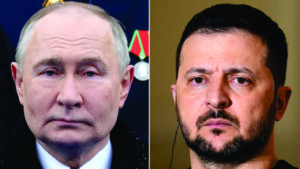
Russia accuses Ukraine of attacks on Zaporizhzhia nuclear power plant

German Chancellor Friedrich Merz visits Kyiv as Zelenskyy reports Russian drone strikes across Ukraine

27% of EU young people lived in overcrowded homes in 2025 — Eurostat
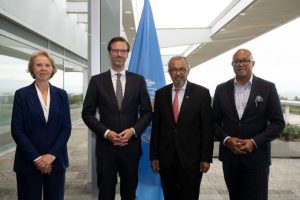
WHO, Netherlands strengthen partnership on Ebola, global health security and emergency response
- Tinubu commissions NRS Headquarters, says new tax reforms will drive prosperity
- Tinubu assures investors of regulatory stability as Ogun, DP World sign $7bn port, SEZ MoUs
- Climate change anxiety is rising — and so is the willingness to act on it
- Ohaukwu LG Chairman Ituma breaks ground for modern diagnostic centre, blood bank
- Baseball boosts TBS, NFL gives ESPN a kick and streamers love ‘Squid’
Community Discussion