Category: Africa

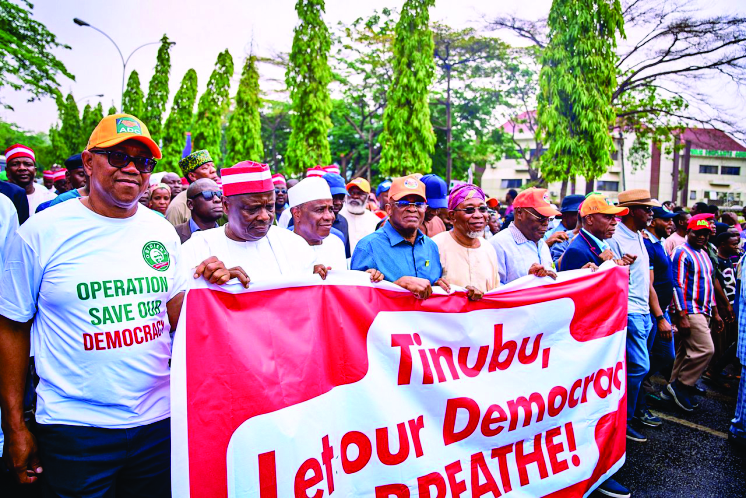
  • ‘Standing Up for Democracy’ Protest: Obi insists people’s will must prevail

    ‘Standing Up for Democracy’ Protest: Obi insists people’s will must prevail

    ABUJA, Nigeria, 8 April 2026 (NPA) — Peter Obi, a presidential aspirant and leader of the African Democratic Congress (ADC), has cautioned that history will not be kind to those who traded the struggle for democracy for the comfort of power.

    Speaking after joining ADC leaders in a protest at the Independent National Electoral Commission (INEC) headquarters, Obi declared: “We will not remain silent, we will not be intimidated, and we will not surrender the future of this nation. The will of the people must prevail—stronger, louder, and impossible to suppress.”

    The demonstration was organised to demand that INEC reverse its decision to deregister the ADC, citing ongoing court proceedings.

    Other prominent figures at the protest included Atiku Abubakar, former Vice President of Nigeria; Rabiu Kwankwaso, former Governor of Kano State; Rotimi Amaechi, former Governor of Rivers State; David Mark, former Senate President and ADC National Chairman before INEC’s derecognition; Rauf Aregbesola, former Governor of Osun State and ADC National Secretary before INEC’s decision; and Aminu Tambuwal, former Governor of Sokoto State, among others.

    In his statement titled “Standing Up for Democracy”, Obi described the protest as not only a defence of democracy but also a reflection on how far the nation has fallen. He urged Nigerians to resist attempts to suffocate democratic freedoms by those who once claimed to have sacrificed for them but now seek to undermine opposition.


  • South Africa strengthens HIV prevention with Lenacapavir

    South Africa strengthens HIV prevention with Lenacapavir

    PRETORIA, SOUTH AFRICA, 8 April 2026 (NPA) — The South African Government has received its first consignment of 37,920 doses of Lenacapavir, a groundbreaking long-acting injectable that offers up to six months of protection against HIV with just two injections per year.

    This milestone marks a significant advance in the country’s HIV response, expanding prevention options particularly for adolescent girls, young women, sex workers, and men who have sex with men. The introduction of Lenacapavir is expected to accelerate efforts to reduce new HIV infections and support South Africa’s goal of ending AIDS as a public health threat by 2030.

    Lenacapavir is not a vaccine but a long-acting HIV prevention medicine. Administered twice yearly, it provides continuous protection and offers a convenient alternative for individuals who face challenges with existing prevention methods.

    The Government emphasised that the rollout of Lenacapavir strengthens its integrated, people-centred approach to HIV prevention. The six-monthly injectable is expected to improve adherence and expand choices for high-risk populations.

    An official launch will be announced in the coming weeks, including details of a phased implementation plan to ensure effective and equitable distribution across the country.

  • Obi questions credibility of ₦3.3 trillion power debt payment

    Obi questions credibility of ₦3.3 trillion power debt payment

    ABUJA, NIGERIA, 7 April 2026 (NPA) — A senior figure in the African Democratic Congress (ADC) and a presidential aspirant, Mr Peter Obi, has criticised the Federal Government’s latest approval of ₦3.3 trillion to settle accumulated power sector debts.

    In a statement today, titled “Let us reflect, sincerely and without sentiment”, Obi noted that this is not the first such announcement. He recalled that on 17 May 2024, ₦3.3 trillion was approved for the same purpose, followed by another ₦4 trillion bond on 25 July 2024. Several other approvals have been made in between, all ostensibly aimed at addressing the same liabilities.

    “This raises a fundamental question: were the previous approvals mere announcements without execution?” Obi asked.

    During the 2023 campaign, President Bola Ahmed Tinubu pledged that if he failed to deliver stable electricity, Nigerians should not re-elect him. Yet, power supply has deteriorated further, with reports even suggesting that the Presidential Villa may be disconnected from the national grid.

    Obi argued that repeated approvals appear more like policy pronouncements than genuine progress. He stressed that the debts were largely accumulated under successive APC administrations between 2015 and 2025, raising serious concerns about accountability, transparency, and financial management.

    He pointed out that government institutions, including the Presidential Villa, owe a significant portion of these debts. “Year after year, budgets were made and funds appropriated. Why then were these obligations not settled when due? And from what source will this new payment be made? Are we resorting once more to borrowing to service inefficiencies?”

    Key questions, Obi said, remain unanswered:

    • How did the debt accrue?
    • What is the actual total debt in the power sector?
    • Which components are due to operators’ inefficiency and should be borne by them?
    • Why have previous approvals not translated into tangible improvements?
    • Who are the real beneficiaries of these repeated payments?

    Obi concluded: “Nigeria must move beyond recycled announcements and confront the power sector crisis with sincerity, transparency, and decisive reforms. Until we do so, we will remain trapped in a cycle of debt and darkness. But with discipline, accountability, and the right leadership, a new Nigeria is still possible.”

  • UN marks 32nd anniversary of Rwanda Genocide amid rising ethnic hatred across Africa

    UN marks 32nd anniversary of Rwanda Genocide amid rising ethnic hatred across Africa

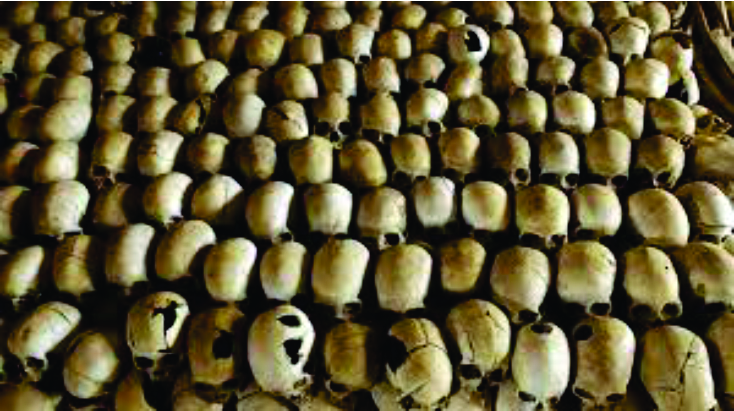
    INTERNATIONAL, April 7, 2026 (NPA) — Today, the world observes the International Day of Reflection on the 1994 Genocide Against the Tutsi in Rwanda. This solemn occasion marks 32 years since one of the darkest chapters in human history, when more than one million people — overwhelmingly Tutsi, but also Hutu and others who opposed the killings — were systematically murdered in less than three months.

    The United Nations commemorates this day with events at its Headquarters in New York and offices worldwide, honouring the victims and reflecting on the resilience of survivors.

    At the 31st anniversary commemoration in 2025, Ms Germaine Tuyisenge Müller shared her harrowing story of survival. At just nine years old, she was left alone for two months after neighbours abandoned her during the genocide. Her testimony underscores the enduring trauma and strength of survivors.

    In September 2024, the Republic of Rwanda gifted the UN the Kwibuka Flame of Hope statue, installed in the north garden of UN Headquarters. The flame symbolises resilience and courage in the face of hate speech, misinformation, and ethnic division that fueled the genocide.Since 1994, the UN has played a central role in Rwanda’s reconstruction. Through the One UN framework, 22 agencies coordinate efforts under a single leader, budget, and program to advance the Sustainable Development Goals. Between 2018 and 2023, the UN invested approximately $631 million in Rwanda’s development initiatives.

  • Africa CDC appoints Osinbajo as Senior Strategic Adviser

    Africa CDC appoints Osinbajo as Senior Strategic Adviser

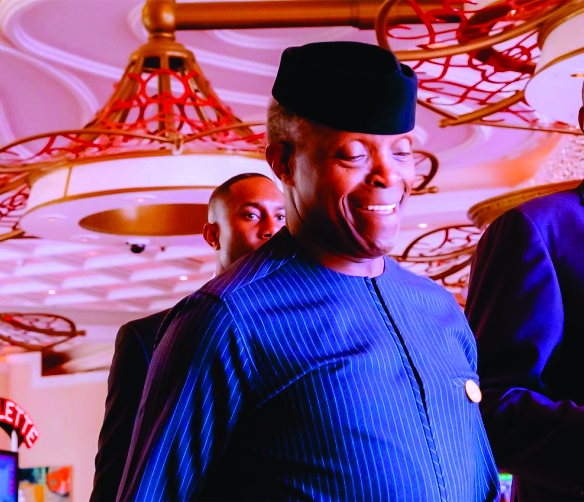
    ABUJA, April 7, 2026 (NPA) — The Africa Centres for Disease Control and Prevention (Africa CDC) has appointed former Vice-President Yemi Osinbajo as Senior Strategic Adviser to Director-General Jean Kaseya, reinforcing leadership capacity for continental health priorities.

    The announcement was made by Margaret Edwin, Director of Communication and Public Information at Africa CDC, in a statement issued Monday.

    Edwin explained that the appointment aligns with the Africa Health Security and Sovereignty Agenda, which seeks to strengthen Africa’s voice in global health, boost domestic financing, and expand local production of health commodities.

    She said Osinbajo would advise on Africa’s positioning in global health architecture reforms, sustainable health financing, local manufacturing, and building strategic partnerships to advance continental health resilience and cooperation.

    Edwin added that the former vice-president brings exceptional experience across governance, finance, law, and diplomacy, noting that his leadership would be critical as Africa seeks greater authority in shaping its health future. “This appointment reflects Africa CDC’s commitment to mobilising African leadership of the highest calibre in service of the continent’s health security, sovereignty, and development,” she said.

    She further noted that Osinbajo’s experience in public policy and governance would support efforts to build resilient health systems across African Union member states, particularly in pandemic preparedness, prevention, and response initiatives.

    The News Agency of Nigeria (NAN) reports that Osinbajo, a Professor of Law and Senior Advocate of Nigeria, served as Nigeria’s vice-president from 2015 to 2023, contributing to policy and governance reforms during his tenure.

    He also served as Attorney General and Commissioner for Justice in Lagos State, where he played significant roles in legal administration and institutional reforms.

    During his time in government, he chaired Nigeria’s Economic Sustainability Committee, led ease-of-doing-business reforms, and advanced social investment programmes, while coordinating key economic policies across multiple sectors nationwide to drive inclusive grow.

  • ADC warns INEC’s decision could jeopardise 2027 participation

    ADC warns INEC’s decision could jeopardise 2027 participation

    ABUJA, April 7, 2026 (NPA) — The African Democratic Congress (ADC) has raised alarm that the Independent National Electoral Commission’s (INEC) decision to stop receiving its correspondence pending a Federal High Court ruling could jeopardise its participation in the 2027 elections.

    The party’s National Publicity Secretary, Malam Bolaji Abdullahi, in a statement issued in Abuja on Monday, said INEC sits at the centre of the emerging crisis.

    Abdullahi explained that while the commission’s action might appear procedural, it directly conflicts with timelines in the Electoral Act 2026, which provides defined compliance windows, including the mandatory 21-day notice period and subsequent submission requirements for political parties.

    “This has revealed the deliberate administrative landmines being deployed by INEC to prevent the party from fielding candidates in the upcoming elections,” Abdullahi said. He added that documentary evidence, including certified INEC records, attendance logs, monitoring reports, and excerpts from the commission’s sworn affidavit, establish a clear record of events.

    He noted that INEC monitored the ADC’s July 29, 2025 NEC meeting, documented proceedings, updated records, and recognised the new leadership, including Senator David Mark and Rauf Aregbesola. “These are not claims. They are facts contained in INEC’s own records,” he stressed.

    Abdullahi argued that leadership transition had already been completed and recognised, and such internal party matters fall outside judicial interference. “Yet, despite this clear documentary trail, INEC has now taken the position that it will no longer receive any correspondence from the ADC. This is where the contradiction becomes dangerous,” he said.

    He further noted that INEC had fixed May 10 as the submission deadline, but its refusal to accept ADC correspondence within that period could block compliance with statutory requirements. “This places the ADC in an impossible position and creates a clear pathway to artificial non-compliance, which can justify excluding the party from fielding candidates,” Abdullahi warned.

    He added that INEC claimed its April 1 decision was taken to avoid rendering proceedings before the Federal High Court nugatory. “The reality is the opposite. By intervening in a matter already before the court, the commission has undermined the very process it claims to protect,” he said.

    The spokesman urged INEC to reverse its position, resume accepting lawful correspondence, and uphold its constitutional duty to ensure fairness and a level playing field.

  • SWEDD Empowered young women driving change through skills and jobs in West and Central Africa

    SWEDD Empowered young women driving change through skills and jobs in West and Central Africa

    INTERNATIONAL, April 6, 2026 (NPA) — From potential to skills and real jobs, young women across Western and Central Africa are reshaping their futures through training and employment opportunities provided by the Sub-Saharan Africa Women’s Empowerment and Demographic Dividend project (SWEDD/SWEDD+).

    Since its inception in 2015, the initiative has reached nearly 3 million women and adolescent girls, linking education, skills development, and access to health services with real economic pathways. More than 255,000 participants have acquired practical skills and transitioned into stable employment, showing how investment in women’s education and workforce participation strengthens families, communities, and local economies.

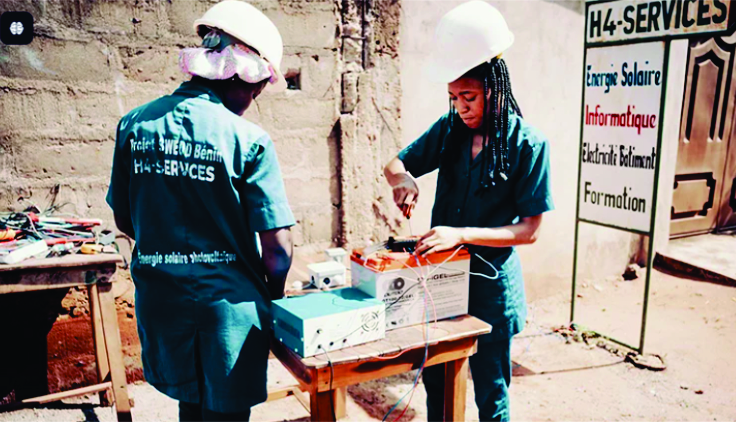
    Across the region, stories of transformation abound. In Benin, Angelique and Odette, who left school early due to financial hardship, were trained in solar photovoltaic installation through SWEDD. Today, they work with a private company, installing solar panels and bringing renewable energy to rural villages. “Now we’re motivated and earning money to support our families. We’re happy to bring solar energy to the villages,” Angelique said, her pride evident.

    Harmelle, also from Benin, faced similar challenges after leaving school at 14 and becoming a widow at a young age. With her twin sister, she joined a SWEDD entrepreneurship program in snail farming. The training and starter kit provided not only income but also stability. “When I started farming, there were difficulties, but then we began earning money, and everyone was better off,” she recalled.

    In Chad, Djogoita pursued midwifery, inspired by her father’s service as a police officer. Her training now allows her to provide essential maternal and child health services. “When they bring me a pregnant woman or a child, I can use the knowledge I gained to help them,” she said proudly, highlighting the confidence and purpose her new role has given her.

    These individual stories reflect a broader shift. While about 40% of young women in West and Central Africa remain outside school, training, or employment, SWEDD+ is changing trajectories by expanding opportunities, building confidence, and strengthening institutional capacity for equal rights.

    The World Bank Group emphasizes that investing in women is one of the smartest economic bets for powering local economies. By equipping young women with relevant skills and connecting them to jobs, programs like SWEDD+ turn human potential into productive employment that fuels inclusive and sustainable growth.

    As the activities marking the International Women’s Month wind down, the voices of Angelique, Odette, Harmelle, and Djogoita is a remind that Africa’s future resilience is already taking shape — one empowered young woman at a time, trained, employed, and determined to drive change in her community.

  • Tinubu’s Senior Adviser responds to Obi’s camp over ADC leadership crisis

    Tinubu’s Senior Adviser responds to Obi’s camp over ADC leadership crisis

    ABUJA, NIGERIA, April 6, 2026 (NPA) — The Special Adviser on Information and Strategy to President Bola Ahmed Tinubu has issued a statement titled “My response to Peter Obi’s media people,” questioning why what he described as “incompetent politicians” are attacking the President over INEC’s delisting of ADC leadership from its portal.

    Onanuga stressed that President Tinubu has no involvement in Obi’s departure from the Labour Party or the challenges he now faces in the ADC.

    He argued that Obi used the Labour Party to contest the presidency in 2023 but abandoned it afterward, failing to demonstrate leadership in resolving its internal crisis. Instead, he leaned on the IPOB-linked Obidient movement, which Onanuga described as “more active online than on the ground.” He added: “You would think the man would transform the movement into a political party. But no, he didn’t. He is incapable of building an organic party of his own.”

    Onanuga further claimed that Obi, aware he needed a political structure to pursue his presidential ambitions, moved to the ADC, which he alleged was “an SPV bought by Atiku Abubakar from Ralph Nwosu.” According to him, no due diligence was carried out, leading to the crisis now confronting the party.

    The statement reads in part: “What is the connection of Tinubu with the ADC crisis? Absolutely none. Whatever problem they have is self-inflicted. Obi and his co-travellers need to get their acts together, clear the mess in their new party and then compete for the presidential ticket. As of now, Obi, without being made a candidate, is inconsequential for 2027. The fact that he came third in 2023 does not mean he will have the same showing in 2027, if he ever becomes a candidate of any party. 2023 is not like 2027. President Tinubu is an incumbent with many achievements to flaunt, most of which Obi has been blind to acknowledge.”

    Onanuga concluded by insisting that all accusations against President Tinubu were baseless, describing them as “sheer baloney” and an unfair attempt to undermine his democratic credentials.

  • ADC youth wing issues 3-day ultimatum to INEC to restore Senator David Mark, others to portal

    ADC youth wing issues 3-day ultimatum to INEC to restore Senator David Mark, others to portal

    ABUJA, NIGERIA, April 6, 2026 (NPA) — The youth wing of Nigeria’s opposition party, African Democratic Congress (ADC), has given the Independent National Electoral Commission (INEC) a three-day ultimatum to restore democracy or face nationwide civic action, following the delisting of the Senator David Mark and Rauf Aregbesola-led ADC leadership from its portal last on April 1, 2026, citing a Court ruling. 

    At a press conference in Abuja, Balarabe Rufai, ADC National Youth Leader, declared Nigeria is under democratic siege. He said what should have been 27 years of uninterrupted civil rule is now being undermined by institutions meant to protect it.

    “This is not a warning, this is a crisis,” Rufai said, quoting Mallam Aminu Kano’s warning that democratic humanism can only be built on the ruins of a corrupt system.

    The ADC recalled that on July 29, 2025, it held a lawful NEC meeting under INEC supervision, dissolving the previous National Working Committee and producing new leadership led by Senator David Mark. INEC verified and uploaded this leadership on September 9, 2025, with no dispute or objection.

    Months later, individuals who had resigned resurfaced to challenge the process. While the matter remains in court, the Court of Appeal ordered a return to the last uncontested position — the David Mark-led leadership. The ADC accused INEC of ignoring facts, misinterpreting court orders, and acting beyond its constitutional authority.

    The youth wing urged the National Assembly to investigate and, if necessary, remove the INEC Chairman, stressing that democracy must be defended with action. It also called on the Judiciary to clarify its orders and protect the integrity of Nigeria’s legal system.

    The group emphasized that the military must remain neutral, warning against force in civic matters. To Nigeria’s youth, it declared: “This is about our future, our voice, our democracy. Together, let’s defend it or lose everything it represents.”

    The ADC insisted that the July 29, 2025 leadership under Senator David Mark remains the only legitimate leadership and demanded INEC restore it immediately and apologize to Nigerians.

  • Botswana’s President Boko embarks on working visit to France and Spain

    Botswana’s President Boko embarks on working visit to France and Spain

    GABORONE, BOTSWANA, April 6, 2026 (NPA) — President Duma Gideon Boko of Botswana will undertake a Working Visit to France and Spain from April 6 to 11, 2026.

    In France, President Boko will participate in the One Health Summit on April 7, coinciding with World Health Day. Hosted by the French Government under the G7 Presidency, the Summit will bring together Heads of State, international organisations, scientists, private sector leaders, youth, and civil society to deliberate on human, animal, plant, and ecosystem health, and explore coordinated approaches to shared global health threats.

    According to a government statement, President Boko will join a High-Level Panel under the theme “Governance, Science and Finance.” His intervention will highlight Botswana’s One Health policy framework and its role in promoting health security, economic resilience, and sustainable development. He will also hold bilateral talks with French President Emmanuel Macron and engage business leaders on trade and investment opportunities in Botswana.

    The visit will continue in Spain on April 9, where President Boko will advance Botswana’s economic diplomacy agenda, supporting national revitalisation and diversification efforts. He will also hold bilateral talks with Spanish Prime Minister Pedro Sánchez Pérez-Castejón to strengthen cooperation between the two nations.

    President Boko will be accompanied by Minister of International Relations Dr. Phenyo Butale, Minister of Health Dr. Stephen Modise, Acting Minister of Lands and Agriculture Dr. Edwin Dikoloti, and senior government officials.

    The delegation is expected to return to Gaborone on April 11, 2026.