Category: Africa

  • CAF General Secretary resigns as AFCON 2025 controversies refuse to end

    CAF General Secretary resigns as AFCON 2025 controversies refuse to end

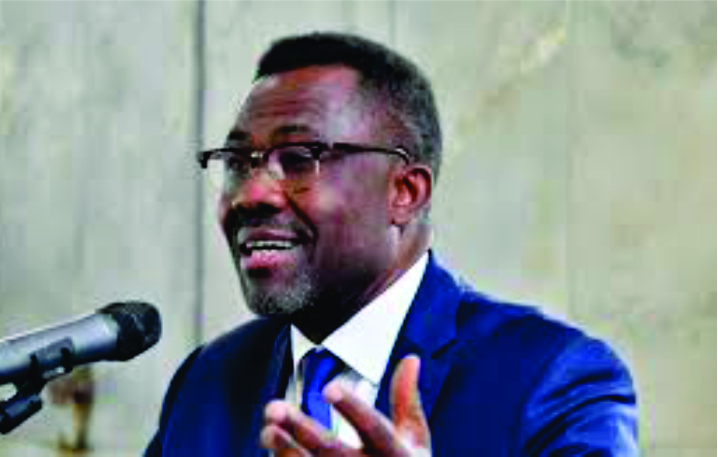
    SPORTS, 30 March 2026 (NPA) — The general secretary of the Confederation of African Football (CAF), Veron Mosengo‑Omba, has resigned during a turbulent period for African football.

    In a statement on Sunday, Mosengo‑Omba said he was retiring, but his departure comes amid controversy over CAF’s decision to strip Senegal of the 2025 Africa Cup of Nations (AFCON) title and postpone the women’s tournament at the last minute. These incidents have left CAF battling a crisis of confidence.

    “Now that I have been able to dispel the suspicions cast on me, I can retire with peace of mind, leaving CAF more prosperous than ever,” wrote Mosengo‑Omba, deputy to CAF president Patrice Motsepe.

    The 66‑year‑old, who hails from the Democratic Republic of Congo and also holds Swiss nationality, was appointed in March 2021. He faced criticism for staying on past CAF’s mandatory retirement age of 63 and was accused of creating a toxic workplace, though an investigation cleared him of wrongdoing.

    Meanwhile, CAF’s Appeals Board has declared Morocco the winner of AFCON 2025 after Senegal staged a walkout during the final. Applying Articles 82 and 84 of the regulations, CAF ruled Senegal forfeited the match, recording a 3–0 victory for Morocco. Several fines against Morocco were reduced, but disciplinary sanctions were upheld in part.

    Senegal has rejected the ruling, calling it unfair and unprecedented. In a statement on March 17, the Senegalese Football Federation announced plans to appeal to the Court of Arbitration for Sport (CAS) in Lausanne, pledging to defend its rights and the integrity of Senegalese football.

  • CAF launches sweeping reforms to restore trust after AFCON 2025 controversy

    CAF launches sweeping reforms to restore trust after AFCON 2025 controversy

    SPORTS, 30 March 2026 (NPA) — The Confédération Africaine de Football (CAF) has announced far‑reaching reforms to its Statutes and Regulations aimed at strengthening trust in referees, VAR operators, and judicial bodies. The measures are designed to prevent a repeat of the incidents that marred the Final Match of the TotalEnergies CAF Africa Cup of Nations (AFCON) Morocco 2025.

    CAF noted that referees and VAR operators at AFCON Côte d’Ivoire 2023 earned widespread praise, and the new reforms seek to restore that level of credibility. The organisation reaffirmed its commitment to appointing Africa’s most respected judges and lawyers to the CAF Disciplinary Board and Appeal Board, ensuring independence and impartiality.

    CAF President Dr Patrice Motsepe said the reforms are backed by legal advice from African and international football experts to align with global best practices. “These changes will strengthen confidence in referees, VAR operators, match commissioners, and judicial bodies. They will also ensure that the unacceptable incidents at AFCON Morocco 2025 do not happen again,” he stated.

    Motsepe added that CAF is working with FIFA to provide ongoing training for referees, VAR operators, and match commissioners, while also pushing for their professionalisation and fair remuneration. He highlighted CAF’s progress in governance, ethics, transparency, and managerial best practices, stressing its zero‑tolerance stance on corruption and improper behaviour.

    “Our commitment to fairness and equal treatment of all Member Associations is non‑negotiable,” Motsepe said. “No association will be favoured above another. CAF will continue to review and improve governance standards to strengthen the global competitiveness of African football.”

    The matters relating to the AFCON 2025 final are currently before the Court of Arbitration for Sport (CAS). Meanwhile, CAF’s focus has shifted to the Confederation Cup, Champions League, and preparations for African nations competing in the FIFA World Cup 2026 in the United States. Motsepe expressed confidence that Africa’s representatives will make the continent proud.

  • Global migration crisis: 22 migrants die off Greek coast 

    Global migration crisis: 22 migrants die off Greek coast 

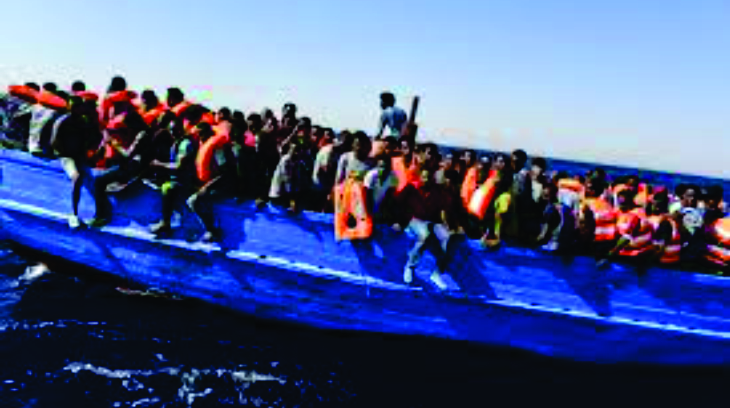
    INTERNATIONAL, 29 March 2026 (NPA) — At least 22 migrants have died this week off the Greek coast after spending six harrowing days adrift in a dinghy bound for Europe. A total of 26 survivors, including a woman and a child, were rescued on Friday by a European border agency vessel and taken to a hospital in Heraklion, Crete.

    Reports indicate the boat departed Tobruk in eastern Libya on 21 March, but poor weather, combined with a lack of food and water, contributed to the deaths, according to the Greek coastguard.

    This tragedy comes against the backdrop of alarming global statistics. In 2025, the International Organization for Migration (IOM) recorded 7,667 migrant deaths or disappearances worldwide, with Africa’s sea routes among the deadliest. The Mediterranean crossing alone claimed 2,108 lives, while another 1,047 migrants perished attempting to reach Spain’s Canary Islands.

    The report noted that an average of 21 migrants died every day in 2025, though experts believe the true toll is higher due to unrecorded cases. Human rights groups argue that restrictive border policies push migrants onto more hazardous routes, increasing fatalities.

    The 2025 figures reveal a devastating toll of nearly 8,000 deaths worldwide, with African sea crossings disproportionately lethal. The Mediterranean and Canary Islands routes alone accounted for more than 3,100 lives lost, underscoring the urgent need for safer migration pathways, stronger rescue operations, and international cooperation to address the crisis.

  • China–South Africa forum sparks optimism as zero‑tariff policy boosts trade

    China–South Africa forum sparks optimism as zero‑tariff policy boosts trade

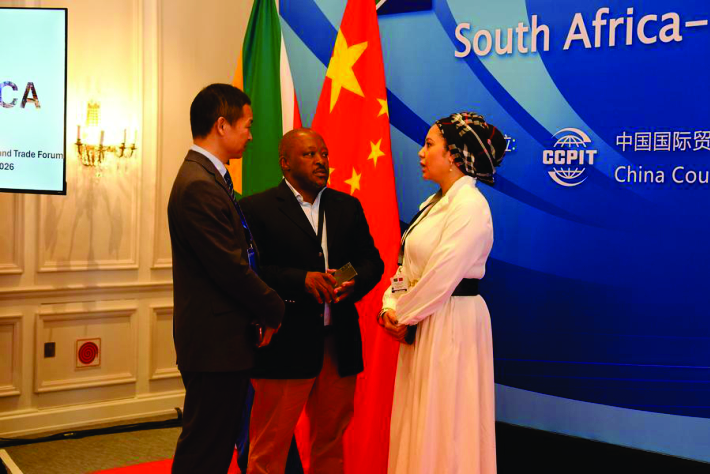
    ABUJA, 29 March 2026 (NPA) — A China–South Africa trade forum held in Cape Town on Friday has raised confidence in deeper bilateral cooperation following China’s zero‑tariff measures for 53 African countries.

    Jointly organised by the China Council for the Promotion of International Trade and South Africa’s Department of Trade, Industry and Competition, the forum drew over 350 political and business representatives, including 70 Chinese and 110 South African executives. Talks centred on agriculture, manufacturing, energy, mining, finance, automobiles, and logistics.

    South Africa’s Deputy Minister Alexandra Abrahams said the zero‑tariff policy would allow African products duty‑free access to China, attracting more investment. She noted that China has long been South Africa’s largest trading partner, while South Africa remains China’s top partner on the continent. “It’s a win‑win situation,” she said.

    Russel Brueton of Wesgro stressed that China will remain a key market for local exporters, adding that easier trade will drive inclusive growth and job creation. He welcomed the policy as a major opportunity for South African products to reach new buyers.

    Chinese companies also expressed optimism. Wang Jian of Aberdare Cable said zero‑tariff measures would cut costs and stabilise raw material supply. Shenzhen Skyworth’s Chairman Fan Ruiwu highlighted opportunities in photovoltaics, energy storage, and new energy vehicles, predicting stronger two‑way investment.

    Lu Ping of Hainan Free Trade Zone Dehang Group said the policy framework offers “early harvest” gains, linking South Africa’s speciality industries with China’s free trade port advantages. Cultural and tourism exchanges are also expected to benefit, with Beijing Green and Blue Culture Media’s Xiao Meng calling the move a platform for deeper cooperation.

  • Ghana and Zimbabwe hold inaugural PJCC session in Accra

    Ghana and Zimbabwe hold inaugural PJCC session in Accra

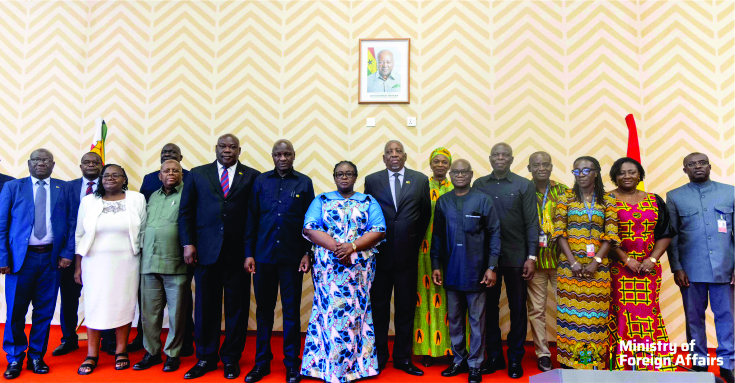
    AFRICA (NPA) — 28 March 2026 — Ghana and Zimbabwe have launched the inaugural session of the Permanent Joint Commission for Cooperation (PJCC), marking a renewed effort to strengthen bilateral relations between the two nations. The meeting took place in Accra on Friday, 27 March 2026.

    Delivering her remarks, Ambassador Khadija Iddrisu, Chief Director of Ghana’s Ministry of Foreign Affairs, highlighted the longstanding historical, political, and cultural ties between the two countries. She noted that Ghana and Zimbabwe share a common heritage rooted in the struggle for independence and Pan-African solidarity. According to her, the PJCC provides a timely platform to transform historical goodwill into tangible, results-oriented partnerships.

    Ambassador Iddrisu further revealed that both countries have identified priority areas for cooperation, including trade and investment, agriculture, energy, mining, education, health, tourism, and governance. She emphasised the need to consolidate these into high-impact programmes that would drive economic growth, industrial development, and job creation.

    On his part, Ambassador Albert Ranganai Chimbindi, Permanent Secretary of Zimbabwe’s Ministry of Foreign Affairs and International Trade, expressed appreciation for Ghana’s warm hospitality and reaffirmed Zimbabwe’s commitment to strengthening bilateral cooperation. He stressed that the success of the PJCC should be measured not by the number of agreements signed but by the tangible impact on the lives of citizens in both countries.

    Both sides reiterated the importance of translating political will into actionable programmes, with a strong focus on implementation, monitoring, and evaluation to guide future cooperation.

  • Kenya vaccinates over 6,000 cows in Sabatia Sub-County

    Kenya vaccinates over 6,000 cows in Sabatia Sub-County

    AFRICA (Agency Report/Maureen Imbayi) — 28 March 2026 — More than 6,000 cows, representing over 20 per cent of the livestock population in Sabatia Sub-County, have been vaccinated against Foot and Mouth Disease under the ongoing e-Voucher vaccination programme.

    Speaking during a Heads of Departments meeting at the DCC’s boardroom, Sub-County Agriculture Officer (SCAO) Robert Anyolo said the target is to vaccinate about 30,000 cows by the end of the exercise.

    Anyolo noted that the programme initially faced challenges due to the time-consuming door-to-door visits required to identify and vaccinate animals. However, with the support of chiefs and their assistants, farmers are now being mobilised to bring their cows to central locations for identification and vaccination.

    “Just like fingerprints are used to identify people, cows are identified by their muzzles, which are unique to each animal,” Anyolo explained. He encouraged farmers to present all their cows for identification and vaccination, stressing that the process would also help reduce theft by making it easier to track animals.

    He added that while the cost of vaccinating one cow is Sh110, farmers are required to pay only Sh50, with the government covering the balance.

    Anyolo further highlighted that the programme is part of a nationwide effort to manage livestock diseases, improve breeding and feeding practices, and boost both the quality and quantity of yields.

    He also advised farmers to plant crop-friendly trees such as grevillea, fruit trees, and fodder to support sustainable agriculture.

  • ECOWAS appoints Akufo-Addo to lead election observation mission in Benin

    ECOWAS appoints Akufo-Addo to lead election observation mission in Benin

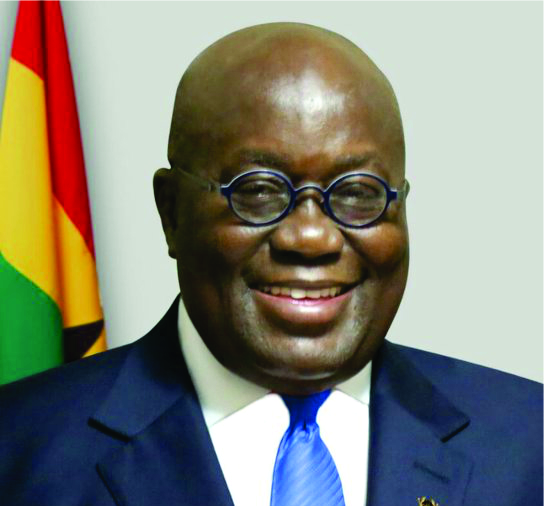
    ABUJA, NIGERIA (NPA) — 27 March 2026 — The Economic Community of West African States (ECOWAS) has appointed H.E. Nana Akufo-Addo as Head of its Election Observation Mission (EOM) to the forthcoming presidential election in the Republic of Benin, scheduled for 12 April 2026.

    The appointment was conveyed by the President of the ECOWAS Commission, H.E. Dr Omar Alieu Touray. It reflects the Community’s enduring commitment to democracy, good governance and regional stability.

    According to a statement from ECOWAS on Friday, the mission will be deployed from 7 to 15 April 2026, in line with the ECOWAS Supplementary Protocol on Democracy and Good Governance (2001). This protocol provides the legal and normative framework for election observation across the region.

    Through this deployment, ECOWAS reaffirms its confidence in Benin’s democratic process and calls on all stakeholders to uphold peace, tolerance and the rule of law.

    The choice of former President Akufo-Addo underscores the Community’s reliance on experienced and respected leaders to guide Member States in conducting peaceful, transparent and credible elections.

    All eyes are now firmly on the Republic of Benin, following the failed coup attempt of 7 December 2025, when rogue elements of the armed forces sought to overthrow President Patrice Talon’s government in Cotonou. The attempt was swiftly repelled by loyalist forces, aided by ECOWAS standby troops, and calm was restored within days.

    The forthcoming presidential election is therefore viewed as a crucial test of resilience for Benin’s democratic institutions. It carries significant weight not only for the country’s stability but also for the wider West African region, where the outcome will be closely watched as a measure of democratic strength in the face of recent upheaval.

  • Kenyan farmers rejoice as government injects Sh3.5 billion to revamp tea sector

    Kenyan farmers rejoice as government injects Sh3.5 billion to revamp tea sector

    AFRICA (Agency Report/Absalom Namwalo) — 27 March 2026 — Kenyan tea farmers have reason to celebrate after the government injected Sh3.5 billion to modernise factories, meet international standards and promote value addition for better prices at the Mombasa auction.  

    Speaking at Olenguruone Tea Factory during the issuing of a corporation certificate, Agriculture PS Dr Kiprono Rono stressed that farmer welfare remains a priority and warned the KTDA board against corruption and mismanagement of funds. He announced Sh26 per kilo as the new price payable to farmers, up from Sh16.  

    Rono outlined sweeping reforms aimed at raising farmer earnings to Sh100/kg by 2027, tackling low auction prices and high production costs. Strategies include factory modernisation, promoting orthodox tea, digitising payments and removing VAT on exports. He urged factories to embrace diversification and value addition to meet global demand.  

    Under the reforms, KTDA factories must implement service-level agreements to guarantee quality services. Factories will also gain autonomy to conduct direct sales, boosting profitability and transparency. Rono emphasised the need for modern technology and field-level oversight to meet international consumer requirements.  

    Willy Mutai of the Tea Board of Kenya echoed these sentiments, urging investment in research and improved processing standards. He noted that reforms on quality, diversification and industry revitalisation will enhance farmer bonuses and earnings. Regulations will enforce payment timelines, with 50% upfront and the balance within three months, easing cash flow challenges.  

    Mutai added that reforms target 40% of Kenya’s tea to be value-added locally rather than exported in bulk. He stressed the importance of consistent green leaf quality, particularly in western Kenya, to attract premium buyers and strengthen competitiveness.

  • Nigeria’s Finance Minister meets IMF Africa Group III Executive Director

    Nigeria’s Finance Minister meets IMF Africa Group III Executive Director

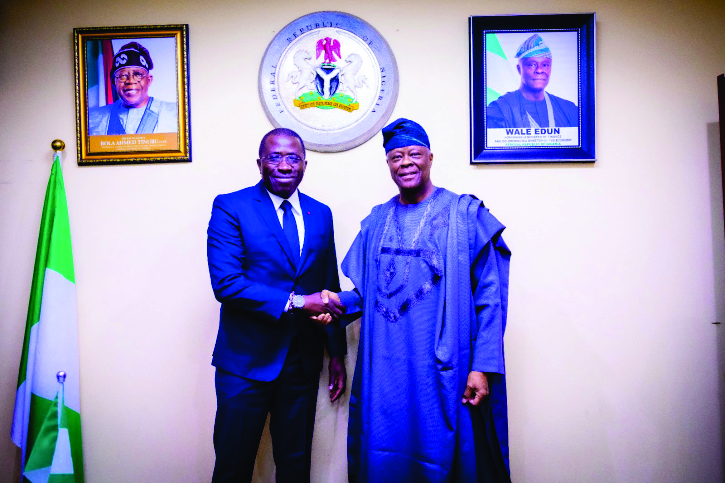
    ABUJA, NIGERIA (NPA) — 27 March 2026 — Nigeria’s Minister of Finance and Coordinating Minister of the Economy, Wale Edun, on Friday received Dr Quattara Wautabouna, Executive Director for the IMF Africa Group III (ECOWAS Constituency), during a courtesy visit in Abuja.

    According to a statement from the Ministry, discussions centred on strengthening regional economic coordination and enhancing collaboration within the ECOWAS constituency. The Minister emphasised the importance of continued engagement to support economic stability and shared growth objectives across the region.

    The IMF Africa Group III has been pivotal in supporting economic and institutional projects across West Africa. In Ghana, its US$3 billion Extended Credit Facility (ECF) programme is stabilising the economy through debt restructuring and fiscal reforms. Nigeria, though not under a lending programme, benefits from IMF-backed reforms, such as subsidy removal, improved functioning of the foreign exchange market, and fiscal discipline. Sierra Leone is implementing a 38‑month ECF arrangement worth SDR 187 million (about US$253 million), focusing on macroeconomic adjustment and climate resilience. Liberia has also received disbursements under its ECF programme, including US$26.5 million in October 2025, to strengthen fiscal management and infrastructure.

    Beyond individual countries, the IMF supports regional capacity building through AFRITAC West 2, which covers Nigeria, Ghana, Sierra Leone, Liberia, The Gambia and Cabo Verde. This initiative provides technical assistance and training in public finance, macroeconomic management and financial sector oversight. Collectively, these projects underscore the IMF’s commitment to stabilising economies, reinforcing reforms and building institutional resilience across West Africa.

  • Ghana advises citizens travelling to Senegal on new health directive

    Ghana advises citizens travelling to Senegal on new health directive

    AFRICA (NPA) — 26 March 2026 — The Republic of Ghana’s Ministry of Foreign Affairs has issued an advisory to Ghanaians planning to travel to Senegal, urging them to comply with new health directives introduced by the West African country.

    According to the Ghanaian authorities, Senegal has recommended vaccination against certain communicable diseases, notably yellow fever, diphtheria, pertussis and tetanus (DPT), measles, and hepatitis A and B, as part of measures to safeguard travellers’ health and safety.

    The advisory clarified, however, that presentation of vaccination certificates for these diseases is not mandatory for entry into Senegalese territory.

    The statement released on Thursday reads in part: “Ghanaian travellers are, nonetheless, encouraged to consult healthcare providers for their routine vaccinations prior to travel, in order to safeguard their health while abroad.”

    It further stressed that the Ministry remains committed to providing timely information to ensure the safety, welfare, and well-being of Ghanaian citizens travelling outside the country.