

‘We drank our urine to survive’: Libya returnee recounts deadly desert ordeal
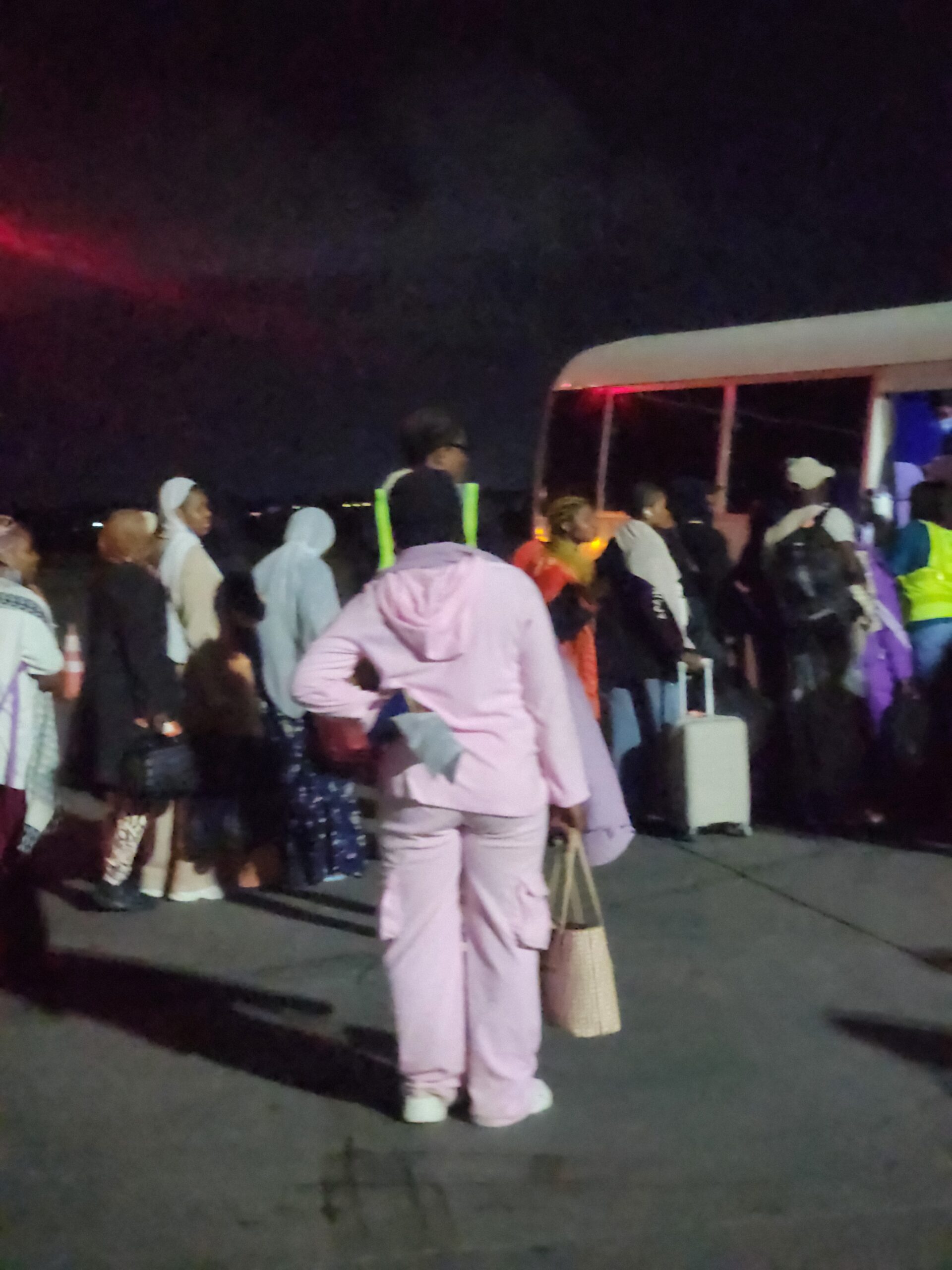
LAGOS, Nigeria (NPA) — A 23-year-old Nigerian returnee from Libya has recounted the harrowing ordeal she endured during a perilous journey across the Sahara Desert, revealing that she and fellow migrants survived by drinking their urine due to severe dehydration.
Endurance Daniel, one of 182 stranded Nigerians recently assisted back home by the International Organisation for Migration (IOM), said seven people died during the desert crossing. At the same time, survivors battled hunger, thirst, and exploitation.
Speaking in an interview with the News Agency of Nigeria (NAN) upon her return, Daniel said she was only 17 when she was persuaded to travel to Libya after being promised employment opportunities and a better life.

According to her, a family acquaintance convinced her mother that she could quickly earn enough money in Libya to lift her family out of poverty.
“My mother’s friend told my mother that her children were in Libya and doing well. She said I could work for less than a year and make good money,” Daniel said.
Driven by economic hardship at home, she embarked on the journey, unaware of the dangers that lay ahead.
Daniel said she travelled with 52 other migrants in a single vehicle and spent more than a month crossing the desert under extreme conditions.
“We spent more than a month in the desert. There was no water, so we were drinking our urine to survive,” she recalled.
“At a point, urine was no longer coming out. Some of us started passing blood instead.”
She said the journey claimed several lives, with seven migrants dying from dehydration, exhaustion, and other harsh conditions.
“Those who died were left where we stayed in the desert. We watched their bodies decay for days because there was nothing we could do,” she said.
Upon arriving in Libya in 2019, Daniel said she quickly discovered that the reality was far different from what she had been promised.
According to her, the sponsor who received her informed her that female migrants had only two options: domestic work or prostitution.
“On getting to Libya, my sponsor told me there were only two jobs available for women migrants — domestic work and prostitution. There was nothing else,” she said.
Daniel said she immediately sought a way back to Nigeria but was prevented from doing so by traffickers who insisted she must first repay the cost of her journey.
“When I asked for a phone to contact my family, he refused. He feared my family would send money for me to return home,” she explained.
She alleged that traffickers routinely used threats, intimidation, and psychological pressure to control migrants and force them into exploitative situations.
“He told us that if we refused his instructions, he would sell us to places where people were forced into prostitution. We were frightened and decided to obey,” she said.
Daniel also claimed that promises of allowing migrants to communicate with their families were often used as bargaining tools to secure compliance.
“I accepted because I desperately wanted to speak with my family. It had been months since I last heard from them,” she said.
The returnee further described life in migrant camps as harsh and degrading, with inadequate food and poor living conditions.
“They gave us plain spaghetti without salt or anything else. We ate it because we had no choice,” she said.
She added that migrants were frequently hidden in vehicles and moved secretly across locations to evade security agencies and immigration authorities.
“If they found you during inspections, you could end up in prison. If they did not, you were considered lucky,” she said.
Despite the traumatic experience, Daniel expressed gratitude for the opportunity to return home safely.
She urged young Nigerians considering irregular migration to thoroughly verify opportunities abroad and avoid falling victim to false promises.
“People should not believe everything they are told. What I experienced was completely different from the promises made before I left,” she said.
Her account adds to growing concerns over the dangers of irregular migration routes across North Africa and the Sahara Desert, where thousands of African migrants continue to face exploitation, human trafficking, detention, and death in pursuit of better economic opportunities abroad.

Biafra activist Simon Ekpa awaits Finnish Appeal Court ruling on six-year jail term tomorrow
Kano police arrest four suspects, recover three stolen vehicles
Amnesty International condemns police blocking of ‘Tinubu Must Go’ protest in Kano

SERAP sues CBN over alleged unaccounted $6.23m election funds, ₦1.63tn in other public funds

Abia police arrest 40-year-old suspect, recover fake ₦200 notes in Aba

Media Freedom Coalition demands justice 20 years after Anna Politkovskaya’s assassination

Finance Ministry Unaware of N124.86bn CBN withdrawal, witness tells court in Emefiele trial
Former US federal employee pleads guilty to $194 million government fraud scheme
- Tinubu commissions NRS Headquarters, says new tax reforms will drive prosperity
- Tinubu assures investors of regulatory stability as Ogun, DP World sign $7bn port, SEZ MoUs
- Climate change anxiety is rising — and so is the willingness to act on it
- Ohaukwu LG Chairman Ituma breaks ground for modern diagnostic centre, blood bank
- Baseball boosts TBS, NFL gives ESPN a kick and streamers love ‘Squid’
Community Discussion