

Jehovah’s Witnesses win landmark case: EU court rules governments cannot ban door-to-door evangelism
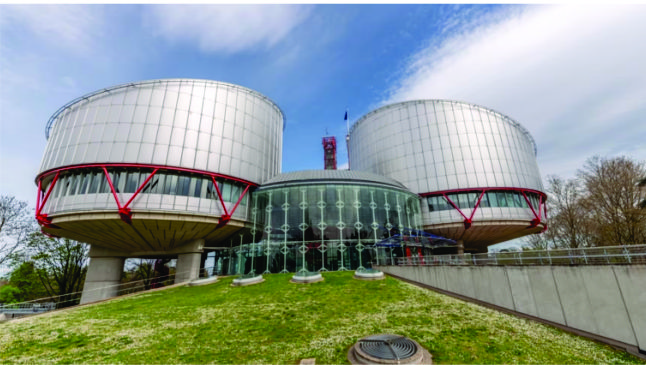
STRASBOURG, France (NPA) — The European Court of Human Rights (ECHR) has ruled that governments cannot impose blanket bans on evangelisation, siding with Jehovah’s Witnesses in a case against Bulgaria.
On June 9, the Strasbourg‑based court found that a vaguely worded ban on “religious propaganda” adopted by the city of Shumen unlawfully restricted the Witnesses’ door‑to‑door ministry. Judges concluded that the measure breached Article 9 of the European Convention on Human Rights, which guarantees freedom of thought, conscience, and religion.
The case was brought by members of Jehovah’s Witnesses after local authorities prevented them from carrying out their missionary work, even though commercial and political canvassing remained permitted.

The court stressed that such unequal treatment violated fundamental freedoms.
Nicolas Bauer, advocacy director at the European Centre for Law and Justice, which intervened in the case, said the ruling reaffirms a basic principle: “Evangelising is often viewed with suspicion in a secularised Europe. The ECHR ruling reaffirms a basic requirement of religious freedom for believers: the right to the same freedom of expression as everyone else.”
At the heart of the dispute was the city’s decision to allow door‑to‑door sales and political campaigning while banning religious outreach. “It was permitted to knock on the door to sell a vacuum cleaner or promote a political program,” Bauer explained, “but forbidden to hand out a Bible or a pious image.”
The court rejected claims that the ban was necessary to protect residents from coercion, noting that authorities had not demonstrated any repeated disturbances. It emphasized that exposure to differing beliefs is part of life in a democratic society and cannot justify a blanket prohibition on peaceful missionary activity.
For Jehovah’s Witnesses, who are known worldwide for their door‑to‑door ministry, the ruling is a significant victory. It ensures that their evangelisation — a central aspect of their faith — remains protected under European human rights law.
Legal experts say the judgment has implications beyond Bulgaria, reinforcing that religious speech must enjoy the same protections as commercial and political expression. The court clarified that while governments may act against harassment or coercion, they cannot outlaw peaceful evangelisation simply because some members of the public find it unwelcome.
The decision comes amid wider debates across Europe about the limits of religious expression in public life, from “buffer zone” laws around abortion clinics to disputes over Christian symbols in public spaces. For Jehovah’s Witnesses, the ruling offers reassurance that their right to share their faith remains safeguarded.


Biafra activist Simon Ekpa awaits Finnish Appeal Court ruling on six-year jail term tomorrow

Kano police arrest four suspects, recover three stolen vehicles
Amnesty International condemns police blocking of ‘Tinubu Must Go’ protest in Kano

SERAP sues CBN over alleged unaccounted $6.23m election funds, ₦1.63tn in other public funds

Abia police arrest 40-year-old suspect, recover fake ₦200 notes in Aba

Media Freedom Coalition demands justice 20 years after Anna Politkovskaya’s assassination

Finance Ministry Unaware of N124.86bn CBN withdrawal, witness tells court in Emefiele trial

Former US federal employee pleads guilty to $194 million government fraud scheme
- Tinubu commissions NRS Headquarters, says new tax reforms will drive prosperity
- Tinubu assures investors of regulatory stability as Ogun, DP World sign $7bn port, SEZ MoUs
- Climate change anxiety is rising — and so is the willingness to act on it
- Ohaukwu LG Chairman Ituma breaks ground for modern diagnostic centre, blood bank
- Baseball boosts TBS, NFL gives ESPN a kick and streamers love ‘Squid’
Community Discussion