

Lassa Fever Claims 70 Lives in Nigeria in 2026 — NCDC
ABUJA, NIGERIA (NPA): The Director-General of the Nigeria Centre for Disease Control and Prevention (NCDC), Dr. Jide Idris, has confirmed that Lassa fever, a viral haemorrhagic illness endemic in West Africa, has killed 70 people in Nigeria since the beginning of 2026.
Speaking at a press briefing in Abuja on Friday, Idris disclosed that as of February 15, 2026, Nigeria had recorded 1,469 suspected cases, 318 confirmed infections, and 70 deaths, representing a 22 percent case fatality rate (CFR).
According to the NCDC, five states — Ebonyi (southeast), Edo (south), Bauchi (northeast), Ondo (southwest), and Taraba (northeast) — account for 91 percent of all confirmed cases nationwide.

Dr. Idris highlighted several obstacles hampering the national response. He criticized some state governments for failing to provide adequate support, noting that many have not allocated funds for awareness campaigns or community engagement.
“In many cases, no funding is provided at the state level for robust awareness activities. This has made it difficult to carry out risk communication and community engagement, which are critical in changing behavior in highly affected communities,” he said.
He also raised concerns about substandard treatment centers, reports of patients absconding, and excessive fees charged by some facilities. In addition, he pointed to shortages of Personal Protective Equipment (PPE), inadequate infection prevention and control (IPC) practices, and weak data reporting mechanisms at state and facility levels.
To strengthen containment, the NCDC has deployed National Rapid Response Teams to eight states — Bauchi, Ondo, Taraba, Edo, Plateau, Benue, and Jigawa — with plans to expand further. The agency has also distributed laboratory testing supplies, medical countermeasures, and PPEs across its national network.
The Incident Management System (IMS) has been activated to coordinate the national response, alongside weekly National Lassa Fever Emergency Operations Centre (EOC) meetings.
Dr. Idris urged state governments to intensify active case searches and contact tracing, scale up community risk communication, address treatment cost barriers, and enforce IPC practices across all health facilities. He emphasized the need for stronger coordination among state teams to avoid rivalry and ensure a unified response.

Ghana, UK review bilateral ties ahead of Mahama’s official visit

Nigeria, Ethiopia deepen cooperation on trade and investment

World Bank upgrades Africa growth outlook, says AI could boost jobs and productivity
Uganda vaccinates more than 8.2 million children in Measles-Rubella Campaign
NCDC heightens vigilance after imported Ebola case confirmed in Kenya
Eswatini says three third-country nationals voluntarily return home
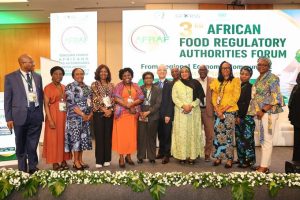
NAFDAC DG advocates stronger continental cooperation on food safety
AU Commission Chairperson congratulates Abiy Ahmed on re-election
- Tinubu commissions NRS Headquarters, says new tax reforms will drive prosperity
- Tinubu assures investors of regulatory stability as Ogun, DP World sign $7bn port, SEZ MoUs
- Climate change anxiety is rising — and so is the willingness to act on it
- Ohaukwu LG Chairman Ituma breaks ground for modern diagnostic centre, blood bank
- Baseball boosts TBS, NFL gives ESPN a kick and streamers love ‘Squid’
Community Discussion