Category: Politics

  • JUNE 12: Democracy has meaning only when people’s will is respected—Adebayo

    JUNE 12: Democracy has meaning only when people’s will is respected—Adebayo

    ABUJA, Nigeria (NPA) — Presidential candidate of the Social Democratic Party (SDP), Prince Adewole Adebayo, has said the June 12, 1993, presidential election remains a powerful reminder that democracy can only thrive when the will of the people is respected.

    In his Democracy Day message on Friday, Adebayo paid tribute to the late Chief Moshood Kashimawo Olawale (MKO) Abiola, whose widely acclaimed victory in the June 12 election became a defining symbol of Nigeria’s democratic struggle.

    According to Adebayo, the historic election demonstrated Nigerians’ desire for unity, progress, and accountable leadership.

    “Today, we mark Democracy Day by remembering the historic victory of Chief MKO Abiola on June 12, 1993 — a moment when Nigerians spoke clearly, freely, and courageously for hope, unity, and progress,” he said.

    The SDP presidential candidate noted that the significance of June 12 extends beyond history, serving as a continuing lesson on the importance of credible elections and democratic accountability.

    “That election remains a powerful reminder that democracy only has meaning when the will of the people is respected,” Adebayo stated.

    He stressed that elections must be conducted in a manner that is free, fair, transparent, and devoid of intimidation, manipulation, and vote buying.

    According to him, the integrity of the electoral process is essential to sustaining public confidence in democracy.

    “Elections must be fair, peaceful, transparent, and free from intimidation, manipulation, and vote buying. No citizen should have to sell their future for a temporary handout. No politician should be allowed to purchase the mandate that belongs only to the people,” he said.

    Adebayo further stated that the Social Democratic Party remains committed to the values that defined the June 12 struggle, including justice, national unity, credible elections, and people-centred governance.

    “The Social Democratic Party stood then for credible elections, national unity, justice, and people-centred leadership. We stand for those same values today,” he said.

    Looking ahead to the 2027 general election, Adebayo argued that Nigeria must return political power to the people and ensure that democratic governance delivers tangible benefits to citizens.

    “As we look towards 2027, Nigeria must return power to the people. Democracy must serve the poor, protect the vulnerable, secure our communities, and give every Nigerian a government that works in their interest,” he said.

    The SDP flagbearer described his party as the true platform for democratic ideals, fairness, and national renewal.

    “The SDP remains the true home of democracy, fairness, and genuine change,” he added.

    He concluded by congratulating Nigerians on the occasion of Democracy Day and urging citizens to remain committed to democratic values and active participation in the nation’s political process.
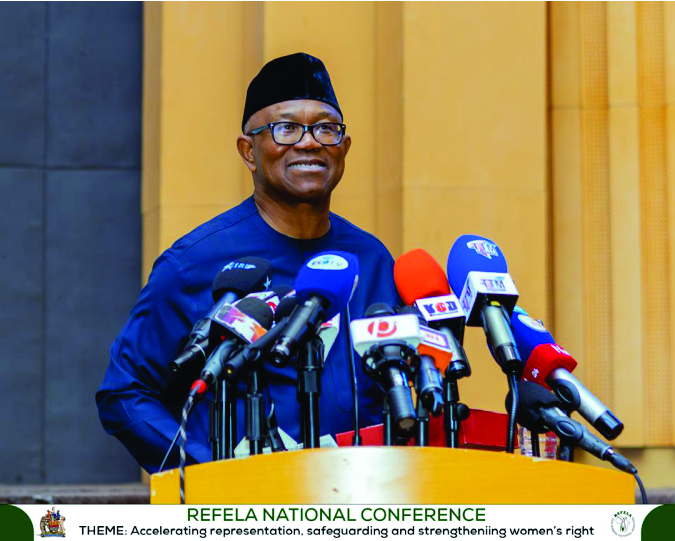
  • June 12 remains bedrock of Nigeria’s democratic identity—Peter Obi

    June 12 remains bedrock of Nigeria’s democratic identity—Peter Obi

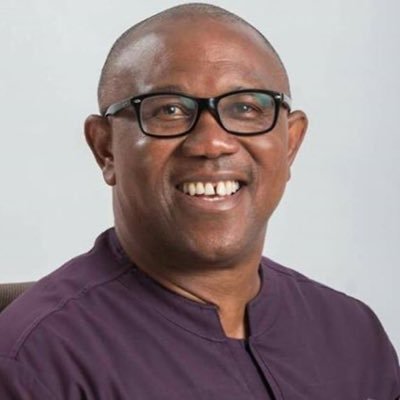
    ABUJA, Nigeria (NPA) — Presidential candidate of the Nigeria Democratic Congress (NDC), Mr Peter Obi, has described June 12 as the emotional and structural bedrock of Nigeria’s modern democratic identity, saying the date embodies both the painful sacrifices and enduring aspirations that define the nation’s democratic journey.

    In a Democracy Day message personally signed on Friday and titled “What June 12 Should Mean to Us Nigerians,” Obi said the annual commemoration remains a powerful reminder of the strength of the Nigerian people’s collective democratic will.

    According to the former Anambra State Governor, June 12 is far more than a date on the national calendar, as it represents one of the most significant milestones in the country’s political history.

    “For us in Nigeria, June 12 is not merely a date on the calendar; it is the emotional and structural bedrock of our modern democratic identity,” Obi said.

    He noted that officially recognised as Democracy Day, June 12 carries profound historical, political, and social significance, symbolising both a national tragedy and the eventual triumph of the people’s democratic aspirations.

    “Officially recognised as Democracy Day, June 12 carries deep historical, political, and social significance, representing both a monumental tragedy and the ultimate triumph of the collective will of the people,” he stated.

    Obi said the annual observance should serve as a moment of reflection on the state of the nation and the performance of its democratic institutions.

    According to him, June 12 provides Nigerians with an opportunity to assess the country’s democratic progress critically and ask fundamental questions about governance, accountability, and electoral integrity.

    “Every year on June 12, the conversation inevitably turns to a critical assessment of the state of our nation. It serves as an annual benchmark for asking important questions: Are our elections today as transparent as they were in 1993? Is the social contract being honoured? Are the institutions of governance truly serving the people?” he asked.

    The former governor stressed that the significance of June 12 lies not only in remembering the past but also in inspiring a better future for the country.

    “Ultimately, June 12 is a powerful blend of reflection and aspiration. It honours a fractured past while serving as a constant and foundational reminder of the immense power inherent in the collective democratic will of the Nigerian people,” he said.

    Obi further argued that understanding the true meaning of June 12 requires an appreciation of its historical evolution and enduring symbolism in Nigeria’s democratic development.

    “To understand what June 12 means to Nigeria, one must examine its history, its evolution, and its enduring symbolism,” he added.

    The NDC presidential candidate concluded his message with a renewed call for genuine democratic governance and national transformation, declaring that a new era of true democracy remains achievable.

    “A New Nigeria is Possible,” he added.

  • Tinubu marks Democracy Day with call for unity, security, and economic renewal

    Tinubu marks Democracy Day with call for unity, security, and economic renewal

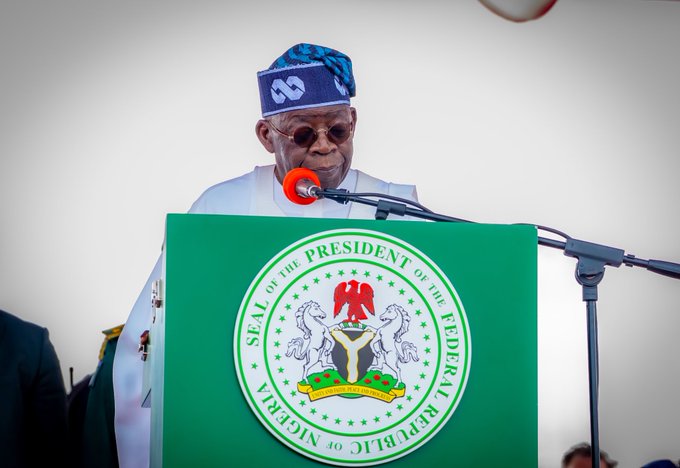
    Abuja, NIGERIA (NPA) — President Bola Ahmed Tinubu marked Nigeria’s Democracy Day with a sweeping national address celebrating 27 years of uninterrupted civilian rule and urging citizens to defend the country’s democratic institutions while embracing reforms aimed at prosperity and security.

    Delivering his speech from the Presidential Villa, Tinubu described democracy as “not perfect, but ours,” reminding Nigerians that the nation’s progress must be measured not only by political freedom but also by economic opportunity and justice.

    He praised the resilience of Nigerians who “refused to surrender their faith in freedom,” and paid tribute to the heroes of June 12, 1993, including Chief M.K.O. Abiola, Alhaja Kudirat Abiola, Chief Gani Fawehinmi, Chief Bola Ige, and others who “endured persecution, imprisonment, exile, and even death so that future generations could enjoy democracy.”

    “The greatest tribute we can pay,” Tinubu said, “is to build a Nigeria where freedom is protected, justice is upheld, opportunity is expanded, and government is accountable.”

    Strengthening Security and National Unity

    Tinubu acknowledged the nation’s grief over the recent abductions of schoolchildren in Oyo and Borno States, pledging intensified efforts to secure their safe return. He reaffirmed his administration’s security emergency, announcing the recruitment of over 50,000 new police officers and thousands of military personnel.

    The President said the 2026 budget’s ₦5.41 trillion allocation to defence and security is Nigeria’s largest ever, underscoring his commitment to protecting citizens. He cited progress against insurgency, noting that ISWAP’s command centre in Arege, Borno had been degraded, terror‑related deaths had fallen by 81% since 2015, and 13,000 terrorists were neutralised in the past year.

    Tinubu also revealed that 124,000 fighters and dependents had surrendered through Operation Safe Corridor since 2023. He warned bandits and kidnappers to “surrender or face the full force of the Nigerian State,” adding that “crime has no ethnicity.”

    Economic Reforms and Power Sector Transformation

    The President devoted a significant portion of his speech to economic recovery, saying his administration’s reforms since 2023 have restored fiscal stability and investor confidence. He highlighted growth in agriculture, energy, manufacturing, technology, mining, and transportation, noting that federation revenues have risen, enabling states and local governments to invest more in infrastructure, education, and healthcare.

    Tinubu announced that domestic refining capacity has increased, reducing reliance on imported petroleum products, and that fiscal transparency has improved with reduced leakages.

    He also addressed Nigeria’s chronic electricity challenges, describing how the Electricity Act now empowers states to generate and distribute power. The Presidential Power Sector Task Force, he said, is working to close the four‑million metering gap and has been authorised to raise a ₦4 trillion bond to settle verified legacy debts.

    “Electricity is a democratic dividend we owe every Nigerian,” Tinubu declared. “We intend to deliver it.”

    Local Governance and Renewed Hope

    Tinubu reaffirmed his push for financial autonomy for Nigeria’s 774 local councils, describing grassroots governance as essential to national stability. He said the collapse of local government administration had contributed to insecurity and underdevelopment, and that the Renewed Hope Agenda seeks to ensure every Nigerian benefits from governance.

    “Every generation has a defining responsibility,” he said. “The generation of our founding fathers secured independence—the generation of June 12 secured democracy. Our generation must secure prosperity.”

    Honours and National Recognition

    In a symbolic gesture, Tinubu announced the revitalisation and renaming of the Institute of Petroleum Studies in Kaduna as the General Shehu Musa Yar’Adua University of Geological Sciences and Engineering Technology, honouring the late military leader’s democratic vision.

    He also unveiled a list of national award recipients, including journalists, activists, and soldier‑democrats who fought for democracy. Among those honoured were Ayoka Lawani, Oladele Alake, Chief Ayo Opadokun, Major‑General Ishola Williams (rtd), and Dr Joe Okei‑Odumakin.

    Tinubu said the full honours list would be released in the coming days.

    A Covenant of Hope

    Closing his address, Tinubu urged Nigerians to reject division and despair, declaring that the country’s diversity is its strength.

    “Nigerians do not break. We bend, we bleed, but we do not break,” he said.

    He called for renewed faith in the democratic covenant:

    “That the labours of our heroes past shall never be in vain, and that government of the people, by the people, for the people, shall not perish from this land.”

  • BREAKING: Tinubu to address Nigerians on Democracy Day

    BREAKING: Tinubu to address Nigerians on Democracy Day

    ABUJA, Nigeria (NPA) — President Bola Ahmed Tinubu will address the nation on Friday as part of activities marking Nigeria’s Democracy Day celebration.

    The Presidency announced on Thursday that the nationwide broadcast will be delivered at 7:00 a.m. and transmitted live on the networks of the Nigerian Television Authority (NTA) and Radio Nigeria.

    According to a statement issued by the Special Adviser to the President on Information and Strategy, Bayo Onanuga, all television and radio stations across the country have been requested to hook into the NTA and Radio Nigeria network to carry the presidential address.

    The annual Democracy Day celebration commemorates Nigeria’s democratic journey and honours the sacrifices of individuals and groups who contributed to the country’s return to civilian rule.

    President Tinubu is expected to reflect on the state of the nation, his administration’s policies, democratic governance, and other issues of national importance during the broadcast.

    The address comes amid ongoing national discussions on economic reforms, governance, security, and democratic consolidation under the current administration.

    Democracy Day is observed annually on June 12 in recognition of the historic June 12, 1993, presidential election, widely regarded as Nigeria’s freest and fairest poll, which was won by the late Chief Moshood Kashimawo Olawale (MKO) Abiola but later annulled by the military government.

    Since 2018, June 12 has been officially recognised as Nigeria’s Democracy Day, replacing May 29 as the date set aside to celebrate the country’s democratic evolution.

    The Presidency urged Nigerians to tune in to the broadcast as the nation commemorates another Democracy Day anniversary.

  • World Cup absence reflects leadership failure, not lack of talent, says Peter Obi

    World Cup absence reflects leadership failure, not lack of talent, says Peter Obi

    ABUJA, Nigeria (NPA) — Presidential candidate of the Nigeria Democratic Congress (NDC), Mr Peter Obi, has attributed Nigeria’s absence from the ongoing FIFA World Cup to what he described as a failure of leadership, planning, and institutional support rather than a shortage of football talent.

    In a statement issued on Thursday and titled “As the World Cup Begins Without Nigeria,” Obi expressed solidarity with millions of Nigerian football fans disappointed by the Super Eagles’ failure to qualify for the global tournament.

    As the competition gets underway across three host nations, Obi urged Nigerians not to lose hope despite the country’s absence from football’s biggest stage.

    “I identify with our teeming football followers and urge them not to be despondent that Nigeria is not participating, despite the abundant talent in our land,” he said.

    According to the former Anambra State Governor, Nigeria’s inability to qualify for the World Cup is symptomatic of broader governance challenges confronting the country.

    “Our failure to participate on the global stage is not due to a deficit of talent; it is a direct consequence of a deficit in leadership, planning, and institutional support,” Obi stated.

    He argued that Nigeria possesses the human resources and sporting potential required to compete with the best football nations in the world but lacks the structures necessary to consistently translate talent into success.

    Obi further challenged the younger generation to take a leading role in rebuilding the nation and creating systems capable of delivering excellence across all sectors, including sports.

    “The task of building a better Nigeria rests primarily on the shoulders of the younger generation,” he said.

    The former governor urged Nigerians to view the World Cup not with frustration or despair but as a reminder of what the country can achieve through effective leadership and strategic planning.

    “Do not watch the World Cup with despair; rather, see it as a reminder of where Nigeria ought to be,” he said.

    Obi, who continues to campaign under his mantra, “A New Nigeria is Possible,” said the country must move beyond being a passive consumer of global entertainment and become an active competitor on the world stage.

    “We must move our country from being a nation of mere consumers of global entertainment to a nation of proud producers and competitors,” he added.

    Nigeria’s failure to qualify for the tournament has generated widespread debate among football stakeholders, with many pointing to administrative challenges, poor planning, and inconsistent development programmes as factors behind the Super Eagles’ absence from the global showpiece.

  • Meloni blasts Italian opposition over failure to present united front ahead of the European Council

    Meloni blasts Italian opposition over failure to present united front ahead of the European Council

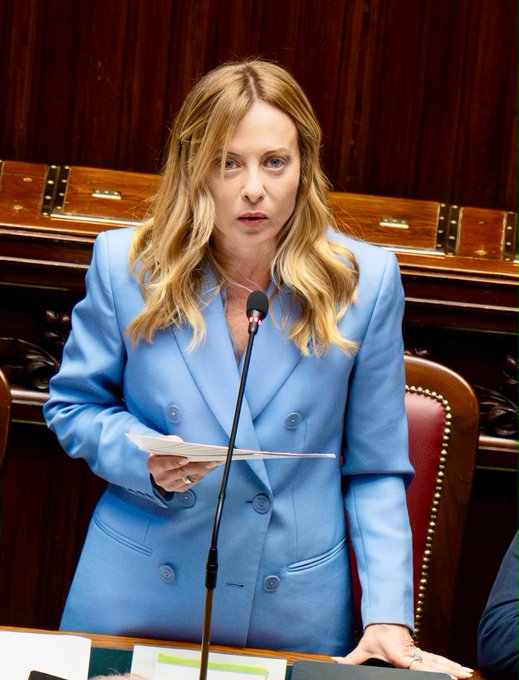
    ROME, Italy (NPA) — Italian Prime Minister Giorgia Meloni has criticised opposition parties for their inability to forge a common position on key national issues, arguing that their divisions cast doubt on their ability to govern the country effectively.

    Meloni made the remarks on Thursday following a vote in the Chamber of Deputies on resolutions tied to the government’s communications ahead of the forthcoming European Council meeting.

    According to the Prime Minister, while the ruling coalition presented a single, unified resolution, opposition parties submitted separate motions reflecting their individual positions.

    “This morning in the Chamber, resolutions were being voted on regarding the Government’s communications ahead of the upcoming European Council. The majority presented a unified text. The opposition, on the other hand, put forward a different resolution for each individual party,” Meloni said.

    Describing the development as revealing, she argued that her government had consistently demonstrated the ability to build consensus and articulate a coherent national position, while opposition parties had failed to do the same.

    “It’s a rather telling snapshot: when it comes to outlining a common line for Italy, our government always manages to find a synthesis. The so-called ‘broad field’ does not,” she said.

    “If they can’t even agree on a parliamentary resolution, it’s hard to imagine how they could put together a budget law and govern a nation together.”

    Meloni said her administration would continue to respond to changing global realities with what she described as pragmatic and effective policies aimed at safeguarding Italy’s interests at home and abroad.

    “We will continue to interpret the changes in the international landscape and promote pragmatic and effective solutions, defending Italian interests,” she stated.

    The Prime Minister further mocked the opposition alliance, describing it as a fragmented coalition lacking a common vision.

    “Meanwhile, the broad field, reduced to a puzzle with pieces from different boxes, manages to divide itself even when it should unite,” she said.

    The latest remarks come amid continuing political tensions between Meloni’s right-wing governing coalition and opposition parties led by the centre-left Democratic Party and the Five Star Movement. While opposition groups have frequently criticised the government’s positions on economic policy, migration, constitutional reforms, and Italy’s role within the European Union, they have often struggled to present a united alternative platform, exposing ideological differences within their ranks.

    Meloni also appeared to take aim at the tone of political discourse adopted by some of her critics in a separate statement. “There are those who do politics with insults and vulgarity. And those who respond with their own story,” she said.

    The debate over Italy’s direction within Europe, economic reforms, immigration policy, and institutional changes is expected to remain at the centre of political discussions as the country prepares for key domestic and European political battles in the months ahead.

  • BREAKING: House of Reps passes State Police Bill, Senate to concur

    BREAKING: House of Reps passes State Police Bill, Senate to concur

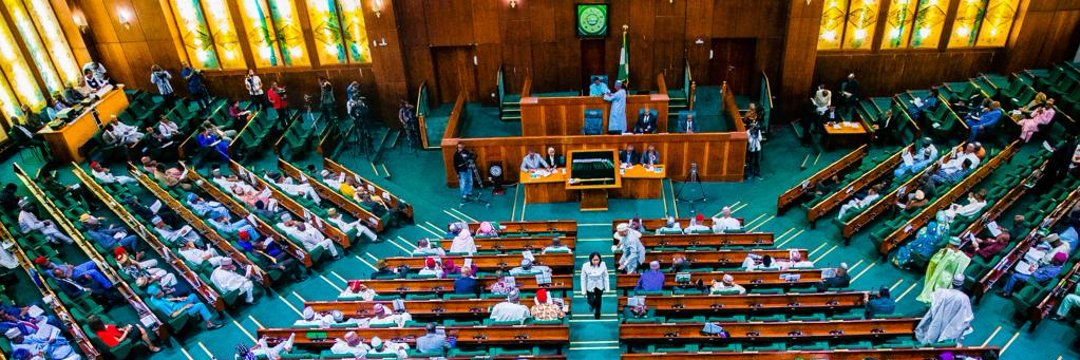
    ABUJA, Nigeria (NPA) — The House of Representatives has passed the State Police Bill, moving Nigeria a step closer to adopting a decentralised policing system aimed at strengthening security and addressing growing concerns over banditry, kidnapping, terrorism, and other violent crimes across the country.

    The landmark legislation, which seeks to amend the 1999 Constitution (as amended), was approved during Thursday’s plenary session following extensive debate and clause-by-clause consideration by lawmakers.

    Presiding over the session, Speaker of the House of Representatives, Rt. Hon. Tajudeen Abbas, described the passage of the bill as a significant milestone in the nation’s efforts to reform its security architecture and improve grassroots policing.

    If eventually enacted, the proposed law will empower state governments to establish and operate their own police services alongside existing federal security structures.

    Under the provisions of the bill, each state will be authorised to create a State Police Service, with operational guidelines to be developed in collaboration with the National Police Council and the Federal Police Service Commission.

    The legislation also provides frameworks for recruitment, training, funding, discipline, oversight, and inter-agency coordination to ensure professionalism and prevent abuse of power.

    Lawmakers who supported the bill argued that the current centralised policing system has struggled to effectively address Nigeria’s diverse and evolving security challenges, particularly in rural and remote communities.

    They maintained that state policing would improve intelligence gathering, strengthen community engagement, and enable quicker responses to security threats.

    Speaker Abbas said the legislation reflects years of public demand for a more responsive and community-based security system.

    According to him, localised policing has become increasingly necessary in view of the security realities confronting different parts of the country.

    The bill now proceeds to the Senate for consideration and concurrence before being transmitted to President Bola Ahmed Tinubu for assent.

    Should the proposal secure Senate approval and presidential assent, it would represent the first constitutional recognition of state policing since Nigeria’s return to democratic rule in 1999.

  • BREAKING: FG disowns Prince Adeniyi’s fake Presidential Foreign Intervention Promotion Council, warns public

    BREAKING: FG disowns Prince Adeniyi’s fake Presidential Foreign Intervention Promotion Council, warns public

    ABUJA, Nigeria (NPA) — The Presidency has distanced itself from an individual identified as Prince Adeniyi Adeyemi and an organisation known as the “Presidential Foreign Intervention Promotion Council,” declaring that neither has any official recognition under the administration of President Bola Ahmed Tinubu.

    In a disclaimer issued on Wednesday, the Chief of Staff to the President, Femi Gbajabiamila, said the attention of the Federal Government had been drawn to claims by Adeyemi that he had been appointed by the Office of the Chief of Staff under the purported council.

    Gbajabiamila categorically denied the claim, stating that no such office exists within the current administration and that no appointment had been made in that regard.

    “It has come to the notice of the Federal Government of Nigeria, and specifically the Office of the Chief of Staff to the President, that a certain Prince Adeniyi Adeyemi, under the auspices of an alleged organisation styled as the ‘Presidential Foreign Intervention Promotion Council’, is portraying himself to the general public as having been appointed by my office,” the statement said.

    “The unsuspecting public is hereby advised to note that such an office does not exist under this administration, and no appointment has been made in that regard.”

    The Presidency urged members of the public to disregard any claims linking Adeyemi or the purported organisation to the Federal Government.

    It also called on foreign and diplomatic missions, multilateral and financial institutions, development partners, security agencies, and other stakeholders to take note of the disclaimer and avoid recognising any purported appointment or representation made under the banner of the alleged council.

    The statement reaffirmed that all official appointments and government bodies are communicated through recognised government channels and urged the public to verify claims of appointments before engaging with individuals purporting to represent the Presidency.

  • INEC fixes June 16–25 primaries for restored constituencies ahead of 2027 elections

    INEC fixes June 16–25 primaries for restored constituencies ahead of 2027 elections

    ABUJA, Nigeria (NPA) — The Independent National Electoral Commission (INEC) has fixed June 16 to June 25, 2026, for the conduct of political party primaries in constituencies recently restored by court orders across Benue, Delta, Jigawa, and Kogi states.

    The electoral body said the move is aimed at enabling political parties to nominate candidates for the affected constituencies ahead of the 2027 General Election.

    In a statement issued on Wednesday by the National Commissioner and Chairman of the Information and Voter Education Committee, Mohammed Kudu Haruna, INEC said the restoration followed judgments by competent courts directing the reinstatement of previously suppressed constituencies.

    According to the Commission, the action is in line with its constitutional mandate and the provisions of the Electoral Act, 2026.

    The restored constituencies in Benue State are Nyamatsor, Ukum Afia, Konshisha III (Shangev-Tiev), Makurdi III (South East), and Gboko III State Constituencies.

    In Delta State, the restored constituencies are Aniocha North II, Ika North East II, Sapele II, Ethiope West II, Warri South West II, and Warri North II State Constituencies.

    For Jigawa State, the restored constituency is Aujara State Constituency.

    In Kogi State, the restored constituencies include Adavi East, Eika, Ajaokuta North, Bassa-Komu, Dekina Town and District, Ijumu II, Kabba-Bunu II, Koton Karfe II, Igalaogwa, and Ogugu State Constituencies.

    INEC said political parties are expected to conduct fresh primaries within the approved window to facilitate the participation of the restored constituencies in the 2027 electoral process.

    The Commission clarified that all other timelines and activities contained in the already published revised Timetable and Schedule of Activities for the 2027 General Election remain applicable to the affected constituencies.

    “In light of the peculiar nature of this arrangement, political parties are requested to submit notices of their primaries to the Commission prior to the scheduled dates,” the statement said.

    INEC reaffirmed its commitment to conducting credible, inclusive, transparent, and legally compliant elections across the country.

    The Commission urged political parties to strictly comply with all electoral guidelines and timelines to ensure a seamless nomination process in the restored constituencies.

  • Umahi warns non-performing contractors, says Tinubu not responsible for delayed road projects

    Umahi warns non-performing contractors, says Tinubu not responsible for delayed road projects

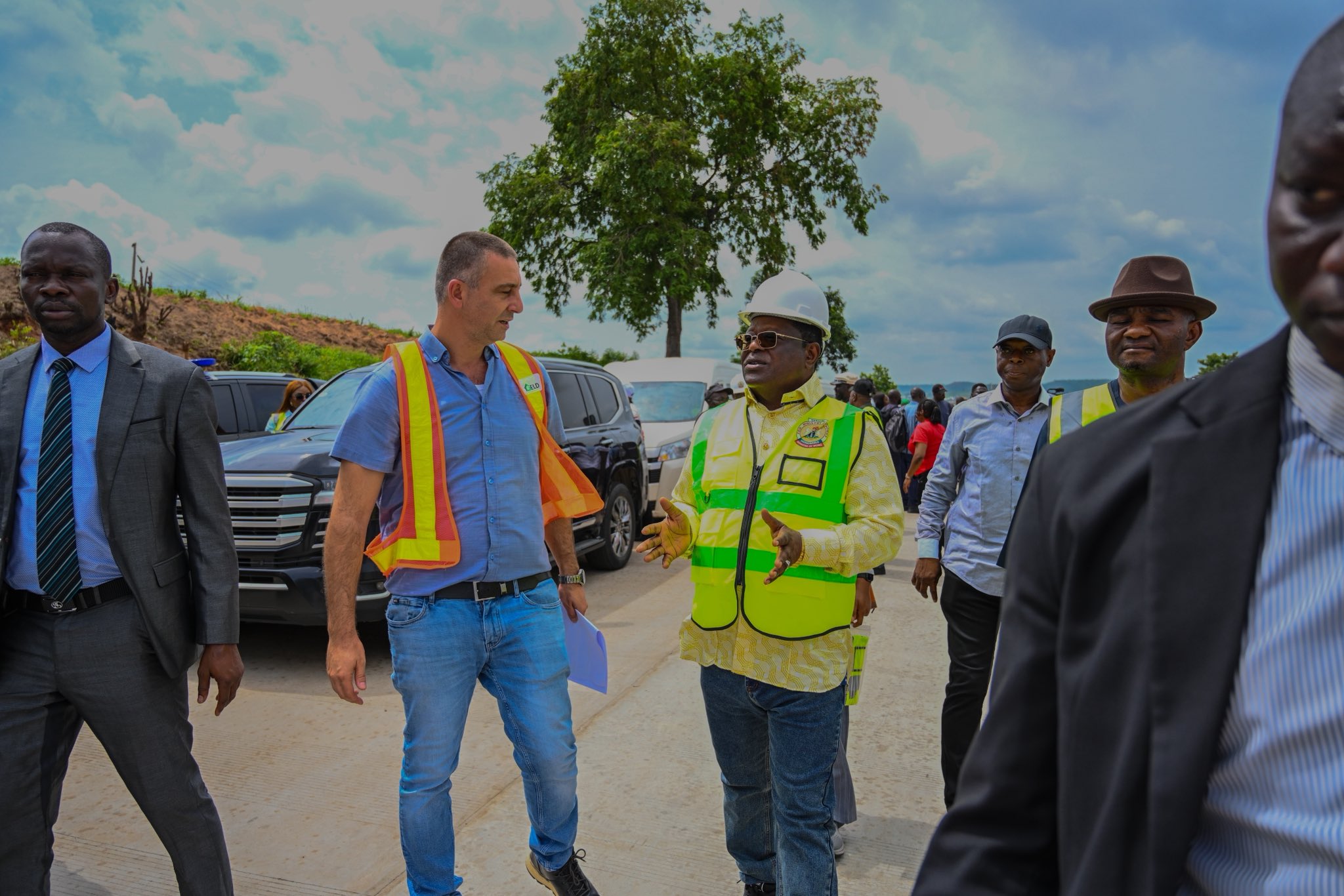
    ABUJA, Nigeria (NPA) — Minister of Works, Senator David Umahi, has issued a stern warning to contractors handling Federal Government road projects, directing them to improve performance and fulfil contractual obligations or risk sanctions, including contract termination.

    Umahi said poor project execution by contractors should not be used to undermine the infrastructure efforts of President Bola Ahmed Tinubu’s administration.

    The minister spoke during an extensive inspection tour of ongoing road and bridge projects in Kogi and Edo States, where he expressed dissatisfaction with the pace of work on sections of the Abuja-Lokoja Dual Carriageway and the Obajana Junction-Benin Road dualisation project.

    According to him, reports submitted to the ministry did not accurately reflect the realities observed on the project sites.

    “I am very sad with what I saw on the ground. What was reported to us is not reflected in the actual work being done,” Umahi said.

    The minister disclosed that funding constraints had forced the Federal Government to reduce the scope of one section of the Abuja-Lokoja road project from 49.28 kilometres to 28 kilometres in order to concentrate available resources on the most critical areas.

    He reiterated the ministry’s directive that no section of a federal highway under construction should remain closed to motorists for more than 14 days.

    Consequently, Umahi issued an ultimatum to one of the contractors handling the project to complete the affected section within the stipulated period or face contract termination.

    He also handed GELD Construction Company a 72-hour deadline to effectively utilise funds already released for its section of the project and demonstrate visible progress.

    The minister, however, commended JRB Construction Company for what he described as excellent performance, professionalism, and commitment to timely project delivery.

    “If everybody does his job accordingly, there will be no reason to shift the blame to Mr. President,” he said.

    Umahi noted that a significant portion of Nigeria’s federal road network had deteriorated before the current administration assumed office, adding that President Tinubu inherited enormous infrastructure deficits but has continued to prioritise the rehabilitation and expansion of critical road infrastructure nationwide.

    He directed Federal Controllers of Works, Engineers’ Representatives, and project supervisors to strengthen monitoring mechanisms and enforce stricter accountability standards on contractors.

    According to him, all procurement processes, project expenditures, and implementation timelines must be closely scrutinised to ensure value for money.

    During the inspection, the minister assessed ongoing reconstruction works on Section III of the Abuja-Lokoja Dual Carriageway, including pavement rehabilitation and construction of the additional carriageway being executed by Trucrete Solutions Limited on the Koton Karfe-Abuja corridor.

    He also inspected two strategic bridge projects along the route, as well as Sections I and II of the Lokoja-Benin Road dualisation project covering the Obajana Junction-Okene and Okene-Auchi corridors across Kogi and Edo States.

    Umahi further evaluated progress on the flyover and interchange components of the project being handled by CCG Contractors.

    According to project updates presented during the inspection, the flyovers have reached approximately 80 per cent completion, while the interchange stands at about 30 per cent completion.

    Speaking during the tour, Chairman of the Senate Committee on Works, Senator Allwell Heacho Onyesoh, commended Umahi’s leadership and commitment to ensuring accountability in the execution of road projects.

    He said public office holders should no longer bear responsibility for the poor performance of contractors, stressing that Nigerians expect quality infrastructure projects delivered on schedule.

    The senator added that strict supervision and enforcement of contractual obligations remain essential to achieving the Federal Government’s infrastructure development objectives.