

Northern stakeholders back Tinubu’s reforms, seek continuity beyond 2027
KADUNA, Nigeria (Agency Report) — Northern political stakeholders, academics, youth groups and civil society organisations on Saturday converged at Arewa House in Kaduna for a town hall meeting organised by the PBAT Door-To-Door Movement to assess the reforms of President Bola Ahmed Tinubu and discuss the 2027 political outlook.
The event, themed “Critical Appraisal of Government and Reforms Under President Bola Ahmed Tinubu and the 2027 Question,” featured discussions on economic reforms, governance, infrastructure development, fiscal policies and national stability.
In his opening remarks, National Coordinator of the movement, Sunday Adekanbi, said the forum was convened to encourage what he described as honest conversations around the administration’s policies and to address misconceptions surrounding ongoing reforms.

According to him, the engagement also provided an avenue to interrogate the “2027 question,” insisting that continuity of the current reform agenda remained necessary for sustainable national development.
Adekanbi said the Tinubu administration had demonstrated leadership through what he described as a “silent yet systematic revolution” across critical sectors of the economy.
“He touched every critical aspect of this country through reforms aimed at economic recovery, institutional strengthening, infrastructure development and youth inclusion,” he said.
Delivering the keynote address, Presidential Adviser on Media and Public Communication, Sunday Dare, said Nigeria was gradually moving from reforms to recovery following the economic measures introduced by the administration.
Dare acknowledged that the reforms had triggered temporary hardship but maintained that the policies were necessary to reposition the country for long-term prosperity and competitiveness.
He said the removal of fuel subsidy, foreign exchange reforms and revenue restructuring were difficult but inevitable decisions needed to avert fiscal collapse.
“Leadership is not about comfort; leadership is about responsibility. The President took decisions others were afraid to take because the country could no longer continue on the old path,” he said.
The presidential aide added that the administration was investing heavily in infrastructure, human capital development and economic modernisation to prepare Nigeria for the demands of the 21st century.
He cited interventions such as the Nigerian Education Loan Fund (NELFUND) as part of efforts to expand access to education and empower young Nigerians.
Also speaking, Prof. Solomon Gushibet, Head of the Centre for Financial Economics at the National Institute for Policy and Strategic Studies, said the Tinubu administration inherited an economy burdened by structural distortions, fiscal leakages and declining investor confidence.
Gushibet said reforms such as fuel subsidy removal and foreign exchange unification represented a transition from economic dependency to productivity-driven development.
According to him, no nation achieves transformation without sacrifice, adding that the administration had shown political courage by implementing reforms previous governments avoided for decades.
He noted that signs of economic stabilisation were gradually emerging through improved revenue generation, reduced fiscal leakages, increased investor engagement and relative stability in the foreign exchange market.
The professor, however, acknowledged challenges including insecurity, rising cost of living, debt pressures and implementation gaps in some policy areas.
He urged the Federal Government to strengthen social intervention programmes and improve communication around the reforms to address public concerns and ease economic hardship.
Gushibet maintained that continuity remained essential for the reforms to achieve long-term impact, warning that abandoning ongoing policies midway could reverse progress already achieved and undermine investor confidence.
On his part, Kaduna State Commissioner for Information, Ahmed Maiyaki, said increased federal allocations following the removal of fuel subsidy had enabled the administration of Governor Uba Sani to expand social intervention programmes and improve service delivery across key sectors.
Maiyaki said one of the major outcomes of the policy was the introduction of 100 Compressed Natural Gas buses providing free transportation for civil servants, students and residents, which he said had saved the state more than N2.8 billion within 10 months.
He added that the Kaduna State Government had prioritised education through a 50 per cent reduction in tuition fees, infrastructural upgrades and accreditation of academic programmes in state-owned institutions.
According to him, Kaduna State University and Nuhu Bamalli Polytechnic had recorded significant improvements, with several courses receiving full accreditation following sustained government investment.
Maiyaki also highlighted progress in security and healthcare, stating that previously volatile areas including Birnin Gwari, Igabi, Chikun, Kajuru and Kachia were witnessing improved peace and economic activities.
He further disclosed that the state had upgraded 255 primary healthcare facilities, recruited thousands of health workers and improved welfare packages to strengthen healthcare delivery across Kaduna State.
Stakeholders at the forum generally called for sustained national dialogue, policy consistency and inclusive governance to consolidate the gains of ongoing reforms and strengthen democratic stability ahead of the 2027 elections.
2027: Tinubu clearing your mess, Keyamo knocks Atiku Abubakar
Biafra activist Simon Ekpa awaits Finnish Appeal Court ruling on six-year jail term tomorrow
2027: APC slams Atiku over addressing Tinubu by first name, vows to maintain protocol

JUST IN: INEC defends AI use ahead of 2027 elections, promises safeguards
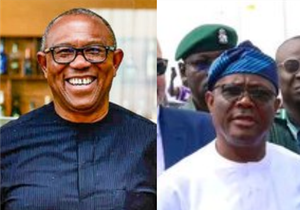
Obidient Movement warns Wike against alleged 2027 election rigging plans
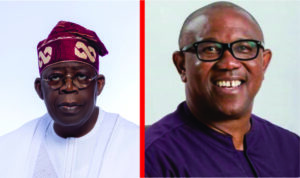
Peter Obi faults Tinubu’s one-month petrol discount, calls policy ‘reactive and confused’

Adelabu did not ask Nigerians to reject APC, media office says viral report is false
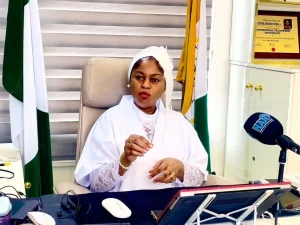
NRM presidential candidate Esther Okereke promises grassroots development
- Tinubu commissions NRS Headquarters, says new tax reforms will drive prosperity
- Tinubu assures investors of regulatory stability as Ogun, DP World sign $7bn port, SEZ MoUs
- Climate change anxiety is rising — and so is the willingness to act on it
- Ohaukwu LG Chairman Ituma breaks ground for modern diagnostic centre, blood bank
- Baseball boosts TBS, NFL gives ESPN a kick and streamers love ‘Squid’
Community Discussion