Category: International

  • Pope Leo sacks San Diego Bishop accused of stealing $250,000

    Pope Leo sacks San Diego Bishop accused of stealing $250,000

    INTERNATIONAL (NPA) — March 11, 2026 — Pope Leo has accepted the resignation of Bishop Emanuel Hana Shaleta of San Diego, following his arrest on suspicion of embezzling $250,000 from his congregation, the Vatican announced Tuesday.

    Shaleta, who has led the Chaldean Catholic community in San Diego since 2017, pleaded not guilty to 16 counts of embezzlement and money laundering during a court hearing on Monday, according to local media.

    San Diego Deputy District Attorney Joel Madero said the alleged crimes occurred in 2024 and were uncovered by a church employee who noticed missing funds, KGTV reported. Shaleta was arrested on March 5 at San Diego International Airport while attempting to leave the United States, according to the sheriff’s office.

    His lawyer told the court that the bishop had been planning a trip to Germany.

    The Chaldean Catholic Church, which follows an Eastern Christian liturgical rite but recognizes the pope’s authority, has about 71,000 members in San Diego, Vatican statistics show.

  • Trump warns Iran of ‘death, fire, and fury’ if Strait of Hormuz oil flow is blocked

    Trump warns Iran of ‘death, fire, and fury’ if Strait of Hormuz oil flow is blocked

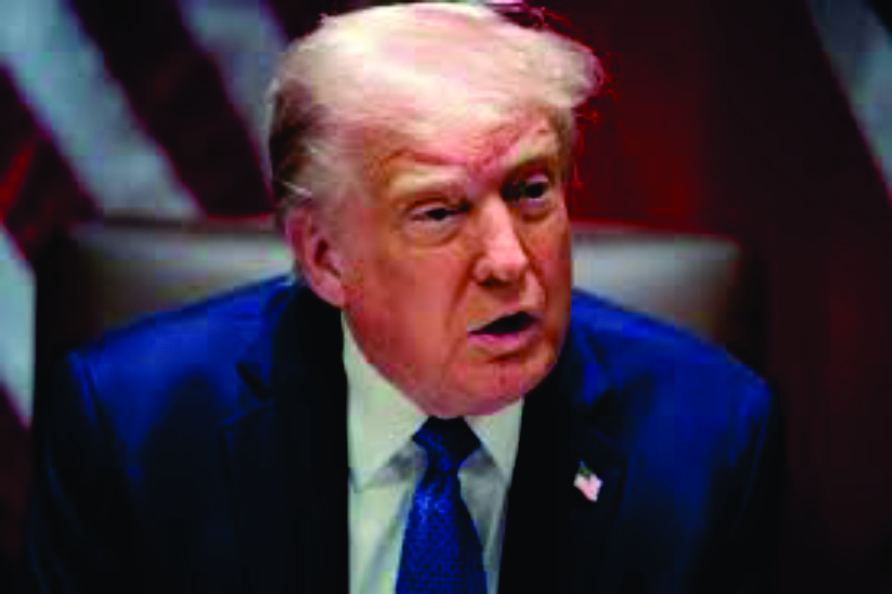
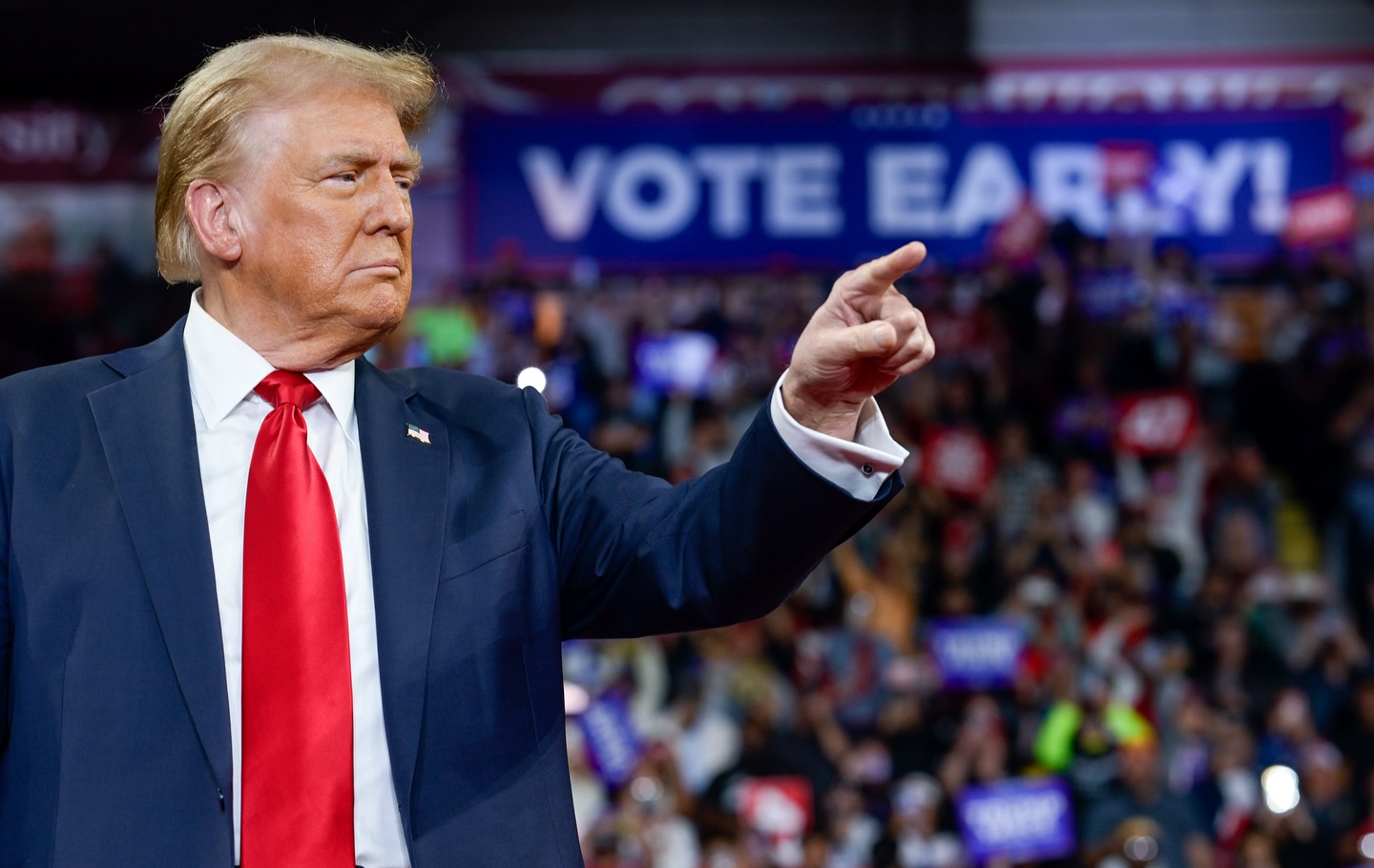
    INTERNATIONAL (NPA) — March 10, 2026 — U.S. President Donald Trump has warned of devastating consequences for Iran if it continues to disrupt maritime traffic in the Strait of Hormuz, a vital global oil route.

    Iran recently announced the closure of the Strait and threatened to attack oil tankers attempting to pass through, halting traffic and driving energy prices higher worldwide. The move is part of Iran’s strategy to pressure the United States and Israel to halt military operations against it.

    In a statement posted Tuesday on his Truth Social account, Trump said: “If Iran does anything that stops the flow of oil within the Strait of Hormuz, they will be hit by the United States of America twenty times harder than they have been hit thus far. Death, fire, and fury will reign upon them.” He added that U.S. strikes would target infrastructure to make it “virtually impossible for Iran to ever be rebuilt as a nation.”

    Global oil prices surged above $100 per barrel following Iran’s announcement. However, coordinated releases of strategic reserves by several countries, combined with Trump’s assurance that the war “will soon be over,” helped ease market pressure on Tuesday.

    The Strait of Hormuz, located between Oman and Iran, is one of the world’s most critical energy chokepoints, with roughly one‑fifth of global oil supplies passing through daily. Any prolonged disruption could have severe consequences for international markets.

    The conflict, now in its second week, has already seen heavy fighting and casualties. It remains unclear how Iran will respond to Trump’s latest warning as tensions continue to escalate.

  • Israeli President Herzog visits northern communities after Hezbollah attacks

    Israeli President Herzog visits northern communities after Hezbollah attacks

    INTERNATIONAL (NPA) — March 10, 2026 — Israeli President Isaac Herzog visited northern Israel on Tuesday to comfort residents following recent Hezbollah attacks.

    During the visit, Herzog met with the family of Staff Sergeant Maher Khatib, an engineering fighter who was killed in Lebanon a few days earlier. He offered condolences to Khatib’s widow, two daughters, and the Druze community, praising their resilience and contribution to the Israel Defence Forces (IDF).

    Herzog began his tour at the Golan Regional Council’s emergency operations centre in Katzrin, where he observed preparedness measures alongside Council Head Yehuda Doha and his team. “I saw up close how they operate during an emergency—with professionalism, dedication, and great responsibility for the residents’ security,” he said.

    He later travelled to Majdal Shams to console Khatib’s family, describing them as “a noble family, grieving and in pain, that serves as a testament to the spirit of heroism and devotion—of the Druze community and of all IDF fighters.”

    The president concluded his visit at an Iron Dome battery, where he praised commanders and air defence soldiers for their round‑the‑clock work intercepting rockets and protecting millions of Israelis.

    The escalation follows Hezbollah’s attacks on northern Israel in response to ongoing Israeli and U.S. operations in Iran. Israel’s deployment of soldiers into Lebanon has displaced many civilians, with two Israeli soldiers killed in the fighting, including Staff Sergeant Khatib.

  • Trump’s bombing of Iran is a simple farmer-herder conflict—Mike Arnold consoles Pantami

    Trump’s bombing of Iran is a simple farmer-herder conflict—Mike Arnold consoles Pantami

    INTERNATIONAL (NPA) — March 10, 2026 — Mike Arnold, a former mayor of Blanco City, Texas, USA, and now a leading activist on religious violence in Nigeria, has ridiculed Nigeria’s pioneer Minister of Digital Economy Technology, Isa Pantami, after a viral video showed him weeping over the killing of Iran’s former Supreme Leader, Ayotola Khamenei.

    Arnold, founder of Africa Arise International and Africa Arise USA, issued a sarcastic statement on Monday in response to Pantami’s grief. He asserted that the U.S. President’s bombing of Iran and the killing of its leader should be seen as nothing more than a “farmer-herder conflict.”

    He wrote: “Oh, poor terrorist. He should know that Trump bombing Iran is not really Trump’s fault. He couldn’t help himself; it was just global warming. A simple farmer-herder conflict. Maybe he should dialogue with Trump, understand his position, offer him government money and jobs. They are brothers, after all. Maybe then Trump will stop bombing Iran and we could all be happy together.”

    Arnold’s remarks reference the official stance often taken during the Buhari administration, in which Pantami served as a cabinet member. At the time, the government frequently described widespread killings by armed Fulani herdsmen as “farmer-herder clashes.”

    That narrative persisted until the Tinubu-led government reclassified such attacks as acts of terrorism, declaring that anyone who sacks villages and kills civilians would be treated accordingly. Analysts note that this shift in terminology has sharpened the mandate of security agencies, enabling them to respond more decisively to protect communities across Nigeria.

  • BREAKING: Iran’s Supreme Leader Mojtaba Khamenei Critically Injured in Israeli Strike

    BREAKING: Iran’s Supreme Leader Mojtaba Khamenei Critically Injured in Israeli Strike

    Lagos, Nigeria — March 9, 2026 — The newly appointed Iranian Supreme Leader, Mojtaba Khamenei, has reportedly been targeted in an Israeli airstrike in Tehran.

    Iranian state television confirmed the strike, stating that Khamenei was “seriously injured from an Israeli strike.”

    Further details are expected as the situation develops.

  • MICHAEL SPENCE: Adam Smith’s philosophy still sheds light on how economies grow, trade, and respond to change

    MICHAEL SPENCE: Adam Smith’s philosophy still sheds light on how economies grow, trade, and respond to change

    OPINION (NPA)— March 9, 2026 — When The Wealth of Nations was published on March 9, 1776, there was no such thing as an economics profession. Two hundred fifty years on, there is no shortage of economists, and Adam Smith is widely regarded as the godfather of their profession.

    If asked, Smith would have probably described himself as a Scot who made a living as a moral philosopher. And as for his famous book, it came to be seen as a true expression of the Enlightenment. This period of cultural and intellectual flourishing helped create an alternative vision for humanity based on reason, science, individual liberty, and human dignity.

    Despite detours and missteps, it is a moral frame of reference that resonates to this day. It is why we continue to listen to what Smith had to say.

    He illuminated the structural foundations of modern economies. Although he is best known for his idea of the “invisible hand,” Smith gave us an insight that is even more important: Moving from a static, subsistence economy to increasing income and prosperity requires what he called the “division of labor.” 

    Without this specialization, one cannot achieve dramatic increases in productivity coming from scale economies, learning curves, and improved conditions for innovation. Like all scientific discoveries, it seems obvious after the fact. 

    Division of labor

    For specialization to work, we need two structural elements, which are mutually reinforcing.

    One is trade, which is implied by specialized production. Indeed, while the supply side of the economy is specialized, the demand side is not. Hence the need for an “invisible hand” in the form of trade, a market system using prices and currencies. Trade is efficient, unless there are glaring externalities and informational gaps and asymmetries. It is economical by not requiring the collection of vast amounts of centralized information. And as a decentralized resource-allocation system, it allows for diverse preferences and creates incentives for innovation.

    Of course, Smith was no stranger to trade. His father served as the customs agent in his hometown and birthplace, Kirkcaldy, and Smith himself served as the commissioner of customs for Scotland from 1778 to 1790. While he is sometimes unfairly accused of codifying a system that glorifies selfishness, he envisioned the opposite: an economy with moral underpinnings and supporting structures, such as regulations, government revenues, and a stable currency.

    The second structural element needed for specialization is a sufficiently large market. In other words, an economy needs to generate enough demand to support the specialized producer.  Otherwise, the producing entity will have to reduce its level of specialization. Think of the general store in the American West giving way to specialized shops as the population grew and became richer and urban centers expanded.

    This is especially relevant for high-tech industries, where the total addressable market is central to assessing investment returns. The economics are clear: Developing new technology involves up-front investment. And the return on that investment is proportional to the size and scope of the market for the innovation. As an aside, the return on investment is also proportional to the duration of the market opportunity—until it is superseded by the next innovation. This is where the Schumpeterian dynamics enter the model.

    All these factors—from specialization and trade to finding ways to access large potential markets—lie at the heart of any successful development model. They are complementary and structural. It is their coevolution that produces the desired result: rising productivity and incomes, economic growth, increasing purchasing power, and the resulting expansion of domestic markets for products and services that, by virtue of growth, become more affordable and desired.

    Technology and development

    Let’s remember that Smith lived at the very beginning of the British Industrial Revolution. To my mind, it is simply stunning that he understood, and to some extent foresaw, the structural features and dynamics that have driven much of the evolution of the global economy in which we now live.

    Time and again, technology has played an essential role in directly driving productivity growth, but also in specialization via a connectivity channel, hence expanding the size of the addressable market. Smith may have seen James Watt’s steam engine (1769), which was more efficient than earlier models; if so, he would have certainly understood its potential in factories and transportation. He did not live to see the first steam locomotive, developed by Richard Trevithick in 1804. Nor did he get to see our modern digital economy, including the latest AI tools.

    But again, he would have understood the implications of these revolutionary developments: the immense benefits of expanding market size at reasonable cost, the opportunity to foster inclusive growth patterns, and the prospect of another jump discontinuity in specialization and productivity.

    The relevance to economic development is hard to overstate. Think of how specialization and trade accelerated in scale and scope after World War II. Over time, specialization moved from being a defining feature of developed economies to being one of the key engines of the entire global economy. It helped generate unprecedented growth rates, productivity expansions, and—over the past three decades—the biggest reduction in extreme poverty in human history.

    In countries in the early stages of development, income levels are low and domestic demand is limited, which in turn limits specialization. But if the global economy is accessible, the domestic demand constraint is removed, at least for tradable goods and services. Leveraging this opportunity requires technology, connectivity, and infrastructure. It also requires the removal of barriers to trade that are created by policies. Hence the importance of the General Agreement on Tariffs and Trade and its successor, the World Trade Organization, and the general acceptance that trade can be broadly beneficial to all.

    While technology, connectivity, and infrastructure cannot be acquired overnight, they can be built, and then the tradable part of the economy specializes and starts to grow. Employment shifts toward the tradable side, and average incomes grow. This income growth initially produces demand that spills over to nontradable goods and services markets. Relaxing the demand constraint on specialization beyond its tradable part benefits the economy as a whole.

    Risk and complexity

    The process of development gathers momentum because its underlying dynamics are mutually reinforcing. And yet myriad things can go wrong. These risks are well documented in the literature: macroeconomic mismanagement, instability and crises, insufficient investment in infrastructure and hence poor connectivity, and failure to leverage the opportunity created by global demand, to name just a few risks.

    Let me briefly expand on one of them. A specialized economy entails risk for the simple reason that anything that causes a disruption or failure of the trading system is dangerous, the more so the longer it lasts. Perceived risks to market openness, functioning, and access could severely constrain specialization. We could even restate Smith’s fundamental insight as follows: Specialization is limited by the extent of the market and the probability that it will remain accessible.

    One way to understand recent developments in the global economy is that, as the risks from multiple sources rise, there is a predictable partial pullback in specialization.

    Moreover, a highly specialized economy is by definition complex. The degree of specialization and complexity can be seen as different sides of the same coin. The market and network connections that underpin a modern economy exceed the capacity of its participants to fully comprehend them. Perhaps advances in AI will give us tools to enhance this comprehension and our ability to adapt. A promising and growing application of AI is precisely in assisting in the management of complex systems, such as global supply chains and smart grids. 

    Complexity also entails hidden risks, which are often systemic. They are embedded in the complex network of interconnections that are hard to see comprehensively. Unless we get better at managing them, complexity will become an additional major constraint on specialization. More broadly, complexity at this level makes it hard for people to understand the economic system. That creates a vacuum, with all kinds of unsubstantiated theories about how, and in whose interests, it works. Some of these theories risk undermining political and social cohesion. 

    All this would make for a fascinating conversation with Smith, who saw plenty of economic disruption and dislocation. He lived at a time when the economy went from extremely local—where people probably knew most of those with whom they interacted and transacted—to the beginning of a rapid increase in specialization and the scope of markets.

    This journey continues in our lifetimes. We increasingly depend on people and places we have never seen and that are largely unknown to us. We depend on science, technology, media, and expertise that go beyond our capacity to verify directly. How we address these challenges will shape our individual well-being and the wealth of nations in the years ahead.

    MICHAEL SPENCE

    MICHAEL SPENCE is a senior fellow at the Hoover Institution and Philip H. Knight Professor and dean, emeritus, at Stanford Graduate School of Business. In 2001, he was awarded the Nobel Memorial Prize in Economic Sciences.

    The opinions expressed in articles and other materials are solely those of the authors and do not necessarily reflect the views or editorial position of Newpost Africa.

  • Trump urges Australia to grant asylum to Iranian women’s soccer team or send them to US

    Trump urges Australia to grant asylum to Iranian women’s soccer team or send them to US

    Washington, D.C., US — March 9, 2026 — U.S. President Donald Trump has called on Australian authorities not to force the Iranian women’s national soccer team to return to Tehran after the players refused to sing the national anthem during a recent match, as war rages back home.

    In a statement on his Truth Social account, Trump warned that sending the team back would be a grave mistake. “Australia is making a terrible humanitarian mistake by allowing the Iran National Woman’s Soccer team to be forced back to Iran, where they will most likely be killed. Don’t do it, Mr Prime Minister, give ASYLUM. The U.S. will take them if you won’t,” he wrote.

    Trump urged Australian Prime Minister Anthony Albanese to grant the players asylum, while declaring America’s readiness to accept them if Australia declines.

    The Iranian women’s team faces serious risks in Tehran after their silent protest. State media has branded them “wartime traitors,” raising fears of persecution, imprisonment, or worse. Several players have already sought asylum in Australia, while international voices continue to press for their protection.

    Iranian state television and conservative commentators have accused the players of treason, intensifying concerns about their safety should they be forced to return.

  • Israel increases defence production for war with Iran and Hezbollah

    Israel increases defence production for war with Iran and Hezbollah

    Jerusalem, Israel (NPA) — March 9, 2026 — The Israeli Ministry of Defence (IMOD) has intensified production of military equipment, including munitions, to sustain operations in the ongoing war with Iran. The announcement came during a visit by IMOD Director General Maj. Gen. (Res.) Amir Baram to Elbit Systems, where he conducted a situational assessment with company leadership on scaling up production rates to meet anticipated defence requirements and potential expansion into additional theatres.

    “The central focus of the Ministry of Defence, per the Minister of Defence’s directive, is aerial munitions. Months of preparation and early readiness have enabled the IDF to operate with virtually no constraints in Iran and Lebanon. At the same time, we are now working to replenish all munitions expended in order to be prepared for any scenario. The decisions we made to expand and accelerate production lines in Israel before the operation will now allow us to take production rates to the next level,” Baram stated.

    The Director General expressed gratitude to Elbit Systems and other defence industries for their mobilisation. “Israel has a unique ecosystem that no other country can match: a distinctive integration between the IDF, the Defence Ministry, and the defence industries that enables the rapid translation of operational needs and battlefield lessons into real-time modifications and upgrades, creating exceptionally fast feedback loops,” he added.

    The visit was also attended by IMOD Deputy Director General and Head of the Planning Department, Itamar Graff; Deputy Director General and Head of the Defence Procurement Directorate (DPD) Ze’ev Landau; General Manager of Elbit Systems Land Yehuda (Udi) Vered; and other senior officials.

  • Iran security chief accuses U.S. of seeking Iran’s disintegration

    Iran security chief accuses U.S. of seeking Iran’s disintegration

    Tehran (NPA) — March 8, 2026 — Ali Larijani, Secretary of Iran’s Supreme National Security Council (SNSC), has accused the United States and Israel of attempting to fragment Iran through the ongoing military conflict. In a televised interview marking the war’s eighth day, Larijani said their “problem is ‘Iran’ itself… not a minor change but the total breakdown of the country.”

    He claimed the initial attacks, including the “martyrdom of Imam Khamenei and other children of the revolution,” were designed to trigger collapse. According to Larijani, Washington’s strategy relied on “shock” tactics to overthrow the government and divide Iranian territory. “Even today, Mr Trump’s published message claimed Iran is being torn apart,” he noted.

    Larijani argued the U.S. miscalculated: “They wanted to trap the people in a state of shock and awe, but they failed because the Iranian people have seen such trials before.” He added, “They did not expect the Iranians not to let go; now they are desperate.”

    He dismissed rumours of military defections, insisting the IRGC, Army, and Basij remain active. He accused the U.S. of trying to incite ethnic divisions, particularly among Kurds, but said they “know the Americans treat them transactionally and have no loyalty.”

    Condemning attacks on schools and hospitals, Larijani said, “Trump does not understand. Iranians may have differences, but they stand by Iran.” He also mocked Trump’s suggestion of deciding Iran’s future leader, calling it “backwards” and insulting.

    On U.S. casualties, Larijani alleged figures were understated and claimed American soldiers had been captured in some countries. He warned regional states against hosting U.S. bases: “If Israel has attacked us, why do you allow it to use your bases? It is Iran’s right to respond.”

    Larijani vowed to continue missile strikes until compensation is paid. “Our missile reservoirs are upright,” he said, rejecting claims of weakened capabilities. He concluded by thanking Iranians for their “zeal and pride” and warned: “Any talk that creates division is a deadly poison… We are passing through the peak of the war.”

  • Arab League holds extraordinary session, condemns Iranian attacks

    Arab League holds extraordinary session, condemns Iranian attacks

    INTERNATIONAL (NPA) — March 9, 2026 — Jordan’s Deputy Prime Minister and Minister of Foreign Affairs and Expatriates, Ayman Safadi, on Sunday participated in an extraordinary session of the Arab League Council at the ministerial level to discuss Iranian attacks on Arab countries.

    The video conference meeting was chaired by the United Arab Emirates following a request from Jordan, Bahrain, Saudi Arabia, Oman, Qatar, Kuwait, and Egypt.

    Safadi condemned Iran’s “unjustified” attacks targeting Jordan and Gulf states, according to Al Mamlaka TV. He underscored Jordan’s solidarity with the Gulf Cooperation Council (GCC), affirming support for measures taken by brotherly nations to counter Iranian aggression and protect citizens, security, and sovereignty. He also expressed appreciation for the Arab states’ support for Jordan.

    “The security of Arab nations is one,” Safadi stressed, urging a unified stance against hostilities. “Arab countries are facing brutal attacks targeting their security, stability, sovereignty, citizens, residents and facilities.”

    The minister reiterated Jordan’s solidarity with Lebanon, emphasising the need for joint efforts to safeguard its stability and sovereignty. On Palestine, he highlighted the importance of collective action to support the people’s right to freedom and the establishment of an independent state.

    Safadi warned that Arab national security faces growing challenges requiring new protection mechanisms, proposing that the council’s next ordinary session later this month focus on strategic reforms. He concluded by stressing dialogue as the primary means of resolving disputes.

    The meeting ended with a resolution condemning Iranian attacks and affirming pan-Arab solidarity.