Category: International

  • Iran labels Al Jazeera HQ in Doha a legitimate target, orders immediate evacuation

    Iran labels Al Jazeera HQ in Doha a legitimate target, orders immediate evacuation

    MIDDLE EAST (NPA) — March 22, 2026 — Iran’s Islamic Revolutionary Guard Corps (IRGC) on March 21 has reportedly issued an evacuation notice for residents of Doha, Qatar, explicitly identifying Al Jazeera’s headquarters as a potential target.

    The IRGC claimed that Doha was hosting U.S. forces and promoting anti-Iranian narratives, declaring such sites “legitimate targets.” The warning urged residents to leave areas near U.S. military facilities and hostile media centres without delay.

    The announcement shocked observers, as Qatar and its state-funded Al Jazeera network have often been viewed as sympathetic to Iran. Analysts note that years of cooperation and favourable coverage appear to have been cast aside, underscoring the volatility of alliances in the region.

    Since the outbreak of war with the United States and Israel, Iran has repeatedly launched missiles and drones at Gulf states, prompting regional governments to coordinate defences and present a united front against what they describe as escalating Iranian aggression. The latest threat against Al Jazeera adds a new dimension, targeting not only military assets but also influential media institutions.

  • Trump threatens to deploy ICE Agents to airports as DHS funding standoff continues

    Trump threatens to deploy ICE Agents to airports as DHS funding standoff continues

    INTERNATIONAL (NPA) — March 21, 2026 — Amid the ongoing shutdown of the Department of Homeland Security (DHS) due to Democrats’ refusal to approve funding without reforms to Immigration and Customs Enforcement (ICE) and Customs and Border Protection (CBP), President Donald Trump has threatened to deploy ICE agents to airports to fill the security gap.

    In a Saturday post on Truth Social, Trump called the situation an “absolute disgrace,” accusing Democrats of endangering public safety. He warned: “If the Democrats do not allow for Just and Proper Security at our Airports, ICE will do the job far better than ever done before… I look forward to moving ICE in on Monday.”

    In another post, Trump reiterated his plan, vowing ICE agents would provide airport security and target undocumented immigrants, singling out arrivals from Somalia. He linked the issue to Minnesota politics, criticising local leaders and Congresswoman Ilhan Omar.

    The DHS shutdown continues as Democrats insist on immigration enforcement reforms before approving funding, while Trump escalates pressure with threats of unilateral action.

  • Jehovah’s Witnesses to use their own stored blood in medical care — Governing Body clarifies

    Jehovah’s Witnesses to use their own stored blood in medical care — Governing Body clarifies

    INTERNATIONAL (NPA) — March 21, 2026 — On Thursday, April 2, 2026, after sundown, Jehovah’s Witnesses worldwide will gather to commemorate the Memorial of Jesus’ death. This announcement was part of the Governing Body Update #2, 2026, released in a 16-minute video on jw.org. viewed by Newpost Africa on Friday.

    In the update, a member of the Governing Body of Jehovah’s Witnesses, Brother Gerrit Lösch, provided an important clarification regarding the use of a patient’s own blood in medical procedures.

    He explained that Christians obey God by following His command to abstain from blood. While Jehovah’s Witnesses are not under the Mosaic Law, the biblical directive to avoid blood remains binding. However, Lösch noted that the Bible does not specifically address the use of one’s own blood in medical or surgical care.

    As a result, each Witness must personally decide how their own blood may be handled in medical therapy or surgery. This includes routine procedures such as blood tests, as well as more complex treatments involving the temporary removal and reinfusion of blood, such as dialysis or the use of heart-lung machines.

    Brother Lösch stated:  “After much prayer and consideration of the Scriptures, the Governing Body has decided to clarify our position on the use of a patient’s own blood in medical and surgical care. Each patient must decide for himself how his own blood will be used. This includes whether to allow his blood to be removed, stored, and then given back to him.”

    He emphasised that while some Witnesses may choose to permit storage and reinfusion of their own blood, others may object. The decision is a matter of personal conscience.

    Importantly, this clarification does not alter the Witnesses’ long-standing refusal to accept transfusions of donor blood. Instead, it provides members with the freedom to decide whether to use their own stored blood for medical procedures.

  • WHO donates Sh10 million health kits to Kenya

    WHO donates Sh10 million health kits to Kenya

    AFRICA (Agency Report/Michael Omondi) — March 21, 2026 —The Ministry of Health has received emergency health kits from the World Health Organization (WHO) valued at approximately Sh 10 million to support Kenya’s response to the ongoing March–April–May (MAM) long rains and flooding, affecting several parts of the country.

    The donation was received on behalf of the Cabinet Secretary (CS) for Health, Aden Duale, by Secretary Administration Mr Adan Halakhe from the Ministry and WHO Acting Representative to Kenya Dr Neema Rusibamayila Kimambo during a handover ceremony held at Afya House, Nairobi.

    Secretary, Administration in the Ministry of Health, Mr Adan Halakhe, delivers the remarks of the Cabinet Secretary for Health, Aden Duale, when he received the emergency health kits from the World Health Organisation to support Kenya’s response to the ongoing March–April–May (MAM) long rains and flooding affecting several parts of the country at Afya House, Nairobi, on 18th March, 2026. Looking on is the World Health Organization (WHO) Acting Representative to Kenya, Dr Neema Rusibamayila Kimambo.

    In his remarks, CS Duale expressed appreciation to WHO for the timely support, noting that the contribution will strengthen Kenya’s capacity to respond to public health risks associated with flooding.

    The CS reported that the emergency kits, which contain essential medicines, medical supplies and life-saving equipment, will support frontline health workers in providing critical care, managing disease outbreaks and maintaining essential health services in affected areas.

    Further, he noted that the ongoing long rains have led to flooding in several counties, resulting in displacement of families, disruption of services and increased risk of disease outbreaks.

    Equally, the CS reaffirmed the Government’s commitment to protecting the health and wellbeing of Kenyans, noting that the Ministry, working closely with county governments and partners, has activated emergency preparedness and response mechanisms to ensure communities at risk receive timely health services.

    “These efforts include strengthening disease surveillance, supporting rapid response teams, ensuring the availability of essential medicines and enhancing public awareness on preventive measures during the rainy season,” Duale highlighted.

    He urged members of the public to remain vigilant by maintaining proper hygiene, using safe water, sleeping under treated mosquito nets and seeking early medical care when experiencing symptoms of illness.

    Speaking during the handover, WHO Kenya Acting Representative, Dr Neema Rusibamayila Kimambo, expressed condolences to families affected by the floods and reaffirmed WHO’s commitment to supporting Kenya’s response efforts.

    She observed that flooding across several counties has disrupted access to safe water, sanitation and essential health services, increasing the risk of diseases such as cholera and malaria.

    Meanwhile, the emergency supplies handed over include cholera case management kits, rapid diagnostic and investigation kits, water treatment supplies and trauma kits expected to support health services for approximately 5,000 people in the most affected areas.

    The event was attended by Director of Public Health, Dr Stephen Muleshe; WHO officials; and senior Ministry of Health officials.

  • UN decries slow progress in reducing child mortality as 5m die annually

    UN decries slow progress in reducing child mortality as 5m die annually

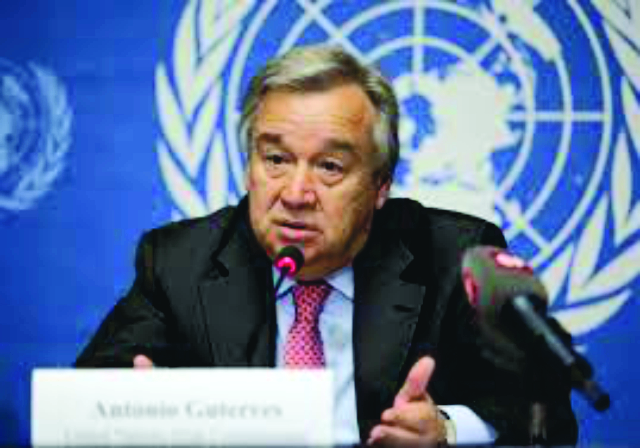
    INTERNATIONAL (Agency Report) — March 21, 2026 — The United Nations has decried the slow progress in reducing child mortality as 4.9 million children still die annually before their fifth birthday.

    Some UN agencies under the aegis of the UN Inter-agency Group for Child Mortality Estimation (UN IGME) stated this in a statement issued on Wednesday, according to a new report.

    The new UN report on child mortality fully assesses leading causes of under five deaths for first time.

    It states that an estimated 4.9 million children died before their fifth birthday in 2024, including 2.3 million newborns, according to new estimates released on Wednesday.

    The report also notes that most of these deaths are preventable with proven, low-cost interventions and access to quality healthcare.

    According to the report, titled: “Level and Trends in Child Mortality,”  under-five deaths globally have fallen by more than half since 2000.

    However, it says since 2015, the pace of reduction in child mortality has slowed by more than 60 per cent.

    “This year’s report provides the clearest and most detailed picture yet of how many children, adolescents, and youth are dying, where they are dying, and – for the first time – fully integrates estimates on the causes of death.

    “For the first time, the report estimates deaths directly caused by Severe Acute Malnutrition (SAM), finding that more than 100,000 children aged 1-59 months – or 5 per cent – died from it in 2024.

    “The toll is far greater when indirect effects are considered, as malnutrition weakens children’s immunity and increases their risk of dying from common childhood diseases,” the report says.

    The statement quoted UNICEF Executive Director, Catherine Russell as saying: “No child should die from diseases that we know how to prevent.

    “However, we see worrying signs that progress in child survival is slowing – and at a time where we’re seeing further global budget cuts.

    “History has shown what is possible when the world commits to protecting its children. With sustained investment and political will, we can continue to build on those achievements for future generations.”

    Commenting on the report, WHO Director-General, Tedros Ghebreyesus, said: “The world has made remarkable progress in saving children’s lives, but many still die from preventable causes.

    “Children living amid conflict and crisis are nearly three times more likely to die before their fifth birthday.

    “We must protect essential health and nutrition services and reach the most vulnerable families so every child has the chance not only to survive, but to thrive.”

    Also reacting to the report, World Bank Group Director, Health, Monique Vledder, said: “These findings are a collective call to speed up implementation of the proven, scalable solutions we know are within reach.

    “The World Bank Group health target of reaching 1.5 billion people is our concrete commitment to accelerating access to quality primary health services for more children and families.”

    The report further stated that mortality data also frequently fail to capture SAM as an underlying cause of death, suggesting the burden is likely substantially underestimated.

    Some of the countries with the highest numbers of direct deaths include Pakistan, Somalia, and Sudan.

    “Newborn deaths account for nearly half of all under-five deaths, reflecting slower progress in preventing deaths around the time of birth.

    “Leading causes among newborns were complications from preterm birth (36 per cent) and complications during labour and delivery (21 per cent).

    “Infections, including neonatal sepsis and congenital anomalies, were also important causes,” the report further says.

    Beyond the first month, the report states that infectious diseases such as malaria, diarrhoea, and pneumonia are major killers.

    It notes that malaria remains the single largest killer in this age group (17 per cent) – with most deaths occurring in endemic areas of sub-Saharan Africa.

    After steep declines between 2000 and 2015, progress towards reducing malaria mortality slowed in recent years.

    It further reveals that deaths remain concentrated in a handful of endemic countries – such as Chad, Democratic Republic of the Congo, Niger, and Nigeria.Nigerian government news

    The report explains that these are where conflict, climate shocks, invasive mosquitos, drug resistance, and other biological threats continue to affect access to prevention and treatment.

    “Child deaths remain heavily concentrated in a small number of regions. In 2024, sub-Saharan Africa accounted for 58 per cent of all under-five deaths.

    “In the region, the leading infectious diseases were responsible for 54 per cent of all under-five deaths.

    “In Europe and North America this proportion drops to 9 per cent and in Australia and New Zealand, it drops further to 6 per cent. These stark disparities reflect unequal access to proven, life-saving interventions,” it says.

    According to the report, fragile and conflict-affected countries continue to bear a disproportionate share of the burden.

    Children born in these settings are nearly three times more likely to die before their fifth birthday than those elsewhere.

    The report also finds that an estimated 2.1 million children, adolescents and youth aged 5–24 died in 2024.

    Infectious diseases and injuries remain leading causes among younger children, while risks shift in adolescence, with self-harm being the leading cause of death among girls aged 15–19, and road traffic injuries among boys. (NAN).

  • Trump slams NATO as ‘Paper Tiger’ over Strait of Hormuz reopening

    Trump slams NATO as ‘Paper Tiger’ over Strait of Hormuz reopening

    INTERNATIONAL (NPA) — March 20, 2026 — U.S. President Donald Trump has sharply criticized NATO allies for refusing to join a U.S.-led coalition to secure the Strait of Hormuz, amid heightened tensions with Iran following joint military operations by the United States and Israel.

    In a post on his Truth Social account Friday, Trump accused NATO of weakness, declaring: “Without the U.S.A., NATO is a paper tiger!” He argued that member states failed to act against what he described as the threat of a “nuclear-powered Iran.”

    Trump noted that despite the U.S. claiming military success against Iran, NATO countries still refused to contribute to efforts to reopen the Strait of Hormuz. He accused them of hypocrisy, saying they complain about soaring oil prices caused by the blockade but “don’t want to help open the Strait,” which he described as a straightforward military maneuver with little risk.

    The President went further, branding NATO members as “cowards” and warning that the United States would remember their inaction. His remarks underscore growing tensions between Washington and its allies over burden-sharing and collective security responsibilities.

    The Strait of Hormuz, a critical global shipping lane, has been at the center of recent conflict, with disruptions driving up energy costs worldwide. Trump’s criticism reflects his longstanding frustration with NATO’s reliance on U.S. military power and his push for allies to take on greater responsibility in global security matters.

  • Pakistan PM calls Lebanon’s leader as Israel strikes back hard to protect citizens from Hezbollah escalation

    Pakistan PM calls Lebanon’s leader as Israel strikes back hard to protect citizens from Hezbollah escalation

    MIDDLE EAST (NPA) — March 20, 2026 — Pakistan’s Prime Minister, Muhammad Shehbaz Sharif, on Friday held a telephone conversation with Lebanon’s Prime Minister, Nawaf Salam, extending Eid‑ul‑Fitr greetings while condemning what he described as “Israeli aggression” in Lebanon.

    In a statement, Sharif expressed solidarity with Lebanon, lamenting civilian casualties and displacement. He called for an immediate ceasefire and urged dialogue to restore peace and stability in the region.

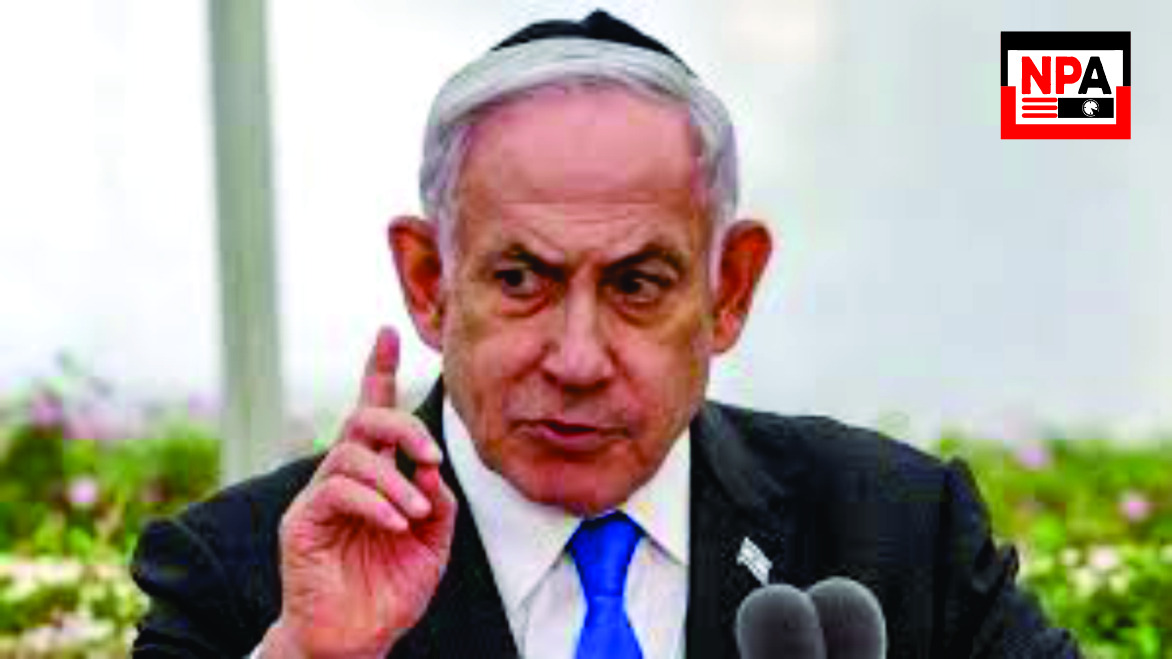
    However, regional observers note that the crisis stems from Hezbollah’s rocket attacks on Israel, which have dragged Lebanon into a wider conflict involving Iran, the United States, and Israel. Hezbollah, an Iranian‑backed proxy, has long resisted calls to disarm despite Lebanon’s pledges to rein in non‑state armed groups.

    Israel, facing relentless rocket fire on its towns and cities, has launched full‑scale military operations to protect its citizens. Officials in Jerusalem argue that Lebanon’s failure to dismantle Hezbollah left Israel with no choice but to act decisively.

    While Pakistan and Lebanon emphasize diplomacy, analysts stress that Israel’s campaign reflects its determination to safeguard national security against one of the most heavily armed militias in the world. The ongoing conflict underscores the deep divisions in international responses, with some governments condemning Israel’s strikes while others highlight Hezbollah’s responsibility for destabilizing the region.

  • Former bank CEO pleads guilty to $25m fraud and sanctions evasion

    Former bank CEO pleads guilty to $25m fraud and sanctions evasion

    INTERNATIONAL (NPA) — March 20, 2026 — The former Chief Executive Officer of Nodus International Bank, a Puerto Rican international bank, has pleaded guilty to leading a multimillion‑dollar fraud scheme and conspiring to evade U.S. sanctions against Venezuela.

    According to the U.S. Department of Justice, Tomás Niembro Concha, 64, of Miami, Florida, admitted to siphoning at least $24.9 million from Nodus Bank between 2017 and 2023. Prosecutors said Niembro and co‑conspirators concealed illegal investments and loans that benefited him and the bank’s chairman, Juan Ramirez, ultimately contributing to the bank’s collapse in 2023.

    Niembro and Ramirez allegedly caused Nodus Bank to invest $11 million in a Miami lender, then redirected the funds for personal use. They also induced the bank to buy 47 promissory notes worth $25.3 million from a company they jointly owned, again diverting the proceeds. Regulators later placed the bank into liquidation after uncovering the sham transactions.

    In addition to fraud, Niembro admitted to violating U.S. sanctions by secretly arranging prohibited financial dealings with a Venezuelan national linked to state‑owned oil company PDVSA. The scheme involved foreclosing on a property in New York, then illegally reselling it through a front company to the sanctioned individual.

    Niembro pleaded guilty to conspiracy to commit wire fraud and conspiracy to violate the International Emergency Economic Powers Act (IEEPA). Each charge carries a maximum penalty of 20 years in prison. Sentencing is scheduled for June 8, 2026, with Niembro agreeing to forfeit at least $16.9 million.

    U.S. officials stressed that the case demonstrates accountability at the highest corporate levels. “Corporate titles don’t place anyone above the law,” said IRS Special Agent Ron Loecker. Prosecutors added that the crimes undermined financial integrity and national security.

  • WTO warns Middle East conflict could slow global trade in latest report

    WTO warns Middle East conflict could slow global trade in latest report

    INTERNATIONAL (NPA) — March 20, 2026 — The World Trade Organization (WTO) says global trade growth will slow in 2026, after stronger‑than‑expected gains last year driven by booming demand for AI‑related products.

    According to the WTO’s latest Global Trade Outlook published on March 19, merchandise trade is forecast to grow by 1.9% in 2026, down from 4.6% in 2025, before picking up slightly to 2.6% in 2027. Services trade is also expected to ease, rising 4.8% in 2026 compared with 5.3% in 2025. Together, goods and services trade will expand by 2.7% in 2026, compared with 4.7% last year.

    The slowdown is linked to the ongoing Middle East conflict, which has disrupted transport routes and raised energy prices. If oil and gas prices stay high, WTO economists warn global GDP growth could fall by 0.3 percentage points, while trade growth could drop by 0.5 points — with energy‑importing regions like Asia and Europe hit hardest.

    The conflict has already blocked traffic through the Strait of Hormuz, a vital global shipping lane. This has disrupted fertilizer exports critical for farming and raised food security concerns in countries such as India, Thailand, and Brazil. Gulf states, heavily dependent on food imports, also face rising costs. Transport disruptions have cancelled tens of thousands of flights and increased insurance premiums, adding further strain on businesses and consumers worldwide.

    Despite these risks, WTO Director‑General Ngozi Okonjo‑Iweala stressed that trade remains resilient, supported by high‑tech goods and digital services. She urged governments to keep trade policies predictable and strengthen supply chains to cushion the impact.

    There is some upside: if the conflict ends quickly and AI‑related spending continues, trade growth could rise to 2.4% in 2026 and 2.7% in 2027. But if energy prices remain high, the outlook will stay fragile.

    In 2025, AI‑enabling goods such as semiconductors and data equipment grew by nearly 22%, accounting for almost half of global trade growth. WTO economists say this sector could continue to offset some of the negative effects of tariffs and geopolitical tensions, offering hope that technology will remain a bright spot in otherwise uncertain times.

  • BREAKING: U.S.–Israel strikes kill two more senior Iranian officials

    BREAKING: U.S.–Israel strikes kill two more senior Iranian officials

    MIDDLE EAST (NPA) — March 20, 2026 — Iran’s Islamic Revolutionary Guard Corps (IRGC) has confirmed the deaths of two senior figures in overnight strikes carried out jointly by the United States and Israel, on March 20, 2026.

    Brigadier General Ali Mohammad Naeini, the IRGC’s spokesperson, was among those killed. A veteran of the Iran–Iraq War and a key architect of the corps’ “soft war” strategies, Naeini had served as spokesman since 2024. The IRGC denounced the attack as a “cowardly terrorist act” by what it called the “American-Zionist alliance.”

    Reports also point to the killing of General Ismail Ahmadi, intelligence chief of the Basij paramilitary force. The Basij plays a central role in domestic security and surveillance, and Ahmadi’s death is seen as a major setback for Iran’s internal enforcement network.

    The twin losses highlight an intensifying campaign against Iran’s military and intelligence elite, raising fears of further instability and retaliation across the region. Analysts warn that the strikes not only weaken Iran’s propaganda and security apparatus but also risk escalating tensions in the already volatile Middle East.