Category: International

  • Herzog praises Lebanon’s expulsion of Iranian envoy, calls it a bold step

    Herzog praises Lebanon’s expulsion of Iranian envoy, calls it a bold step

    MIDDLE EAST (NPA) — March 25, 2026 — Israeli President Isaac Herzog has hailed Lebanon’s decision to expel the Iranian Ambassador, describing it as a bold and historic move. He said the action marks a watershed moment and could signal broader regional changes if the influence of Iran and its proxies is curtailed.

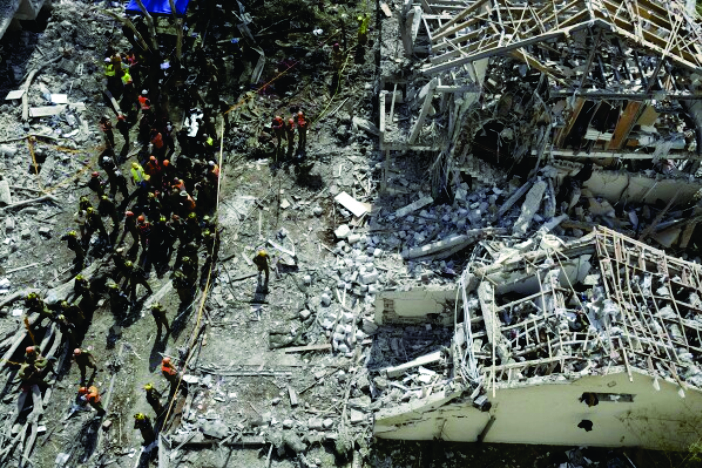
    Herzog made the remarks while visiting the site of an Iranian missile strike in Tel Aviv, which recently hit an affluent part of the city. Addressing the nation, he stressed that missiles “do not distinguish between person and person, and neither do we — the entire nation stands together in this battle.”

    The president praised Israel’s rescue forces and municipal teams for their dedication and professionalism in responding to the attack. He commended the Tel Aviv operations center for its effective management, innovative approaches, and uncompromising commitment to residents’ safety. Herzog emphasised that such resilience demonstrates the unity of Israeli society in the face of external threats.

    “I wish to thank Tel Aviv Mayor Ron Huldai and his team, and I wish to strengthen the citizens of Israel from north to south. Together we will stand and prevail,” Herzog concluded, underscoring his message of solidarity and determination.

  • Russian hacker sentenced to over six years in U.S. prison, returns $9.1M

    Russian hacker sentenced to over six years in U.S. prison, returns $9.1M

    INTERNATIONAL (NPA) — March 24, 2026 — A court in the Southern District of Indiana has sentenced Russian citizen Aleksei Volkov to 81 months in prison for assisting major cybercrime groups, including the Yanluowang ransomware gang, in attacks against U.S. companies and organisations.

    Volkov, 26, of St. Petersburg, Russia, acted as an “initial access broker,” specialising in breaking into corporate computer networks and selling that access to ransomware operators. His activities facilitated dozens of attacks across the United States, causing more than $9 million in actual losses and $24 million in intended losses. He was indicted in both Indiana and Pennsylvania, arrested in Rome, Italy, and extradited to the U.S., where he pleaded guilty to multiple charges.

    Court documents show Volkov exploited vulnerabilities to gain unauthorized access, which his co‑conspirators then used to deploy ransomware. Victims’ data was encrypted, business operations disrupted, and ransom demands made in cryptocurrency — sometimes in the tens of millions of dollars. In some cases, victims paid, while in others their stolen data was leaked online. Volkov received a share of the ransom proceeds.

    On November 25, 2025, Volkov pleaded guilty to six counts, including identity theft, trafficking in access information, conspiracy to commit computer fraud, and money laundering. He admitted to hacking networks, stealing data, and dividing ransom payments with co‑conspirators. He agreed to pay restitution of at least $9.1 million and forfeit equipment used in his crimes.

    The case was prosecuted by attorneys from the Justice Department’s Criminal Division, the Southern District of Indiana, and the Eastern District of Pennsylvania, with support from the FBI and international partners. The Justice Department’s Office of International Affairs coordinated with Italian authorities to secure Volkov’s arrest and extradition.

  • Ex-US Mayor, Mike Arnold accuses Britain of silence over Nnamdi Kanu’s imprisonment

    Ex-US Mayor, Mike Arnold accuses Britain of silence over Nnamdi Kanu’s imprisonment

    INTERNATIONAL (NPA) — March 24, 2026 — Mike Arnold, founder of Africa Arise International and former mayor of Blanco City, Texas, has accused Britain of deliberate silence over the imprisonment of British citizen Mazi Nnamdi Kanu in Nigeria.

    Arnold, a vocal critic of Christian persecution in Nigeria, on Tuesday, published a lengthy piece titled Great Britain’s Dirtiest Secret.” He described Kanu, a British passport holder and founder of IPOB — the Indigenous People of Biafra — as a peaceful advocate for Igbo rights and independence. Broadcasting legally from London, he alleged that Kanu’s movement was declared a terrorist organisation in 2017 by then‑President Muhammadu Buhari without trial or evidence. Though courts later dismissed the designation, damages were awarded, and IPOB’s activities continued.

    Arnold condemned Kanu’s abduction from Kenya in 2021 without extradition proceedings, his conviction in November 2025 under what he alleged was a repealed law, and his transfer to Sokoto prison, far from family and legal counsel. He questioned Britain’s silence in all these, noting no statement, briefing, or sanctions, despite similar actions against Russia, Myanmar, and China.

    The release emphasised the vitality of the Igbo people, describing them as dynamic and entrepreneurial, yet marginalised for decades. 

    Arnold further accused Britain of allegedly prioritising oil and Shell’s pipelines over millions of lives during the Nigeria-Biafra War, insisting that reparations and autonomy are overdue. He argued that Biafra represents justice, not instability, and warned that Washington’s reluctance to address it stems from fear.

    He broadened the critique to Nigeria’s diverse ethnic groups — Yoruba, Tiv, Berom, Kanuri, and others — all deserving freedom and self‑determination. 

    According to him, Britain’s 1970 victory left the Igbo dispossessed, with systematic marginalisation continuing: no Igbo president, underrepresentation in federal institutions, and environmental devastation in the oil‑rich southeast,’ he wrote further.

    Arnold contrasted the poverty in the Igbo homeland with the success of the Igbos in diaspora, whom he highlighted as reputable doctors, engineers, and professionals thriving in America and Britain. He concluded that the problem with Nigeria lies not with the people but with a system designed to suppress them, comparing Nigeria’s tribal divisions to America’s racial ones — both tools to keep the oppressed divided.

    Recently, Arnold and his former associate, Nigeria’s Ambassador to Mexico, Reno Omokri, publicly clashed over widespread allegations of Christian killings in Nigeria — a controversy that ultimately drew the attention of a U.S. congressional inquiry.

  • Nigeria-NNPC’s Ojulari shines as global energy leaders gather in Houston for CERAWeek 2026

    Nigeria-NNPC’s Ojulari shines as global energy leaders gather in Houston for CERAWeek 2026

    INTERNATIONAL (NPA) — March 24, 2026 — Engr. Bashir Bayo Ojulari, Group Chief Executive Officer of NNPC Limited, has been spotlighted at the ongoing CERAWeek 2026 in Houston, themed “Convergence and Competition: Energy, Technology and Geopolitics.”

    CERAWeek 2026, organised by S&P Global, is the world’s premier energy conference, drawing more than 10,000 participants from 89 countries, including top executives, ministers, and innovators. The five‑day event focuses on energy security, the transition to cleaner fuels, and the role of technology in reshaping global markets.

    Other key speakers include Amin Nasser of Aramco, Patrick Pouyanné of TotalEnergies, and Vicki Hollub of Occidental, alongside senior U.S. officials. Discussions highlight the impact of Middle East instability on oil supplies, the growing importance of renewables, and the integration of artificial intelligence into energy systems. The Innovation Agora segment showcases emerging technologies and startups driving the energy transition.

    Widely regarded as the “Davos of energy,” CERAWeek sets the agenda for investment, policy, and innovation at a time when global fuel markets face unprecedented volatility.

    In his presentation, Ojulari reaffirmed Nigeria’s strategic direction, stressing that the government’s approach is deliberate and grounded—anchored on realism, strengthened by partnerships, and driven by disciplined execution.

    “With the policy clarity and commercial autonomy provided under President Bola Ahmed Tinubu’s leadership, NNPC Limited is firmly positioned to pursue long‑term, value‑driven solutions,” he said. Ojulari emphasised that Nigeria today stands as a credible, competitive, and dependable destination for the energy investment the world requires.

  • Strait of Hormuz blockade forces Australia to lower diesel standards amid deepening fuel shortages

    Strait of Hormuz blockade forces Australia to lower diesel standards amid deepening fuel shortages

    INTERNATIONAL (NPA) — March 24, 2026 — Australia has temporarily lowered its diesel standards for six months in a bid to ease nationwide fuel shortages, as hundreds of petrol stations report running out of key fuel types.

    Energy Minister Chris Bowen confirmed that the “flashpoint” for diesel has been reduced from 61.5 to 60.5 degrees Celsius, a move designed to expand supply options from international refiners in the United States, Canada, and Europe. He stressed that the adjustment would have no impact on engines or emissions, while giving Australian refineries greater flexibility to meet demand.

    The decision comes amid mounting pressure on fuel reserves following instability in global energy markets linked to the war in the Middle East. Bowen revealed that 20 per cent of the country’s fuel reserve has already been released, but six scheduled shipments for April were cancelled, forcing reliance on alternate sources.

    Latest figures show widespread shortages: in New South Wales, 164 stations are without diesel and 289 without at least one fuel type; Queensland has 55 stations without diesel and 35 without unleaded; Victoria reports 162 stations with outages; South Australia has 46 affected, while Western Australia and Tasmania report smaller disruptions. The Northern Territory and ACT remain unaffected, though flooding has impacted supply in some areas.

    Reports of informal rationing have emerged, with service stations limiting purchases or restricting jerry can refills. The government has urged Australians to buy only the fuel they need, while the opposition has launched a website, nofuelhere.com.au, to collect community reports of shortages.

    Shadow ministers have called for biofuels to be prioritised as a backup supply, while truck drivers are set to receive new protections under amendments to the Fair Work Act to shield them from rising costs.

  • UAE intercepts latest incoming Iranian missiles and drones 

    UAE intercepts latest incoming Iranian missiles and drones 

    MIDDLE EAST (NPA) — March 24, 2026 — The Ministry of Defence of the United Arab Emirates (UAE) announced that its air defence systems intercepted waves of Iranian ballistic missiles, cruise missiles, and drones fired at the country on Tuesday, March 24, 2026.

    According to official figures, the latest assault involved 17 unmanned aerial vehicles (UAVs) and five ballistic missiles. Cumulatively, the UAE has faced 1,806 UAVs, 15 cruise missiles, and 357 ballistic missiles launched against it. Despite successful interceptions, several critical civilian and oil infrastructures were hit, including fuel storage facilities, power distribution lines, and sections of port installations, causing temporary disruptions in energy supply and trade operations in the Gulf nation.

    Over the weekend, Gulf countries convened an emergency meeting to address the escalating attacks. In a joint communiqué, member states strongly condemned Iran’s actions, describing them as violations of international law and direct threats to regional stability. The statement emphasised solidarity with the UAE, called for restraint, and urged the international community to take decisive steps to prevent further aggression.

    The communiqué also highlighted the broader implications of the strikes, warning that continued targeting of energy and civilian infrastructures could destabilise global oil markets and exacerbate humanitarian challenges across the region.

  • Philippines deploys vessels to shield fishermen amid Chinese harassment in Bajo de Masinloc

    Philippines deploys vessels to shield fishermen amid Chinese harassment in Bajo de Masinloc

    INTERNATIONAL (NPA) — March 24, 2026 — The Philippine Coast Guard (PCG) and Bureau of Fisheries and Aquatic Resources (BFAR) have deployed vessels to safeguard Filipino fishermen following continued harassment by Chinese Coast Guard ships in the Bajo de Masinloc area. The move comes after more than 20 Filipino fishing boats reported intimidation last weekend.

    In response, two PCG vessels and five fishery patrol boats were dispatched to the area, providing protection and logistical support such as fuel subsidies, food packs, and ice to extend fishing operations and ease rising fuel costs.

    PCG Spokesperson on West Philippine Sea Concerns, Jay Tarriela, confirmed the deployment, noting that PCG Commandant Admiral Ronnie Gil Gavan also ordered a Maritime Domain Awareness (MDA) flight. The aerial patrol documented six China Coast Guard vessels, 20 China Maritime Militia ships, and one People’s Liberation Army Navy warship operating nearby.

    Significantly, the PCG recorded a China Coast Guard vessel announcing via live radio broadcast its intent to conduct a “clearing operation” within coordinates spanning 15°05’N, 118°10’E to 14°14’N, 118°25’E.

    The PCG reaffirmed its commitment to President Ferdinand Marcos Jr.’s directive to defend Philippine sovereignty and maritime rights in the West Philippine Sea, pledging to uphold international law and protect the livelihoods of Filipino fishermen against external threats.

  • Death toll in Colombia plane crash rises to 66

    Death toll in Colombia plane crash rises to 66

    INTERNATIONAL (NPA) — March 24, 2026 — The death toll from the Colombian military plane crash in Puerto Leguízamo, Putumayo province, has climbed to 66, with four soldiers still missing.

    The Lockheed C-130 Hercules transport aircraft, carrying 128 people — including 115 Army personnel, 11 crew members, and two National Police officers — went down shortly after takeoff on March 23. The crash produced flames and thick smoke, with eyewitnesses reporting a large black cloud rising from the site.

    Rescue teams have recovered dozens of survivors, though many remain hospitalised with injuries. The Defence Minister, Pedro Sánchez, described the incident as a “tragic accident,” confirming that soldiers were among the victims.

    The Colombian Air Force has launched an investigation into the cause, with mechanical failure or overload considered possible factors. President Gustavo Petro expressed condolences to the families and pledged full support for rescue and inquiry efforts.

    The crash, one of the deadliest in Colombia’s military aviation history, has raised concerns about the safety and maintenance of the country’s ageing C-130 fleet. Puerto Leguízamo’s remote Amazon location has complicated rescue operations, underscoring the challenges of military transport in difficult terrain.

  • Netanyahu vows continued strikes in Iran war, claims killing of two nuclear scientists

    Netanyahu vows continued strikes in Iran war, claims killing of two nuclear scientists

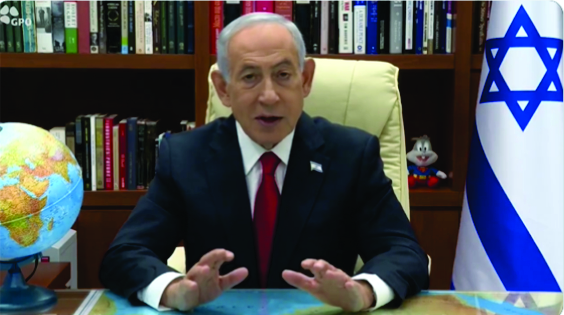
    MIDDLE EAST (NPA) — March 23, 2026 — Israeli Prime Minister Benjamin Netanyahu on Monday held discussions with United States President Donald Trump regarding the ongoing war involving the US, Israel, and the Islamic Republic of Iran.

    Netanyahu revealed that the talks focused on consolidating the “tremendous achievements” made by Israel and the US in the conflict, while exploring additional strategies to secure their war objectives in a framework that protects the vital interests of both nations.

    In a televised broadcast, on Monday, monitored by Newpost Africa, Netanyahu stressed that diplomatic engagements would not deter Israel from continuing military operations in Iran and Lebanon.

    “We are crushing the missile program and the nuclear program, and continuing to inflict severe blows on Hezbollah,” he declared. “Just days ago, we eliminated two more nuclear scientists — and the hand is still outstretched.”

    The Prime Minister emphasised that Israel’s security priorities remain unchanged, regardless of the outcome of ongoing US talks with Iran. He insisted that Israel would safeguard its national interests under any scenario, reinforcing his government’s resolve to maintain pressure on Tehran and its allies.

    Observers note that Netanyahu’s remarks underscore Israel’s determination to pursue a hardline military approach while simultaneously engaging in high‑level diplomatic coordination with Washington. The statement also highlights the dual track of Israel’s strategy: combining battlefield operations with international negotiations to secure long‑term security guarantees.

  • Rising debt forces 3.4 billion to spend more on loans than health or education

    Rising debt forces 3.4 billion to spend more on loans than health or education

    INTERNATIONAL (NPA) — March 23, 2026 — Calls for a fundamental shift in global economic governance dominated discussions at the Impact Exchange in Geneva, Switzerland, where representatives from nearly 90 Member States, UN agencies, civil society, and experts gathered to advance a “Human Rights Economy.”

    The event, organised by UN Human Rights and the Universal Rights Group with support from the Friedrich Naumann Foundation, came amid warnings of rising inequality, surging debt, and austerity measures that could affect 85 per cent of the world’s population. “Austerity could slash investments in social protection, health, education, and the environment,” cautioned Nada Al‑Nashif, UN Deputy High Commissioner for Human Rights.

    Speakers stressed that economic growth without access to healthcare, education, clean water, decent work, and a healthy environment risks deepening divides. The Human Rights Economy framework, they argued, prioritises people and the planet in fiscal choices, moving beyond GDP as the sole measure of progress.

    Claudia Fuentes Julio, Chile’s Permanent Representative and Vice President of the Human Rights Council, underscored how inequality erodes social cohesion and urged innovative strategies to strengthen democracies. Chile’s reforms include a universal guaranteed pension, free public health services, and gender‑responsive budgeting.

    From The Gambia, Cherno Marenah highlighted people‑centred budgeting and the removal of VAT on sanitary products, while Jawad Ali of Pakistan emphasised constitutional commitments to uplift marginalised communities. Spain’s representative, Miryam Naveiras, pointed to progressive taxation and the Sevilla Declaration as a roadmap for debt relief and climate‑sensitive economic planning.

    South Africa’s Mxolisi Nkosi called for a fairer global financial architecture, stressing that development is a right, not a privilege. Portugal and Malaysia echoed the need for reforms in taxation, trade, and education, while civil society voices urged the adoption of metrics that reflect well‑being, equality, and sustainability.

    Throughout the Exchange, participants agreed that even in tight fiscal times, progress is possible when human rights guide economic choices. OHCHR announced the expansion of its ESCR Knowledge Hub, showcasing promising practices from 2020–2024 to help countries operationalise the Human Rights Economy.

    The message was clear: systemic reform rooted in human rights is essential to confront inequality and achieve the 2030 Agenda.