Category: Business

  • South Africa raises petrol price by R2.04/litre amid global oil tensions

    South Africa raises petrol price by R2.04/litre amid global oil tensions

    PRETORIA, South Africa (NPA) — South Africa has announced an upward adjustment in fuel prices effective May 6, 2026, with petrol prices rising by R2.04 per litre as global crude oil prices and supply disruptions continue to pressure international energy markets.

    The adjustment was announced by the country’s Ministry of Mineral and Petroleum Resources in an official statement outlining the factors behind the latest fuel price review.

    According to the ministry, the increase follows a rise in average Brent crude oil prices from 93.67 dollars per barrel to 101 dollars during the review period, driven largely by tensions between the United States and Iran, the closure of the Strait of Hormuz, and damage to critical oil infrastructure affecting global supply chains.

    The statement noted that international petroleum product prices also increased significantly, particularly for diesel and paraffin, due to stronger demand and reduced supply from the Persian Gulf region.

    Authorities said the rising costs contributed to increases of:

    • R2.04 per litre for petrol,
    • R4.96 per litre for diesel, and
    • R4.21 per litre for illuminating paraffin.

    The ministry added that prices of propane and butane also increased during the period due to limited global supply linked to the continued closure of the Strait of Hormuz.

    On currency performance, the government said the rand remained relatively stable against the U.S. dollar during the review period, contributing less than one cent per litre to fuel price adjustments.

    The statement further disclosed that the cumulative slate balance for petrol and diesel stood at a negative R14.173 billion as of March 2026, prompting the implementation of a slate levy of 122.70 cents per litre in line with the country’s self-adjusting fuel pricing mechanism.

    Despite the increases, the South African government announced a temporary extension of fuel levy relief measures aimed at cushioning the impact on consumers.

    According to the ministry, the Minister of Finance, in consultation with the Minister of Mineral and Petroleum Resources, approved a further temporary reduction in the general fuel levy of 300.0 cents per litre for petrol and R393.0 cents per litre for diesel from May 6 to June 2, 2026.

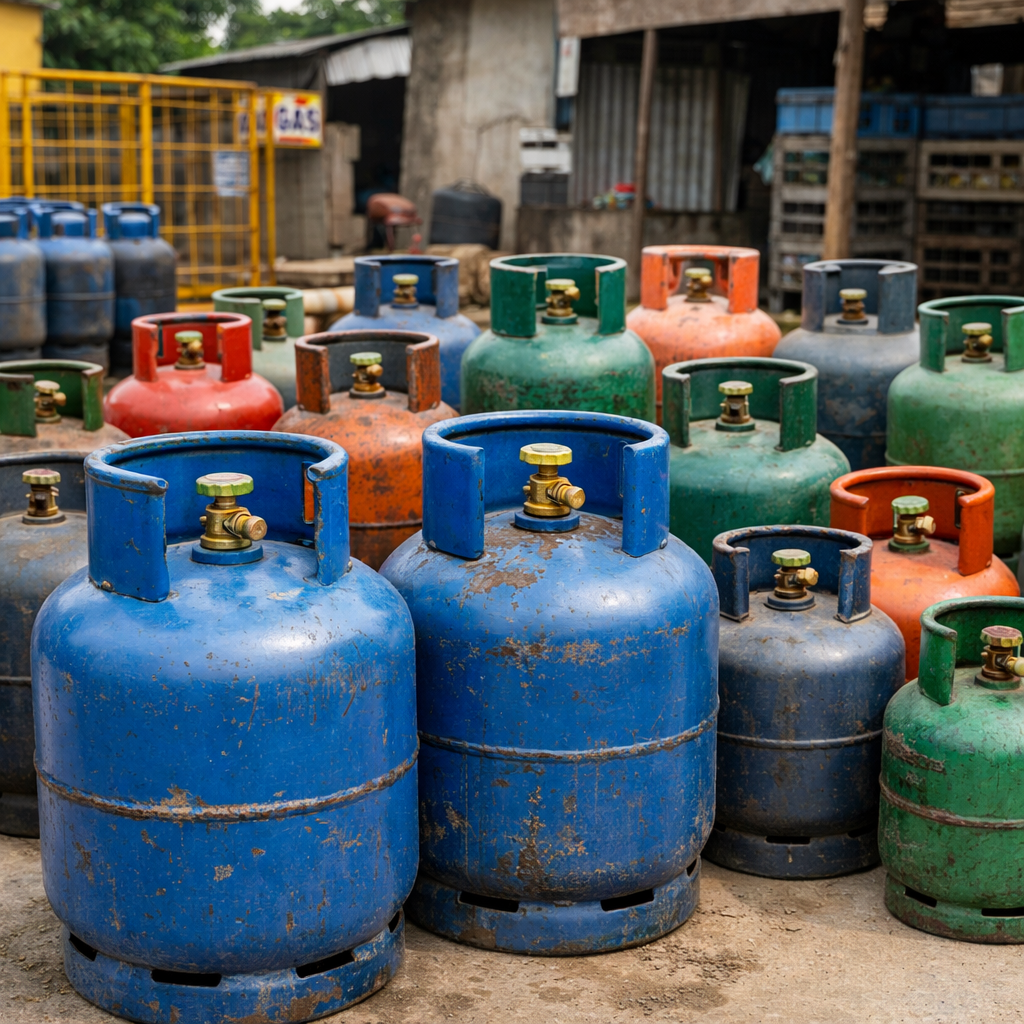
    The government also announced new Maximum Refinery Gate Price and Maximum Retail Price levels for LPG imported through the Port of Saldanha Bay in Western Cape Province.

    Under the revised pricing structure, LPG will sell at R18,375.72 per metric ton and R40.85 per kilogram effective May 6, 2026.

  • GTCO posts N302.9BN profit before tax in Q1 2026, records strong balance sheet growth

    GTCO posts N302.9BN profit before tax in Q1 2026, records strong balance sheet growth

    LAGOS, Nigeria (NPA) — Guaranty Trust Holding Company (GTCO) has reported a profit before tax of N302.9 billion for the first quarter ended March 31, 2026, reflecting sustained growth across its core banking and financial services operations.

    The group disclosed the results on Thursday in Lagos in its unaudited consolidated and separate financial statements for the period under review.

    According to the report, interest income increased by 17.5 per cent year-on-year, while fee income rose by 7.1 per cent, driven by continued momentum in its banking activities.

    GTCO’s loan portfolio grew modestly by 1.3 per cent to N3.17 trillion, supported by a 6.3 per cent rise in customer deposits to N13.69 trillion. Total assets closed at N18.7 trillion, while shareholders’ funds stood at N3.6 trillion, underscoring what the group described as a strong capital position.

    The Capital Adequacy Ratio remained robust at 39.5 per cent during the period, reflecting solid regulatory capital buffers.

    Asset quality also improved, with IFRS 9 Stage 3 loans declining to 4.4 per cent from 5.0 per cent in December 2025. Cost of risk dropped significantly to 0.2 per cent from 2.2 per cent in the previous period.

    “The group recorded growth across all asset lines and maintains a healthy, liquid and diversified balance sheet across its banking, payments, pension and funds businesses,” the statement said.

    Group Chief Executive Officer, Mr Segun Agbaje, said the results reflected a shift in earnings quality and operational strength.

    “Our Q1 2026 results mark a defining shift in the quality and composition of earnings,” Agbaje said. “We delivered solid growth across core income lines, supported by disciplined execution and a diversified, strong and healthy balance sheet.”

    He added that the group remains focused on sustainable earnings growth through stronger customer relationships, expansion of ecosystem businesses, and increased use of technology to deliver faster financial services.

    “We see significant headroom across payments, wealth management and banking in Nigeria and across West and East Africa,” he said. “We are positioning the group to capture these opportunities while sustaining strong, long-term value creation.”

    Key performance indicators showed a pre-tax return on average equity (ROAE) of 34.4 per cent and return on average assets (ROAA) of 6.6 per cent.

    The group also recorded a cost-to-income ratio of 31.5 per cent, reflecting continued operational efficiency across its businesses.

  • Wole Soyinka says NAS secretariat will strengthen humanitarian services, advocacy initiatives

    Wole Soyinka says NAS secretariat will strengthen humanitarian services, advocacy initiatives

    ABUJA, Nigeria (NPA) — Nobel Laureate Wole Soyinka says the new secretariat of the National Association of Seadogs will strengthen humanitarian services, expand charitable interventions and deepen social advocacy across communities.

    Soyinka spoke on Friday during the foundation-laying ceremony of the association’s secretariat at the Abuja Chamber of Commerce and Industry, attended by members of the association, business leaders and invited guests.

    He said the facility would serve as a permanent base for coordinating outreach, education and advocacy programmes, while also helping to address public misconceptions about the organisation.

    According to Soyinka, members must continue to uphold the association’s core values of discipline, integrity and service in all its activities.

    “Your work already speaks for itself,” Soyinka said, commending the association’s sustained humanitarian interventions and public enlightenment campaigns across the country.

    The Nobel Laureate also praised the chamber, describing it as a leading institution in economic development and private sector representation with a strong record of supporting enterprise growth.

    President of the chamber, Chief Emeka Obegolu, welcomed Soyinka and members of the association, applauding their contributions through humanitarian services, advocacy and public enlightenment initiatives.

    Obegolu highlighted the association’s interventions, including medical outreach programmes, charity drives, environmental sanitation campaigns, and the promotion of human rights, social justice and good governance.

    He said the initiatives had improved community welfare, raised public awareness and encouraged responsible citizenship and national development, particularly in underserved communities.

    According to him, the association’s activities complement government programmes while promoting civic responsibility and inclusive participation in national development efforts.

    Obegolu also urged members to strengthen collaboration with the chamber, which he described as the voice of Nigeria’s private sector with more than 16 sectoral groups.

    He noted that stronger partnerships would enhance impact, create opportunities for joint programmes and broaden the reach of both organisations’ initiatives.

  • Federal Government, Bi-Courtney resolve 20-year MM2 Airport dispute

    Federal Government, Bi-Courtney resolve 20-year MM2 Airport dispute

    ABUJA, Nigeria (NPA) — Minister of Aviation and Aerospace Development, Festus Keyamo, SAN, announced that the Federal Executive Council, presided over by President Bola Tinubu, has approved a settlement to end the two-decade-long dispute between the Federal Government and Bi-Courtney Ltd over the Murtala Muhammed Airport Terminal Two (MM2) in Lagos.

    Keyamo explained that negotiations had been ongoing for more than a year to break the impasse. Under the agreement:

    • Bi-Courtney wrote off ₦132 billion in court-assessed damages against the Federal Government.
    • Bi-Courtney handed back MMI Airport (the old local terminal), which the Supreme Court had ordered to be transferred to it.
    • Bi-Courtney relinquished its exclusive right to operate any private or domestic airport in Lagos State.
    • Bi-Courtney agreed to commence payment of concession fees under the 2003 Concession Agreement, which had been suspended during the dispute.

    In exchange, the Federal Government agreed to:

    • Write off all unpaid concession fees accumulated over nearly 20 years.
    • Return the uncompleted hotel and conference centre opposite the airport to Bi-Courtney, with a 24-month deadline for completion and shared revenue arrangements.
    • Move regional flights to MM2, subject to capacity.
    • Provide Bi-Courtney with additional land to expand the MM2 apron for more aircraft.

    The settlement brings closure to one of Nigeria’s longest-running aviation disputes. For years, the disagreement had revolved around unpaid concession fees, exclusive rights claims, and conflicting court judgments, creating uncertainty for both the government and Bi-Courtney. By resolving these contentious issues, the agreement is seen as a balanced compromise that restores revenue streams for the government, secures operational clarity for Bi-Courtney, and ultimately benefits passengers and the aviation sector by ensuring stability and growth.

  • Reps order 11 DISCOs to refund N55.42bn NMMP loan over metering failures

    Reps order 11 DISCOs to refund N55.42bn NMMP loan over metering failures

    ABUJA, Nigeria (NPA) — The House of Representatives has directed 11 electricity distribution companies (DISCOs) to refund N55.42 billion obtained under the National Mass Metering Programme (NMMP), following findings that the scheme failed to achieve its intended objectives.

    Lawmakers on Thursday adopted the report of the House Committee on Public Assets, giving the beneficiary companies a seven-month deadline to repay the loan to the Central Bank of Nigeria (CBN).

    Presenting the report before the House, the committee chairman, Uchenna Okonkwo, said the investigation uncovered significant gaps in the implementation of the metering intervention programme introduced in 2020.

    According to him, the NMMP was designed to bridge Nigeria’s metering deficit, reduce estimated billing, promote local meter manufacturing and curb revenue losses in the power sector.

    He listed the beneficiary firms as Abuja, Eko, Enugu, Ibadan, Ikeja, Jos, Kano and Yola electricity distribution companies, among the 11 DISCOs that received disbursements under the scheme.

    Okonkwo said the committee engaged the CBN, Meristem Wealth Management, NESI-SSL, the Nigerian Electricity Regulatory Commission (NERC), and other stakeholders during the probe.

    “The report indicates the programme, initiated in 2020, was to be implemented in three phases.

    “N59.28 billion was earmarked for the 11 companies, repayable at nine per cent interest, with six per cent to financiers and three per cent to the CBN.

    “The investigation revealed DISCOs received N55.42 billion, leaving N3.85 billion unaccounted for,” he said.

    The lawmaker also raised concerns over a contractual clause granting Meristem Wealth Management 0.5 per cent of DISCO collections annually until 2030.

    He disclosed that the company had already received N450 million for its services under the programme, a development the committee criticised.

    The committee further recommended that the firm provide its corporate profile, ownership structure and a comprehensive report detailing its role in the implementation of the metering initiative.

    Following the adoption of the report, the House approved the establishment of a joint loan recovery committee comprising the CBN and NERC to recover the funds from beneficiary DISCOs before the end of 2026. (NAN).

  • NNPC completes River Niger crossing of OB3 gas pipeline

    NNPC completes River Niger crossing of OB3 gas pipeline

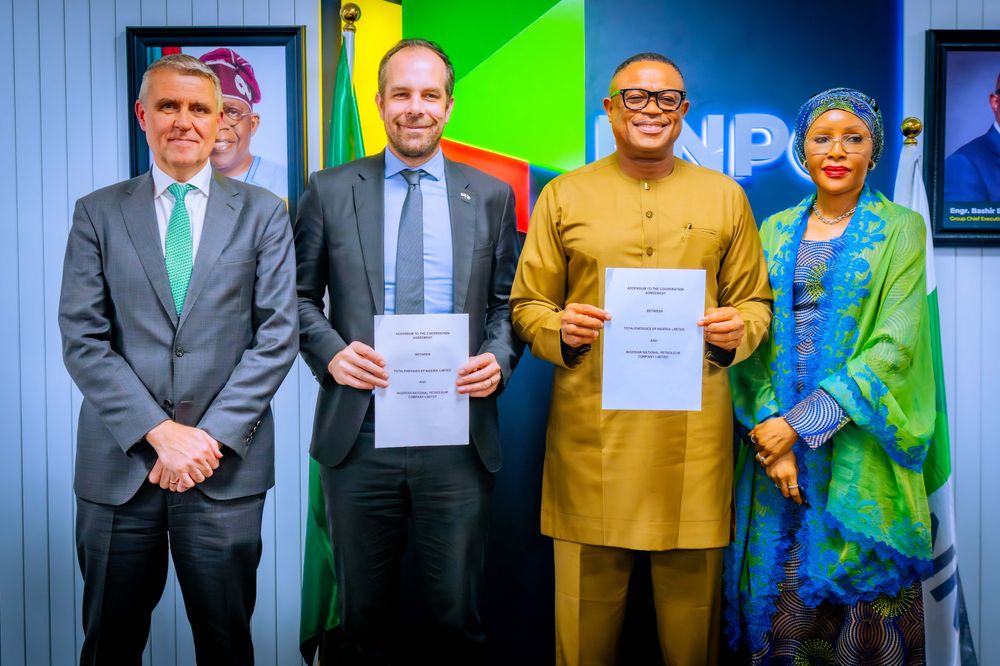
    ABUJA, Nigeria (NPA) — The Group Chief Executive Officer of NNPC Limited, Bashir Bayo Ojulari, has announced the successful completion of the River Niger crossing of the OB3 Gas Pipeline.

    He said the project was executed 2km beneath the riverbed using advanced HDD technology, unlocking a transport capacity of 2 billion scf/day to strengthen Nigeria’s energy security, power generation, and industrial growth. Ojulari noted that the achievement builds on the AKK crossing success and reflects disciplined execution, innovative engineering, and the commitment of NNPC’s team and partner, PCE Nig. Limited.

    Ojulari expressed appreciation to President Bola Ahmed Tinubu, GCFR, for his Gas‑to‑Prosperity agenda, the NNPC Board led by Chairman Ahmadu Musa Kida, host communities, and the NGIC team for their support.

    According to him, the OB3 Pipeline links East to West and connects to the Northern corridor via the AKK Pipeline, unlocking over 500 million scf/day of domestic gas.

    He explained that the AKK will supply power plants, fertiliser companies, manufacturing, and new industries across Kaduna, Kano, and beyond—driving job creation, economic diversification, energy access, and West African exports.

    Ojulari summed up the success of the project as “BIG ENERGY.”

  • Museveni defends Uganda Sovereignty Bill, reaffirms commitment to free economy

    Museveni defends Uganda Sovereignty Bill, reaffirms commitment to free economy

    KAMPALA, Uganda (NPA) — President Yoweri Kaguta Museveni has defended Uganda’s proposed Sovereignty Bill, insisting that the legislation is aimed solely at protecting the country’s independence in policy decision-making and not restricting economic freedoms, investments or legitimate financial transactions.

    In a statement released Thursday by the Government of Uganda, Museveni reiterated Uganda’s commitment to maintaining a free and open economy, stressing that there was no government policy preventing Ugandans or foreign investors from sending or receiving legally earned money anywhere in the world.

    “We run a free economy. Forex is bought and sold in privately run Forex bureaus,” Museveni said.

    “None of our policies says: do not send to Uganda or take out of Uganda money you have earned legally anywhere in the world,” he added.

    The Ugandan leader described private sector freedom as one of the pillars sustaining the country’s economic resilience and growth.

    “This is the strength of the Ugandan economy. The freedom of the private sector compensates for the obstructions of corrupt or non-patriotic public servants,” he stated.

    Clarifying the objective of the proposed Sovereignty Bill, Museveni said the legislation was designed to safeguard Uganda’s ability to independently determine its political, social, economic and diplomatic policies without foreign interference.

    “Sovereignty means: ‘Please, muteleke (leave us alone), so that we make our own decisions,’” the president said.

    “The Bill I initiated was about what we fought for — sovereignty in policy decision-making,” he added.

    Museveni also cautioned external actors against funding groups aimed at influencing Uganda’s national direction and domestic decisions. “Do not fund groups to influence our decisions as a country,” he warned.

    The president further emphasized that Uganda’s sovereignty would continue to be exercised constitutionally through democratic mechanisms including elections and referenda.

    Reflecting on Africa’s political history, Museveni noted that the continent’s struggle for independence was deliberate and hard-fought, stressing that political sovereignty also includes the freedom for nations to learn from their own decisions.

    “Independence means the right to make our own mistakes if necessary and learn from them,” he said.

    Museveni, however, assured stakeholders and investors that the proposed bill would be refined to avoid interference with private enterprise, remittances and lawful business operations.

    “The Bill will concentrate on the sovereignty of policy decision-making and not meander into areas of private enterprise or money transfers,” he stated.

    The president concluded by calling for international engagement based on positive example rather than coercion or manipulation. “Influence people by example and not by coercion or manipulation,” he said.

  • NGX trading hours extension records hitch‑free debut

    NGX trading hours extension records hitch‑free debut

    LAGOS, Nigeria (NPA) — Dr Umaru Kwairanga, Chairman of the Nigerian Exchange Group (NGX Group), says the first trading day under the newly extended market hours was smooth, with no operational hitches recorded.

    The new schedule, which commenced on Monday, April 27, shifted trading hours from 9:30 a.m.–2:30 p.m. to 9:00 a.m.–4:00 p.m. as part of efforts to enhance market efficiency and liquidity.

    Kwairanga told reporters in Lagos on Tuesday that feedback from staff confirmed the transition was seamless. “From my observation and feedback, the first day went smoothly. Operators may need a few days to adjust internal processes, but we have started a new trading era successfully,” he said.

    Vice President of Highcap Securities Ltd., Mr David Adonri, also commended the debut session, noting that all schedules were met and systems functioned appropriately.

    The seven‑hour trading window is designed to modernise the exchange, allowing more time to absorb macroeconomic data, corporate disclosures, and global financial developments. It is expected to improve price discovery, enable quicker responses to new information, and create better overlap with major international markets, making it easier for foreign portfolio investors to manage positions in real time.

  • Uganda assures citizens of stable fuel supply, warns against hoarding

    Uganda assures citizens of stable fuel supply, warns against hoarding

    KAMPALA, Uganda (NPA) — The Government of Uganda has assured citizens that the country’s fuel supply remains stable, secure, and firmly under control.

    This assurance was given by Ruth Nankabirwa Ssentamu, Minister of Energy and Mineral Development, in a statement on Tuesday. She noted that Uganda’s fuel supply is managed through her ministry and the Uganda National Oil Company (UNOC), which is mandated to sustainably develop and manage the state’s commercial interests in the petroleum sector.

    Ssentamu said Uganda maintains robust stock levels and a strong import pipeline, with more than 385 million litres of fuel scheduled between May and mid‑June.

    She reminded Oil Marketing Companies (OMCs) that isolated station‑level stock‑outs are operational issues, not national shortages, warning that any OMC found hoarding fuel will have its license revoked.

    The minister reiterated that compliance with distribution guidelines, pricing discipline, and responsible stock management is mandatory. “Government will continue strict enforcement against hoarding, speculative pricing, and illicit trade to protect market stability,” she said.

  • Governor Eno announces commencement of international flights from Victor Attah Airport

    Governor Eno announces commencement of international flights from Victor Attah Airport

    UYO, Nigeria (NPA) — Akwa Ibom State Governor, Pastor Umo Eno, has announced the commencement of international flights from Victor Attah International Airport, Uyo, following Presidential approval for its upgrade to international status.

    According to the governor, the maiden international flight is scheduled for Saturday, May 2, 2026, from Uyo to Kotoka International Airport, Accra, Ghana, with a return flight on Sunday, May 3, 2026. The historic flight will be operated by the state’s flagship carrier, Ibom Air.

    “This milestone marks another major step in our commitment to expanding aviation capacity, improving global connectivity, and positioning Akwa Ibom as a preferred destination for tourism, trade, and investment,” Eno said.

    The governor expressed appreciation to President Bola Ahmed Tinubu, GCFR, for granting the approval, and to the Minister of Aviation and Aerospace Development, Festus Keyamo, SAN, for his support in making the vision a reality.

    He also acknowledged the contributions of past leaders of the state who laid the foundation for the growth of Akwa Ibom’s aviation sector.

    The state’s aviation sector has continued to expand, earning accolades as a sustainable investment that has created jobs and positioned Akwa Ibom as an aviation hub in the West African subregion.