Category: Business

  • Nigeria’s capital importation rises 83.8% to $10.37 billion in Q1 2026

    Nigeria’s capital importation rises 83.8% to $10.37 billion in Q1 2026

    ABUJA, Nigeria (NPA) — Nigeria recorded a total capital importation of $10.37 billion in the first quarter of 2026, representing an 83.83 per cent increase from the $5.64 billion reported in the corresponding period of 2025, according to the latest Capital Importation Report released by the National Bureau of Statistics (NBS).

    The report also showed a 60.97 per cent quarter-on-quarter increase compared to the $6.44 billion recorded in the fourth quarter of 2025, signalling renewed investor interest in Africa’s largest economy.

    According to the NBS, portfolio investment remained the dominant source of capital inflows, accounting for $9.86 billion or 95.09 per cent of total capital imported during the period.

    Other investments contributed $374.48 million, representing 3.61 per cent of total inflows, while Foreign Direct Investment (FDI) recorded the lowest share at $135.08 million, accounting for just 1.30 per cent.

    A breakdown of the report revealed that the banking sector continued to serve as the primary gateway for foreign capital entering the country, accounting for the largest share of inflows.

    Standard Chartered Bank Nigeria Limited emerged as the leading recipient institution, attracting $4.41 billion, representing 42.56 per cent of total capital importation.

    It was followed by Stanbic IBTC Bank Plc, which recorded inflows of $2.78 billion or 26.79 per cent, while Rand Merchant Bank attracted $930.82 million, representing 8.97 per cent.

    Citibank Nigeria Limited and Access Bank Plc completed the top five with capital inflows of $782.84 million and $710.03 million, respectively.

    Sectoral analysis showed that banking and financing activities dominated investment inflows, jointly accounting for more than 96 per cent of total capital imported during the quarter.

    The financing sector attracted $2.43 billion, representing 23.42 per cent of total inflows, while production and manufacturing received $152.27 million or 1.47 per cent.

    Investment in shares accounted for $75.34 million, representing 0.73 per cent of total inflows.

    Other sectors recorded comparatively smaller investments, including trading with $65.79 million, agriculture with $37.28 million, and information technology services with $11.33 million.

    The telecommunications, transport, and construction sectors collectively accounted for less than one per cent of total capital importation during the period.

    The NBS noted that the continued dominance of the banking sector reflects the critical role of financial institutions in facilitating foreign investment into Nigeria.

    The strong performance recorded in the first quarter of 2026 points to improving investor confidence and a gradual recovery in capital inflows, supported largely by increased portfolio investments and sustained interest in Nigeria’s financial sector.

  • Tinubu, Oyedele highlight Lagos as engine of Nigeria’s economic growth, investment hub

    Tinubu, Oyedele highlight Lagos as engine of Nigeria’s economic growth, investment hub

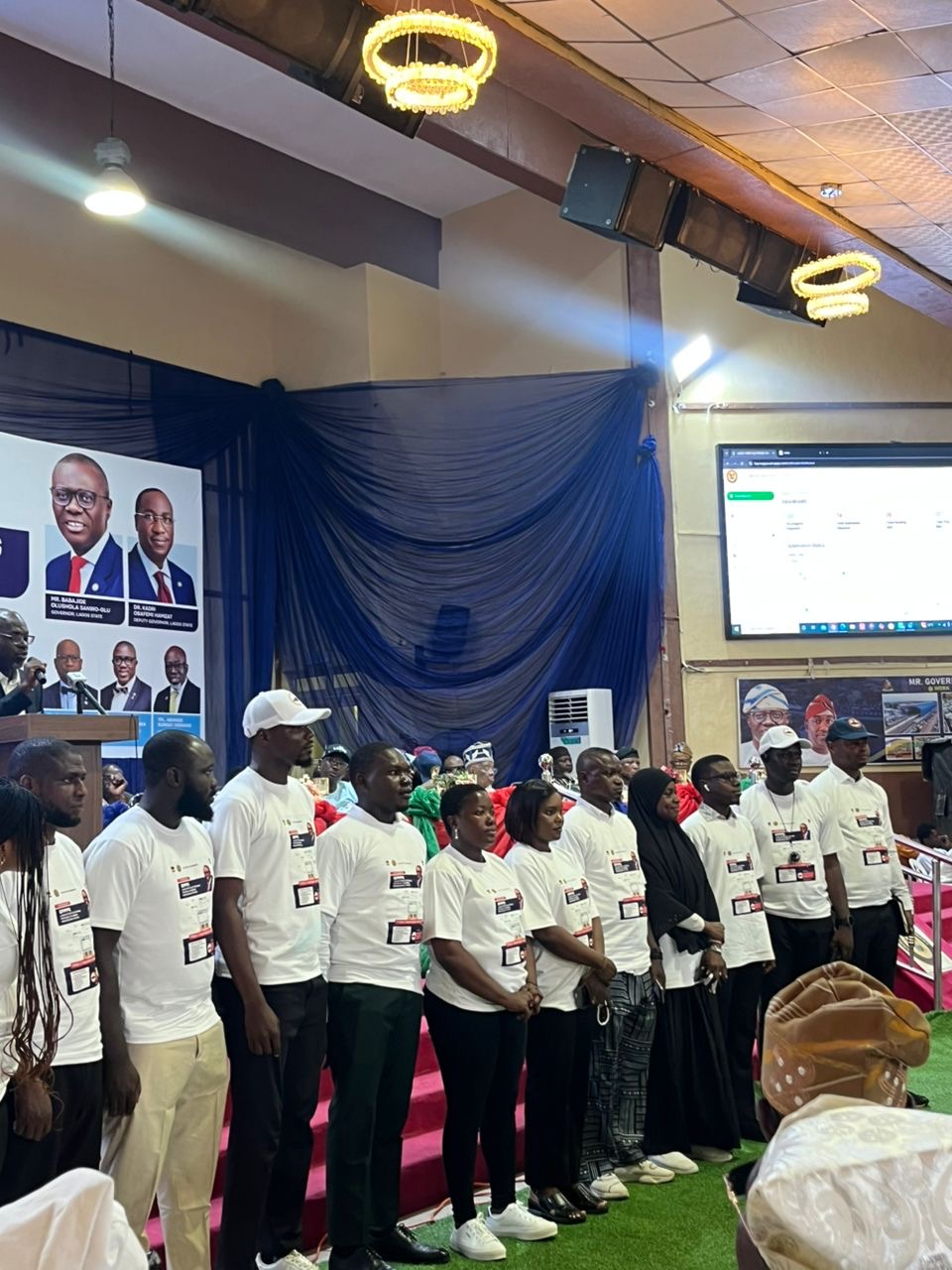
    LAGOS, Nigeria (NPA) — President Bola Tinubu has described Lagos State as a major driver of Nigeria’s economy, saying the state continues to lead the country in investment attraction, innovation, and economic growth.

    Represented by Vice President Kashim Shettima at the Invest Lagos 3.0 Summit in Lagos on Monday, Tinubu said Lagos contributes about 30 per cent of Nigeria’s Gross Domestic Product (GDP), making it one of Africa’s most significant economic centres.

    He attributed the state’s remarkable growth to policy consistency, enterprise, and a conducive environment for business and investment.

    “Lagos is Nigeria. Lagos is Nigeria,” the President declared, underscoring the state’s strategic importance to the national economy.

    According to him, Lagos offers investors unparalleled access to markets, capital, talent, infrastructure, and business opportunities, positioning it as a gateway to Africa’s vast economic landscape.

    Tinubu further noted that Lagos hosts five of Africa’s nine technology unicorns, a development he said reinforces its status as the continent’s leading hub for innovation and investment.

    The President stated that ongoing economic reforms by the Federal Government are restoring investor confidence, strengthening fiscal sustainability, and improving the country’s investment outlook.

    He added that Nigeria’s foreign reserves have grown significantly, rising to nearly $50 billion, while assuring local and international investors that the country remains open for business.

    “Nigeria is ready and open for business,” he said.

    Tinubu stressed that sustaining economic growth would require stronger collaboration between the Federal Government and subnational governments, commending Lagos for setting standards that encourage other states to improve their investment climate and competitiveness.

    Also speaking, the Minister of Finance and Coordinating Minister of the Economy, Mr Taiwo Oyedele, said state governments are increasingly becoming critical drivers of Nigeria’s economic transformation.

    “The future of Nigeria’s growth story is being written in Lagos, Kano, Enugu, Uyo and other cities,” Oyedele said.

    He noted that investors are increasingly focusing on projects, industrial clusters, logistics corridors, and economic ecosystems rather than countries alone.

    The minister cited the recent commissioning of a hyperscale data centre in Lagos as a successful example of collaboration between the public and private sectors.

    According to him, key reforms undertaken by the Federal Government have improved economic predictability, competitiveness, and profitability for investors.

    He identified exchange-rate reforms, stronger external reserves, and fiscal restructuring as some of the measures supporting macroeconomic stability.

    Oyedele disclosed that Nigeria’s economy recorded a growth rate of 3.89 per cent in the first quarter of 2026 and expanded by 11.2 per cent in dollar terms in 2025.

    He also highlighted ongoing tax reforms designed to simplify compliance procedures, improve efficiency, and support business expansion.

    “Our goal is not to tax more; it is to tax smarter,” he said.

    The minister further announced plans to establish a Nigerian Deal Room to connect investors with viable projects and unlock investment opportunities across key sectors of the economy.

    He urged investors to explore opportunities in infrastructure, agriculture, energy, manufacturing, technology, tourism, and housing, describing Nigeria as one of the world’s most attractive long-term investment destinations.

    “Nigeria remains one of the most compelling long-term investment destinations globally,” Oyedele added.

  • JUST IN: Lagos Blue Line increases daily trips to 94, introduces earlier 6:00 a.m. service

    JUST IN: Lagos Blue Line increases daily trips to 94, introduces earlier 6:00 a.m. service

    LAGOS, Nigeria (NPA) — The Lagos Metropolitan Area Transport Authority (LAMATA) has announced an expansion of services on the Lagos Rail Mass Transit (LRMT) Blue Line, increasing daily train operations from 90 to 94 trips and introducing an earlier start time for weekday and Saturday services.

    According to LAMATA, the revised timetable will take effect from Monday, June 15, 2026, as part of efforts to improve passenger experience, reduce waiting times and meet growing commuter demand on the rail corridor.

    In a statement signed by Kolawole Ojelabi, Head Corporate Communication, LAMATA said under the new schedule, train services from Monday to Saturday will commence at 6:00 a.m., 30 minutes earlier than the current 6:30 a.m. departure time.

    The authority said the adjustment is designed to enable commuters to begin their journeys earlier and avoid peak-hour road traffic.

    While train operations will continue to close at 9:30 p.m., the increase in daily trips is expected to ease platform congestion and improve overall travel efficiency across the route.

    LAMATA also announced improvements to Sunday services, with the number of trips increasing from 22 to 24.

    The authority said trains will operate at consistent 30-minute intervals throughout Sundays, providing passengers with greater predictability and convenience.

    The latest service enhancement comes amid growing patronage of the Blue Line since passenger operations commenced on September 4, 2023.

    According to LAMATA, the rail system has transported more than six million passengers since its launch, highlighting its increasing role in improving urban mobility and reducing travel times within Lagos.

    The authority said the expansion reflects its commitment to providing efficient, reliable and sustainable transportation solutions for residents of the state.

    LAMATA added that the improvements form part of ongoing efforts to strengthen public transportation infrastructure and support the movement of millions of commuters across Africa’s most populous city.

  • Sowore accuses MTN of shortchanging subscribers on data service, threatens nationwide protest

    Sowore accuses MTN of shortchanging subscribers on data service, threatens nationwide protest

    ABUJA, Nigeria (NPA) — Human rights activist and African Action Congress (AAC) presidential candidate, Omoyele Sowore, has accused telecommunications giant MTN Nigeria of shortchanging subscribers and failing to provide transparency in the management of mobile data consumption.

    Sowore’s criticism followed remarks by MTN Nigeria Chief Executive Officer, Karl Toriola, who recently stated that unlimited mobile data plans are largely unavailable globally unless customers are willing to pay significantly higher fees.

    Reacting in a statement on Monday, Sowore alleged that the telecom operator was asking Nigerians to consume less data while continuing to charge higher prices.

    “MTN’s CEO, Karl Toriola, is essentially telling Nigerians to use less of the data they paid for while continuing to charge them more. That is precisely what many consumers find unacceptable,” Sowore said.

    He argued that internet access has become an essential service in modern society and should not be treated as a luxury.

    “People buy data for work, education, business, communication, entertainment and daily life. In the digital age, data is not a luxury; it is a necessity,” he stated.

    Sowore further called for greater accountability and transparency in the telecommunications sector, insisting that consumers deserve clear information on how data is measured, priced and consumed.

    “Nigerians deserve affordable, reliable internet service, fair pricing, and complete transparency about how their data is measured, priced and consumed,” he said.

    He urged subscribers who believe they are being unfairly treated to organise and demand accountability from service providers.

    “If you believe consumers are being shortchanged, then it is time to organise, speak up and demand accountability,” he added.

    The activist also threatened a nationwide protest campaign under the hashtag #OccupyMTN, escalating his dispute with the telecommunications company.

    According to Toriola, “unlimited data on mobile networks does not exist anywhere in the world, except you are paying $400 a month.”

    He maintained that unrestricted data usage could place excessive pressure on network infrastructure and compromise service quality for subscribers.

    Sowore, however, rejected the claim, describing it as misleading and insisting that millions of consumers around the world enjoy affordable, unlimited or near-unlimited internet plans.

    The activist accused MTN executives of failing to provide accurate information about global data pricing and availability.

    MTN Nigeria has yet to issue an official response to Sowore’s latest remarks as debate over data pricing, network quality and consumer protection within Nigeria’s telecommunications sector, where mobile internet services remain critical to business, education and everyday communication, rages on.

  • DStv Nigeria announces temporary contact centre shutdown for system maintenance

    DStv Nigeria announces temporary contact centre shutdown for system maintenance

    LAGOS, Nigeria (NPA) — DStv Nigeria has announced a temporary shutdown of its customer contact centre services as part of a scheduled system maintenance exercise.

    In a notice to subscribers, the pay-TV provider said its contact centre would be unavailable from 2:00 p.m. to 8:00 p.m. on Friday, after which normal operations would resume.

    The company explained that the maintenance exercise would affect its call centre, email support and live chat services during the six-hour period.

    However, DStv assured customers that its self-service platforms would remain fully operational throughout the maintenance window.

    Subscribers can continue to access services through the MyDStv and MyGOtv mobile applications, the company’s websites and its WhatsApp service channel.

    The company said the temporary disruption is necessary to improve service delivery and enhance operational efficiency.

    DStv apologised for any inconvenience the maintenance exercise may cause and thanked customers for their understanding and continued support.

    The company advised subscribers requiring assistance during the period to utilise its available digital self-service channels until full contact centre operations resume.

  • Umo Eno leads Akwa Ibom delegation to France to advance Ibom Deep Sea Port Project

    Umo Eno leads Akwa Ibom delegation to France to advance Ibom Deep Sea Port Project

    PARIS, France (NPA) — Akwa Ibom State Governor, Pastor Umo Eno, has led a high-level delegation to France as part of ongoing efforts to accelerate the development of the Ibom Deep Sea Port, one of Nigeria’s most ambitious maritime infrastructure projects.

    The visit comes as the state government intensifies engagements with technical and investment partners following federal approvals and the completion of key project planning stages.

    In a statement issued on Friday, Governor Eno disclosed that he chaired a strategic technical session in Paris with Africa Global Logistics (AGL) Group and other stakeholders involved in the project.

    According to the governor, discussions centred on the recently completed technical feasibility report and the roadmap for moving the project from the planning phase to execution.

    “The meeting reviewed the recently completed technical feasibility report and focused on the next steps required to move the project from planning to execution,” Eno said.

    “I emphasised the need for clear timelines, defined milestones and accelerated implementation.”

    The governor reiterated his administration’s commitment to delivering the project, describing the Ibom Deep Sea Port as a strategic economic asset capable of transforming Akwa Ibom into a major maritime, trade and logistics hub.

    “The Ibom Deep Sea Port remains a key strategic project for our state. We are committed to working with our partners to bring this vision to reality and position Akwa Ibom as a major maritime, trade and logistics destination,” he added.

    Earlier in the week, Governor Eno appeared on ARISE Television’s Morning Show (monitored by Newpost Africa), where he explained that the state government was bringing together the necessary technical, financial and development partners required to actualise the project following approvals granted by the Federal Government.

    Located in Mbo Local Government Area, the Ibom Deep Sea Port is a flagship component of the broader Ibom Industrial City initiative and is designed to serve as a major maritime gateway for Nigeria, West Africa and Central Africa.

    The port is strategically positioned in naturally deep waters, enabling it to accommodate large post-Panamax vessels and ease pressure on existing ports in Lagos and Rivers State.

    The project is being developed through a Public-Private Partnership (PPP) framework and is expected to stimulate economic growth through increased trade, industrialisation, job creation and foreign direct investment.

    Upon completion, the port is projected to strengthen Nigeria’s maritime competitiveness, expand export capacity and support the growth of industries including logistics, manufacturing, oil and gas.

    Analysts view the project as a potential game-changer for the South-South region, with the capacity to drive regional integration and position Akwa Ibom as a leading commercial and industrial destination.

  • UK delegation visits NPA, deepens maritime cooperation with Nigeria

    UK delegation visits NPA, deepens maritime cooperation with Nigeria

    LAGOS, Nigeria (NPA) — The Nigerian Ports Authority (NPA) has reaffirmed its commitment to strengthening maritime cooperation with the United Kingdom following a high-level visit by a British delegation led by the Deputy British High Commissioner, Jonny Baxter, and the United Kingdom National Hydrographer, Rear Admiral Angus Essenhigh.

    The delegation, which also included officials of the United Kingdom Hydrographic Office (UKHO), paid a courtesy visit to the Managing Director of the NPA, Dr Abubakar Dantsoho, at the authority’s headquarters.

    The visitors were received by the NPA Managing Director, alongside the Executive Director, Engineering and Technical Services, and other members of the authority’s senior management team.

    Discussions centred on expanding the longstanding maritime partnership between Nigeria and the United Kingdom, particularly in the areas of hydrography, navigational safety, port development and capacity building.

    During the meeting, Dantsoho highlighted the NPA’s ongoing modernisation initiatives, including major investments in port rehabilitation, channel improvement projects and critical infrastructure upgrades designed to enhance operational efficiency and strengthen Nigeria’s position as a leading maritime hub in the region.

    The Managing Director noted that the reforms are aimed at improving port competitiveness, facilitating trade and supporting the growth of Nigeria’s blue economy.

    The UK delegation reaffirmed its commitment to supporting Nigeria’s hydrographic development through technical cooperation and knowledge exchange.

    Areas of support discussed include nautical charting, implementation of S-100 hydrographic standards, digitalisation of maritime services and specialised training programmes for NPA personnel.

    Both sides expressed optimism that enhanced collaboration would contribute to safer navigation, improved port operations and greater efficiency within Nigeria’s maritime sector.

  • EU unveils €641 million investment package to boost Moldova’s economy

    EU unveils €641 million investment package to boost Moldova’s economy

    BRUSSELS, Belgium (NPA) — The European Union has announced investment plans and project initiatives worth up to €641 million aimed at strengthening Moldova’s economy, improving infrastructure and accelerating the country’s integration into European markets.

    The announcement was made by the European Commissioner for Enlargement, Marta Kos, during the EU-Moldova Investment Conference.

    According to the European Commission, the package brings together funding from international financial institutions, private sector partners and public stakeholders to support key sectors including energy, digital infrastructure, education and sustainable agriculture.

    The initiative is designed to enhance Moldova’s economic resilience, expand access to finance, modernise infrastructure and deepen integration into European value chains.

    A major component of the package includes up to €433 million mobilised through a combination of European Union grants, guarantees and loans in partnership with leading international financial institutions.

    Under the arrangement, the Agence Française de Développement (AFD) will support energy-efficiency projects in public buildings and residential housing, while the European Investment Bank (EIB) will finance the modernisation of school infrastructure across Moldova.

    The European Bank for Reconstruction and Development (EBRD) will support the development of digital infrastructure and services, strengthen strategic investment frameworks and enhance private-sector competitiveness and innovation.

    The European Fund for Southeast Europe (EFSE) and the Green for Growth Fund (GGF) will help expand access to finance for businesses and households.

    In addition, eight private-sector projects worth up to €208 million in planned investments were selected under the EU’s Call for Expressions of Interest for private investments in Moldova.

    Letters of Intent were signed in the presence of Moldova’s President Maia Sandu, Prime Minister Alexandru Munteanu and Commissioner Kos.

    The selected projects include investments in private equity, data centres, technology innovation, pharmaceuticals, manufacturing, logistics, water infrastructure and agricultural exports.

    Among the companies involved are INVL, TET, Micro Nano Tech, Balkan Pharmaceuticals, KB Container, Danube Logistics, BOSAQ and VED-MAR AGRO.

    The EU said the investments are expected to support Moldova’s economic transformation, improve connectivity, strengthen industrial capacity and create new opportunities for businesses and citizens.

    Looking ahead, the European Union and Moldova are expected to hold their second EU-Moldova Summit on June 22, where both sides will reaffirm their strategic partnership and commitment to Moldova’s European integration ambitions.

    The investment package forms part of the EU’s broader Growth Plan for Moldova, a €1.9 billion programme proposed in October 2024 to support reforms, economic growth and development between 2025 and 2027.

    According to the European Commission, Moldova has already received €504 million under the Growth Plan, making it the largest financial support package ever provided by the EU to the country.

    EU officials said they will continue working closely with the Moldovan government, international financial institutions and private-sector partners to ensure the successful implementation of the announced projects and deliver tangible benefits for citizens and businesses.

  • TCN announces seven-hour power outage in Iwo, Bowen and others for transformer maintenance

    TCN announces seven-hour power outage in Iwo, Bowen and others for transformer maintenance

    ABUJA, Nigeria (NPA) —The Transmission Company of Nigeria (TCN) has announced a planned seven-hour power outage in parts of Osun State to facilitate annual maintenance on a major power transformer at the Iwo Transmission Substation.

    According to a statement issued by the General Manager, Public Affairs, Mrs Ndidi Mbah, routine maintenance will be carried out on the 40MVA 132/33kV power transformer at the Iwo Transmission Substation on Thursday, June 4, 2026, from 10:00 a.m. to 5:00 p.m.

    TCN said the exercise forms part of its ongoing efforts to ensure the reliability, stability, and efficient operation of the national transmission network.

    As a result of the maintenance work, the Ibadan Electricity Distribution Company (IBEDC) will be unable to receive bulk power supply from the transmission station during the period. Consequently, electricity consumers in Iwo Town, Bowen University, and Rabbish will experience a temporary power interruption.

    The transmission company assured that power supply would be restored immediately after the maintenance exercise is completed and apologised for the inconvenience the outage may cause affected customers.

  • DBN disburses over N1tn to MSMEs, supports 1.6 million jobs

    DBN disburses over N1tn to MSMEs, supports 1.6 million jobs

    LAGOS, Nigeria (NPA) — The Development Bank of Nigeria (DBN) Plc says it has disbursed more than N1 trillion to over one million Micro, Small and Medium Enterprises (MSMEs), supporting the creation of more than 1.6 million jobs since its inception.

    Managing Director of DBN, Dr Tony Okpanachi, disclosed this on Wednesday in Lagos, outlining the bank’s achievements and growth strategy for the next five years.

    Okpanachi said the bank’s next phase of expansion would focus on deepening financial inclusion, mobilising additional capital and increasing support for underserved sectors of the economy.

    According to him, DBN aims to reach more than two million MSMEs and facilitate the creation of two million direct and indirect jobs over the next five years.

    “Our strategic intent over this period is to achieve scale by expanding support for MSMEs and strengthening inclusive economic growth,” he said.

    The managing director said the bank is targeting N1 trillion in outstanding loans and plans to issue N500 billion in guarantees under its new strategy. He added that DBN also intends to mobilise N1.3 trillion in debt and equity capital to support its expansion plans.

    Okpanachi noted that inclusion remains a key pillar of the bank’s strategy, with 40 per cent of loans earmarked for women-led businesses and 30 per cent reserved for youth-owned enterprises. He added that 15 per cent of disbursements would target MSMEs in underdeveloped geopolitical zones and focus states.

    The bank also plans to expand green financing to between N75 billion and N100 billion while training 500,000 MSMEs through its capacity-building programmes.

    Reviewing the bank’s cumulative impact, Okpanachi said DBN has onboarded 84 Participating Financial Institutions (PFIs), including commercial banks, microfinance banks, merchant banks and development finance institutions.

    He disclosed that women-owned businesses accounted for 77 per cent of beneficiaries, while 28 per cent were youth-led enterprises.

    According to him, DBN disbursed N108 billion to more than 132,000 MSMEs operating in economically disadvantaged and conflict-affected states such as Borno, Adamawa, Katsina, Yobe and Zamfara.

    In 2025 alone, the bank disbursed over N358 billion to more than 289,000 beneficiaries and onboarded five additional PFIs.

    Speaking on the performance of DBN’s subsidiary, Impact Credit Guarantee Ltd. (ICGL), Okpanachi said the company has guaranteed loans exceeding N500 billion since inception.

    He noted that ICGL, established in partnership with the World Bank, has supported more than 93,000 MSMEs and small corporates through over 130,000 credit guarantees, helping to sustain more than 203,000 jobs.

    The subsidiary has also expanded its reach through partnerships with institutions including the African Development Bank and the European Investment Bank.

    On financial sustainability, Okpanachi projected a cumulative five-year profit before tax of about N300 billion.

    “We are balancing developmental impact with strong financial performance to ensure DBN remains a sustainable development finance institution,” he said.

    He added that the bank has maintained stable supervisory ratings from the Central Bank of Nigeria and retained top credit ratings from Agusto & Co. and GCR Ratings.

    Also speaking, Managing Director of ICGL, Mr Anthony Asonye, highlighted the critical role of credit guarantees in improving access to finance for MSMEs.

    Asonye described credit guarantees as an effective tool for reducing lending risks and encouraging financial institutions to extend credit to underserved businesses.

    He noted that Nigeria’s informal sector, despite contributing significantly to economic growth, continues to face limited access to formal financing due to perceived lending risks.

    According to him, Nigeria has about 41 million registered SMEs, contributing between 45 and 49 per cent of the nation’s Gross Domestic Product (GDP), yet receiving less than one per cent of total commercial bank lending.

    “SMEs contribute nearly half of our GDP, yet they receive less than one per cent of total banking credit,” Asonye said.

    “Banks are often reluctant to lend because many SMEs lack adequate collateral, while prevailing risks in the operating environment push lending rates to between 35 and 40 per cent.”

    To address the challenge, he said ICGL operates a World Bank-backed credit-collateral substitute scheme designed to de-risk lending to MSMEs.

    He explained that the scheme provides silent guarantees to commercial banks, covering up to 60 per cent of default risk for standard loans and up to 75 per cent for businesses owned by women and young entrepreneurs.

    “Our guarantee is a first-class, cash-backed collateral substitute,” he said.

    “Commercial banks can deploy more assets to the SME sector with confidence, knowing there is a reliable backstop. It is a silent guarantee designed to minimise moral hazard while incentivising lending to the real drivers of the economy.” (NAN)