Category: Business

  • Air Peace launches flights to Douala, Libreville, Bamako, Conakry

    Air Peace launches flights to Douala, Libreville, Bamako, Conakry

    LAGOS, Nigeria (NPA) — Air Peace has announced the launch of scheduled flight services from Lagos to Douala (Cameroon), Libreville (Gabon), Bamako (Mali), and Conakry (Guinea), effective August 1, 2026.

    The new routes form part of the airline’s expansion strategy aimed at strengthening connectivity across West and Central Africa while supporting trade, tourism, investment, and regional integration.

    Under the new schedule, Air Peace will operate the Lagos–Douala–Libreville route four times weekly on Mondays, Wednesdays, Fridays, and Sundays.

    The Lagos–Bamako–Conakry service will operate on Tuesdays, Thursdays, and Saturdays.

    The airline said the additional destinations will further strengthen Lagos’ position as a major aviation hub linking West and Central Africa with its extensive domestic and international network.

    Passengers travelling from Douala, Libreville, Bamako, and Conakry will have access to onward connections to several Nigerian cities, including Abuja, Port Harcourt, Enugu, Benin, Owerri, Kano, Asaba, Ibadan, Yola, Maiduguri, and Gombe.

    According to a report by The Travel Port, the new services will also provide easier access to Air Peace’s international destinations, including London Gatwick in the United Kingdom and Caribbean destinations such as Antigua and Barbados.

    Commenting on the development, Air Peace management said the expansion reflects the airline’s commitment to providing safe, reliable, and affordable air transportation across Africa.

    “The launch of these new regional services underscores our commitment to connecting Africa through safe, reliable, and affordable air transportation. By expanding our footprint across West and Central Africa, we are facilitating commerce, tourism, investment, and regional integration,” the airline said.

    Air Peace noted that the routes align with the objectives of the African Continental Free Trade Area (AfCFTA) and the Single African Air Transport Market (SAATM), which seek to improve connectivity and reduce travel barriers across the continent.

    Bookings for the new services are now available through the airline’s website, mobile application, contact centre, and accredited travel agencies.

    The carrier said it remains committed to expanding access to air travel while strengthening Nigeria’s position as a leading aviation gateway in Africa.

  • Google unveils Android 17 with new productivity, gaming and security features

    Google unveils Android 17 with new productivity, gaming and security features

    GOOGLEPLEX, California (NPA) — Google has announced the release of Android 17, describing it as a major update packed with new features designed to enhance productivity, entertainment, and security. The rollout begins today for Pixel devices, with other eligible Android phones set to receive the update throughout 2026.

    According to Seang Chau, VP and GM of Android Platform, “Android 17 is here, bringing a suite of features designed to enhance your productivity, entertainment, security and safety.” He added that select advanced devices will gain Gemini Intelligence later this summer, offering proactive assistance to help users manage daily tasks.

    Among the standout features is Bubbles multitasking, which allows any app to be converted into a floating window for quick access. On large‑screen devices, bubbles dock in a dedicated bar, enabling seamless switching and resizing.

    Another highlight is Screen Reactions, a tool that lets users record themselves with the selfie camera while capturing their phone screen, making it easier to share reactions over apps, sites, and trending videos without complex setups.

    For gamers, Android 17 introduces Foldable Gaming Mode, offering a split layout with gameplay on top and a dynamic gamepad below. The update also improves memory cleanup to reduce frame drops and stutters during high‑definition gaming.

    Security has been strengthened with features such as temporary location sharing, selective contact access, and an enhanced “Mark as Lost” option in Find Hub, which locks missing phones with biometrics. Updates to Live Threat Detection and Advanced Protection Mode further guard against suspicious apps and sophisticated threats.

    Additional improvements include expanded parental controls, a dedicated assistant volume control, more customisation for dark mode, and app memory limits to boost performance and battery life. Pixel devices also receive exclusive updates through the June Pixel Drop, including real‑time screen reactions, Gemini Omni creative tools, and expanded safety features like Car Crash Detection and Loss of Pulse Detection.

    With Android 17, Google positions its platform as more powerful, secure, and creative, aiming to meet the demands of an AI‑driven mobile era.

  • 1Password acquires Israeli cyber startup Apono in landmark $250M–$300M deal

    1Password acquires Israeli cyber startup Apono in landmark $250M–$300M deal

    TEL AVIV, Isreal (NPA) Canadian cybersecurity giant 1Password has acquired Israeli startup Apono in a deal valued between $250 million and $300 million, marking its first acquisition in Israel and a significant expansion beyond password management into access governance.

    Apono, founded in 2022 by Rom Carmel and Ofir Stein, operates an AI‑powered platform that manages permissions and access to cloud infrastructure. The company eliminates standing permissions by providing dynamic, real‑time access based on business needs and context. Its technology is designed to address the growing challenge of securing both human and non‑human digital identities in the AI era.

    All 80 of Apono’s employees, including 50 based in Israel, will join 1Password, which also plans to expand its local operations with new hires. Carmel, who previously held R&D leadership roles in the Prime Minister’s Office cyber division, and Stein, a former Air Force Ofek unit officer and early developer at Logz.io, bring decades of DevOps and cybersecurity experience to the acquisition.

    Apono has raised $54 million since inception, with investors including Meron Capital, USVP, 33N Ventures, New Era Capital, and others. In December 2025, the company announced its Series B round, led by USVP and 33N Ventures. Board member Ziv Conen of New Era Capital described Apono’s vision as “securing access for AI agents,” highlighting its role in the next frontier of cybersecurity.

    The platform serves Fortune 500 companies and enterprises across the United States, Europe, and Israel, with customers such as Hewlett Packard Enterprise, Jasper, and Bloomreach. It supports access management across AWS, Azure, Google Cloud, Kubernetes, Snowflake, and Databricks, and integrates with more than 200 enterprise applications including Slack, Jira, PagerDuty, and GitHub.

    1Password, valued at approximately $6.8 billion, reported annual recurring revenue of more than $400 million at the end of 2025. The acquisition of Apono strengthens its position in identity and access security, expanding its reach into governance and compliance — areas where Israeli firms like CyberArk and Wiz are already major players.

    The deal comes as organizations worldwide adopt artificial intelligence and face a surge in non‑human digital identities. Apono’s system grants access on a just‑in‑time basis and revokes it immediately after tasks are completed, reducing the need for permanent accounts and simplifying deployment.

    By acquiring Apono, 1Password positions itself at the forefront of identity security in the AI era, combining its global scale with Israeli innovation to tackle one of cybersecurity’s most pressing challenges.

  • Afreximbank secures positive investment grade rating from S&P Global

    Afreximbank secures positive investment grade rating from S&P Global

    CAIRO, Egypt (NPA) — African Export-Import Bank (Afreximbank) has been assigned a ‘BBB+’ long-term issuer credit rating and an ‘A-2’ short-term issuer credit rating by S&P Global Ratings, with a Stable Outlook. The move reinforces the Bank’s strong financial standing and its critical role in driving trade, industrialisation, and economic development across Africa and the wider Global Africa community.

    According to S&P, the rating reflects Afreximbank’s growing strategic importance, robust enterprise risk profile, and expanding role as a countercyclical institution supporting African economies through periods of global and regional uncertainty. The agency highlighted the Bank’s strong policy relevance and shareholder support, underscoring its role in advancing intra-African trade, supporting the African Continental Free Trade Area, and developing transformative platforms that strengthen regional integration and resilience.

    Between 2015 and 2025, Afreximbank’s total assets expanded from $7.1 billion to $42.3 billion, while shareholders’ equity grew from $1.3 billion to $8.4 billion, reflecting significant capital injections and lending growth.

    Commenting on the rating, Afreximbank President and Chairman of the Board Dr. George Elombi described it as “a strong endorsement of Afreximbank’s financial strength, stability, and international credibility, and a clear affirmation of its strategic importance to — and impact across — Global Africa.” He added that Africa’s economic transformation requires “deliberate, bold, courageous and decisive action by the continent itself, working with its diaspora.”

    S&P also noted Afreximbank’s track record in responding to external shocks, including the global financial crisis, commodity price downturn, COVID-19, the Russia-Ukraine conflict, and most recently the Middle East crisis. The Bank has announced a US$10 billion Gulf Crisis Response Programme (GCRP) to shield African and Caribbean economies from regional shocks.

    Afreximbank continues to strengthen systems supporting African trade and investment, including the Pan-African Payment and Settlement System, the Africa Trade Gateway, and the AfCFTA Adjustment Fund. The Stable Outlook reflects S&P’s view of Afreximbank’s strengthened role as a countercyclical lender, ongoing shareholder support, and consecutive capital increases.

    The Bank remains focused on delivering its mandate to transform the structure of African trade by supporting industrialisation, expanding intra-African trade, strengthening regional value chains, and increasing Africa’s participation in global trade.

  • LPG retailers urge producers to prioritise local market as cooking gas prices rise

    LPG retailers urge producers to prioritise local market as cooking gas prices rise

    LAGOS, Nigeria (NPA) — The Liquefied Petroleum Gas Retailers Association of Nigeria (LPGAR) has called on local LPG producers to prioritise supplies to the domestic market amid a sharp rise in cooking gas prices across the country.

    The association said inadequate local supply, coupled with rising logistics and energy costs, has contributed significantly to the recent surge in prices, placing additional pressure on Nigerian households.

    Speaking with journalists, the Public Relations Officer of LPGAR’s Nyanya Branch, Mr. Promise Ajujumbu, attributed the development to a combination of global market pressures and domestic supply constraints.

    Cooking gas is currently selling for as much as ₦2,000 per kilogramme among roadside retailers, while major marketers are dispensing the product at about ₦1,600 per kilogramme.

    The latest increase has triggered concerns among consumers, many of whom have called on the Federal Government to intervene and ease the burden on households already grappling with rising living costs.

    Ajujumbu alleged that some local LPG producers may be prioritising exports over domestic supply due to more attractive returns in international markets.

    “The global energy crisis has played a role in the increase in LPG prices, but local factors are also contributing to the problem,” he said.

    “There are concerns that some local producers may be prioritising exports because of better returns, and this is affecting product availability in the domestic market.”

    According to him, the supply shortfall has significantly increased procurement costs for retailers, with LPG prices rising from about ₦900,000 per metric tonne before the current scarcity to approximately ₦1.7 million per tonne.

    “The local market should be adequately supplied before exports are considered,” Ajujumbu said, adding that higher diesel prices have also increased transportation and distribution costs across the supply chain.

    However, the Federal Government has dismissed claims that locally produced LPG is being exported at the expense of domestic consumers.

    Reacting to the concerns, Mr. Louis Ibah, spokesperson to the Minister of State for Petroleum Resources (Gas), Dr. Ekperikpe Ekpo, said no producer was currently exporting LPG designated for the Nigerian market.

    He noted that the government’s ban on LPG exports remains in force and is being enforced by the Nigerian Midstream and Downstream Petroleum Regulatory Authority (NMDPRA).

    According to Ibah, marketers have intensified efforts to boost product availability and are importing additional LPG volumes to meet growing domestic demand.

    He also disclosed that the new Seplat Gas facility is expected to commence LPG supply to the domestic market in July, a development industry stakeholders believe could significantly improve availability and help stabilise prices.

    The development comes amid renewed concerns over energy affordability, as millions of Nigerians increasingly rely on cooking gas as a cleaner alternative to firewood, charcoal, and kerosene.

  • JUST IN: TCN announces planned power outage in parts of Abuja, Niger State

    JUST IN: TCN announces planned power outage in parts of Abuja, Niger State

    ABUJA, Nigeria (NPA) — The Transmission Company of Nigeria (TCN) has announced a planned power outage that will affect electricity supply to parts of the Federal Capital Territory and neighbouring communities in Niger State.

    In a notice issued on Saturday, TCN said the temporary disruption is necessary to facilitate scheduled maintenance work at its Katampe 330/132/33kV Transmission Substation in Abuja.

    According to the company, the maintenance exercise will take place on Saturday, June 13, 2026, between 10:00 a.m. and 2:00 p.m.

    During the four-hour maintenance window, TCN engineers will carry out critical works on the 150MVA 330/132/33kV transformer and its associated switchgear equipment at the substation.

    As a result of the exercise, the Abuja Electricity Distribution Company (AEDC) will be unable to receive bulk power supply from the affected transformer for onward distribution to customers.

    The planned outage is expected to affect electricity consumers in Kubwa, Suleja, Bwari, and surrounding communities.

    TCN explained that the maintenance forms part of efforts to improve the reliability, efficiency, and stability of power transmission infrastructure serving the affected areas.

    The company appealed to residents and businesses that may be impacted by the temporary interruption to bear with the inconvenience.

    “TCN apologises for any inconvenience this maintenance exercise may cause customers supplied through the affected transformer,” the company stated.

    The transmission firm assured the public that normal electricity supply would be restored immediately after the completion of the scheduled maintenance works.

    The latest exercise is part of TCN’s ongoing network maintenance programme aimed at strengthening the national grid and enhancing power delivery across the country.

  • DEMOCRACY DAY: Mbah urges Nigerians to embrace unity, justice, good governance

    DEMOCRACY DAY: Mbah urges Nigerians to embrace unity, justice, good governance

    ENUGU, Nigeria (NPA) — Governor Peter Ndubuisi Mbah of Enugu State has called on Nigerians to recommit themselves to the values of unity, justice, and good governance as the nation marks Democracy Day.

    In his Democracy Day message on Friday, the governor said the survival and growth of democracy depend not only on institutions but also on the commitment, participation, and resilience of the people.

    According to Mbah, democracy thrives when citizens remain actively engaged in the pursuit of a better society and accountable governance.

    “As we celebrate Democracy Day, I join Nigerians across the country in reflecting on our shared journey and recommitting ourselves to the values of unity, justice, and good governance,” he said.

    The governor noted that Nigeria’s democratic progress has been sustained by the courage, sacrifices, and aspirations of citizens who continue to believe in the promise of a better future.

    “Democracy is sustained not only by institutions, but by the people whose courage, participation, and belief in a better future keep its ideals alive,” he stated.

    Mbah also paid tribute to the people of Enugu State, commending what he described as their resilience, enterprise, and unwavering commitment to development.

    He said the contributions of Ndi Enugu continue to drive economic growth and social progress both within the state and across the country.

    The governor urged citizens to remain united in the collective task of nation-building and creating opportunities for future generations.

    “Together, let us continue building a stronger Nigeria and a more prosperous Enugu for generations to come,” he said.

    The Democracy Day message comes as the Mbah administration continues to pursue ambitious economic and infrastructure projects aimed at transforming Enugu State into a major investment destination.

    One of the flagship projects is the proposed 660-megawatt coal-fired power plant, expected to provide stable and affordable electricity to homes and businesses across the state by late 2027.

    According to the state government, the project will utilise Enugu’s low-sulfur, high-calorific coal reserves to generate cleaner energy while addressing long-standing electricity challenges.

    The administration believes a reliable power supply is critical to its broader economic vision of expanding Enugu’s economy from approximately $4.4 billion to $30 billion.

    Industry analysts have also projected that the project could position Enugu as one of Nigeria’s leading power-independent states, improve industrial productivity, reduce energy costs, and attract significant local and foreign investments.

  • Afreximbank invests $83 billion in Nigeria, positions Lagos as Africa’s trade gateway

    Afreximbank invests $83 billion in Nigeria, positions Lagos as Africa’s trade gateway

    LAGOS, Nigeria (Agency Report) — The African Export-Import Bank (Afreximbank) has invested approximately $83 billion in Nigeria since its establishment, with a significant portion of the funding channelled into projects in Lagos, as the state strengthens its position as a leading hub for trade, investment, and industrialisation in Africa.

    The disclosure was made at the Invest Lagos 3.0 Summit held in Lagos, where government officials, investors, development finance institutions, and business leaders explored opportunities for economic growth under the African Continental Free Trade Area (AfCFTA).

    Speaking at the summit, the Executive Vice-President of Afreximbank, Kanayo Awani, said the bank remains committed to supporting investments that drive industrialisation and economic transformation across the continent.

    Awani, who was represented by Dr Gainmore Zanamwe, Director of Trade Facilitation and Investment Promotion at Afreximbank, said Lagos has emerged as a strategic gateway to African markets.

    According to her, the bank’s decision to support initiatives aimed at expanding trade and investment opportunities in Lagos was straightforward given the state’s economic importance.

    “We did not need to think twice,” she said.

    Awani noted that Afreximbank has invested heavily in industrial parks and special economic zones across Africa to reduce barriers to investment through the provision of critical infrastructure, including roads, power, and transport networks.

    She cited projects in Benin Republic and Gabon as examples of how targeted industrial investments can boost local value addition, stimulate manufacturing, and create employment opportunities.

    “Lagos is in that position of a gateway to Africa,” she said.

    The Afreximbank executive also highlighted the bank’s support for the Dangote Refinery project, describing it as a demonstration of the transformative impact of investment-led industrial development.

    A major highlight of the summit was the announcement that Lagos will host the next Intra-African Trade Fair (IATF), one of the continent’s largest trade and investment events.

    The Secretary-General of AfCFTA, Wamkele Mene, described Lagos as a critical centre for commerce and industrialisation on the continent.

    “Lagos is indeed the gateway to the African market,” Mene said.

    He disclosed that 50 African countries are currently implementing the AfCFTA framework, while intra-African trade has grown to approximately $230 billion.

    According to him, Nigeria now exports more goods to African markets than to any other region of the world, reflecting the growing benefits of continental economic integration.

    Mene said the forthcoming trade fair is expected to attract major investment commitments and commercial transactions from across Africa and beyond.

    Also speaking at the summit, Commonwealth Secretary-General Shirley Botchwey said global investors increasingly prioritise markets that offer stability, talent, trust, and long-term growth prospects.

    “That is why Lagos matters,” she said.

    Botchwey described Lagos as a commercial powerhouse, logistics hub, and cultural centre that exemplifies Africa’s economic potential.

    She urged governments and businesses to convert emerging opportunities into jobs, infrastructure development, innovation, and inclusive economic growth.

    “Lagos is not simply a city of potential. It is a city of proof,” she added.

    Meanwhile, the Minister of Aviation and Aerospace Development, Festus Keyamo, said Lagos remains Nigeria’s foremost aviation gateway, accounting for about 67 per cent of international passenger traffic into the country.

    According to him, the state’s strategic location positions it as a natural aviation hub connecting Africa with Europe, the Middle East, and South America.

    Keyamo disclosed that the Federal Government is investing $500 million in the modernisation of the Murtala Muhammed International Airport, Lagos.

    He also revealed plans to extend a rail line to the airport in collaboration with the Lagos State Government to improve connectivity and ease passenger movement.

    “Lagos is just ready for the next big step,” the minister said.

    Stakeholders at the summit agreed that Lagos remains central to Nigeria’s economic future and is well-positioned to deepen regional trade, attract global capital, and strengthen its role as one of Africa’s leading business and investment destinations.

  • EU Council endorses negotiating position on European business wallets

    EU Council endorses negotiating position on European business wallets

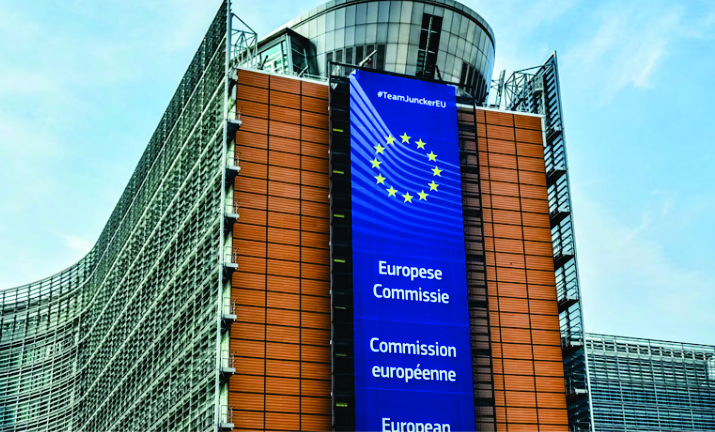
    BRUSSELS, Belgium (NPA) — The Council of the European Union has formally adopted its negotiating stance on the creation of European business wallets (EBWs), a digital identity solution designed to streamline and secure business interactions across the bloc.

    The initiative, built on the eIDAS2 framework, will allow companies to digitalise operations that currently require in‑person processing. By offering a harmonised European solution, EBWs will enable secure cross‑border communication and document exchange, reducing administrative burdens and strengthening the single market.

    Deputy Minister for Research, Innovation and Digital Policy of Cyprus, Nicodemos Damianou, hailed the agreement as “a key building block of Europe’s digital future” and central to the ‘One Europe, One Market’ roadmap. He stressed that the Council is on track to reach a political agreement by the end of 2026, in line with commitments made at the March 2026 European Council.

    With EBWs, companies will be able to verify identities digitally, create and share trusted documents such as licenses and permits, sign and seal documents electronically, delegate legal authority, and communicate securely with businesses or public administrations.

    The Council’s position introduces several safeguards and clarifications: EBWs will complement rather than replace national systems; digital actions will be legally recognised but subject to national requirements; powers of attorney remain unaffected; and stricter authorisation thresholds for EBW providers have been set to enhance cybersecurity. National supervisory bodies will now have up to 60 days to review provider applications, with streamlined timelines for clarity.

    Having reached a general approach, the Council will now begin negotiations with the European Parliament under the ordinary legislative procedure once Parliament adopts its position.

  • Nigeria’s capital importation rises 83.8% to $10.37 billion in Q1 2026

    Nigeria’s capital importation rises 83.8% to $10.37 billion in Q1 2026

    ABUJA, Nigeria (NPA) — Nigeria recorded a total capital importation of $10.37 billion in the first quarter of 2026, representing an 83.83 per cent increase from the $5.64 billion reported in the corresponding period of 2025, according to the latest Capital Importation Report released by the National Bureau of Statistics (NBS).

    The report also showed a 60.97 per cent quarter-on-quarter increase compared to the $6.44 billion recorded in the fourth quarter of 2025, signalling renewed investor interest in Africa’s largest economy.

    According to the NBS, portfolio investment remained the dominant source of capital inflows, accounting for $9.86 billion or 95.09 per cent of total capital imported during the period.

    Other investments contributed $374.48 million, representing 3.61 per cent of total inflows, while Foreign Direct Investment (FDI) recorded the lowest share at $135.08 million, accounting for just 1.30 per cent.

    A breakdown of the report revealed that the banking sector continued to serve as the primary gateway for foreign capital entering the country, accounting for the largest share of inflows.

    Standard Chartered Bank Nigeria Limited emerged as the leading recipient institution, attracting $4.41 billion, representing 42.56 per cent of total capital importation.

    It was followed by Stanbic IBTC Bank Plc, which recorded inflows of $2.78 billion or 26.79 per cent, while Rand Merchant Bank attracted $930.82 million, representing 8.97 per cent.

    Citibank Nigeria Limited and Access Bank Plc completed the top five with capital inflows of $782.84 million and $710.03 million, respectively.

    Sectoral analysis showed that banking and financing activities dominated investment inflows, jointly accounting for more than 96 per cent of total capital imported during the quarter.

    The financing sector attracted $2.43 billion, representing 23.42 per cent of total inflows, while production and manufacturing received $152.27 million or 1.47 per cent.

    Investment in shares accounted for $75.34 million, representing 0.73 per cent of total inflows.

    Other sectors recorded comparatively smaller investments, including trading with $65.79 million, agriculture with $37.28 million, and information technology services with $11.33 million.

    The telecommunications, transport, and construction sectors collectively accounted for less than one per cent of total capital importation during the period.

    The NBS noted that the continued dominance of the banking sector reflects the critical role of financial institutions in facilitating foreign investment into Nigeria.

    The strong performance recorded in the first quarter of 2026 points to improving investor confidence and a gradual recovery in capital inflows, supported largely by increased portfolio investments and sustained interest in Nigeria’s financial sector.