Category: Africa

  • Uganda confirms Ebola outbreak as Africa CDC, U.S. step up response

    Uganda confirms Ebola outbreak as Africa CDC, U.S. step up response

    KAMPALA, Uganda (NPA) — Uganda’s Ministry of Health on Friday confirmed an outbreak of the highly infectious Ebola Virus Disease (EVD) involving the Bundibugyo strain, following the death of a Congolese patient in intensive care on May 14. The ministry said the case was an imported infection from the Democratic Republic of Congo (DRC), where health authorities are battling a wider outbreak.

    The Africa Centres for Disease Control and Prevention (Africa CDC) activated emergency response measures after laboratory tests in Ituri Province, DRC confirmed Ebola infections. Preliminary findings from the National Institute of Biomedical Research (INRB) in Kinshasa showed 13 of 20 samples tested positive, with the outbreak resulting in 246 suspected cases and 65 deaths, mainly in Mongwalu and Rwampara health zones. Four deaths have been confirmed among laboratory-positive cases, while additional suspected infections are under review in Bunia.

    Africa CDC convened a high-level meeting on Thursday to strengthen cross-border surveillance, preparedness, and emergency coordination with the DRC, Uganda, South Sudan, and global partners. The agency emphasized the urgency of preventing further spread across the region.

    In Washington, U.S. health officials said they are closely monitoring the situation and providing technical assistance. CDC Acting Director Jay Bhattacharya told reporters that the agency is working through its country offices in both Uganda and the DRC to support response efforts. “CDC has extensive experience and expertise in responding to Ebola outbreaks, and we will absolutely mobilize there as needed,” he said.

    The World Health Organization (WHO) confirmed it learned of suspected cases on May 5 and dispatched a team to Ituri to assist investigations. Although initial field samples tested negative, subsequent laboratory analysis confirmed the outbreak.

    Ebola, which spreads through direct contact with bodily fluids or contaminated objects, remains one of the deadliest viral diseases. Congo’s dense tropical forests are considered a natural reservoir for the virus, which can linger in survivors and resurface years later.

    Health authorities across the region are urging vigilance, rapid reporting of suspected cases, and strict adherence to infection prevention protocols to contain the outbreak.

  • BREAKING: Nigerian-born ISIS Global Deputy Abu-Bilal al-Minuki killed in Joint US-Nigeria operation —Trump

    BREAKING: Nigerian-born ISIS Global Deputy Abu-Bilal al-Minuki killed in Joint US-Nigeria operation —Trump

    INTERNATIONAL (NPA) — United States President Donald Trump has announced the killing of Abu-Bilal al-Minuki, described as the global second-in-command of ISIS, during a joint overnight operation carried out by United States and Nigerian forces.

    Trump disclosed the development in a post on his Truth Social platform, saying the operation was “meticulously planned” and successfully executed by American troops alongside the Armed Forces of Nigeria.

    According to the US President, the slain terrorist had been hiding in Africa while allegedly coordinating extremist operations targeting civilians across the continent and planning attacks against Americans.

    Trump stated that the elimination of al-Minuki would significantly weaken ISIS’s global operational structure and reduce the group’s influence in Africa and beyond.

    Part of Trump’s statement reads: “Tonight, at my direction, brave American forces and the Armed Forces of Nigeria flawlessly executed a meticulously planned and very complex mission to eliminate the most active terrorist in the world from the battlefield. Abu-Bilal al-Minuki, second in command of ISIS globally, thought he could hide in Africa, but little did he know we had sources who kept us informed on what he was doing. He will no longer terrorize the people of Africa, or help plan operations to target Americans. With his removal, ISIS’s global operation is greatly diminished. Thank you to the Government of Nigeria for your partnership on this operation.”

    Abu-Bilal al-Minuki, also known as Abu Bakr ibn Muhammad ibn Ali al-Mainuki, was believed to be a Nigerian-born extremist from Mainok in Borno State. Security reports identified him as one of the most influential ISIS commanders operating within Africa, particularly in the Lake Chad region.

    He reportedly served as a top leader within the Islamic State West Africa Province (ISWAP) and oversaw operations linked to ISIS’s General Directorate of Provinces, coordinating funding, logistics and operational guidance for affiliated terror cells.

    The United States government had designated him a Specially Designated Global Terrorist in June 2023 over allegations of coordinating kidnappings, armed attacks and extortion activities across Nigeria and neighbouring countries.

    Security analysts described his death as one of the most significant counterterrorism successes recorded in Africa in recent years, noting that the development could weaken ISWAP’s operational capacity across the Sahel and Lake Chad Basin.

  • BREAKING: Nigeria implements 30-day visa exemption for Rwandan nationals

    BREAKING: Nigeria implements 30-day visa exemption for Rwandan nationals

    ABUJA, Nigeria (NPA) — The Nigeria Immigration Service (NIS) has announced the commencement of a 30-day visa exemption for citizens of Rwanda, following President Bola Ahmed Tinubu’s directive at the Africa CEO Forum in Kigali.

    The move reciprocates a similar gesture extended by the Rwandan government to Nigerian citizens and marks a new milestone in bilateral cooperation between both nations.

    Under the arrangement, Rwandan nationals may enter Nigeria without a visa for up to 30 days for lawful purposes including tourism, business, and official engagements.

    However, those intending to stay beyond the approved period must obtain the appropriate visa through a Nigerian Embassy, High Commission, or the Nigeria e-Visa platform.

    The NIS confirmed that all international entry points—airports, land borders, and seaports—have been directed to begin immediate implementation of the policy. The Service emphasised that the initiative reflects Nigeria’s commitment to strengthening intra-African mobility, tourism, and economic cooperation, in line with continental integration goals.

    In a statement signed by DCI Akinsola Akinlabi, Service Public Relations Officer, the NIS reaffirmed its dedication to facilitating safe, orderly, and lawful migration consistent with international best practices and the Renewed Hope Agenda of President Tinubu.

  • Kenya airport runways remain safe and operational, KCAA assures

    Kenya airport runways remain safe and operational, KCAA assures

    NAIROBI, Kenya (NPA) —The Kenya Civil Aviation Authority (KCAA) has reaffirmed that airport runways across the country remain safe and fully operational, even as the tendering process for the expansion of Jomo Kenyatta International Airport (JKIA) nears completion. JKIA, last rehabilitated in 2016, has faced congestion during peak hours, affecting its runway system and passenger terminals.

    Speaking at the 7th EAC Aviation Symposium in Mombasa, organised by the Civil Aviation Safety and Security Oversight Agency (CASSOA), KCAA Acting Director General Nicholas Bodo said the Ministry of Transport is intensifying efforts to strengthen aviation safety and security. He explained that the expansion project will include runway upgrades, a partial parallel taxiway, and rapid exit taxiways to reduce runway occupancy time and improve efficiency.

    Bodo stressed that infrastructure, especially runways, must be maintained to proper standards to ensure passenger safety. He noted that JKIA’s current terminal was designed for 7.5 million passengers annually but now handles 8.6 million, creating capacity constraints. Plans are underway to expand the existing terminal and build a new one capable of handling 10 million passengers annually.

    The Acting DG also highlighted the shortage of aviation professionals, calling for a regional training fund to support pilots and engineers. He backed harmonisation of aviation regulations across East Africa, saying it would allow operators to function more seamlessly within the region.

    CASSOA Acting Executive Director Francis Lichuma said the agency has made progress in harmonising aviation regulations among partner states, including unified safety standards and examination systems. He explained that pilots across the region now sit for the same exams, aligning with the wider EAC vision of integration.

    KCAA Chairman Brown Ondego emphasised the importance of regional collaboration, noting that air transport remains the safest mode of travel due to strict regulation. He said harmonised legislation and technical guidance would further strengthen safety across East Africa’s airspace.

  • Presidential spokesman calls for global reassessment of Somalia, recognition of Somaliland

    Presidential spokesman calls for global reassessment of Somalia, recognition of Somaliland

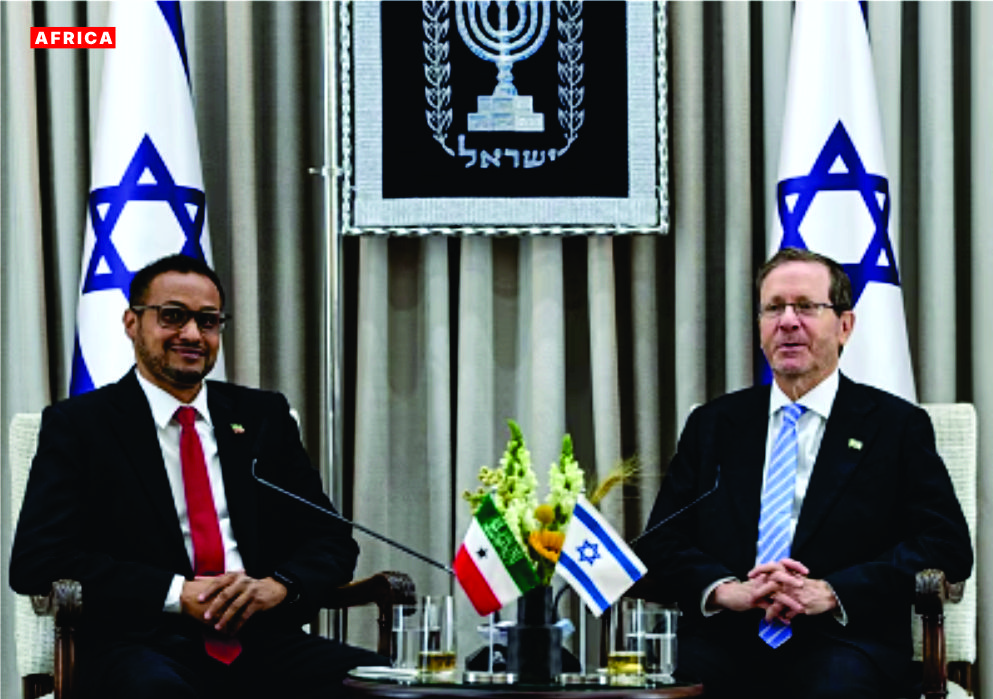
    HARGEISA, Somaliland (NPA) — The Republic of Somaliland has urged the international community to reconsider its approach to Somalia, citing deepening political instability, contested legitimacy, and growing authoritarian tendencies in Mogadishu.

    In a statement issued by Hussein Deyr, Official Spokesman to the President of Somaliland, he warned that Somalia’s crisis has entered a dangerous phase marked by intimidation, institutional collapse, and expanding foreign influence. He accused Turkey of acting as a “new colonial power” in Somalia, exploiting the fragile state for strategic and economic interests.

    Deyr called on the United States, the United Kingdom, and the European Union to impose targeted sanctions, travel restrictions, and asset freezes on Somali leaders, while reassessing existing security frameworks and partnerships. He also urged renewed United Nations-led international stewardship, recalling the transitional trusteeship period of the 1950s as a model for stabilising Somalia.

    At the same time, Somaliland pressed for international recognition of its sovereignty, describing itself as a peaceful, democratic, and stable nation whose recognition would bolster regional stability and accountability in the Horn of Africa. “Enough. Face reality and cut the cord,” the statement declared, insisting that Somaliland should not remain trapped in Somalia’s cycle of instability.

    The spokesman further noted that Somalia’s president had refused to step down despite the expiration of his term on 15 May 2026, accusing Mogadishu’s leadership of perpetuating corruption, dependency, and permanent instability. He argued that billions of dollars in international aid had failed to deliver tangible progress, instead fueling further divisions and repeated extensions of power.

    Deyr criticised Western partners for being “played” by Somalia’s political elite, while Turkey remained silent and consolidated its influence through President Hassan Sheikh. He insisted that Somaliland’s recognition would provide a credible alternative, strengthening democratic governance and long-term security in the region.

    The statement concluded with a call for a new international policy approach that acknowledges Somalia’s failures while embracing Somaliland’s stability and democratic credentials.

    Somaliland’s push for recognition carries major geopolitical consequences in the Horn of Africa, reshaping power dynamics among Turkey, Israel, the Gulf states, and Western partners. Analysts warn that recognition could stabilise Somaliland but intensify Somalia’s fragility, while also altering maritime security in the Red Sea and Gulf of Aden.

    Israel formally recognised Somaliland as an independent state on 26 December 2025, becoming the first UN member country to do so. This landmark decision has added weight to Somaliland’s calls for wider international recognition and reshaped debates on Somalia’s political crisis.

  • EBOLA ALERT: Africa CDC activates emergency response as DRC outbreak claims 65 lives

    EBOLA ALERT: Africa CDC activates emergency response as DRC outbreak claims 65 lives

    ADDIS ABABA, Ethiopia (NPA) — The Africa Centres for Disease Control and Prevention (Africa CDC) has activated emergency response measures following the confirmation of an Ebola Virus Disease outbreak in Ituri Province of the Democratic Republic of the Congo (DRC).

    The agency said it was working closely with the DRC Ministry of Health, Uganda, South Sudan and other global partners to contain the outbreak and prevent further spread across the region.

    Africa CDC disclosed that it convened an urgent high-level meeting on Thursday to strengthen cross-border surveillance, preparedness and emergency response coordination.

    According to preliminary laboratory findings released by the National Institute of Biomedical Research (INRB) in Kinshasa, 13 of 20 samples tested were positive for the Ebola virus.

    The outbreak has so far resulted in 246 suspected cases and 65 deaths, mainly recorded in the Mongwalu and Rwampara health zones.

    Health authorities also confirmed four deaths among laboratory-confirmed Ebola cases.

    The agency added that additional suspected cases had been identified in Bunia, with laboratory confirmation still pending.

    Ebola Virus Disease is a severe and often fatal illness transmitted through direct contact with the blood, body fluids or tissues of infected persons or animals. Common symptoms include fever, weakness, vomiting, diarrhoea and, in severe cases, internal and external bleeding.

    Health experts advise the public to avoid physical contact with infected persons, maintain proper hand hygiene, avoid handling dead bodies without protective equipment and promptly report suspected symptoms to health authorities for early treatment and containment.

    Africa CDC said it continued to support national authorities and partners in enhancing coordination, risk communication, case management and regional preparedness efforts.

    The public health body reaffirmed its commitment to working with affected countries and international partners to contain the outbreak and reduce the risk of wider transmission across the region.

  • AU-UN Conference: Guterres urges reforms, climate action, and stronger partnership with Africa

    AU-UN Conference: Guterres urges reforms, climate action, and stronger partnership with Africa

    ADDIS ABABA, Ethiopia (NPA) — UN Secretary-General António Guterres calls for stronger AU-UN partnership, financial reforms, and climate action at 10th AU-UN Conference

    The United Nations Secretary-General António Guterres has reaffirmed the strength of the African Union–United Nations partnership, describing the AU as “the flagship for multilateralism in Africa” and “a collective voice of justice for the developing world.” Speaking at his final AU-UN Conference in Addis Ababa on 13 May 2026, Guterres outlined progress and future priorities across four key areas: partnership, sustainable development financing, climate change, and peace.

    Guterres announced the signing of a new declaration with AU Chairperson Mahmoud Ali Youssouf, aimed at institutionalising coordination mechanisms and reinforcing frameworks on peace, security, sustainable development, and human rights. He emphasized Africa’s imprint in the Pact for the Future (2024), which called for reforms to the UN Security Council to redress Africa’s exclusion from permanent representation — a “historical injustice” he said must be corrected.

    On financing, Guterres highlighted Africa’s vast potential — from the African Continental Free Trade Area to its young population and green energy sector — but warned that progress on Agenda 2063 and the 2030 Agenda is lagging due to debt burdens and inequitable borrowing costs. He urged reforms to the global financial architecture, citing the Sevilla Commitment and supporting initiatives such as the African Credit Rating Agency and the creation of a New African Financial Architecture for Development.

    Turning to climate change, Guterres warned that a temporary overshoot of the 1.5°C limit is inevitable but reversible. He stressed Africa’s potential to lead the renewable energy revolution, noting that by 2040 the continent could generate ten times its electricity needs entirely from renewables. Yet Africa currently receives only two per cent of global clean energy investment. He called for tripling adaptation finance, scaling up contributions to the Loss and Damage Fund, and supporting African countries in diversifying economies through local manufacturing and processing of critical minerals.

    On peace and security, Guterres reiterated support for the AU’s Silencing the Guns initiative and welcomed the adoption of UN Security Council Resolution 2719, which provides predictable funding for AU-led peace operations. He expressed disappointment that the resolution was not applied in Somalia, where it is most needed. He also addressed conflicts in Sudan, South Sudan, the Democratic Republic of the Congo, the Sahel, and Libya, urging ceasefires, dialogue, and AU-led mediation.

    Responding to questions, Guterres condemned foreign interference in African conflicts, particularly the supply of weapons and drones, calling it “intolerable.” He stressed the urgency of reforms to international institutions, noting that Africa’s underrepresentation undermines legitimacy and effectiveness.

    Concluding, Guterres described Africa as “a continent of immense richness and promise,” pledging continued solidarity and support for African-led solutions to global challenges.

  • Ramaphosa secures ANC backing amid renewed ‘Farmgate’ impeachment push

    Ramaphosa secures ANC backing amid renewed ‘Farmgate’ impeachment push

    JOHANNESBURG, South Africa (NPA) — South African President Cyril Ramaphosa has reportedly secured the backing of the African National Congress (ANC) National Executive Committee amid renewed impeachment proceedings linked to the controversial “Farmgate” scandal.

    According to South Africa’s public broadcaster, SABC, the ANC’s top decision-making body endorsed Ramaphosa during a meeting held on Wednesday, providing the president with political support as pressure mounts over the revived impeachment process.

    The ANC had yet to officially confirm the development as of Thursday, while a party spokesperson did not immediately respond to requests for comments on the report.

    The renewed controversy follows a recent Constitutional Court ruling which revived impeachment proceedings against Ramaphosa over allegations connected to the theft of large sums of foreign currency hidden at his private Phala Phala ranch.

    Ramaphosa, who has served as South Africa’s president since 2018, has consistently denied wrongdoing in the matter.

    The scandal, popularly referred to as “Farmgate,” emerged after reports that about 580,000 dollars in cash allegedly hidden inside furniture at the president’s farm was stolen in 2020.

    The incident triggered public debate over the source of the money, whether it was properly declared, and why such funds were allegedly kept at the property instead of being deposited in a financial institution.

    Reacting earlier this week to the Constitutional Court decision, Ramaphosa said he respected the ruling and would defend himself through lawful means.

    The ANC had initially blocked impeachment efforts against the president in 2022, but the Constitutional Court last week ruled that Parliament must establish an impeachment committee to conduct further investigations into the allegations.

    On Wednesday, the Speaker of the National Assembly announced that the impeachment committee would consist of 31 members drawn from the 16 political parties represented in the lower chamber of parliament.

    Under the arrangement, the ANC will control the largest representation on the committee with nine members, while its coalition partner, the Democratic Alliance (DA), will hold five seats.

    Political analysts, however, say Ramaphosa is likely to survive any impeachment vote should the process advance to the floor of parliament.

    An impeachment would require the support of a two-thirds majority in the National Assembly, a threshold considered difficult to achieve given the ANC’s strong parliamentary presence.

    The ANC currently controls roughly 40 per cent of seats in the lower house, positioning the ruling party as a decisive factor in determining the outcome of the proceedings.

    The party has postponed its planned media briefing on the outcome of the National Executive Committee meeting from Thursday to Friday.

    The Farmgate controversy remains one of the most politically sensitive issues confronting Ramaphosa’s administration as the president continues to face scrutiny from opposition parties and anti-corruption groups.

  • Body of second missing US soldier recovered in Morocco

    Body of second missing US soldier recovered in Morocco

    RABBAT, Morocco (NPA) — The body of a second U.S. service member declared missing during the African Lion 2026 exercise has been recovered in Morocco, officials confirmed on Wednesday.

    According to a joint statement by the U.S. Army and Morocco’s Royal Armed Forces, search and rescue teams retrieved the remains of Specialist Mariyah Symone Collington, 19, an air and missile defense crew member, from a coastal cave roughly 500 meters from where she and another soldier went missing near Cap Draa, Tan Tan.

    Collington’s recovery follows the earlier discovery of 1st Lieutenant Kendrick Lamont Key Jr., whose body was found on May 9. Both soldiers disappeared on May 2 during a training exercise near a cliff at the Cap Draa Training Area.

    The multinational exercise, which brought together U.S., Moroccan, and partner forces, immediately launched coordinated search operations involving ground, air, and maritime assets. Officials said the mission remains active as investigations continue into the circumstances surrounding the incident.

    United States Africa Command (AFRICOM) emphasised that the soldiers were participating in a critical joint exercise designed to strengthen interoperability and regional security. The disappearance prompted an urgent response, highlighting the risks inherent in complex multinational training operations.

    The recovery of Collington’s remains marks a solemn moment for the U.S. military and its allies, underscoring the sacrifices made in pursuit of readiness and cooperation.

  • Tinubu, Kagame deepen Nigeria–Rwanda cooperation, push AfCFTA agenda

    Tinubu, Kagame deepen Nigeria–Rwanda cooperation, push AfCFTA agenda

    KIGALI, Rwanda (NPA) — President Bola Ahmed Tinubu and President Paul Kagame of Rwanda have agreed to strengthen bilateral relations and deepen economic cooperation between their countries, with renewed focus on trade, regional integration and the implementation of the African Continental Free Trade Area (AfCFTA).

    The agreement was reached during a bilateral meeting at the Urugwiro Presidential Village in Kigali shortly after Tinubu arrived in Rwanda for the Africa CEO Forum.

    According to a statement issued by the State House, both leaders resolved to reactivate mechanisms aimed at advancing Nigeria–Rwanda cooperation, particularly through the Joint Permanent Ministerial Commission (JPMC) established in 2021.

    The two presidents agreed that Nigeria would host the next meeting of the commission as part of efforts to accelerate cooperation across strategic sectors.

    Tinubu, who arrived in Kigali from Nairobi after participating in the Africa Forward Summit co-hosted by Kenyan President William Ruto and French President Emmanuel Macron, said African nations must embrace stronger economic partnerships driven by trade, investment and innovation.

    “I arrived in Kigali this afternoon from Nairobi, where we joined other African leaders at the Africa Forward Summit co-hosted by President Ruto and President Macron to advance a new model of partnership built on trade, investment, innovation, infrastructure, and shared prosperity,” Tinubu stated.

    The Nigerian leader thanked President Kagame for the warm reception and described their engagement as productive and forward-looking.

    “I thank my brother, President Paul Kagame, for the warm reception upon my arrival in Kigali and for our productive bilateral engagement at the Urugwiro Presidential Village,” he said.

    The discussions between both leaders focused significantly on expanding bilateral trade and improving logistics connectivity to support African businesses.

    Tinubu disclosed that Nigeria was in the early stages of discussions with RwandAir on a practical flat-rate cargo arrangement aimed at helping Nigerian businesses transport goods more efficiently and predictably across African markets.

    “Our discussions focused on expanding bilateral trade between our two countries. We are also in the early stages of discussions with RwandAir on a practical flat-rate arrangement that can help Nigerian businesses ship their goods more predictably across the continent,” he said.

    The initiative follows Nigeria’s earlier establishment of an air cargo corridor with Uganda Airlines as part of efforts to facilitate intra-African trade and improve export opportunities for local businesses.

    On consular relations, Tinubu said Nigeria would consider reciprocating Rwanda’s 30-day visa-free policy for Nigerians in line with the ideals of Pan-Africanism and continental integration.

    The leaders also reviewed pending Memoranda of Understanding covering tourism, anti-corruption cooperation and the fight against illicit drug trafficking.

    Both presidents reaffirmed their commitment to the AfCFTA and pledged continued collaboration to remove trade barriers, strengthen market access and expand digital trade across the continent.

    “As champions of the AfCFTA, Nigeria and Rwanda will continue to work together to deepen digital trade, strengthen market access, and remove the barriers that limit African enterprise,” Tinubu stated.

    The President further announced that Nigeria would host the AfCFTA Council of Ministers and Digital Trade Forum in June, while also preparing to host the Intra-African Trade Fair (IATF) and Creative Africa Nexus (CANEX) events from Nov. 5 to Nov. 11, 2026, as well as another continental gathering in November 2027.

    According to Tinubu, Africa’s future depends on stronger economic cooperation among African countries rather than dependence on external markets.

    “From the Africa Forward Summit in Nairobi to the Africa CEO Forum in Kigali, my message remains the same. Africa’s future will not be built by speeches alone. It will be built by trade, investment, innovation, and the courage to trust one another’s markets,” he said.

    “This is the path to shared and sustainable prosperity for our people and the continent.”