Category: Africa

  • Kenyan Parliament Vets Ida Betty Odinga for UNEP Permanent Representative Role

    Kenyan Parliament Vets Ida Betty Odinga for UNEP Permanent Representative Role

    NAIROBI, KENYA (NPA): The Kenyan Parliament on Friday conducted a vetting session for Ida Betty Odinga, widow of former Prime Minister Raila Odinga, following her nomination by President William Ruto as Kenya’s Permanent Representative to the United Nations Environment Programme (UNEP).

    The National Assembly Committee on Defence, Intelligence and Foreign Relations assessed her competencies, qualifications, and experience, as well as her ability to advance Kenya’s interests in global environmental diplomacy. The 75-year-old pledged to champion equitable climate financing, strengthen international cooperation, and amplify African voices in shaping global environmental policy. She also outlined plans to diversify funding streams by engaging the private sector and philanthropic partners to sustain UNEP programmes amid declining donor support.

    Raila Odinga, one of Kenya’s most influential political figures, served as Prime Minister from 2008 to 2013 and contested the presidency multiple times between 1997 and 2022. He was widely recognized for his role in advancing constitutional reforms, multiparty democracy, and infrastructure development across Africa, including his tenure as the African Union’s High Representative for Infrastructure Development.

    Odinga passed away on October 15, 2025, at the age of 80 in Kerala, India, after suffering a heart attack, according to agency reports.

  • Sahara Reporters Marks 20 Years of Bold Investigative Journalism

    Sahara Reporters Marks 20 Years of Bold Investigative Journalism

    LAGOS, NIGERIA (NPA): Sahara Reporters, the Nigeria-based online news platform founded in 2006 by activist and journalist Omoyele Sowore, has marked its 20th anniversary. Over two decades, the outlet has built a reputation for fearless investigative reporting, exposing corruption, human rights abuses, and political scandals across Africa.

    Known for its citizen-driven journalism, Sahara Reporters has cultivated a loyal following among Nigerians across regions. Its uncompromising style — often challenging government narratives and holding public officials accountable — has earned praise for promoting transparency, while also drawing criticism from authorities and sparking frequent legal battles.

    In a statement, Sowore reflected on the platform’s journey since its launch in New York. “What began as a bold experiment in citizen-driven investigative reporting grew into a disruptive force that challenged entrenched power, amplified unheard voices, and redefined accountability in Nigerian and African media,” he said. “It proved that journalism could be fearless, borderless, and uncompromising.”

    Sowore paid tribute to the platform’s early supporters, including citizen journalists who risked careers to provide evidence, legal experts who defended it against threats, and a support system that sustained its survival.

    Over the years, Sahara Reporters, the honey badger of the Nigeria media industry, has been credited with several landmark investigations, including:

    • The 2013 exposé on former Aviation Minister Stella Oduah’s purchase of two BMW bulletproof cars at inflated prices, which led to her removal from office.
    • Extensive coverage of the Halliburton bribery scandal, keeping international attention on accountability in Nigeria.
    • The 2014 “Ekiti Election Rigging Tapes,” publishing leaked audio of officials allegedly conspiring to manipulate gubernatorial elections.
    • Persistent reporting on police brutality and abuses by the Special Anti-Robbery Squad (SARS), which amplified calls for reform and fueled the #EndSARS protests.
    • Investigations into corruption in Nigeria’s oil sector, including revelations of missing billions in revenue under the Nigerian National Petroleum Corporation (NNPC).

    Despite its achievements, Sowore himself has faced repeated legal challenges, often appearing in court or being taken to court as a result of his activism and the platform’s uncompromising reporting.

  • Abuja Residents Head to the Polls for Area Council Elections

    Abuja Residents Head to the Polls for Area Council Elections

    ABUJA, NIGERIA (NPA) — Voters in Nigeria’s capital, Abuja, will head to polling stations tomorrow to elect chairmen for the six Area Councils of the Federal Capital Territory (FCT), including the Abuja Municipal Area Council.

    Unlike in Nigeria’s 36 states, where local government elections are conducted by state electoral commissions, the Abuja council polls are organized and supervised directly by the Independent National Electoral Commission (INEC).

    The 2026 Abuja Area Council elections will be the first overseen by the recently appointed INEC Chairman, Professor Joash Ojo Amupitan. The conduct of the polls is widely regarded as a litmus test for his leadership and a precursor to the credibility of the 2027 general elections.

    Tomorrow’s exercise will cover 2,822 polling units, with approximately 1.6 million registered voters expected to participate.

    Since assuming office in October 2025, Professor Amupitan has pledged to deliver free, fair, and transparent elections, emphasizing the restoration of voter confidence by ensuring that every ballot truly counts.

    The Abuja Area Council elections also come in the wake of controversies and protests surrounding recent amendments to Nigeria’s 2022 Electoral Act, passed by both chambers of the National Assembly and signed into law by President Bola Ahmed Tinubu. READ HERE

  • Bobi Wine Pays Tribute to Reverend Jesse Jackson, Vows Steadfastness in Uganda’s Struggle

    Bobi Wine Pays Tribute to Reverend Jesse Jackson, Vows Steadfastness in Uganda’s Struggle

    LAGOS, NIGERIA (NPA): Ugandan opposition leader Robert Kyagulanyi Ssentamu, widely known as Bobi Wine, has paid tribute to American civil rights icon Reverend Jesse Jackson, who passed away on 17 February 2026. Wine, the presidential candidate of the National Unity Platform (NUP) in Uganda’s last election, described Jackson as a towering figure whose life embodied the universal struggle for human rights.

    In a statement issued Wednesday, Wine said Jackson “taught us that the struggle for human rights is a universal calling to humanity as a whole. He also taught us that ordinary people, when organised and courageous, can successfully confront and topple or force to reform entrenched systems of injustice.”

    Wine, who has faced persistent harassment from state operatives since President Yoweri Museveni secured a seventh term in January 2026, noted that Jackson’s life was a reminder that “moral courage will always outlive oppression. Despite facing hostility and imprisonment, he never abandoned his belief in the power of the people.” He added that peaceful struggle, as Jackson embodied, can bring about meaningful change if citizens remain resolute.

    The musician-turned-politician has endured years of confrontation with the Ugandan state:

    • 2017 – Wins Kyadondo East parliamentary seat, drawing government scrutiny.
    • 2018 – Arrested and charged with treason after protests in Arua; alleges torture in custody, sparking international condemnation.
    • 2019–2020 – Multiple concerts banned; files a case with the Uganda Human Rights Commission over restrictions on his music career.
    • 2020 – Launches the National Unity Platform (NUP); government questions its registration, but the High Court dismisses the challenge.
    • 2021 – Runs against Museveni; placed under house arrest after voting, with opposition MPs and lawyers blocked from visiting him.
    • 2022–2023 – Faces restrictions on rallies and public gatherings; civil society highlights harassment of NUP supporters.
    • 2024 – Withdraws his Human Rights Commission case over blocked concerts, citing lack of progress.
    • 2025 – Electoral Commission accuses him of escalating clashes with security forces during campaign activities.

    Wine’s disputes with the Ugandan government span political repression, restrictions on his music career, arrests, and challenges to his party’s legitimacy—reflecting the broader struggle between Uganda’s opposition and President Museveni’s long-standing administration.

  • Tinubu Signs Amendments to Nigeria’s 2022 Electoral Act, Emphasises Need for Continuous Reform

    Tinubu Signs Amendments to Nigeria’s 2022 Electoral Act, Emphasises Need for Continuous Reform

    Tinubu Signs Amendments to Nigeria’s 2022 Electoral Act, Emphasises Need for Continuous Reform

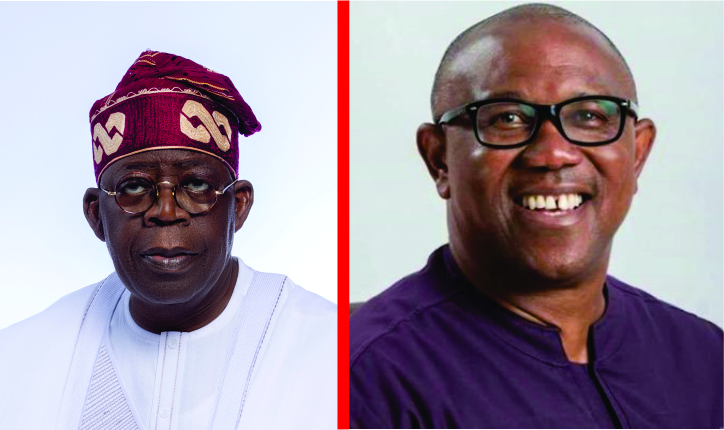
    ABUJA, NIGERIA (NPA): President Bola Ahmed Tinubu has signed into law amendments to Nigeria’s 2022 Electoral Act, a move that has stirred debate among political parties, civil society groups, and electoral stakeholders. The signing follows weeks of protests by opposition leaders and activists over the contentious issue of compulsory real-time electronic transmission of election results.

    In a statement issued Wednesday, President Tinubu stressed that the reforms were aimed at strengthening electoral processes rather than serving political interests. “These amendments are not about politics. They are about process. They are about closing gaps, strengthening procedures, and providing greater clarity to those who conduct and participate in our elections,” he said. He added, “When citizens walk into a polling unit, they must do so with confidence. When results are declared, they must be trusted. That confidence is built deliberately, and not by chance.”

    The President commended the National Assembly for what he described as its “cooperation and sense of national responsibility” in concluding the legislative process. He underscored the importance of continuous improvement in Nigeria’s electoral system to ensure that elections remain fair, credible, and reflective of the people’s will.

    The amendments, however, remain controversial. Critics argue that provisions on result transmission are vague, leaving room for manipulation. Clause 60 of the bill became a flashpoint in the Senate, with opposition lawmakers insisting that electronic transmission should be mandatory to safeguard credibility. Supporters countered that flexibility was necessary to accommodate rural areas with poor internet connectivity.

    Beyond result transmission, civil society groups have raised concerns about gaps in campaign financing regulations, inclusivity measures, and enforcement of electoral offences. They argue that the reforms do not adequately address systemic issues such as election security or the participation of women, youths, persons with disabilities, and internally displaced persons.

    The Independent National Electoral Commission (INEC) has also called for clarity in the law, warning that ambiguity could erode public trust. Former INEC officials, including Mike Igini, urged the President not to sign the bill unless it guaranteed electronic transmission, cautioning that vague provisions could weaken transparency. INEC maintains that reforms must enhance electoral integrity rather than introduce loopholes that undermine credibility.

  • Dangote Promotes Daughters in Business Repositioning Strategy

    Dangote Promotes Daughters in Business Repositioning Strategy

    LAGOS, NIGERIA (Newpost Africa): Nigeria’s leading businessman and Africa’s richest person, Aliko Dangote, has promoted his three daughters to senior executive positions within the Dangote Group as part of a succession and growth strategy aimed at repositioning the conglomerate. The move follows the company’s announcement of its vision to become a $100 billion enterprise by 2030.

    According to the new leadership structure, Ms Halima Dangote will oversee the Family Office and international operations in Dubai and London, Ms Fatima Dangote will lead commercial operations in oil and gas, while Ms Mariya Dangote will head the cement and food businesses.

    The Dangote Group remains one of Africa’s most diversified conglomerates, with interests in cement, sugar, flour, salt processing, packaging, and logistics. Its flagship company, Dangote Cement, is the continent’s largest producer, with plants across Nigeria and other African countries. Beyond food and construction, the group has expanded into oil refining and petrochemicals, notably through the Dangote Refinery in Lagos—one of the largest single-train refineries in the world. It also invests in fertiliser production, real estate, and agriculture, reinforcing its role as a driver of industrialisation and economic growth across Africa.

  • Enugu Monarch, Igwe Agubuzu, Appeals to Tinubu for Nnamdi Kanu’s Release

    Enugu Monarch, Igwe Agubuzu, Appeals to Tinubu for Nnamdi Kanu’s Release

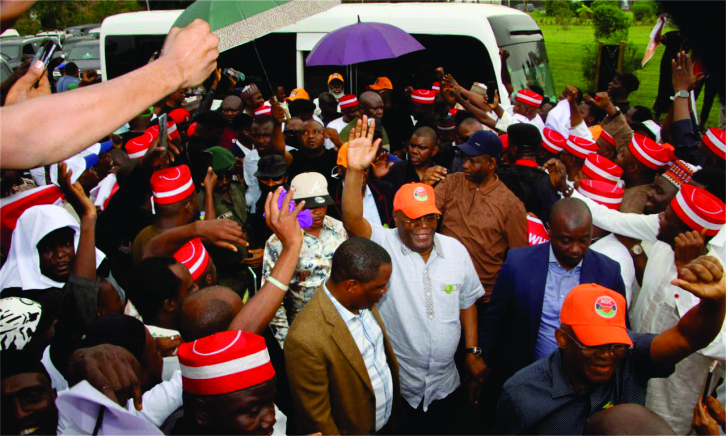
    ABUJA, NIGERIA: A prominent traditional ruler from Nigeria’s Southeast, HRM Igwe, Amb. Dr Lawrence Okolio Chikezie Agubuzu, has urged President Bola Ahmed Tinubu to order the release of Mazi Nnamdi Kanu, leader of the Indigenous People of Biafra (IPOB), currently held in Sokoto prison.

    Speaking on Tuesday at the National Traditional and Religious Leaders Summit on Health in Abuja, attended by President Tinubu and a delegation of royal fathers, Agubuzu made an emotional plea for justice and reconciliation. He expressed dismay at the continued detention of Kanu, drawing a comparison with Sunday Igboho, who is being honoured in the Southwest. “Bring this man out,” he told the president. “If we don’t want him in Nigeria, return him to Kenya or London, where they took him from.” He warned that silence from traditional rulers could be misinterpreted by Southeast youths as complicity with the government, adding that such perceptions risk alienating leaders from their communities.

    Kanu was arrested in Kenya in 2021 under controversial circumstances and subjected to what his lawyers described as “extraordinary rendition” back to Nigeria. His detention sparked widespread protests and debate over due process and international law. The Federal Government charged him with terrorism and treasonable felony, citing his Radio Biafra broadcasts and separatist mobilisation. After protracted legal proceedings, Justice James Omotosho of the Federal High Court in Abuja sentenced him to life imprisonment in November 2025 on seven counts of terrorism-related offences. While the government insists his actions endangered national security, his defence team argues the charges are politically motivated and his rendition violated international law.

    Agubuzu’s appeal adds to mounting pressure from lawmakers, civil society groups, and Southeast leaders who have repeatedly called on Tinubu to intervene. Observers warn that Kanu’s continued detention risks deepening unrest in the region and undermining efforts at national reconciliation.

  • Amaechi Warns of 25% Deductions Under New Tax Law

    Amaechi Warns of 25% Deductions Under New Tax Law

    ABUJA, NIGERIA: Opposition figure and 2027 presidential aspirant Rotimi Amaechi has cautioned Nigerians against re-electing President Bola Ahmed Tinubu, warning that the administration intends to implement a controversial tax policy after the forthcoming elections. Speaking during a campaign event in Abuja over the weekend, the former Rivers State governor and ex-Minister of Transportation told traders that under the new law, “every payment made to you, 25% will be deducted by 2027.”

    Amaechi alleged that the ruling party had delayed implementation of the measure until after the polls, adding: “If you receive ₦100 million for goods you sold, ₦25 million will be deducted from your bank account immediately. By January–February next year, all of you will be in trouble if the APC wins.”

    Nigeria’s new tax laws, which came into effect on January 1, 2026, represent the most ambitious fiscal overhaul in the country’s history. The reforms consolidate multiple statutes—including the Companies Income Tax Act, Personal Income Tax Act, Value Added Tax Act, and Capital Gains Tax Act—into a single streamlined regime. While the legislation introduces significant exemptions for low-income earners and small businesses, Finance Minister Wale Edun has emphasised that the reforms are designed to broaden the tax base, stimulate economic activity, and support the federal government’s ambition of building a $1 trillion economy.

  • U.S. Sanctions Boko Haram Sponsors Amid Rising Violence in Nigeria

    U.S. Sanctions Boko Haram Sponsors Amid Rising Violence in Nigeria

    WASHINGTON, D.C. / ABUJA: The United States government has sanctioned eight individuals in Nigeria for alleged links to Boko Haram, the Islamist insurgent group responsible for widespread violence across Nigeria’s northeast, northwest, and north-central regions, as well as in the wider Lake Chad Basin covering Cameroon, Chad, and Niger. Boko Haram, designated a foreign terrorist organisation by the U.S. in 2013, has killed tens of thousands and displaced millions since its insurgency began in 2009.

    The sanctions were announced in a publication by the U.S. Treasury’s Office of Foreign Assets Control (OFAC), which blocks the property and interests of designated persons. Among those listed is Salih Yusuf Adamu (a.k.a. Salihu Yusuf), born August 23, 1990, who was convicted in the United Arab Emirates in 2022 for establishing a Boko Haram cell to raise funds for insurgents in Nigeria. Others named include Babestan Oluwole Ademulero, Abu Abdullah ibn Umar Al-Barnawi, Abu Musab Al-Barnawi, Khaled Al-Barnawi, Ibrahim Ali Alhassan, and Abu Bakr ibn Muhammad ibn Ali Al-Mainuki.

    The U.S. indictment alleges that all sanctioned individuals actively participated in Boko Haram’s operations in Nigeria and neighbouring countries.

    This action follows the October 31, 2025, designation of Nigeria as a “Country of Particular Concern” (CPC) under the International Religious Freedom Act, after reports that jihadist groups killed more than 7,000 Christians and abducted 7,800 others in the first seven months of 2025.

    On December 25, 2025 (Christmas Day), the U.S. military launched Tomahawk missile strikes against suspected Islamic State (ISIS) camps in Sokoto State, northwest Nigeria. The operation, coordinated with the Nigerian government, targeted militants linked to the Islamic State–Sahel Province and its affiliate, Lakurawa. The U.S. Africa Command confirmed the strikes, describing them as aimed at “ISIS terrorists in Nigeria.”

    In early 2026, the U.S. deployed a small team of troops to Nigeria, marking the first official American military presence on the ground in support of counterterrorism operations.

  • Peter Obi Vows Votes Must Count in 2027 Elections

    Peter Obi Vows Votes Must Count in 2027 Elections

    ABUJA, NIGERIA: Nigeria’s leading opposition figure and presidential aspirant for the 2027 elections, Peter Obi, has vowed that the votes of Nigerians “must count” in the forthcoming polls. His remarks come amid heated debate over the ongoing amendments to the Electoral Act, particularly regarding the electronic transmission of results.

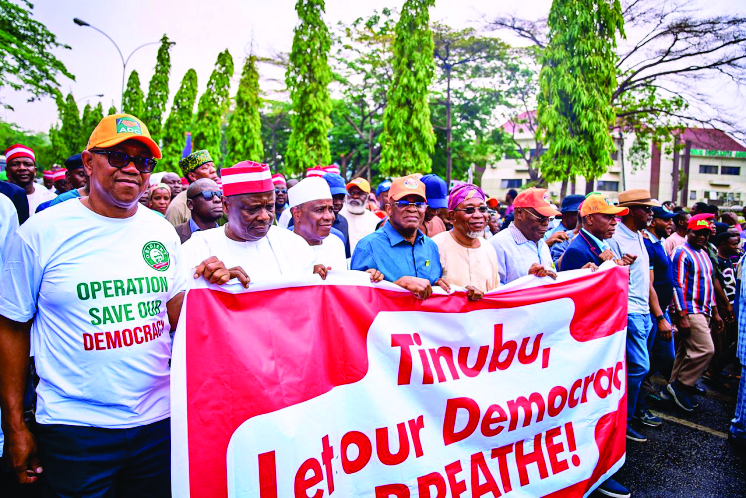
    Recall that opposition parties, civil society groups and demonstrators at the National Assembly are calling on the Nigerian Senate to pass a law mandating the electronic transmission of results. They blamed the manual transmission for creating the room for malpractices and election rigging, which they alleged has robbed the country of quality leadership.

    In a statement, Obi declared: “Unlike in the past, in 2027 our votes MUST count.” He warned that those who attempt to undermine the process would be “counted among those destroying Nigeria.” The aspirant, who commands the Obidient Movement, urged supporters and citizens to remain at polling units after casting their ballots to witness both the counting and transmission of results.

    Obi stressed that anyone who obstructs the proper counting of votes would face “the full weight of the law against rigging.” He added: “If you do not count our votes, we will count you among those who destroy our democracy, thereby destroying our future, and you must answer to the law.”