

FG reaffirms commitment to Lagos–Abidjan corridor, raises design and funding challenges
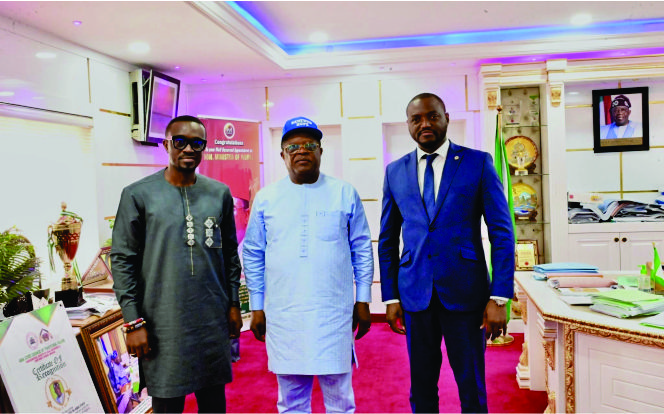
ABUJA, Nigeria (NPA)— The Federal Government has reaffirmed its commitment to the delivery of the 1,028-kilometre Lagos–Abidjan Corridor project, a flagship regional highway aimed at boosting trade and connectivity across West Africa, while flagging key design and funding concerns that must be resolved before full implementation.
Minister of Works, David Umahi, gave the assurance during a high-level meeting in Abuja with delegations from the ECOWAS Commission and the African Development Bank.
The corridor, spanning five countries — Côte d’Ivoire, Ghana, Togo, Benin, and Nigeria — is designed to link Abidjan to Lagos, forming a major transport backbone along the West African coast.

According to a statement signed by Francis Nwaze, Senior Special Assistant to the Minister of Works (Media), Umahi said the administration of Bola Ahmed Tinubu remains fully committed to infrastructure development, describing the Lagos–Abidjan highway as a critical component of a broader network of strategic road projects across Nigeria and the region.
He disclosed that Nigeria’s section of the corridor, estimated at about 79.5 kilometres, will be constructed using reinforced concrete technology with three lanes on each carriageway—exceeding the two-lane design proposed by ECOWAS.
However, the minister raised concerns over unresolved technical and structural issues, including what he described as an unequal distribution of corridor length among participating countries and design elements that do not reflect on-ground realities.
“On the engineering side, there are unresolved issues on the Lagos–Abidjan corridor. The distribution of corridor length across countries is unequal and can only be resolved at the level of heads of state,” Umahi said.
He added that Nigeria is developing an alternative design model tailored to local conditions, expected to be completed within two weeks, incorporating existing infrastructure and practical implementation challenges.
Umahi also stressed that decisions on financing frameworks must be agreed upon by heads of state before the project can proceed to procurement.
“Once the design is finalized and approved, the funding model must be agreed at the highest political level. Until then, moving into procurement and financing is premature,” he stated.
Despite the challenges, he reaffirmed Nigeria’s commitment, noting that the project would enhance regional trade and integration by linking national infrastructure systems across borders.
Earlier, ECOWAS Director of Transport, Chris Appiah, said the visit formed part of ongoing consultations with member states to harmonize technical designs and address outstanding issues.
On financing, the AfDB delegation, led by Salawou Mike Moukaila, described the corridor as a top priority, revealing that the bank is undertaking an identification mission across 25 countries to develop a financing framework.
Moukaila noted growing interest from co-financiers globally, emphasizing that the bank is positioning itself to lead funding mobilization efforts for the project.
He also underscored Nigeria’s strategic importance to the corridor, citing the country’s role as a major origin point for trade flows along the route.
The AfDB delegation commended the Federal Government’s ongoing infrastructure drive, describing the Lagos–Abidjan Corridor as a “game changer” for regional connectivity across West, Central, and East Africa.
Ghana, UK review bilateral ties ahead of Mahama’s official visit

Nigeria, Ethiopia deepen cooperation on trade and investment
World Bank upgrades Africa growth outlook, says AI could boost jobs and productivity

Uganda vaccinates more than 8.2 million children in Measles-Rubella Campaign

NCDC heightens vigilance after imported Ebola case confirmed in Kenya
Eswatini says three third-country nationals voluntarily return home
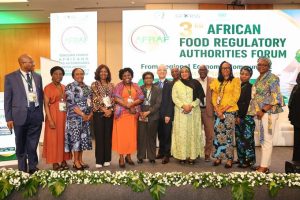
NAFDAC DG advocates stronger continental cooperation on food safety
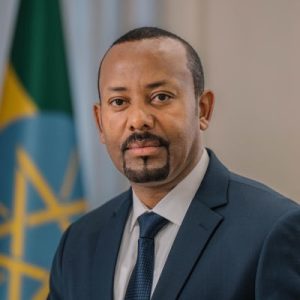
AU Commission Chairperson congratulates Abiy Ahmed on re-election
- Tinubu commissions NRS Headquarters, says new tax reforms will drive prosperity
- Tinubu assures investors of regulatory stability as Ogun, DP World sign $7bn port, SEZ MoUs
- Climate change anxiety is rising — and so is the willingness to act on it
- Ohaukwu LG Chairman Ituma breaks ground for modern diagnostic centre, blood bank
- Baseball boosts TBS, NFL gives ESPN a kick and streamers love ‘Squid’
Community Discussion