

Brent crude rises above $100 a barrel as Middle East conflict intensifies
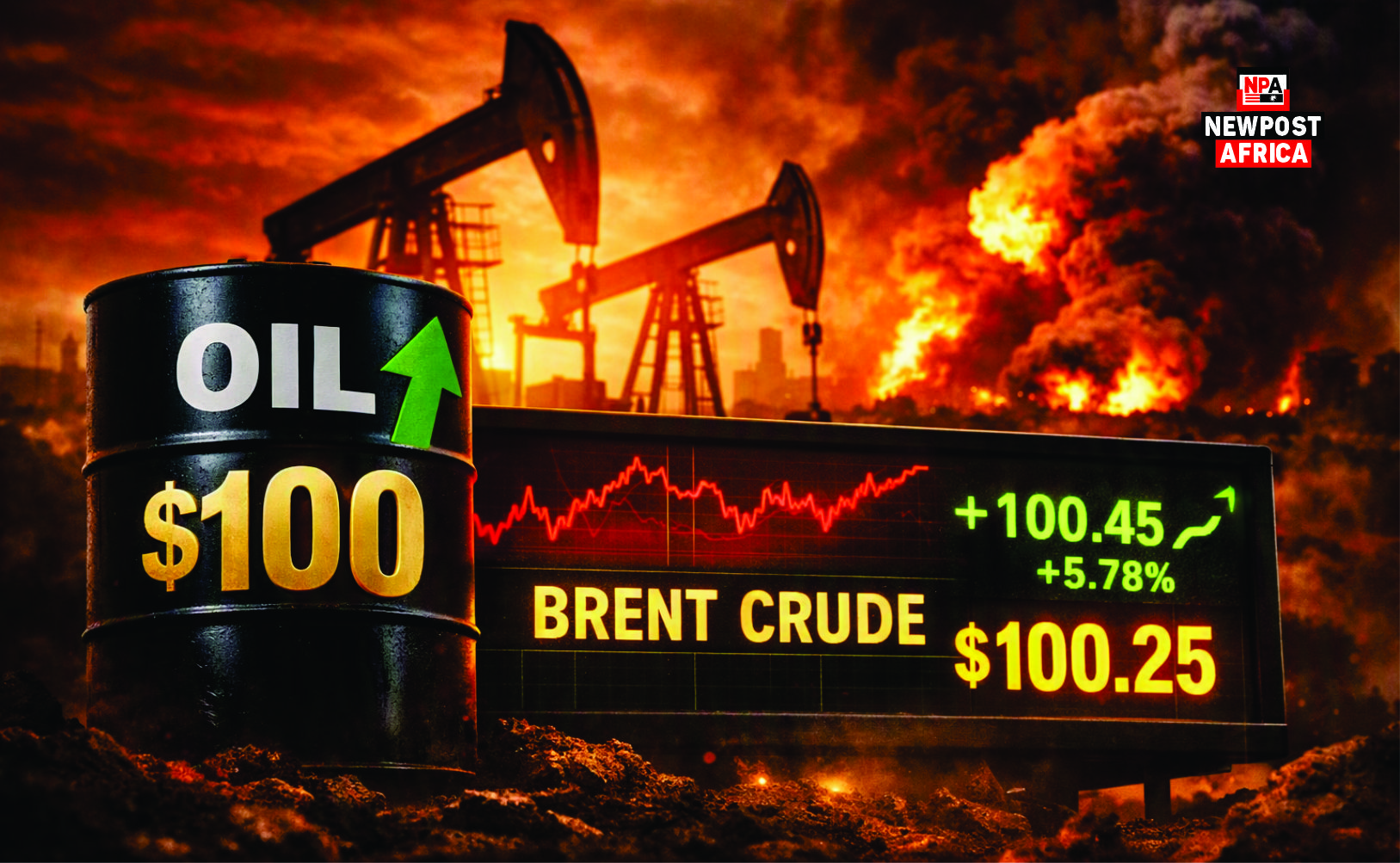
SINGAPORE, Singapore (NPA) — Brent crude oil prices have risen above $100 a barrel for the first time since July 24, as intensifying conflict in the Middle East raises concerns about disruptions to oil supplies from the region.
Brent crude futures climbed as high as $100.19 a barrel on Wednesday before easing to $99.93, up $2.01 or 2.05 per cent, by 0802 GMT. U.S. West Texas Intermediate (WTI) crude also rose $1.49, or 1.60 per cent, to $94.52 a barrel.
Brent has gained about 25 per cent since early August, as hopes for a permanent resolution to the six-month-old U.S.-Iran conflict continue to fade.

Since the war began on February 28, Brent has climbed as high as $126.41 a barrel, a level reached on April 30.
The latest escalation has heightened concerns over oil supplies, following attacks by Iran-backed Houthis on Saudi energy facilities that set oil installations ablaze and raised fears of a wider regional conflict.
The attacks have also raised concerns about crude shipments through the Red Sea, which has served as an alternative route to the Strait of Hormuz, where oil flows have been severely curtailed since the start of the conflict.
Hamad Hussain, senior climate and commodities economist at Capital Economics, said market participants appeared to be pricing in a longer Middle East conflict and the possibility that the latest military escalation could disrupt regional oil flows.
He identified the impact of attacks on oil tankers on ship-to-ship transfers in the Gulf of Oman as a key risk, noting that such transfers had helped supply global markets and limit price increases.
Several major banks, including Goldman Sachs, Bank of America and HSBC, have raised their crude oil price forecasts in recent days.
According to Rystad Energy Chief Economist Claudio Galimberti, between 8 million and 9 million barrels per day (bpd) had flowed through the Strait of Hormuz in the week before fighting resumed on August 30, twice the volume recorded the previous week. More recently, flows had fallen below 2 million bpd.
Jeffrey Currie, co-chairman at Abaxx Markets, said the increase in energy prices should not be viewed as a temporary development, describing it as a structural rise linked to heightened security risks.
Meanwhile, non-OPEC producers, including the United States, Canada and Guyana, have increased output. However, the International Energy Agency (IEA) said last month that it expected global oil supply to fall by 4.3 million bpd, or about 4 per cent, this year.

Peter Obi faults Tinubu’s one-month petrol discount, calls policy ‘reactive and confused’

JUST IN: Tinubu says World Bank report shows Nigeria’s economic reforms are working

JUST IN: Tinubu responds to commuters, highlights efforts to reduce transport costs

Fitch revises Nigeria’s credit outlook to positive, affirms ‘B’ rating

World Bank upgrades Africa growth outlook, says AI could boost jobs and productivity

Ardova takes Customer Service Week campaign to B2B customers

Etihad Airways, Ibom Air sign interline agreement connecting Nigeria to global network

JUST IN: NRS warns public against fraudulent recruitment notice
- Tinubu commissions NRS Headquarters, says new tax reforms will drive prosperity
- Tinubu assures investors of regulatory stability as Ogun, DP World sign $7bn port, SEZ MoUs
- Climate change anxiety is rising — and so is the willingness to act on it
- Ohaukwu LG Chairman Ituma breaks ground for modern diagnostic centre, blood bank
- Baseball boosts TBS, NFL gives ESPN a kick and streamers love ‘Squid’
Community Discussion