

Nigeria’s EV market could save nearly ₦10tn by 2040 — RMI
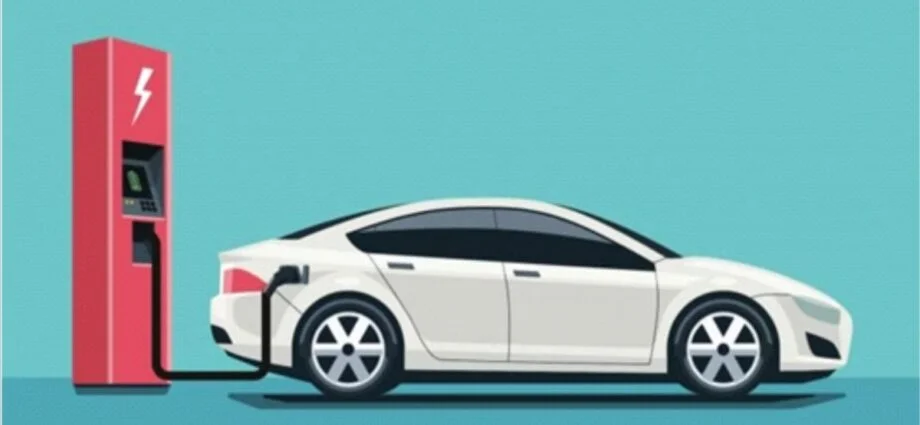
LAGOS, Nigeria (Agency Report) — Nigeria’s electric vehicle (EV) market could generate cumulative savings of nearly ₦10 trillion by 2040, according to the Rocky Mountain Institute (RMI).
The analysis was presented on Tuesday during an RMI webinar on electric mobility in Nigeria and Kenya, with a focus on two- and three-wheelers.
RMI, an independent non-profit think-and-do tank focused on accelerating the transition to a clean, prosperous and secure low-carbon energy future, said Nigeria’s local conditions offered significant potential for EV adoption, particularly for two-wheelers where grid charging was available.

The institute said a high-adoption scenario could deliver nearly 500 megatons of cumulative carbon dioxide savings by 2060.
According to RMI, the transition to electric mobility could support cleaner transport, local manufacturing and job creation while reducing mobility costs.
It said Nigeria needed stronger demand incentives, supply-side regulations and support for domestic EV manufacturing to accelerate adoption.
RMI said fuel-efficiency standards or a zero-emission vehicle availability standard could rapidly expand the country’s EV market.
It also called for carefully designed incentives to encourage domestic manufacturing, create jobs and strengthen Nigeria’s emerging electric mobility industry.
The institute said affordable financing would enable consumers and businesses to acquire EVs and benefit from their lower operating costs, while charging infrastructure needed to be rapidly deployed with Nigeria’s electricity realities and grid readiness in mind.
RMI said EVs should not be viewed only as an additional burden on the electricity system, arguing that they could be managed to support grid operations while creating opportunities for electricity utilities.
The institute said its recent EV policy roadmap for Nigeria examined measures needed to develop a stronger policy framework for the sector.
Speaking at the webinar, Mr Olaoluwa Faniyi, Chief Technology Officer and co-founder of SunFi, said Nigeria could accelerate electric mobility through decentralised solar charging and battery-swapping infrastructure.
Faniyi said EV adoption remained extremely low, with electric vehicles accounting for less than one per cent of vehicles on Nigerian roads.
He attributed the slow adoption partly to electricity challenges, noting that the national grid generated about 4,000 megawatts for more than 200 million people.
He added that Nigeria had fewer than 50 public EV charging stations, limiting access to reliable charging infrastructure.
According to Faniyi, decentralised solar installations could provide the backbone for off-grid EV charging and battery-swapping networks, expanding access to electric mobility without placing additional pressure on the constrained national grid.
He said commercial two- and three-wheelers should be viewed as opportunities for Nigeria’s energy, transport and climate transition, adding that electric mobility could enable drivers to reduce operating costs while creating sustainable income-generating opportunities.
Faniyi also called for policies supporting the wider clean mobility value chain rather than focusing mainly on finished electric vehicles.
He proposed zero tariffs on standalone lithium batteries, solar charging equipment and other key components required for electric mobility, saying lower duties could attract infrastructure investment, strengthen charging systems and reduce barriers to private-sector investment.
Mr Dustin Kahler, EV Industry Advisor at Upeo.Earth, said African EV users were predominantly commercial operators, making operating costs critical to electric mobility economics.
Kahler said commercial EV operators in East Africa could achieve between 30 and 40 per cent savings in total cost of service.
He identified high borrowing costs as a major obstacle to wider EV adoption, while noting that supply-side financing constraints also affected manufacturers and battery-swapping companies.
The Market Intelligence and Research Manager at Shell Foundation, Mr Habib Nuhu, called for greater mobilisation of domestic capital to finance Nigeria’s EV transition.
Nuhu said local banks, pension funds and other financial institutions needed to recognise electric mobility as a commercially viable industry.
He said much of Africa’s current EV financing came from outside the continent and was denominated in foreign currencies, exposing businesses earning local-currency revenue to additional currency risks.
According to him, stronger domestic financing could help Nigerian businesses access capital better suited to local market conditions.
Nuhu also advocated sector-wide risk-sharing schemes to spread lending risks and encourage financial institutions to finance EV assets.
He said lower financing costs, combined with reduced import duties, could make electric motorcycles more affordable for commercial riders.
Nuhu cited experiences from India, Rwanda and Kenya as evidence that zero-duty policies could support EV adoption.
“One of the lessons we’ve also learned is not to be too dependent on the government and hope that the government is moving at the same speed that the industry requires to evolve,” he said.
He urged private-sector players to develop solutions that complemented government policies and responded quickly to industry needs.
The panel also identified standardised charging and battery-swapping infrastructure as important to Africa’s electric mobility growth.
Speakers said stronger collaboration across African markets could enable countries to share lessons on policy, financing, infrastructure and local manufacturing.
For Nigeria, they said stronger domestic investment, cleaner energy and reliable charging infrastructure could unlock the economic and environmental benefits of electric mobility.

Peter Obi faults Tinubu’s one-month petrol discount, calls policy ‘reactive and confused’

JUST IN: Tinubu says World Bank report shows Nigeria’s economic reforms are working
JUST IN: Tinubu responds to commuters, highlights efforts to reduce transport costs
Fitch revises Nigeria’s credit outlook to positive, affirms ‘B’ rating

World Bank upgrades Africa growth outlook, says AI could boost jobs and productivity

Ardova takes Customer Service Week campaign to B2B customers

Etihad Airways, Ibom Air sign interline agreement connecting Nigeria to global network

JUST IN: NRS warns public against fraudulent recruitment notice
- Tinubu commissions NRS Headquarters, says new tax reforms will drive prosperity
- Tinubu assures investors of regulatory stability as Ogun, DP World sign $7bn port, SEZ MoUs
- Climate change anxiety is rising — and so is the willingness to act on it
- Ohaukwu LG Chairman Ituma breaks ground for modern diagnostic centre, blood bank
- Baseball boosts TBS, NFL gives ESPN a kick and streamers love ‘Squid’
Community Discussion