
Zelenskyy calls for tougher sanctions on Russian missile industry, unveils European anti-ballistic shield initiative

KYIV, Ukraine (NPA) — Ukrainian President Volodymyr Zelenskyy has urged Ukraine’s international partners to impose tougher and better-coordinated sanctions on Russia’s ballistic missile industry, warning that gaps in the existing sanctions regime continue to allow Moscow to expand its missile production despite the ongoing war.
Speaking during a meeting with heads of Ukraine’s foreign diplomatic missions, Zelenskyy said the growing threat posed by Russian ballistic missiles demands stronger international action, deeper military cooperation and accelerated development of Europe’s collective air and missile defence capabilities.
According to the Ukrainian leader, several key Russian companies involved in manufacturing ballistic missiles remain outside sanctions imposed by major Western partners, enabling them to continue operating through what he described as loopholes in different jurisdictions.
“Everyone can see the ballistic missile threat posed by Russia, and this threat is growing,” Zelenskyy said.
“Some key Russian enterprises involved in ballistic missile production are still not subject to strict global sanctions. Of the 17 key Russian enterprises involved in producing ballistic missiles, most can unfortunately exploit sanctions loopholes in various partner jurisdictions.”
He called on Ukraine’s allies to strengthen coordination and synchronise sanctions regimes across countries, arguing that fragmented restrictions weaken international efforts to reduce Russia’s military capabilities.
“We need greater coordination, daily engagement with partners on sanctions, and greater synchronisation of sanctions,” he added.
The Ukrainian President warned that Russia’s extensive use of ballistic missiles, coupled with similar tactics employed by Iran, is encouraging potential aggressors elsewhere to view such weapons as effective tools of warfare.
According to him, the global ballistic missile threat is likely to increase significantly unless democratic nations collectively strengthen their defensive capabilities.
“One of the worst consequences of Russia’s war against Ukraine—and of Iran’s tactics as well—is that potential aggressors around the world can see how much harm ballistic missiles can inflict on human life,” he said.
“The global ballistic missile threat will therefore continue to grow, and all anti-ballistic defence capabilities must grow as well.”
As part of Ukraine’s response, Zelenskyy unveiled the FREYJA project, which he described as a future integrated European anti-ballistic missile defence system.
He said Ukraine has the capacity to manufacture both the interceptor missile and its launch platform, while several European partners possess the radar systems, sensors and supporting technologies required to make the project operational.
“Our FREYJA can become a shared European system providing integrated protection. FREYJA will be quick to produce and battle-tested,” he said.
The President disclosed that agreements had already been reached with participating governments and defence manufacturers.
According to Zelenskyy, the Anti-Ballistic Coalition currently comprises Ukraine, Denmark, France, Germany, Italy, the Netherlands, Norway, Spain, Sweden and the United Kingdom, alongside 12 defence manufacturers, while remaining open to additional countries capable of contributing to Europe’s collective security.
Beyond missile defence, Zelenskyy highlighted Ukraine’s expanding defence-industrial cooperation with international partners through what he described as the Drone Deals initiative.
He said the programme provides Ukraine with stable, long-term annual financing for domestic drone manufacturers while enabling partner countries to benefit from modern defence technologies.
“Through the Drone Deals format, Ukraine receives long-term annual funding for the country and for Ukrainian defence manufacturers—a stable financial foundation for the defence industry. Our partners, in turn, receive modern defence capabilities,” he said.
According to him, Ukraine has already concluded drone cooperation agreements with nine countries, while negotiations on another 15 agreements are underway.
The President also announced a key change in Ukraine’s security architecture.
He said Defence Minister Rustem Umerov will become the new Head of Ukraine’s Foreign Intelligence Service to enable him focus on defence diplomacy, negotiations with the United States and other strategic partners, as well as diplomatic efforts aimed at ending Russia’s invasion.
Zelenskyy also named Ihor Klymenko as the new Secretary of the National Security and Defence Council (NSDC), describing him as an experienced security official who played a central role in strengthening Ukraine’s resilience during the previous winter.
He disclosed that the NSDC would soon meet in a special session to assess the implementation of regional resilience plans, warning that officials who fail to deliver would be held accountable.
The Ukrainian President also instructed the government, diplomatic missions and national institutions to align foreign policy priorities more closely with Ukraine’s defence, economic resilience and international partnerships.
Reflecting on the broader war effort, Zelenskyy praised Ukraine’s Air Force for defending the country’s skies despite what he described as an unequal battle against Russia’s vastly superior military resources.
He said Ukraine has prevented Russia from achieving air superiority since the start of the full-scale invasion and has significantly strengthened its air defence capabilities through cooperation with European partners.
According to him, systems such as Patriot, IRIS-T, NASAMS and Hawk have enabled Ukraine to intercept a substantial proportion of Russian cruise missiles, while the country’s success rate against attack drones now exceeds 90 per cent.
“Ukrainians did not surrender—and will not surrender—their skies to Russia. That is one of our nation’s greatest achievements throughout this full-scale war,” Zelenskyy said.
He acknowledged that ballistic missiles remain one of Ukraine’s greatest security challenges but expressed confidence that closer cooperation with allies, expanded sanctions against Russia and stronger integrated air defence systems would further strengthen Ukraine’s ability to protect its territory and move closer to what he described as a just and lasting peace.
Von der Leyen outlines vision for a stronger, more independent Europe in 2026 State of the Union address
Scotland, Wales, and Northern Ireland leaders intensify push to break away from UK

Scotland, Wales and Northern Ireland leaders plan fresh push for self-determination
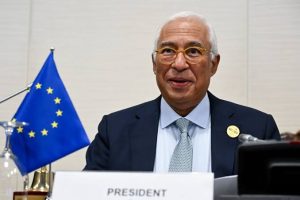
EU unity crucial as bloc prepares for 2028-2034 budget, President Costa says

France’s top court blocks social media ban for under-15s
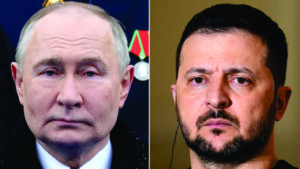
JUST IN: EU releases €1.4bn from frozen Russian assets to support Ukraine
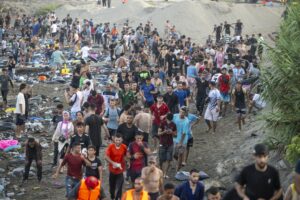
Spain warns irregular entry through Ceuta, Melilla does not grant right to stay or access EU
EU sanctions nine Russians, four entities over cyber-attacks and destabilising activities
- Tinubu commissions NRS Headquarters, says new tax reforms will drive prosperity
- Dare hits back at Atiku over criticism of Tinubu, says President needs no ‘unsolicited homework’
- Climate change anxiety is rising — and so is the willingness to act on it
- Golden Globes want to make a comeback this year. Hollywood isn’t buying
- Baseball boosts TBS, NFL gives ESPN a kick and streamers love ‘Squid’
Community Discussion