

Utomi reflects on Patito's gang legacy, links Nigeria's insecurity crisis to failure of public discourse
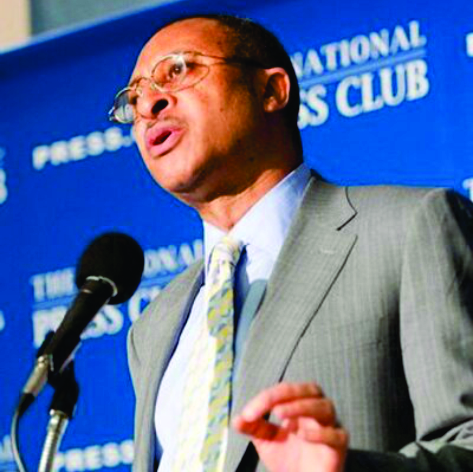
LAGOS, Nigeria (NPA) — Renowned political economist, scholar and public intellectual, Professor Pat Utomi, has reflected on the legacy of his influential television programme, Patito’s Gang, arguing that many of the security and governance challenges confronting Nigeria today were foreseen decades ago but ignored by political leaders and the public alike.
In a series of posts on his X account on Saturday, Utomi recalled the origins of the programme, which first aired 26 years ago and sought to create a platform for robust public debate as Nigeria transitioned from military rule to democratic governance.
According to him, Patito’s Gang was inspired by the need to reinvent the public sphere in the classical sense described by German philosopher Jurgen Habermas, where democracy and modernity intersect through rational public conversation and a vibrant marketplace of ideas.
“In its first run, Patito’s Gang had a 90-minute magazine format that tried for transgenerational impact,” Utomi said.
He explained that the programme featured multiple segments, including a senior panel he moderated, a junior gang hosted by Ubong Essien, a youth parliament guided by Austin Nweze, and Bullseye, a segment that engaged top policymakers on national issues.
Utomi announced that the programme would soon return, this time airing on YouTube and selected private television platforms.
The first episode, he said, would serve as “an ode to Patito’s Gang” while revisiting the issues that originally inspired its creation.
Reflecting on Nigeria’s worsening security situation, Utomi argued that warning signs had long been evident but were overlooked.
He noted that during the years when Patito’s Gang aired, Boko Haram appeared to many Nigerians as a distant and insignificant threat confined to Borno State.
However, he maintained that common sense and careful analysis suggested the danger would eventually spread if left unchecked.
“Now that what was feared has come home to roost, maybe we can press a reset button,” he said.
“If we can turn our back on how politicians driven by self-love have divided us, poisoned long-term friendships and replaced reason with emotion in the public sphere, redemption may come.”
The former presidential candidate blamed what he described as emotion-driven political choices and the failure of the educated middle class to challenge poor leadership for allowing insecurity, banditry and state capture to deepen across the country.
According to him, many of the crises currently confronting Nigeria were predicted years ago in a series of articles he authored with titles such as The Road to Somalia, Mogadishu Bus Stop and The Coming Anarchy.
Utomi lamented that despite repeated warnings, successive governments failed to take decisive action to address the structural causes of insecurity and social decline.
He pointed to recent reports highlighting rising insecurity, disease outbreaks, economic hardship and food insecurity as evidence of a nation under strain.
Among the headlines he cited were reports of growing insecurity threatening the education of millions of pupils, cholera outbreaks in Borno State, nationwide protest threats and worsening food affordability for ordinary households.
The economist also reflected on the personal and financial sacrifices involved in sustaining Patito’s Gang, describing it as one of the most rewarding projects of his public life.
“Even with Patito’s Gang being a major drain on my finances, it remains one of the more gratifying of my exploits,” he said.
Utomi recounted encounters with Nigerians in cities across the world, including Melbourne, London, Philadelphia, Dallas, Los Angeles, Paris and Kuala Lumpur, who told him the programme had shaped their thinking and worldview.
He revealed that despite initial scepticism about the programme’s ambitious format, it survived for several years before evolving from a 90-minute show to one-hour and later 30-minute formats.
According to him, the programme maintained its commitment to quality discourse and intellectual independence despite pressure from commercial and political interests.
Among the prominent figures who featured on the programme were journalists Onukaba Adinoyi-Ojo, Pini Jason, John Momoh, Remi Oyo and Reuben Abati, alongside professionals such as Dr Obiageli Ezekwesili and other leading voices in public affairs.
Utomi acknowledged that some Nigerians dismissed the programme’s message as mere intellectualism or “grammar”, but argued that the consequences of ignoring serious public debate are now evident.
“What makes the heart bleed is that I am on record that these times were on the way, in the hope that all would rally to prevent their advent,” he said.
With the planned return of Patito’s Gang, Utomi said he hopes the platform can once again contribute to rebuilding a culture of reasoned debate, civic engagement and national renewal.

Art exhibition, food festival highlight Oba of Benin’s 10th Coronation Anniversary

EU develops new projects to support Nigerian, African artistes

Onaiyekan urges sustained support for books in digital age

Afreximbank, FEDA launch drive to mobilise $1 bn for Africa’s film industry

BOI signs $170 million fund management deal to boost Nigeria’s tech, creative industries

JUST IN: Peter Obi celebrates Akunyili Crosby as Obama unveils portrait of former first couple

Irabor commends ANA for mentoring young writers, promoting literary excellence

VIDEO RELEASE: Mr P‑Square drops visuals for “I Can’t Look Away”
- Tinubu commissions NRS Headquarters, says new tax reforms will drive prosperity
- Tinubu assures investors of regulatory stability as Ogun, DP World sign $7bn port, SEZ MoUs
- Climate change anxiety is rising — and so is the willingness to act on it
- Ohaukwu LG Chairman Ituma breaks ground for modern diagnostic centre, blood bank
- Baseball boosts TBS, NFL gives ESPN a kick and streamers love ‘Squid’
Community Discussion